
Sound Association Letter Recognition Worksheets for Ages 8-9
5 filtered results
Difficulty Level
Grade
Age
-
From - To
Subject
Activity
Standards
Enhance your child’s reading skills with our engaging Sound Association Letter Recognition Worksheets for ages 8-9. Designed to support young learners, these worksheets not only foster letter recognition but also strengthen phonetic skills through fun sound associations. Children will explore the connection between letters and their corresponding sounds in a variety of interactive activities that promote critical thinking and language development. Each worksheet builds confidence and reinforces foundational skills necessary for literacy. Perfect for classroom use or at-home practice, our materials make learning enjoyable, ensuring your child develops a love for reading. Download today and watch their reading skills soar!
Favorites
With answer key
Interactive
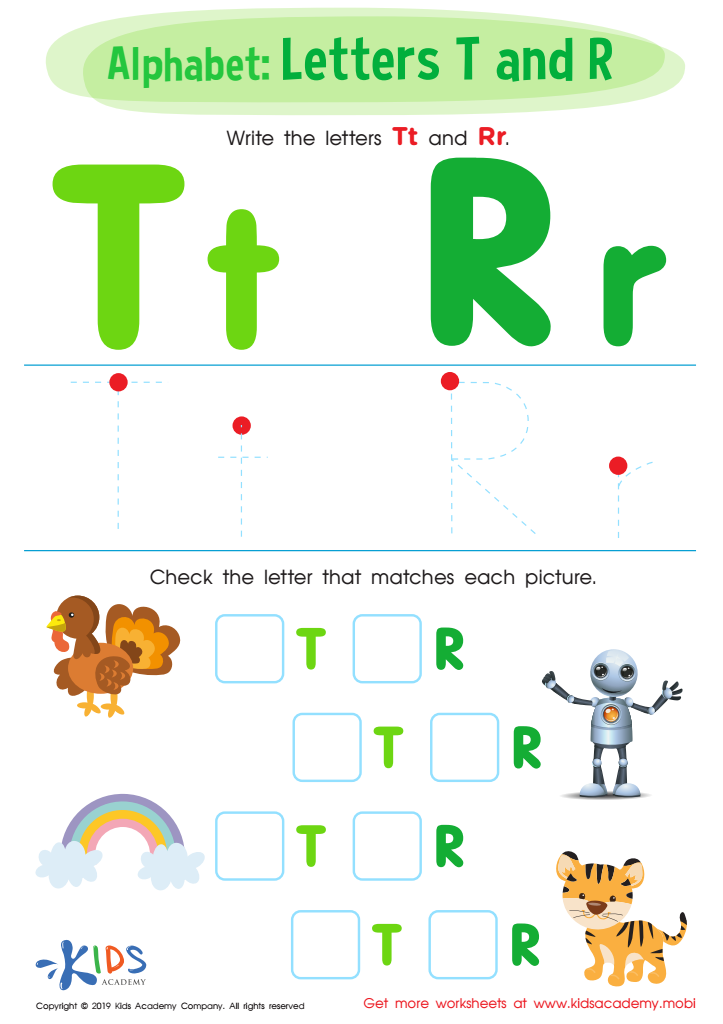
Letters T and R Worksheet
Is your kid bored with basic letter learning? Try this Letters T & R traceable sheet! It combines tracing and picture matching to help solidify fundamental skills. Your child will gain a better understanding and have fun at the same time.
Letters T and R Worksheet
Worksheet
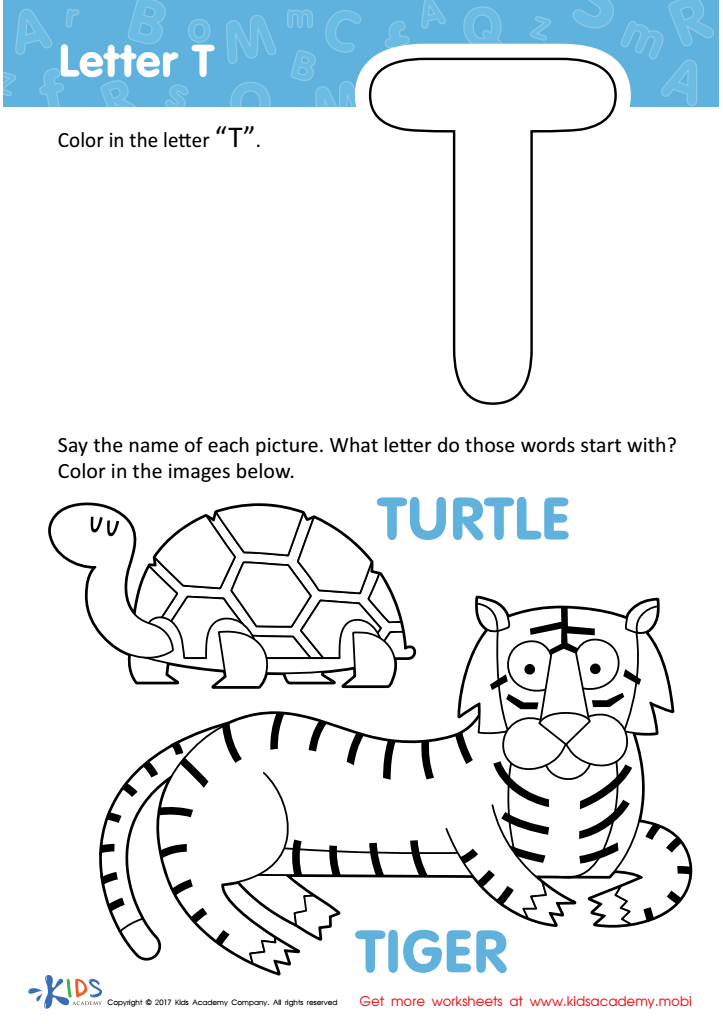
Letter T Coloring Sheet
Introduce your child to the letter "T" and its animals – turtles and tigers! With this coloring page, you can stimulate your child's imagination and creativity, while helping them recognize the letter "T". Have fun with your child and get coloring!
Download (PDF)
 Assign to My Students
Assign to My Students
Letter T Coloring Sheet
Worksheet
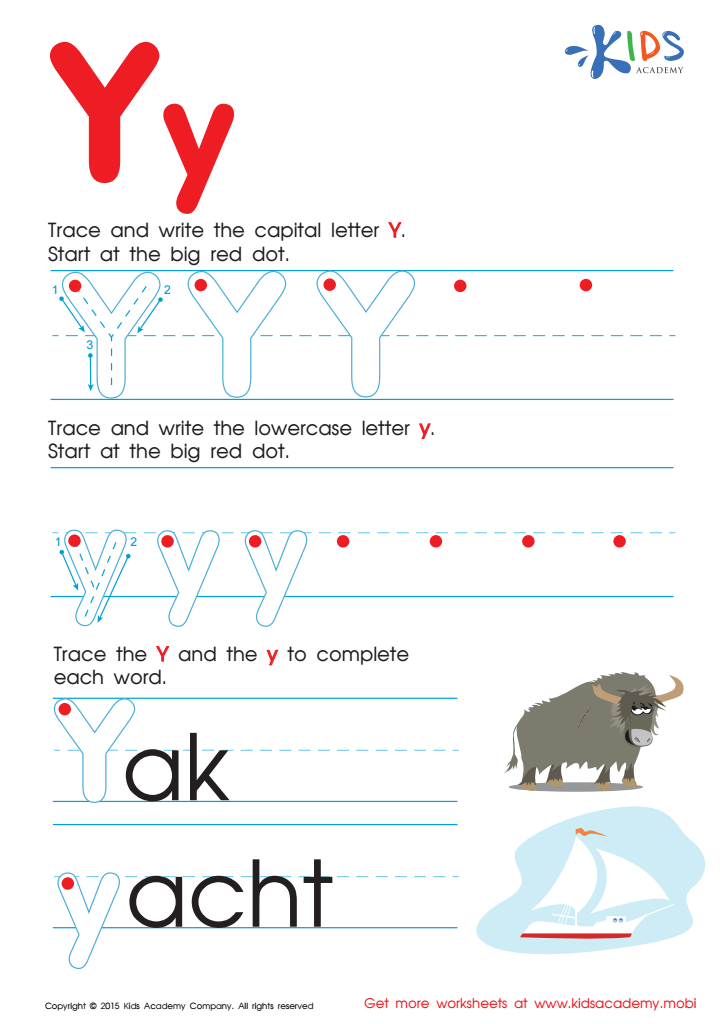
Letter Y Tracing Page
Trace the capital letter "Y" on the red dot, then trace and write the lowercase letter. Complete the words to help the Yak walk and the yacht swim. More worksheets at Kids Academy.
Letter Y Tracing Page
Worksheet
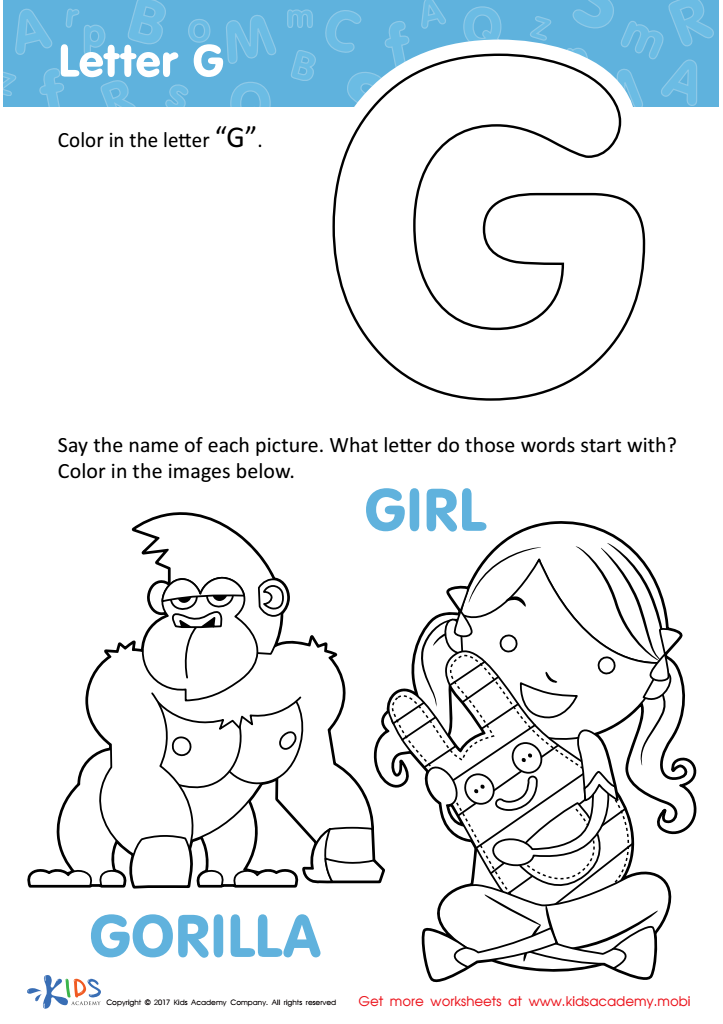
Letter G Coloring Sheet
This "G" coloring page encourages creativity and teaches kids the letter "G" sound. With its fun visuals and familiar words, it's sure to excite your child. Plus, you can talk about the letter’s sound with the pictures given.
Download (PDF)
Assign to My Students
Assign to My Students
Letter G Coloring Sheet
Worksheet
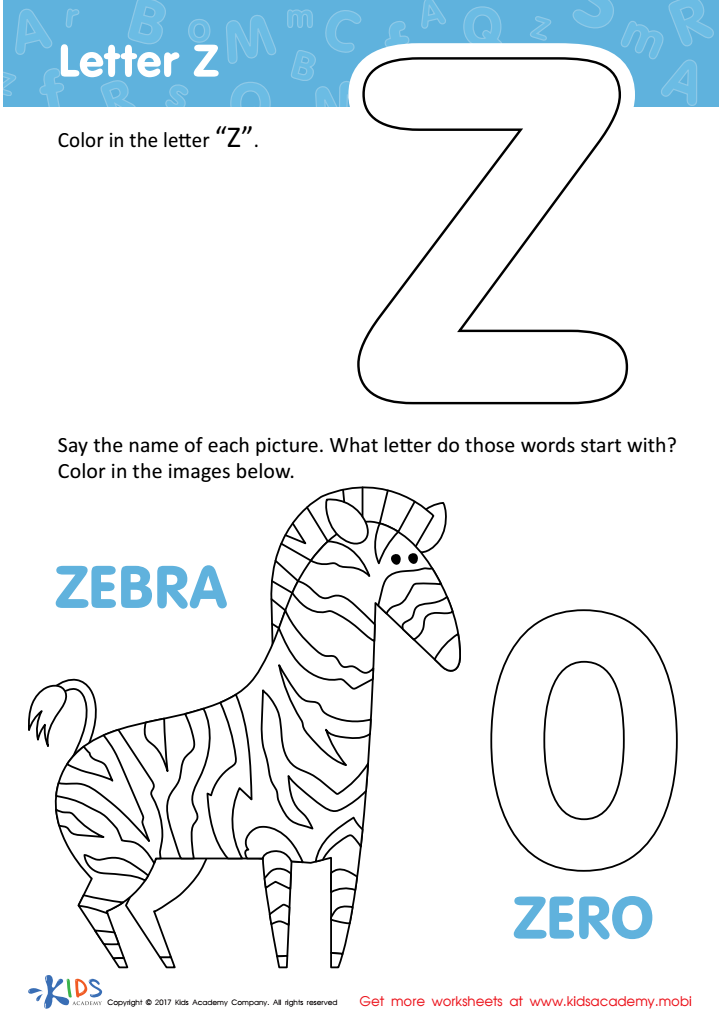
Letter Z Coloring Sheet
This coloring page featuring the letter "Z" is perfect for your child to practice letter recognition! Help them learn the unique sound it makes as they color. It'll be a fun and easy activity they won't have trouble with!
Download (PDF)
Assign to My Students
Assign to My Students
Letter Z Coloring Sheet
Worksheet
Join Kids Academy for Free
Who is primarily going to use this learning content?








Sound Association Letter Recognition is a critical skill for children ages 8-9, serving as a foundational element for literacy development. At this age, children are transitioning from learning to read to reading to learn. Mastery of sound-letter associations enhances their ability to decode words, facilitating independent reading and comprehension.
Parents and teachers should prioritize this skill because it directly influences academic success and self-confidence in literacy. When children can effectively connect sounds with letters, they become more fluent readers, boosting their enjoyment of books and learning materials. Moreover, strong reading skills lay the groundwork for success across all subjects, including math and science, where comprehension of text and instructions is vital.
Additionally, sound-letter recognition supports spelling and writing abilities. Children who understand these associations are better equipped to express their thoughts and ideas clearly, which is essential for their overall communication skills.
Ultimately, fostering sound association letter recognition creates a love for literacy, empowering children to explore, learn, and grow. By investing time and resources in this area, parents and teachers can cultivate lifelong learners who are confident in their reading and writing abilities, setting them up for future academic achievements.







