Vocabulary enhancement Long And Short Vowel Worksheets for Ages 8-9
4 filtered results
-
From - To
Enhance your child's vocabulary with our comprehensive Long and Short Vowel Worksheets designed for ages 8-9. These fun, engaging printables support the development of essential reading skills by focusing on vowel sounds—both long and short. Perfect for young learners, each worksheet complements classroom learning and makes mastering vowel variation enjoyable and effective. Through a range of thoughtfully crafted activities, kids will boost their phonemic awareness, improve spelling, and expand their vocabulary. Give your child the tools they need to excel in reading and language arts with Kids Academy's expertly designed worksheets.
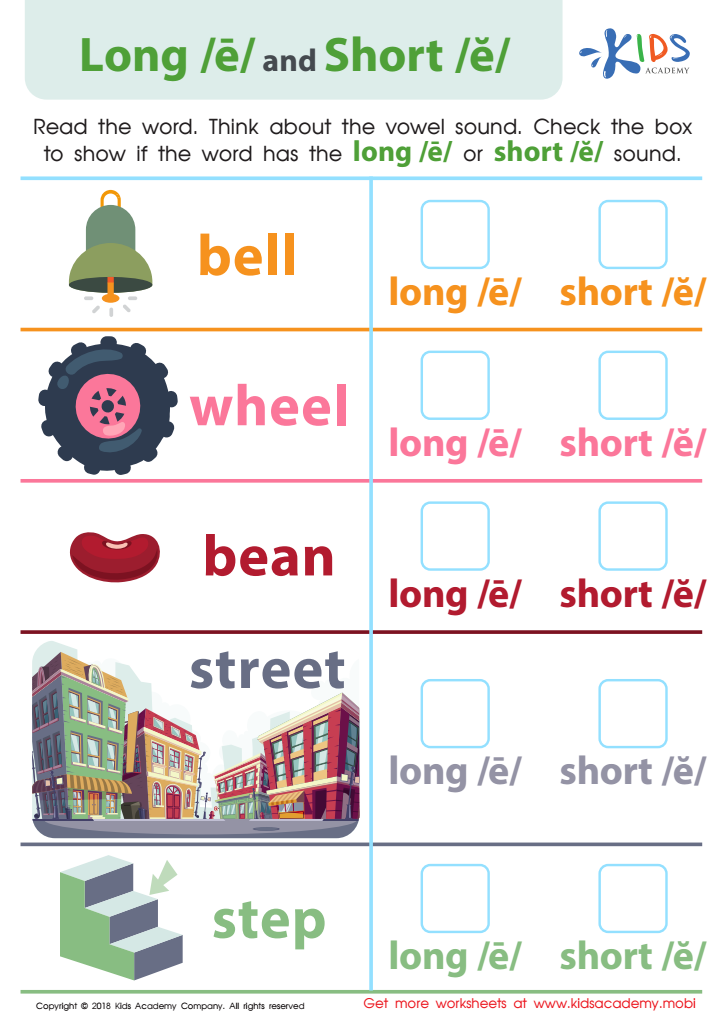
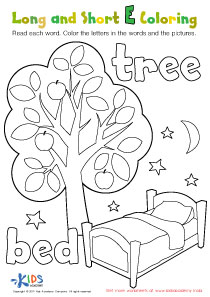
Reading: Long E and Short E Worksheet
 Assign to My Students
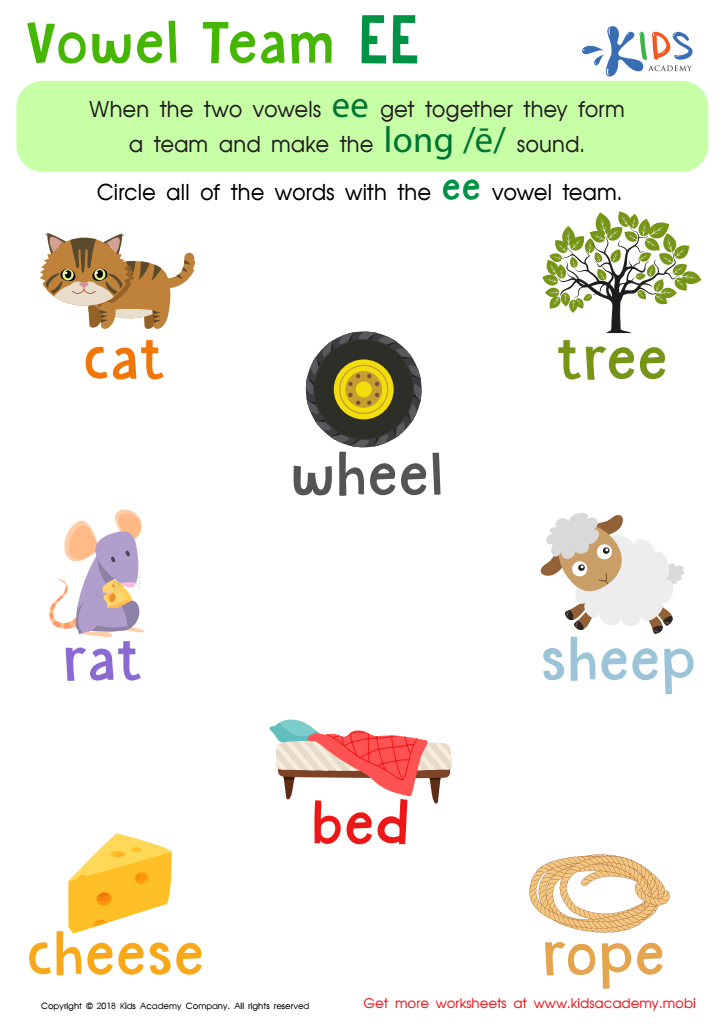
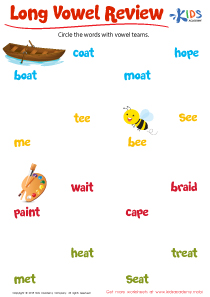
Reading: Vowel Team EE Worksheet
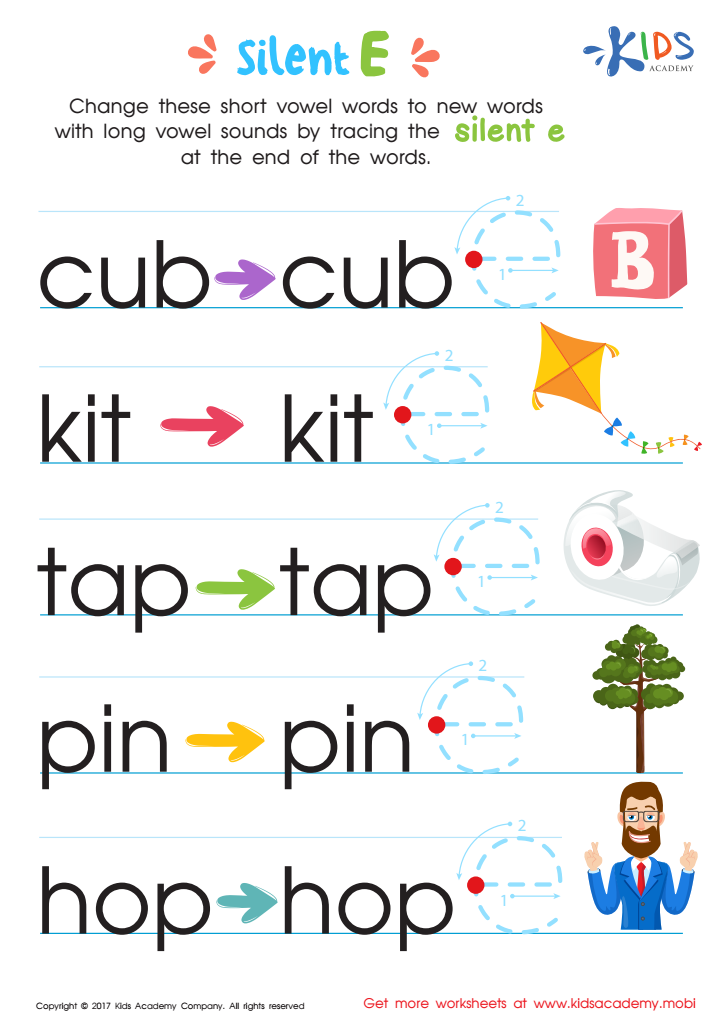
Silent E Words Worksheet
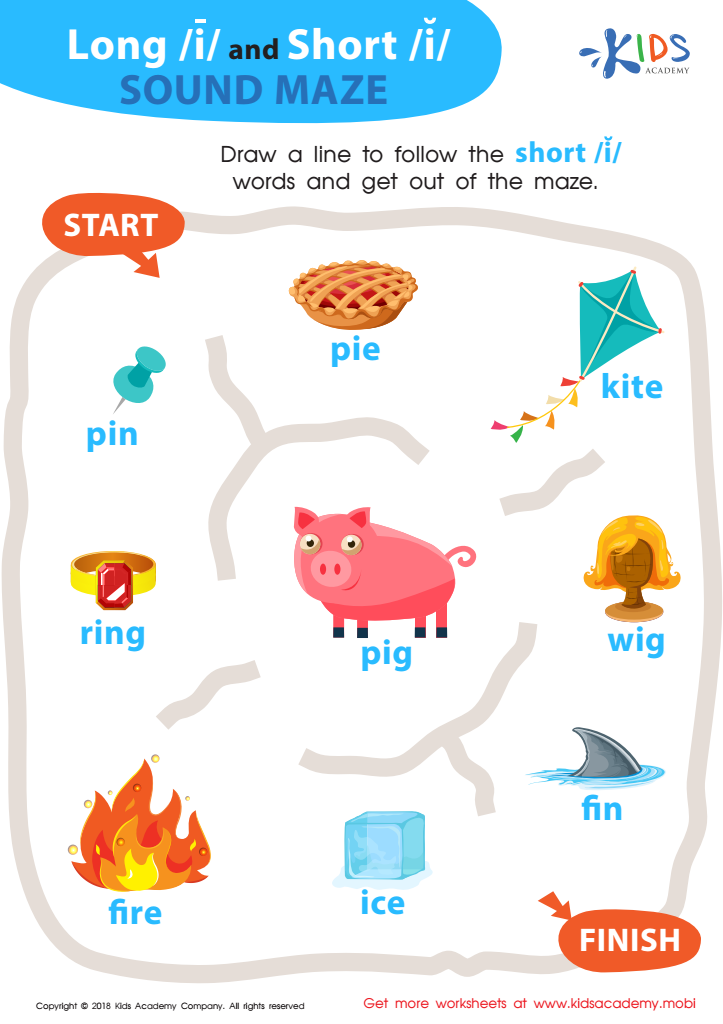
Reading: Long I and Short I Sound Maze Worksheet




Vocabulary enhancement, particularly with a focus on long and short vowels, is critically important for children aged 8-9, as this period marks a pivotal stage in their language and literacy development. At this age, children transition from simple decoding of words to more fluent, comprehensible reading and more nuanced writing skills.
Understanding long and short vowels is foundational for accurate pronunciation, spelling, and reading. Long vowels "say their name," as in words like "cake" (long "a") and "note" (long "o"), whereas short vowels have a distinct, unique sound, as in "cat" (short "a") and "pen" (short "e"). Mastery of these vowels aids in word recognition and improves children's ability to decode unfamiliar words, therefore enhancing their reading fluency.
Moreover, a strong grasp of vowel sounds and an enriched vocabulary contribute to a more robust reading comprehension. When children understand the meanings of words and can pronounce them correctly, they are better able to grasp broader concepts within texts. This further fosters enjoyment in reading, turning it into a lifelong habit beneficial for academic success.
Teachers and parents who emphasize vowel sounds and vocabulary skills provide children with the tools they need to become proficient readers and writers. This focused literacy instruction supports overall cognitive development, setting the foundation for future learning across all subjects.