Spelling practice Long Vowels Worksheets for Ages 8-9
4 filtered results
Difficulty Level
Grade
Age
-
From - To
Subject
Activity
Standards
Our Spelling Practice Long Vowels Worksheets for Ages 8-9 are designed to build confidence and mastery in young learners. Ideal for children who are beginning to spell more complex words, these engaging worksheets focus on long vowel sounds, helping to enhance their reading and spelling skills. Each sheet provides fun and interactive practice through exercises, puzzles, and word games, making learning enjoyable. Developed by educational experts, our worksheets effectively support the school curriculum and cater to different learning styles. Accessible and easy to use at home or in the classroom, they ensure consistent practice and improvement in spelling proficiency.
Discover more at Kids Academy!
Favorites
With answer key
Interactive
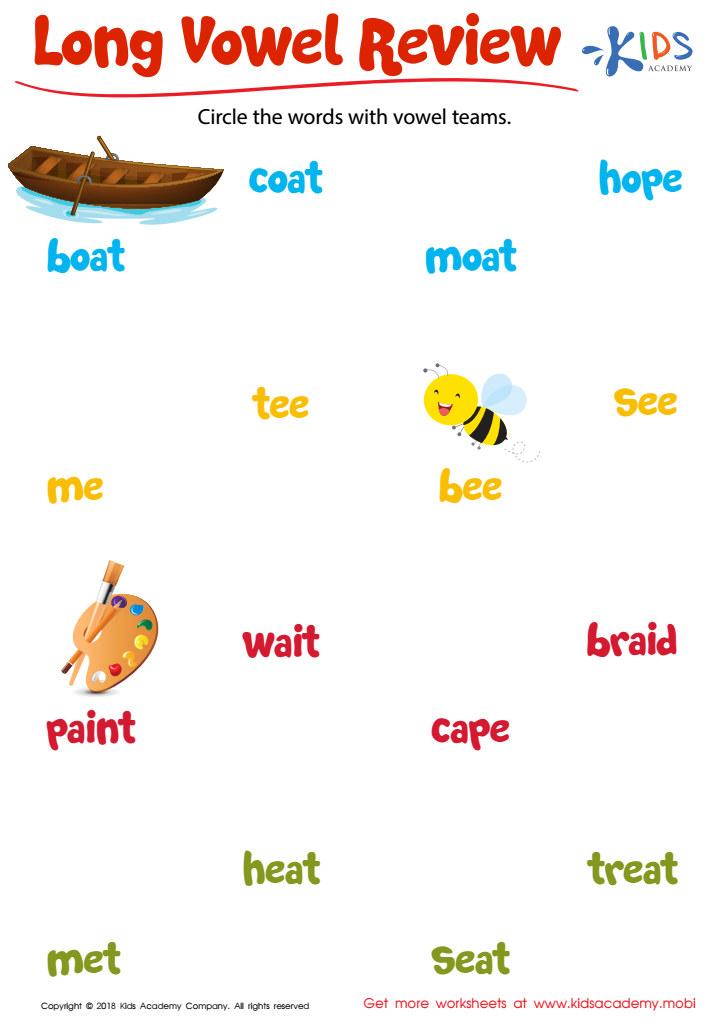
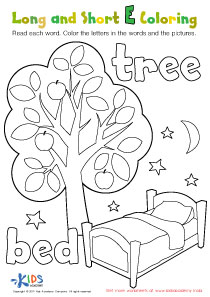
Long Vowel Review Worksheet
Vowel teams like "ea" and "ai" help us make words, and understanding these patterns aids emerging readers in becoming more fluent. This review worksheet has students finding words with vowel teams that make the long vowel sound, and helps them recognize high-frequency words.
Long Vowel Review Worksheet
Worksheet
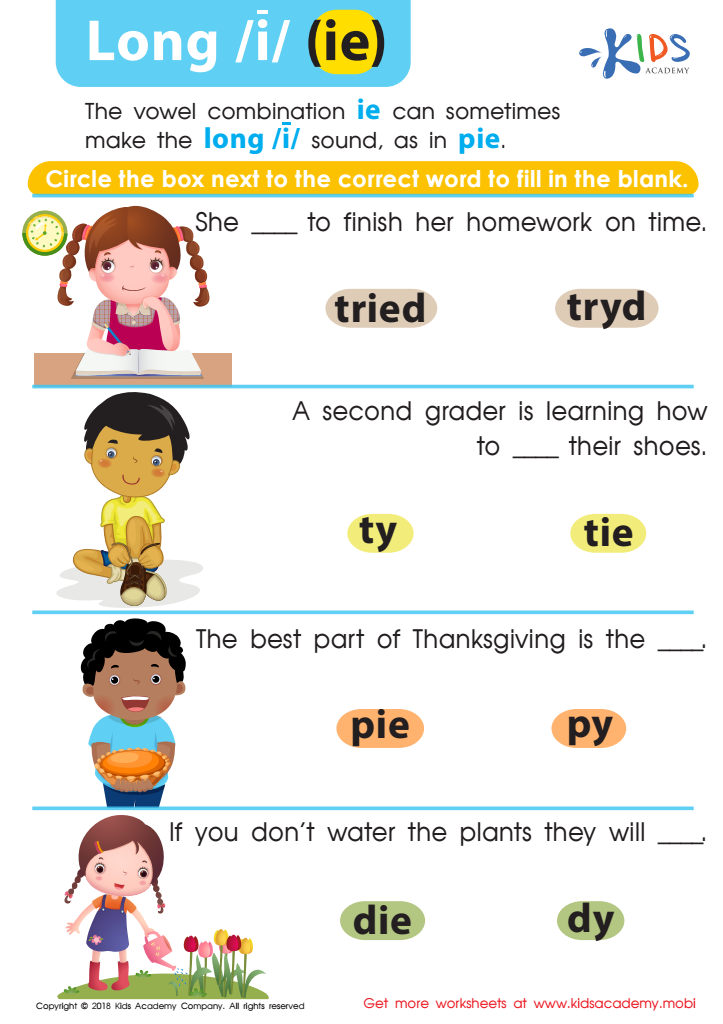
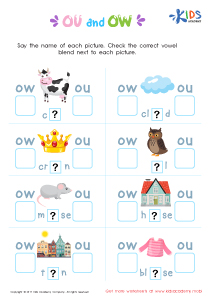
Reading: Long I and IE Worksheet
Have your child list words with the long /i/ sound (eg. 'pie'), and if needed, help them out with some examples. Read each word in the worksheet together and check their answer by having them circle the correct word.
Reading: Long I and IE Worksheet
Worksheet
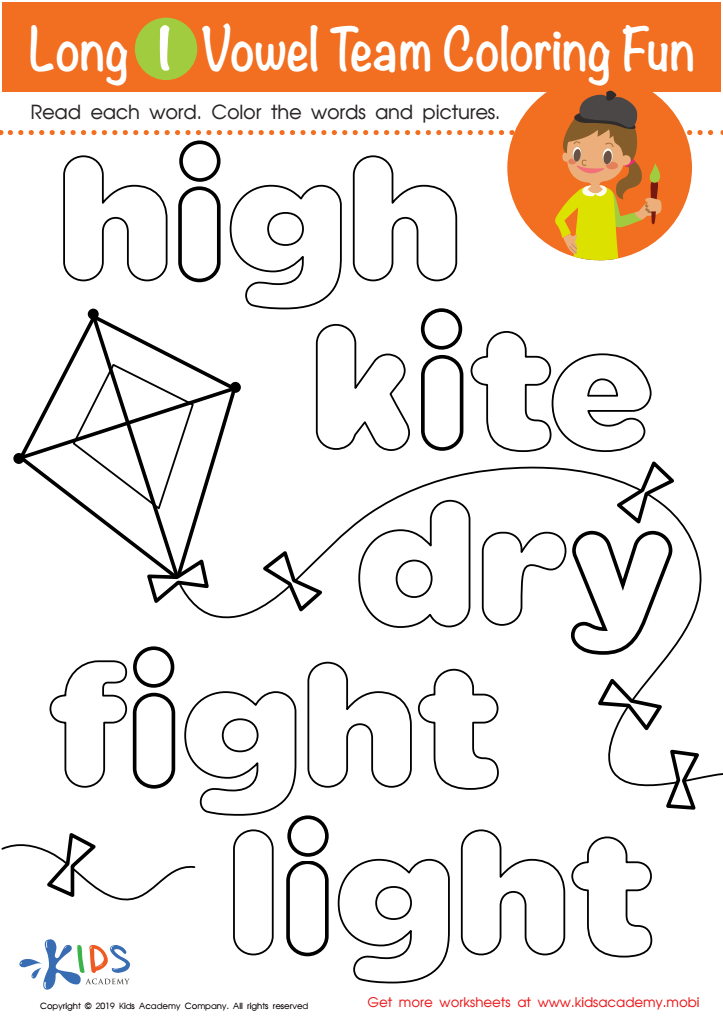
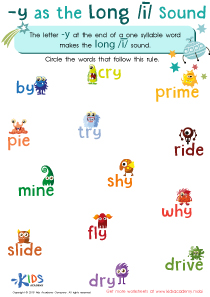
Long I Vowel Team Coloring Worksheet
This worksheet provides practice with letter combinations that make the long "i" sound while enhancing creativity and motor skills with a fun coloring activity. Unknowingly, new readers learn key phonics skills while having fun!
Download (PDF)
 Assign to My Students
Assign to My Students
Long I Vowel Team Coloring Worksheet
Worksheet
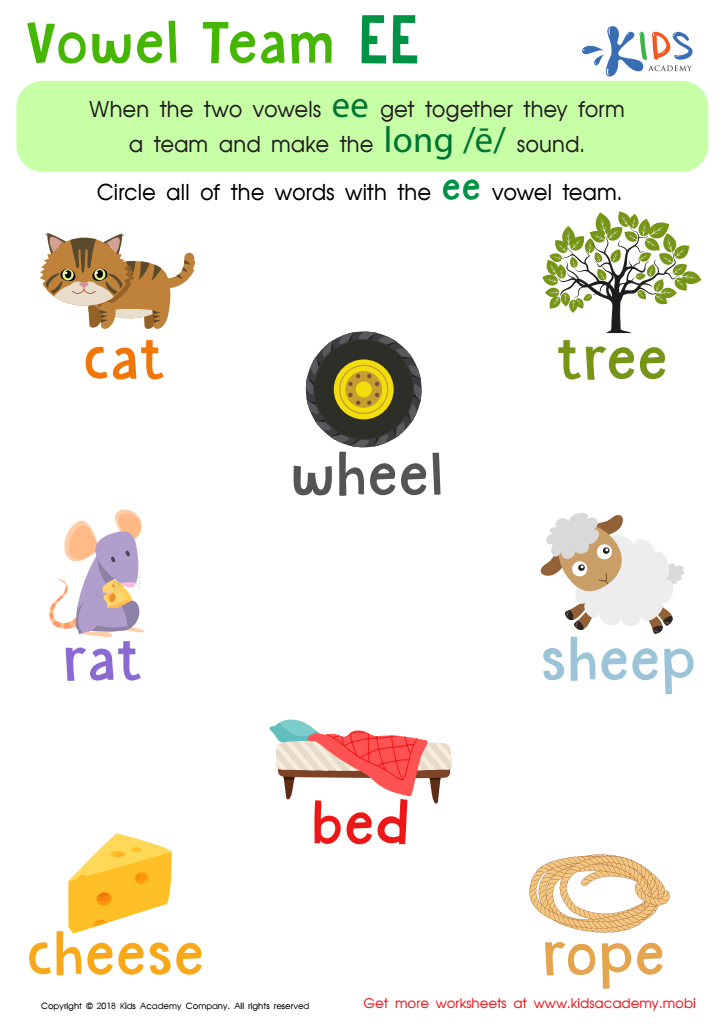
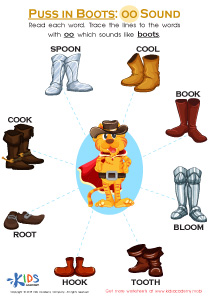
Reading: Vowel Team EE Worksheet
This worksheet is perfect for helping young learners master the /ee/ vowel team. It shows the first vowel with a long sound and the second vowel silent. It also provides pictures for unfamiliar words for readers of all levels. It's an ideal resource for teaching phonics skills.
Reading: Vowel Team EE Worksheet
Worksheet
Join Kids Academy for Free
Who is primarily going to use this learning content?



Educators and parents play a crucial role in the academic and developmental growth of children, and one key area of focus is spelling practice for long vowels in children aged 8-9. At this developmental stage, children typically transition from basic phonetics to more complex spelling patterns. Long vowels, which sound like the name of the respective vowel letters (e.g., 'a' in 'cake,' 'e' in 'me,' 'i' in 'kite'), are fundamental for mastering literacy.
Proficiency in spelling long vowels enhances reading skills. Children better recognize these vowel patterns, resulting in smoother, more efficient reading. Solid spelling instruction also deepens their comprehension, since understanding the structure and function of words aids in grasping meaning.
Furthermore, writing competence significantly benefits from accurate spelling of long vowels. Confident spellers can express their ideas more fluently and with fewer interruptions. This naturally fosters better written communication skills, which are essential for academic success across subjects.
Lastly, consistent spelling practice also boosts self-confidence. As children observe tangible progress, they develop positive attitudes toward learning and better perseverance.
In conclusion, integrating spelling practice of long vowels in the curriculum is not merely about rote memorization; it lays the groundwork for comprehensive language skills, promotes academic success, and nurtures confident, capable learners.