Spelling practice Phonics Worksheets for Ages 8-9 - Page 2
25 filtered results
-
From - To
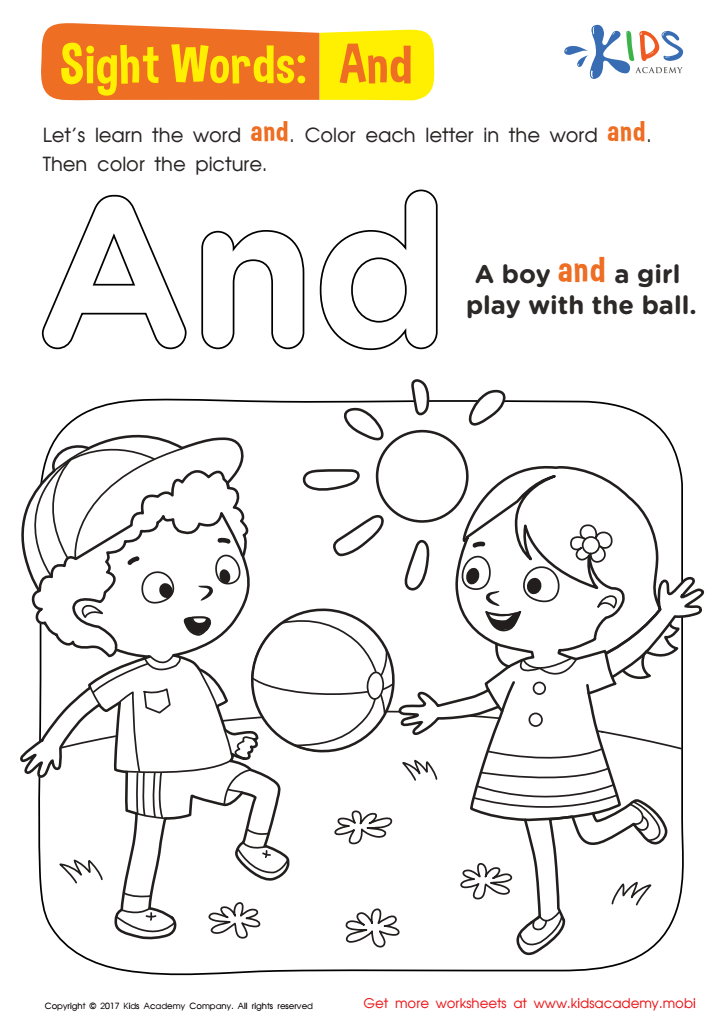
And Worksheet Sight Words Worksheet
 Assign to My Students








Spelling practice and phonics instruction are crucial for children aged 8-9 because they form the foundation of literacy, which in turn affects academic success and lifelong learning. At this developmental stage, students transition from "learning to read" to "reading to learn." Strong spelling skills enable them to decode words more efficiently, enhancing both reading comprehension and writing proficiency.
Phonics, the relationship between sounds and their spellings, offers children systematic strategies to read unfamiliar words independently. This is particularly beneficial for developing their vocabulary and fluency. Repeated exposure to spelling patterns helps solidify mental word lists, which is necessary for both reading and writing activities. In this way, correct spelling and phonics act as building blocks for more advanced literacy skills.
Furthermore, mastering spelling and phonics boosts a child's confidence. The ability to read and write well instills a sense of achievement, encouraging them to engage more actively in classroom discussions and l in various academic subjects. Ignoring these foundational skills can lead to frustration and a curtailed learning process. Therefore, consistent and engaging practice in spelling and phonics paves the way for academic excellence, effective communication, and a lifelong love for learning. This practice acts as a catalyst for broader educational development, making it integral for parents and teachers to prioritize it.







