Letter recognition Tracing Letters Worksheets for Ages 8-9 - Page 2
26 filtered results
-
From - To
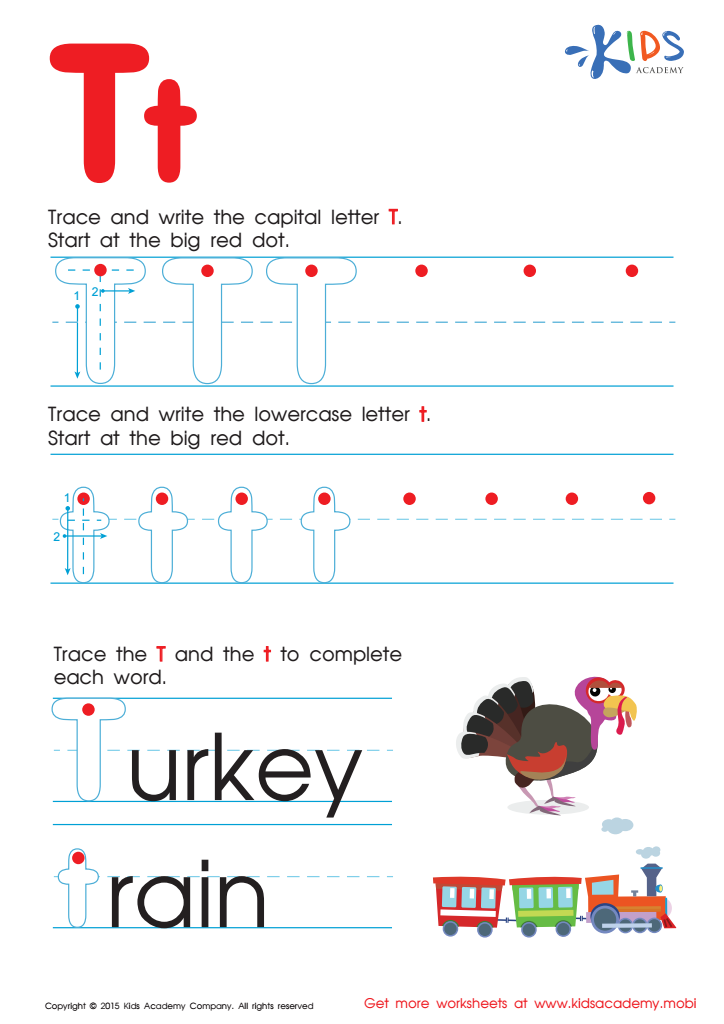
Letter T Tracing Page
 Assign to My Students
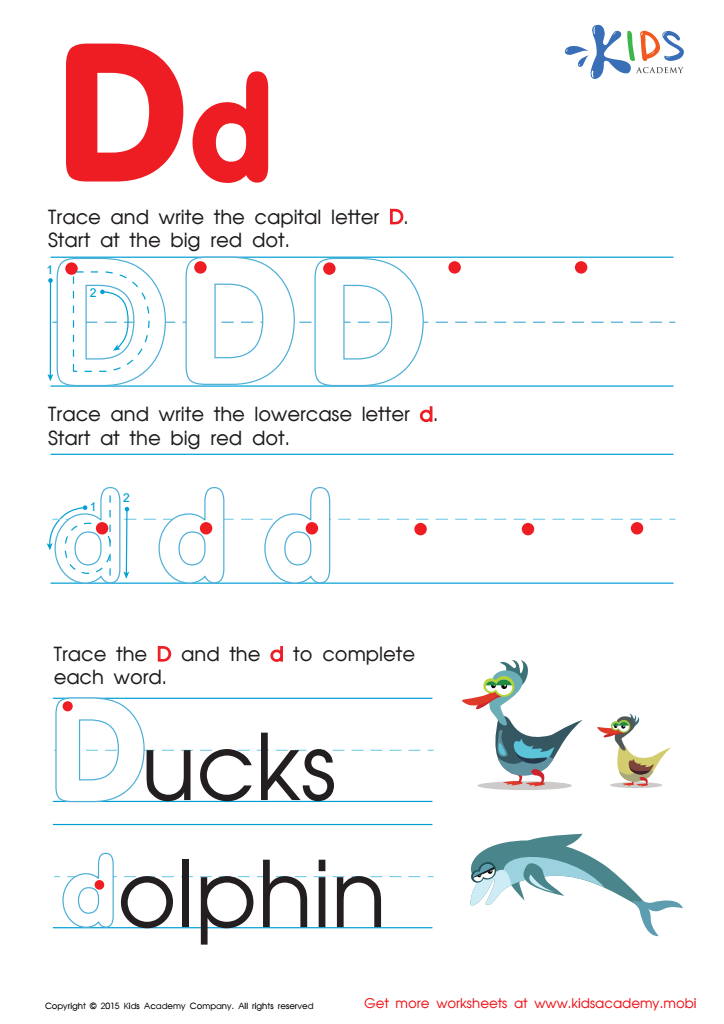
Letter D Tracing Page








Though letter recognition and tracing are skills typically emphasized in the earlier years of education, they remain essential for children aged 8-9 who may be struggling with literacy. Mastering letter recognition and tracing can significantly impact a child's ability to read and write fluently—skills that are foundational for academic success in all subjects. When a child can effortlessly recognize and write letters, they also improve their spelling, increase their reading speed, and enhance their overall comprehension abilities.
At this age, any gaps in these fundamental skills can become more evident and potentially hinder a student's self-esteem and performance in school. By providing targeted activities like letter tracing, parents and teachers can offer a form of remediation that feels approachable and engaging. It not only reinforces muscle memory for writing but also helps to solidify the connection between letter shapes, names, and sounds.
Moreover, these activities can reveal potential learning disabilities such as dyslexia, which may require more specialized interventions.
In a nutshell, focusing on letter recognition and tracing for children ages 8-9 builds a stronger literacy foundation, helping them navigate more complex reading and writing tasks with confidence. Given the strong correlation between literacy and overall academic achievement, this investment in early education yields long-term benefits.








