
Motor skills development Tracing Letters Worksheets for Ages 8-9
4 filtered results
Difficulty Level
Grade
Age
-
From - To
Subject
Activity
Standards
Enhance your child's motor skills with our engaging "Tracing Letters Worksheets" designed specifically for ages 8-9. These worksheets provide a fun and interactive way for children to refine their handwriting abilities while boosting confidence in letter formation. As they trace each letter, kids develop fine motor coordination and improve their ability to control writing instruments. Our colorful and visually appealing worksheets stimulate interest, making practice enjoyable. Perfect for home or classroom use, these resources also support classroom learning outcomes. Watch as your child progresses in their writing skills while having fun with tracing activities that nurture creativity and motor skill development!
Favorites
With answer key
Interactive

Letter H Tracing Page
Trace the letter "H", then practice writing its lowercase form. Finally, choose your favorite form of transport and ride away! Get our worksheets to make learning fun and easy.
 Assign to My Students
Letter H Tracing Page
Worksheet
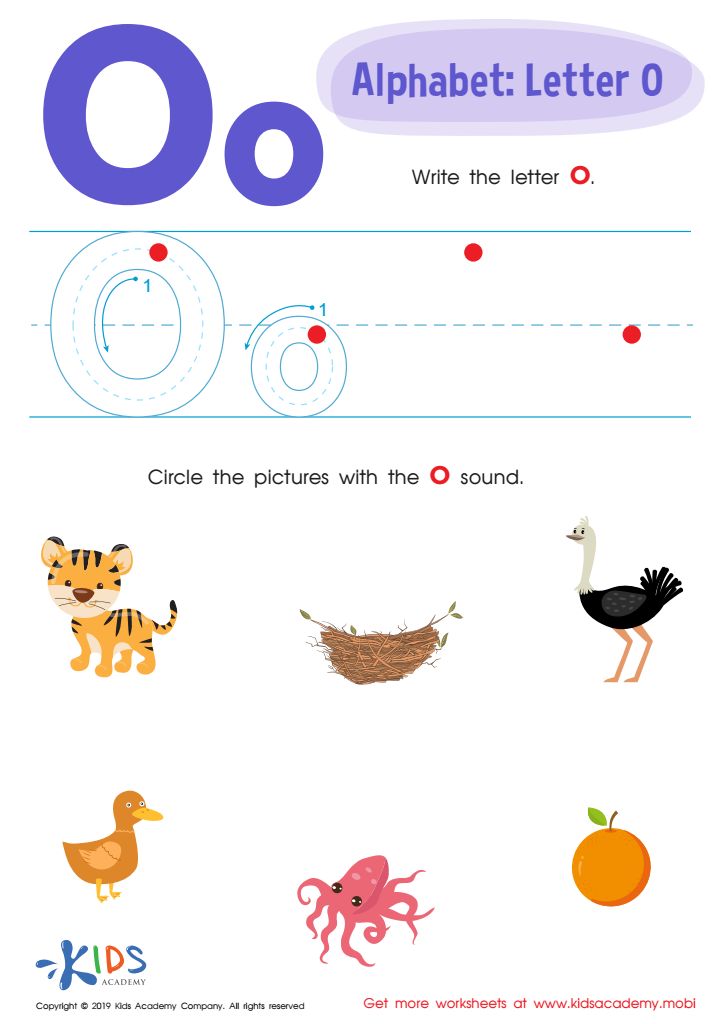
Letter O Tracing Worksheet
This worksheet gives kids the chance to trace the letter "O" while also circling pictures that have the "O" sound. Visual and hands-on learners will benefit from the visuals and tracing, helping them learn the letter "O" with ease. It's the perfect way to learn what "octopus" and "ostrich" start with!
Letter O Tracing Worksheet
Worksheet
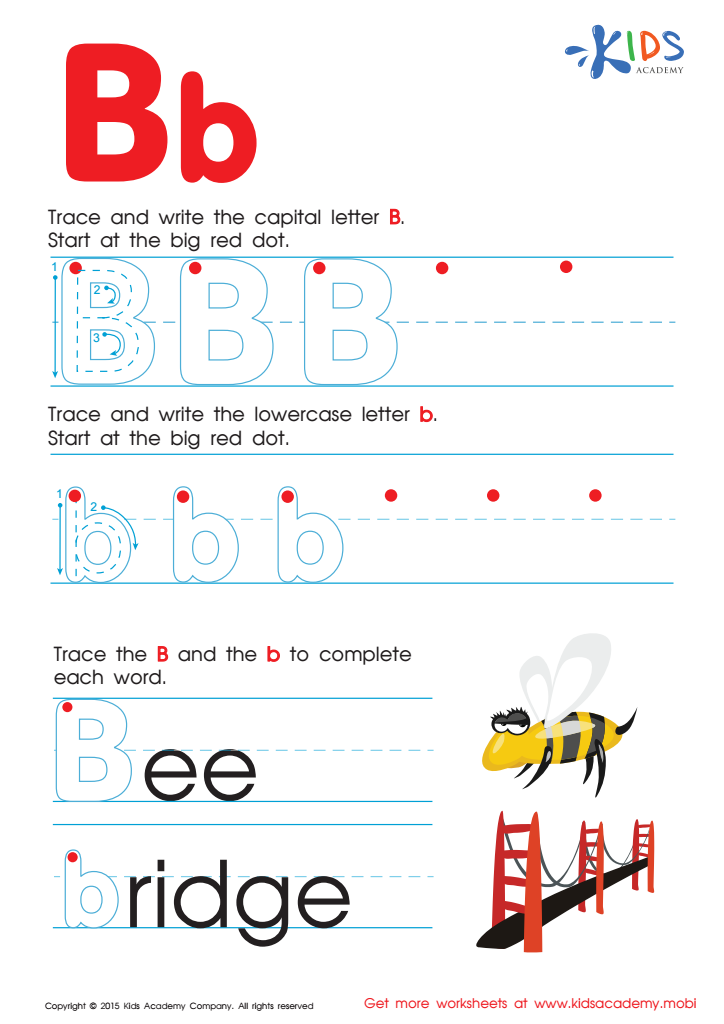
Letter B Tracing Page
Ready to learn the Alphabet? Put your pencil on the red dot and trace & write both capital & lowercase "B". Then have a look at the pictures. Catch the bee, cross the bridge & write the letters to complete the words. More ABC worksheets for kindergarten available!
Letter B Tracing Page
Worksheet
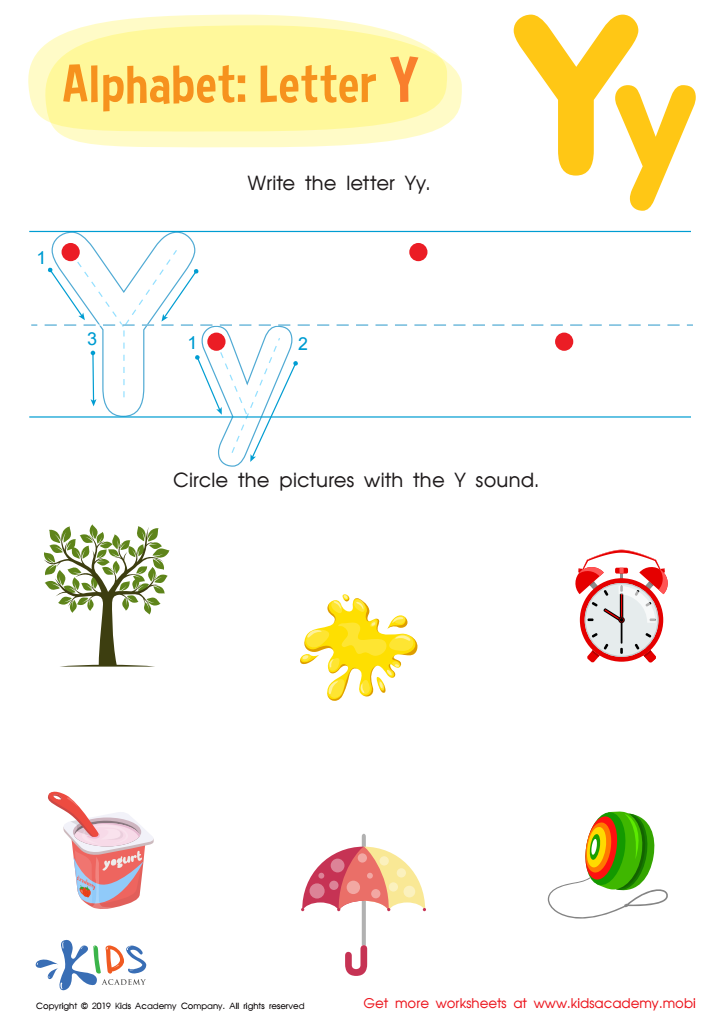
Letter Y Tracing Worksheet
Does your child need help with learning the final letters of the alphabet? This PDF worksheet is perfect then! Kids can practice tracing the letter «Y» and circle pictures that start with the same sound. Options include «yellow» and «yogurt». It's a great way of honing their letter-learning skills.
Letter Y Tracing Worksheet
Worksheet
Join Kids Academy for Free
Who is primarily going to use this learning content?







Motor skills development, particularly tracing letters, plays a crucial role in the growth of 8 to 9-year-olds. At this age, children are refining their fine motor skills, which are essential for tasks like writing, drawing, and engaging in hands-on activities. Tracing letters enhances finger dexterity, control, and coordination, all vital for writing fluency.
Moreover, tracing helps strengthen children’s spatial awareness and reinforces how letters are formed, laying the groundwork for proper handwriting techniques. This mastery not only boosts their confidence in written communication but also encourages a love for writing.
Academically, strong motor skills contribute to a child’s overall literacy development. A proper grasp of letter shapes aids in spelling and reading, enhancing reading comprehension and fostering a stronger engagement with texts.
Additionally, fine motor skill activities like tracing involve repetitive practice, which builds neural connections in the brain. This repetition is vital for learning and memorization, crucial aspects of early education.
For parents and teachers, focusing on motor skills through activities like tracing letters can set the stage for long-term academic success and personal development, preparing children for future challenges in both academic and real-world scenarios.








