
Word Recognition Two Letter Phonics Worksheets for Ages 8-9
4 filtered results
Difficulty Level
Grade
Age
-
From - To
Subject
Activity
Standards
Enhance your child's reading skills with our engaging "Word Recognition Two Letter Phonics Worksheets" designed specifically for ages 8-9. These worksheets promote phonetic awareness, helping children to recognize and decode two-letter words with ease. By focusing on fundamental letter combinations, students will boost their confidence in reading and improve their vocabulary. The fun and interactive activities maintain children's interest while reinforcing crucial literacy skills. Perfect for classroom settings or home practice, these worksheets serve as an essential resource for young learners to master phonics, paving the way for successful reading journeys ahead. Explore our collection and watch your child's progress soar!
Favorites
With answer key
Interactive
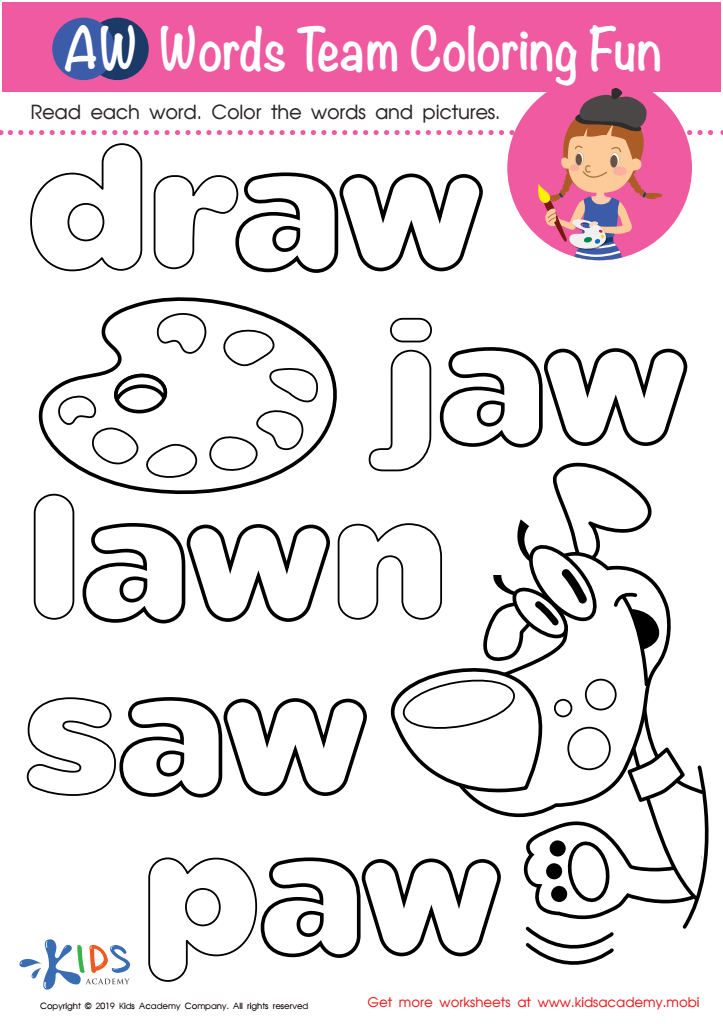
AW Words Team Coloring Fun Worksheet
Coloring words they can read is a blast for little learners! This worksheet offers emerging readers the chance to practice and gain confidence in reading words from the -aw family, while also improving fine-motor and creativity skills. Without knowing it, they'll learn about phonetic teams along the way!
Download (PDF)
 Assign to My Students
Assign to My Students
AW Words Team Coloring Fun Worksheet
Worksheet
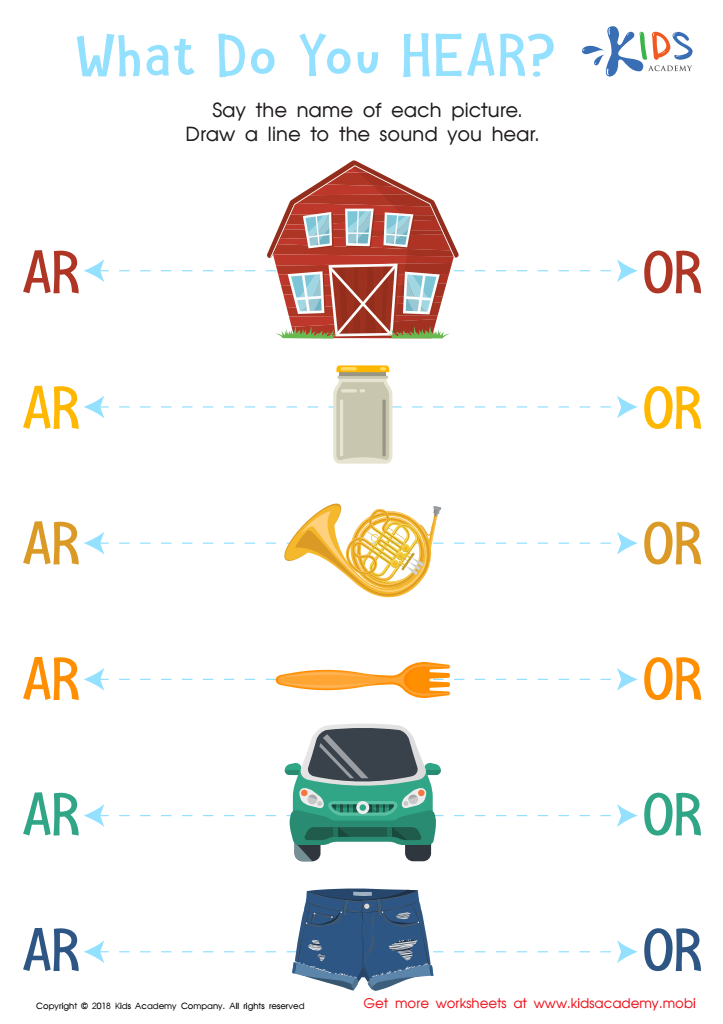
What do you hear Worksheet
Kids can practice distinguishing between r-controlled vowel teams /ar/ and /or/ with this worksheet. The pictures help identify the words and the sounds heard. Tracing a line to the correct sound supports fine motor skills development.
What do you hear Worksheet
Worksheet
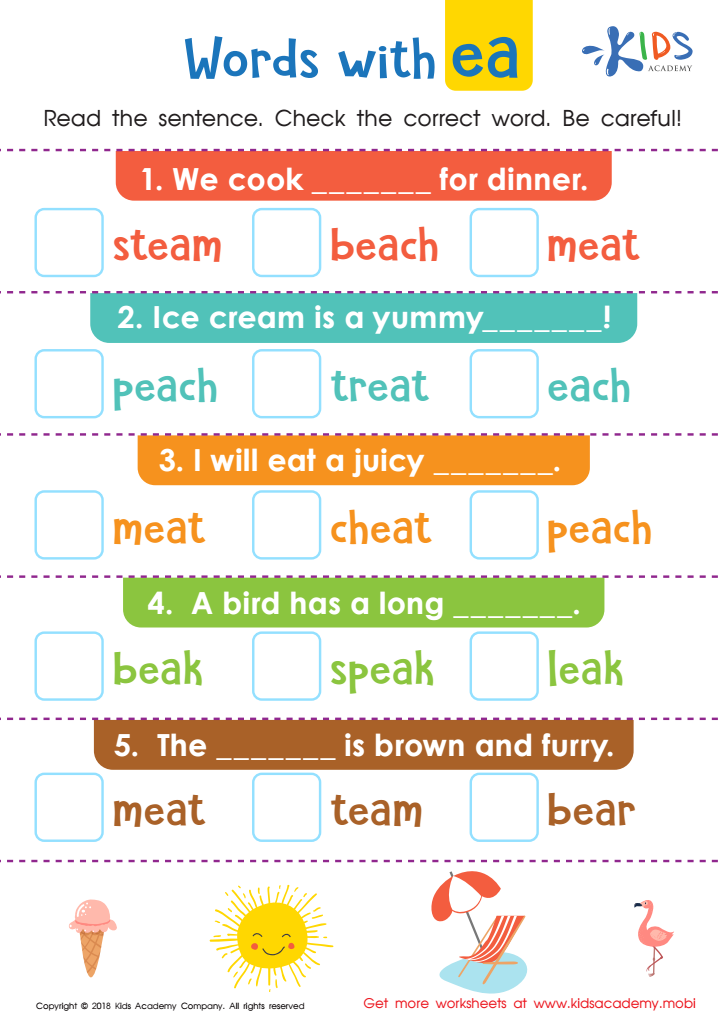
Words with ea Worksheet
Beginning readers may struggle with -ea vowel digraphs, which can have multiple sounds and be tricky to decode. This cheerful worksheet helps kids practice reading sentences with missing -ea words, using context clues to fill in the blanks. They'll also be exposed to various -ea sound examples, and build their sight word knowledge.
Words with ea Worksheet
Worksheet
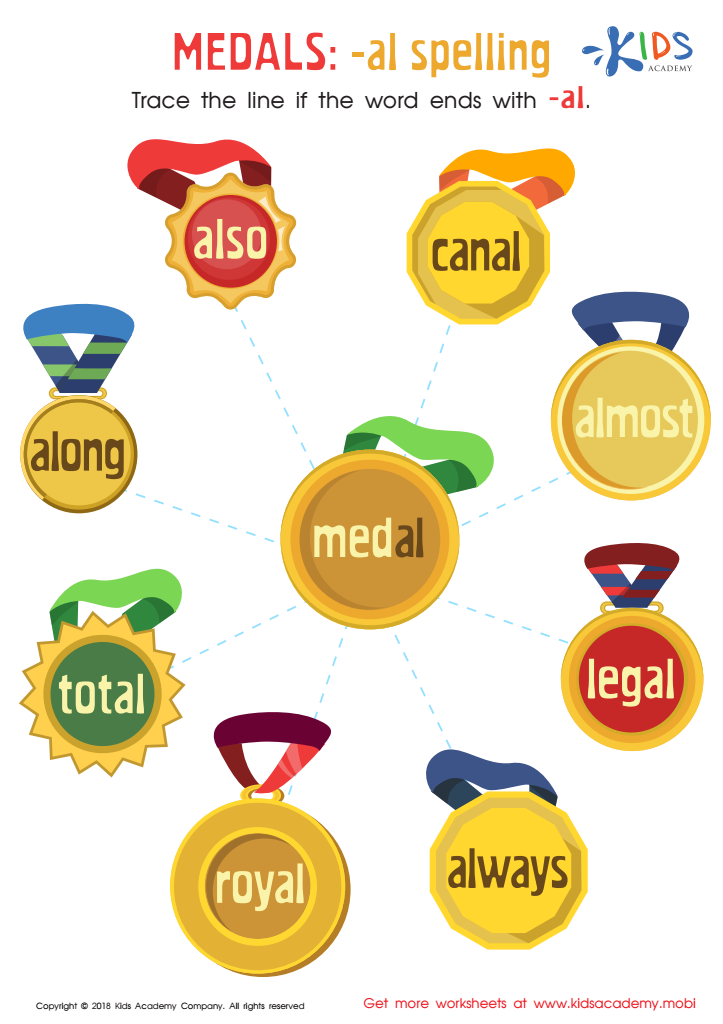
Medals: Al Spelling Worksheet
Have your students list common words ending with -al. See how many they can give and spell. Give examples of your own, assisting with spelling. Now review the words in the worksheet. Guide students to trace the line for each word ending with -al. 80 words
Medals: Al Spelling Worksheet
Worksheet
Join Kids Academy for Free
Who is primarily going to use this learning content?



Word recognition and phonics are crucial components of reading literacy, especially for children aged 8-9. At this stage, students are transitioning from learning to read to reading to learn, making efficient word recognition vital for academic success. Two-letter phonics, in particular, simplifies the decoding process by enabling children to sound out and recognize common two-letter combinations, enhancing their confidence and fluency.
A strong foundation in word recognition allows students to tackle more complex texts and content areas. By mastering two-letter phonics, they improve their ability to read unfamiliar words independently, fostering a sense of autonomy in reading. This not only enhances comprehension but also encourages a love for reading, which is essential for lifelong learning.
Moreover, word recognition skills directly impact a child’s performance across subjects. When students spend less time decoding words, they allocate more cognitive resources to understanding the content, participating in discussions, and expressing their ideas. This improvement in literacy skills is beneficial for academic achievement and social interaction, helping children articulate their thoughts clearly. Therefore, parents and teachers should prioritize teaching word recognition and two-letter phonics to support children’s overall academic development, confidence, and enthusiasm for reading.







