
Phonics Skills Vowels and Consonants Worksheets for Ages 8-9
4 filtered results
Difficulty Level
Grade
Age
-
From - To
Subject
Activity
Standards
Explore our engaging Phonics Skills Vowels and Consonants Worksheets designed specifically for children aged 8-9! These interactive resources help enhance key reading skills by focusing on the fundamental building blocks of language. With a variety of fun activities, students will practice identifying and distinguishing between vowels and consonants, boosting their phonemic awareness and decoding skills. Our worksheets are tailored to make learning enjoyable while providing a solid foundation in phonics. Perfect for home or classroom use, these materials are essential for fostering a love of reading and writing. Download now and support your child's literacy growth with our comprehensive worksheets!
Favorites
With answer key
Interactive
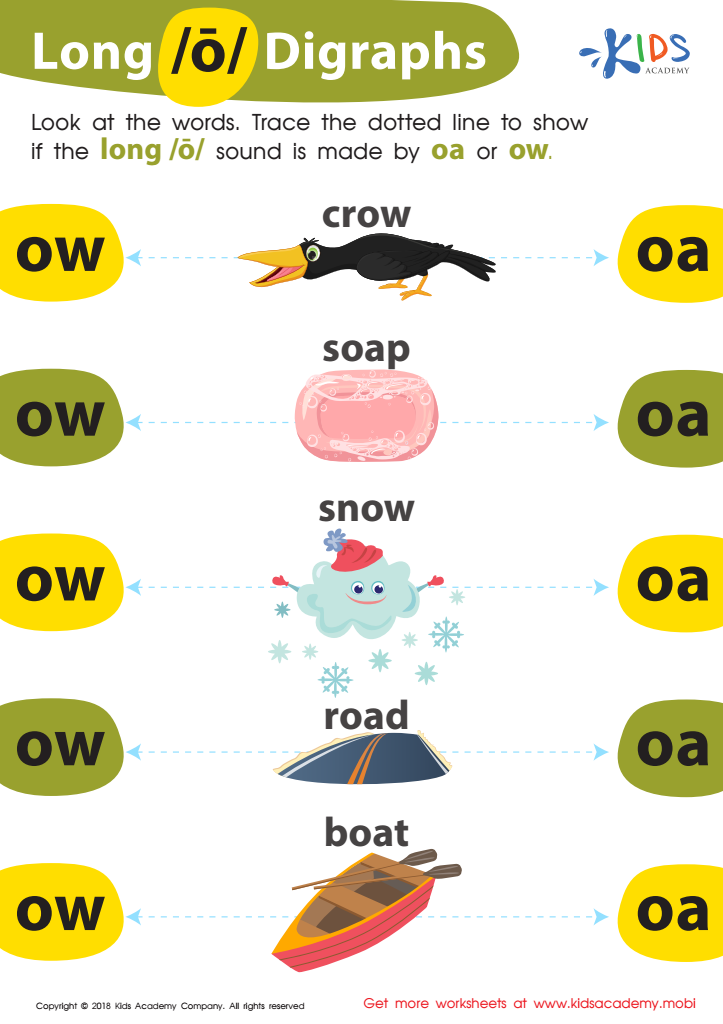
Reading: Long O Digraphs Worksheet
Reading and decoding words can be complex for learners when they start studying digraphs, two letters that make one sound. This worksheet focuses on the long O sound, /oa/ and /ow/. With the understanding of digraphs, students can decode more words and build their reading confidence.
 Assign to My Students
Reading: Long O Digraphs Worksheet
Worksheet
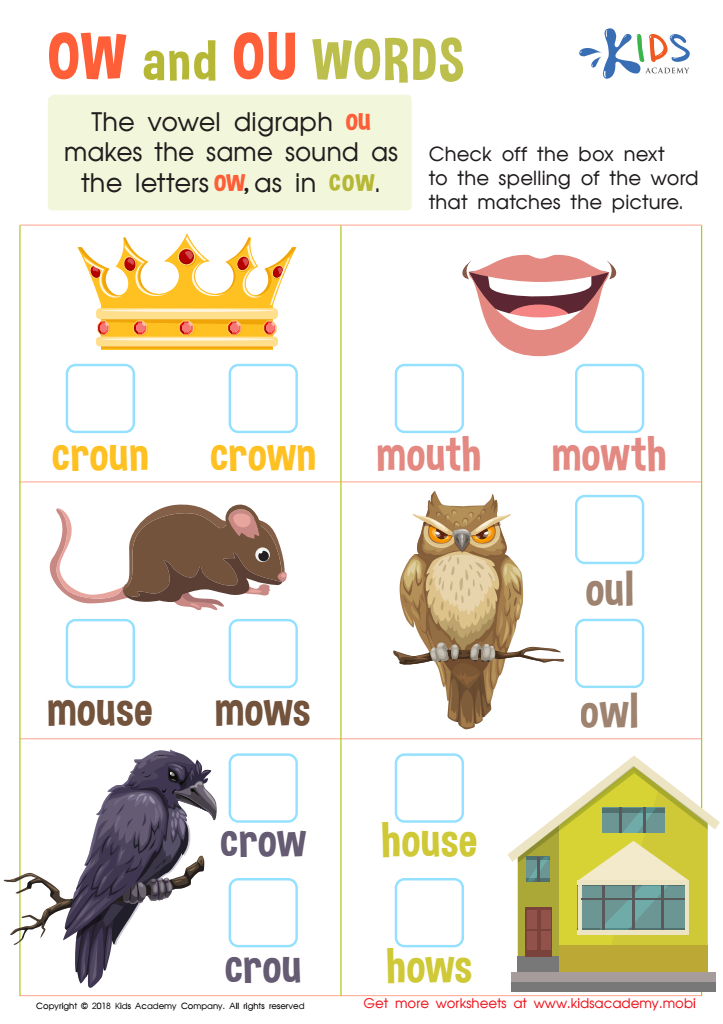
Reading: OW and OU Words Worksheet
Help your kids learn phonetics! Explain the different sounds and long/short variations. Emphasize that some vowel sounds are the same, e.g. ou = ow in cow. For practice, have them read aloud the words in the worksheet and check the box next to the spelling that matches the picture.
Reading: OW and OU Words Worksheet
Worksheet
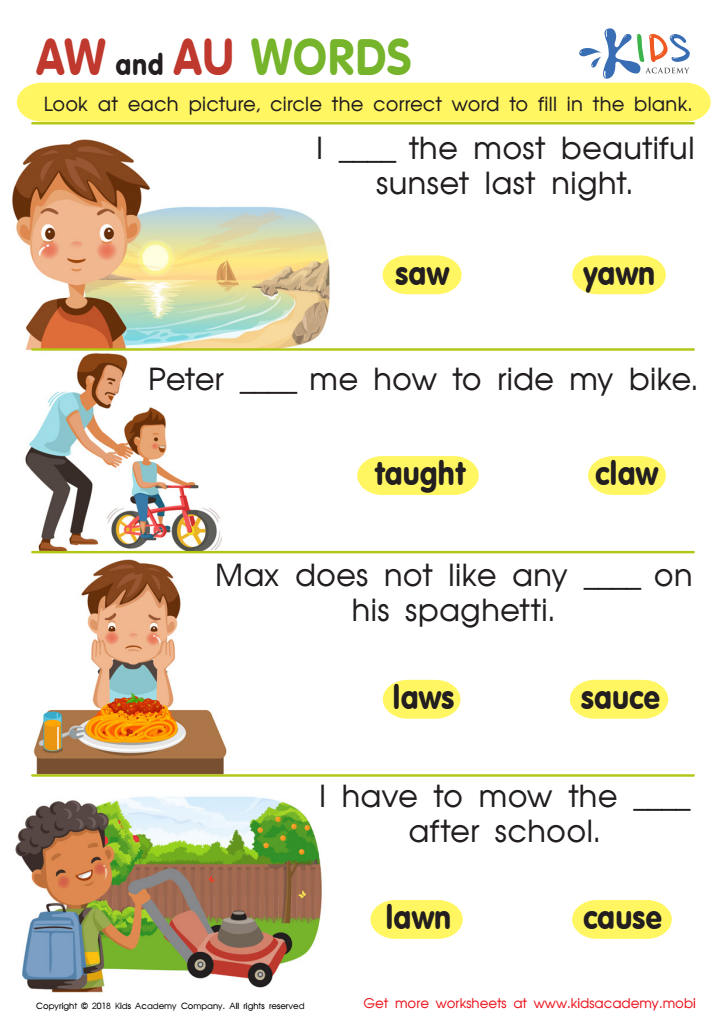
Reading: AW and AU Words Worksheet
This worksheet helps kids recognize that /au/ and /aw/ can make the same sound. Students read sentences and pick the correct word with one of the digraphs. Understanding digraphs improves decoding and reading fluency. Perfect for reading and phonics classes.
Reading: AW and AU Words Worksheet
Worksheet
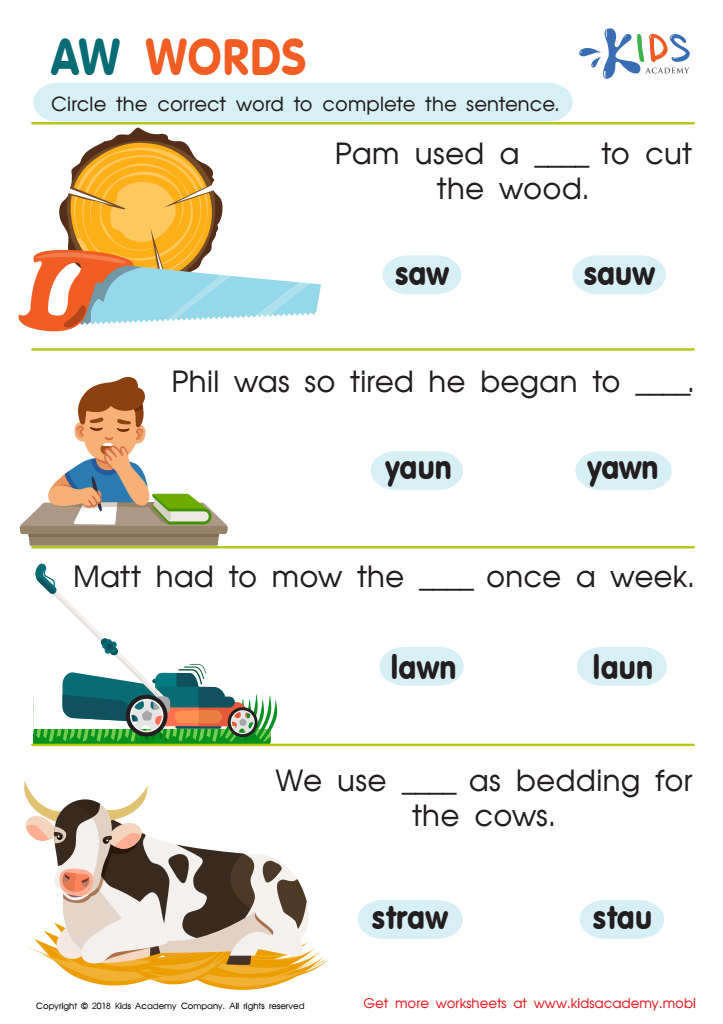
Reading: AW Words Worksheet
Practice decoding the /aw/ digraph with this printable. Students read sentences and select the word with the correct spelling to complete each one. Note, /aw/ is sometimes spelled /au/, so this worksheet helps prevent confusion. Have fun, and practice hard!
Reading: AW Words Worksheet
Worksheet
Join Kids Academy for Free
Who is primarily going to use this learning content?



Phonics skills, particularly understanding vowels and consonants, are crucial for children aged 8-9 as they form the foundation for proficient reading and writing. At this age, students are transitioning from learning to read to reading to learn. A solid grasp of phonics helps them decode unfamiliar words, enhancing their reading fluency and comprehension. Recognizing how vowels and consonants work together allows children to sound out words accurately, fostering greater confidence in their abilities.
Moreover, developing phonics skills contributes significantly to spelling proficiency. An understanding of how vowel and consonant patterns work enables students to make educated guesses when spelling unfamiliar words. This is essential as writing becomes a more significant focus in their education.
For parents and teachers, promoting phonics skills creates a pathway to improved literacy outcomes. Children with strong phonetic skills tend to perform better academically and develop a love for reading—an essential component for lifelong learning. It’s important for parents and educators to engage with children through enjoyable phonics activities, ensuring they acquire these vital skills. Ultimately, effective phonics instruction lays the groundwork for future academic success and fosters critical thinking skills necessary for navigating complex texts.







