
Vowel Recognition Vowels Worksheets for Ages 8-9
6 filtered results
Difficulty Level
Grade
Age
-
From - To
Subject
Activity
Standards
Enhance your child's reading skills with our expertly designed Vowel Recognition worksheets, tailored for ages 8-9. Perfect for reinforcing the basics of English, these worksheets guide young learners in identifying and understanding vowel sounds within words. Each activity emphasizes various vowels through engaging exercises such as matching, fill-in-the-blanks, and word searches. Ideal for classroom use or home practice, these worksheets ensure a fun and interactive learning experience that bolsters vowel recognition, spelling, and pronunciation. Help your child excel in reading and writing with Kids Academy's Vowel Recognition Vowels Worksheets. Accessible for download now!
Favorites
With answer key
Interactive
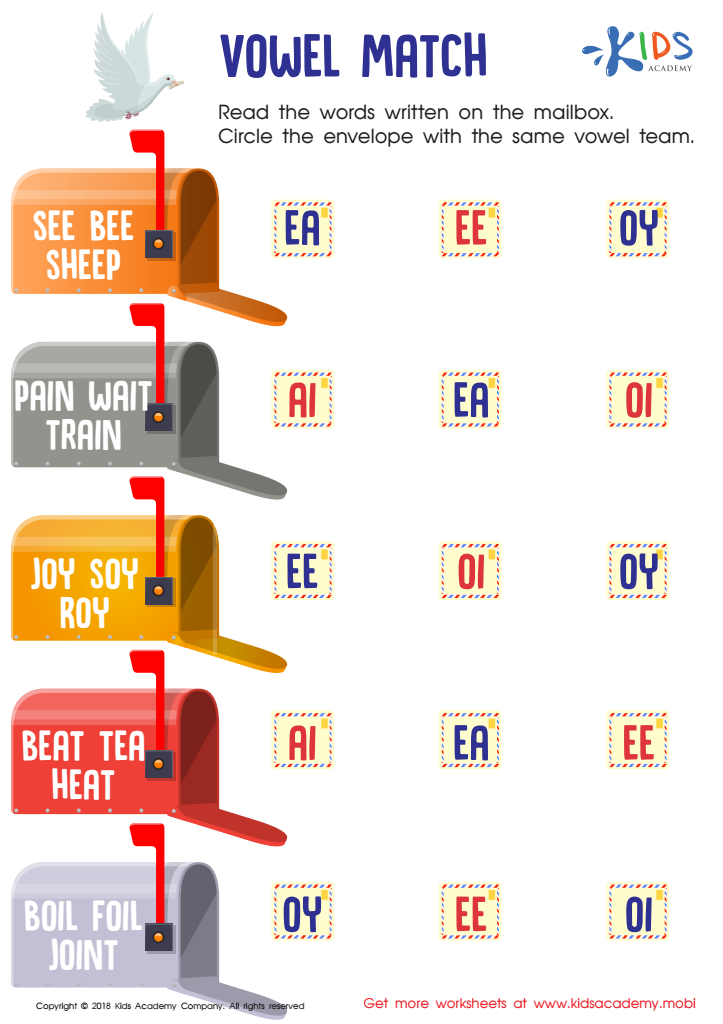
Vowel match Worksheet
Early readers can find vowel teams (digraphs) tricky. This simple worksheet helps kids match words with the right digraphs and learn to read! They'll practice reading words from different families, and linking the letters to their sounds. It's a fun way to get kids sending letters to the right addresses!
Vowel match Worksheet
Worksheet
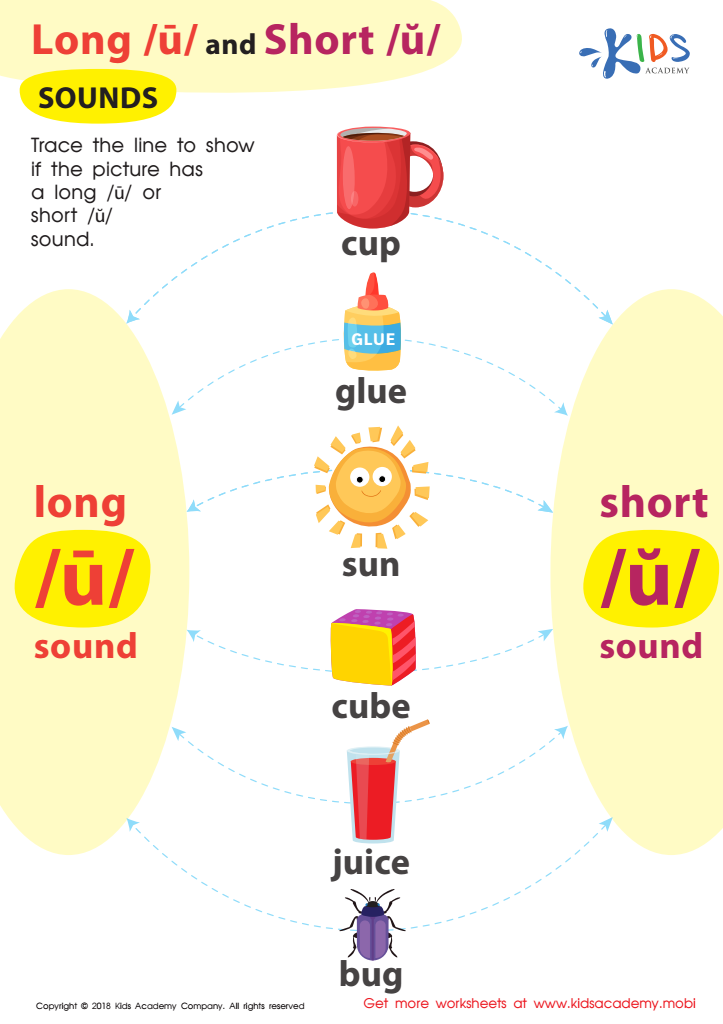
Reading: Long U and Short U Sounds Worksheet
Learning about long and short vowel sounds can be tricky, especially with the letter U. Extra practice with this worksheet is recommended for mastering this sound. Children read words with the different vowel sounds and categorize them. Great for instruction, practice and reteaching in reading classes.
Reading: Long U and Short U Sounds Worksheet
Worksheet
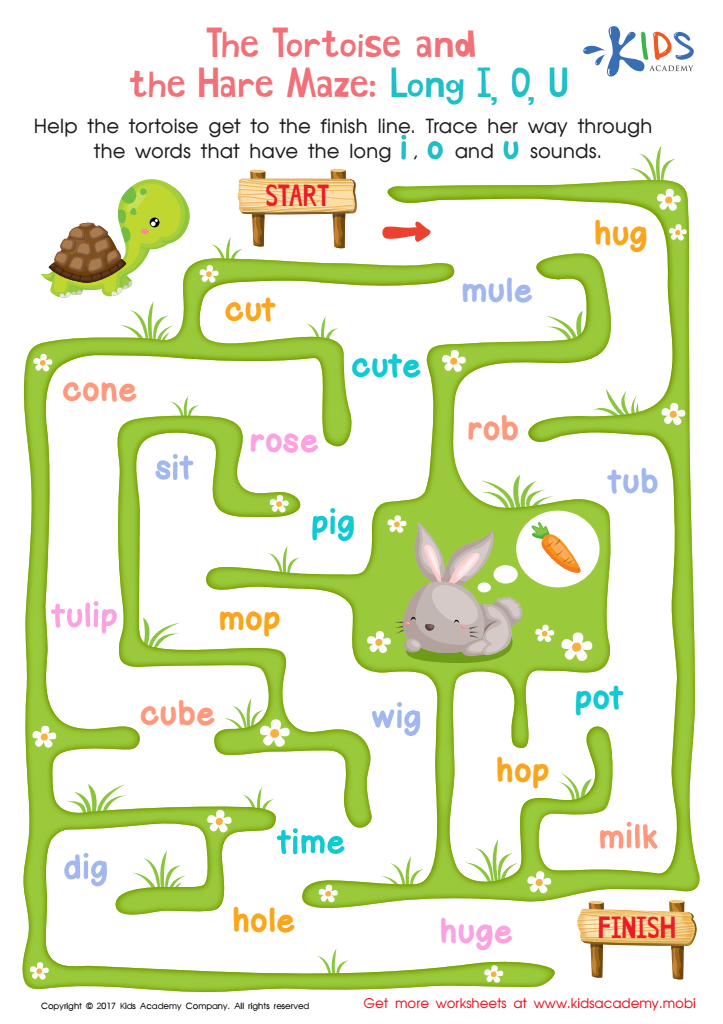
Long I, O, U Words Worksheet
This fun phonics worksheet has your child race the tortoise and hare to the finish line. Find all the long vowel sounds to win! It'll help your child's recognition of long I, O, and U words without him realizing it!
Long I, O, U Words Worksheet
Worksheet
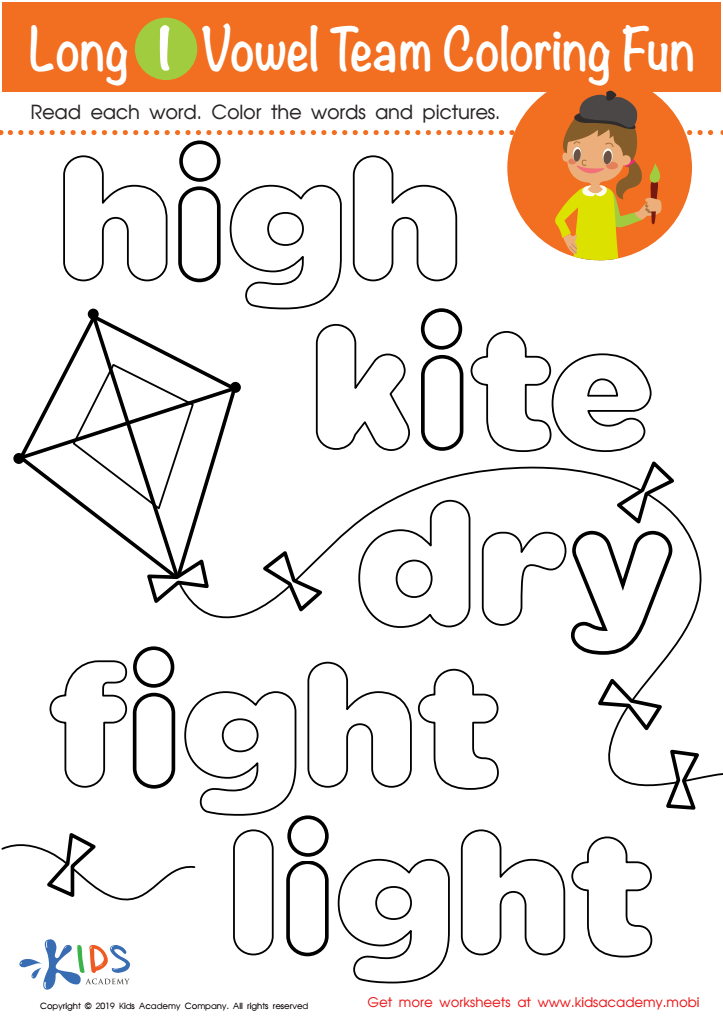
Long I Vowel Team Coloring Worksheet
This worksheet provides practice with letter combinations that make the long "i" sound while enhancing creativity and motor skills with a fun coloring activity. Unknowingly, new readers learn key phonics skills while having fun!
Download (PDF)
 Assign to My Students
Assign to My Students
Long I Vowel Team Coloring Worksheet
Worksheet
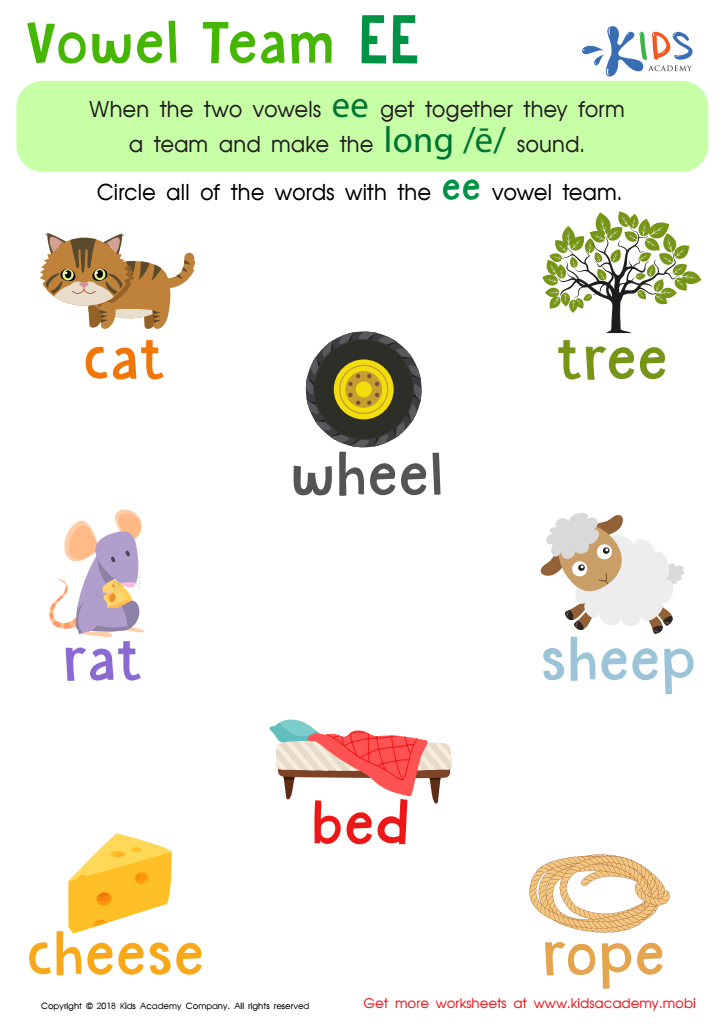
Reading: Vowel Team EE Worksheet
This worksheet is perfect for helping young learners master the /ee/ vowel team. It shows the first vowel with a long sound and the second vowel silent. It also provides pictures for unfamiliar words for readers of all levels. It's an ideal resource for teaching phonics skills.
Reading: Vowel Team EE Worksheet
Worksheet
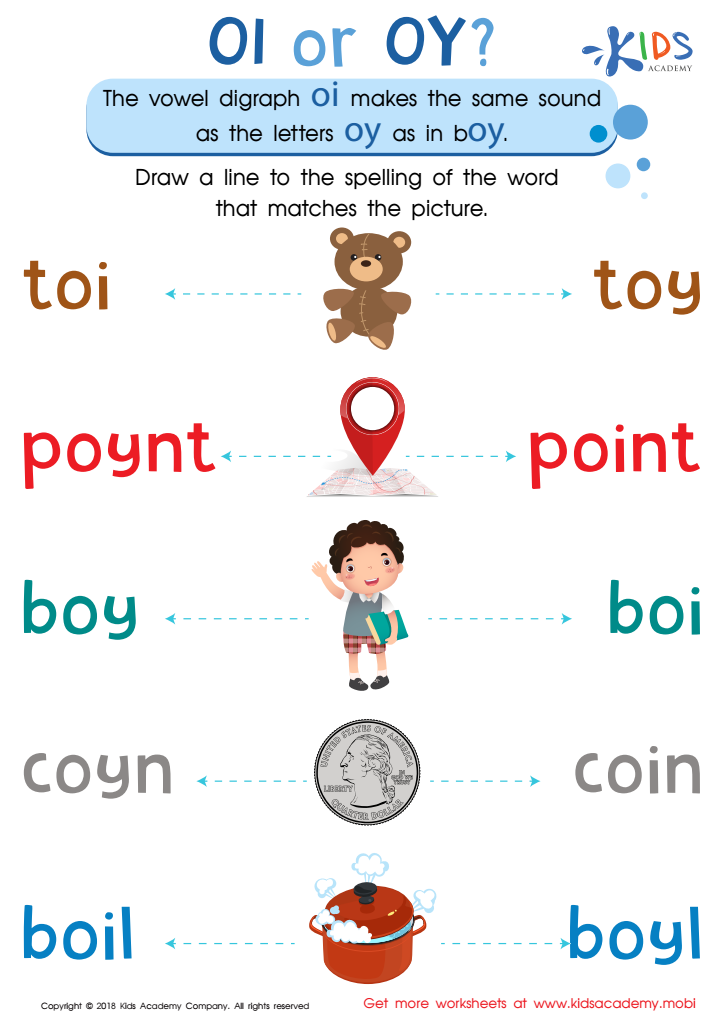
Reading: OI and OY Worksheet
Ask your students if they know the rule for words with /oi/ or /oy/ sound. If not, it's easy to learn! Rule: If /oy/ at end of word, spell with 'oy'; if /oi/ in middle of word, spell with 'oi'. Use this worksheet to help them master these digraphs and improve their ability to decode.
Reading: OI and OY Worksheet
Worksheet
Join Kids Academy for Free
Who is primarily going to use this learning content?





Vowel recognition is paramount for children aged 8-9 as it forms the backbone of their reading and language development. By this age, children are refining their reading skills, and understanding vowels—both their sounds and their functions within words—enables them to decode new vocabulary more efficiently. Vowels play a critical role in differentiating word meanings and pronunciations. For example, the distinction between "bit" and "bet" hinges on vowel sounds.
Mastering vowel recognition aids fluency, which is the ability to read text accurately, quickly, and with appropriate expression. Fluency is linked directly to better comprehension since a fluent reader doesn't need to labor over Basic decoding and can focus on understanding the text. This fluency extends to writing skills, as proficient readers often become better writers. They can spell more accurately and construct more varied and expressive sentences.
In addition, strong vowel recognition supports phonemic awareness, allowing children to manipulate sounds within words—an essential skill that predicts successful reading and spelling achievements. Cognitive and linguistic research asserts that early proficiency in vowel recognition can have long-term positive impacts on a child's academic trajectory and fosters a love for lifelong learning.
Therefore, parents and teachers should dedicate ample time to vowel recognition activities and games to ensure children attain these foundational literacy skills, setting them up for academic success.







