Analog clock reading Worksheets for Ages 8-9
3 filtered results
-
From - To
Enhance your child's time-telling skills with our Analog Clock Reading Worksheets designed specifically for ages 8-9. These engaging, interactive worksheets help children develop a strong understanding of time, from reading hour and minute hands to converting time between analog and digital formats. Our resources provide a variety of exercises, including identifying times, solving word problems, and practicing elapsed time concepts. Perfect for classroom or home use, these worksheets foster learning through fun activities and illustrations, ensuring kids remain motivated. Make mastering time an enjoyable experience for your child with our carefully crafted worksheets today!
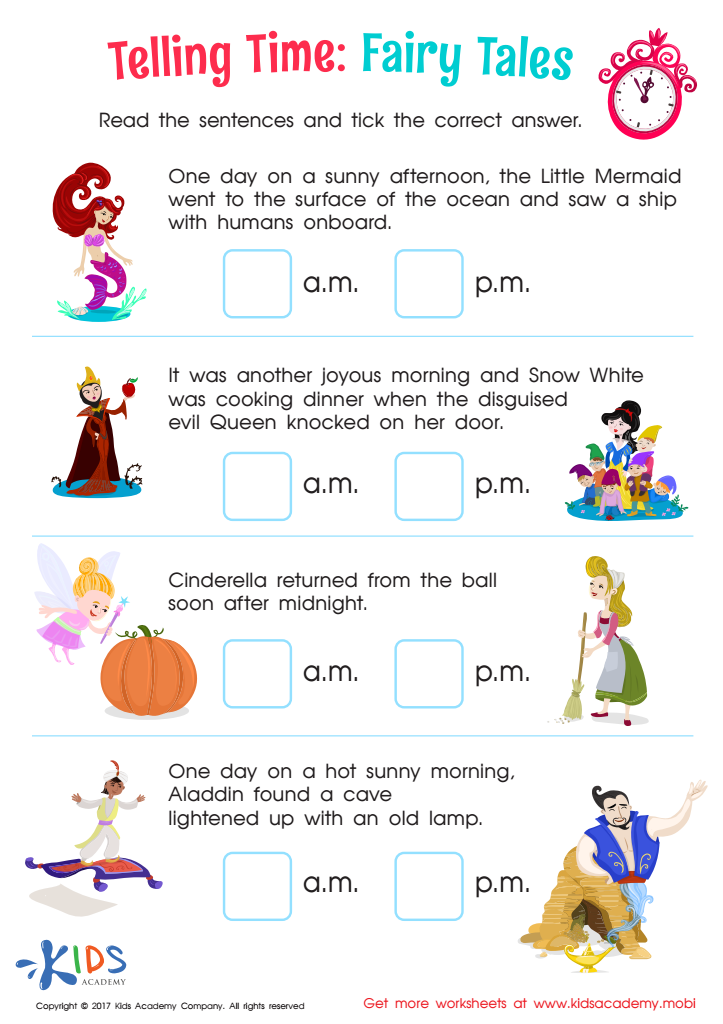
Telling Time: Fairy Tales Worksheet
 Assign to My Students
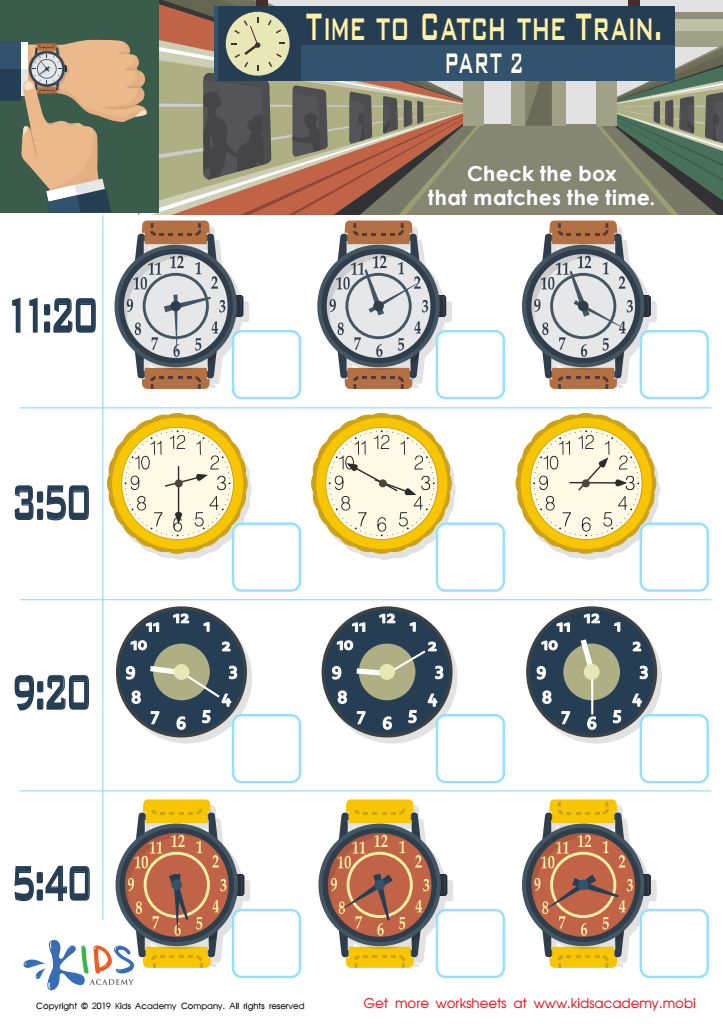
Time to Catch the Train Part 2 Worksheet






Teaching children to read analog clocks is essential for their overall development and practical life skills. For children aged 8-9, the ability to read an analog clock promotes cognitive growth and enhances critical thinking. Understanding the relationship between the hour and minute hands helps improve their time management skills and sense of punctuality.
Moreover, learning to read an analog clock boosts mathematical understanding, as it encourages children to grasp concepts of fractions (e.g., quarters of an hour) and dividing time. Analog clocks also provide a visual representation of time, helping children understand the passage of minutes—including how to estimate durations.
In a world dominated by digital displays, being able to read an analog clock remains a valuable skill. It relates to real-life situations, such as being on time for appointments or scheduled activities. Moreover, it fosters independence and responsibility, as children no longer need to rely solely on digital devices.
Parents and teachers should care about this skill not only for academic reasons but also to prepare children for everyday scenarios they will encounter throughout their lives. Fostering this knowledge contributes to kids' confidence and competencies as they navigate their developing worlds.








