Basic math concepts Worksheets for Ages 8-9
4 filtered results
-
From - To
Discover engaging and interactive Basic Math Concepts Worksheets for ages 8-9 designed to make learning math fun and effective. Our expertly crafted worksheets cover essential math topics, including addition, subtraction, multiplication, division, fractions, and more. Each worksheet aims to build foundational skills, enhance problem-solving abilities, and boost confidence in young learners. Perfect for classroom use, homework, or extra practice, our worksheets cater to various learning styles and paces. Help your child excel in math with these easy-to-understand and rewarding activities. Visit Kids Academy to explore our full range of resources today.
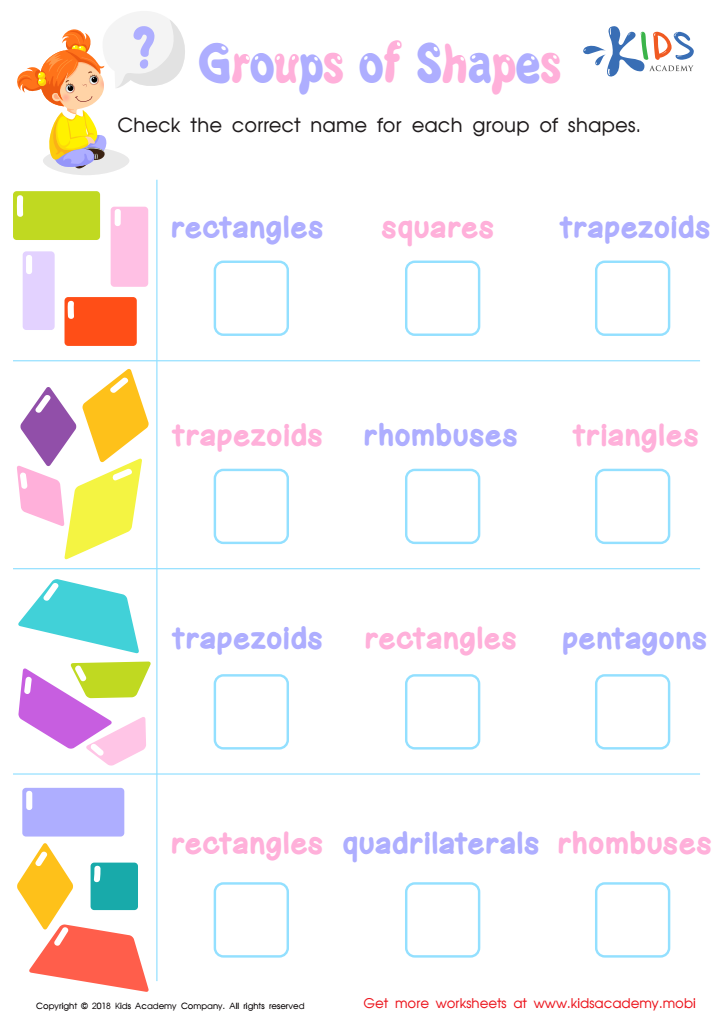
Groups of Shapes Worksheet
 Assign to My Students
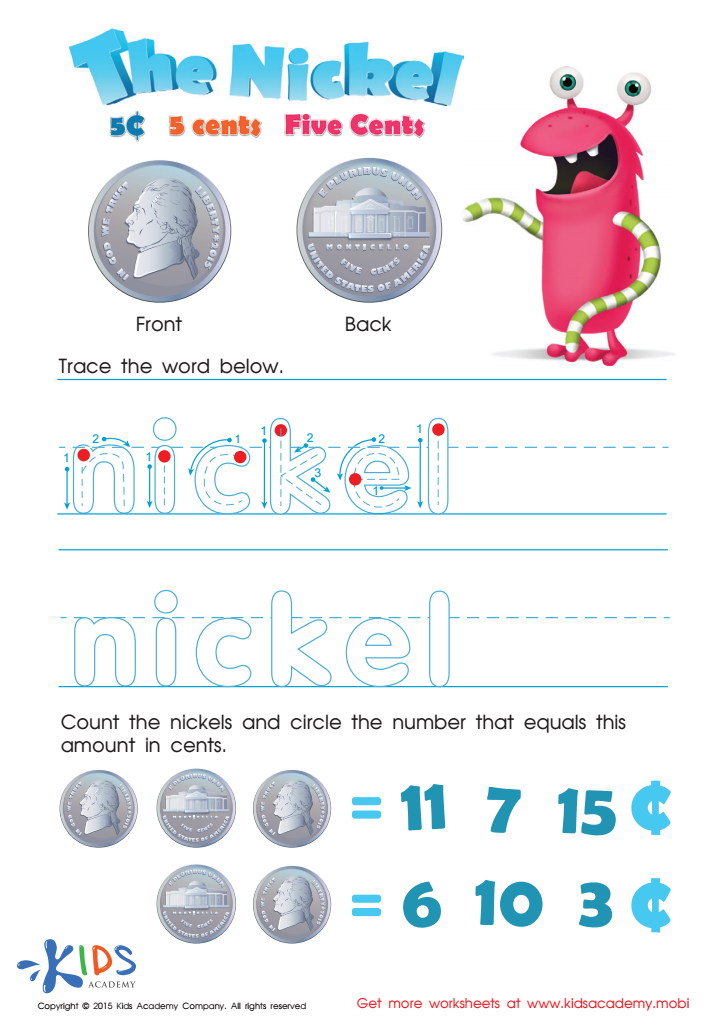
Five Cents or the Nickel Money Worksheet
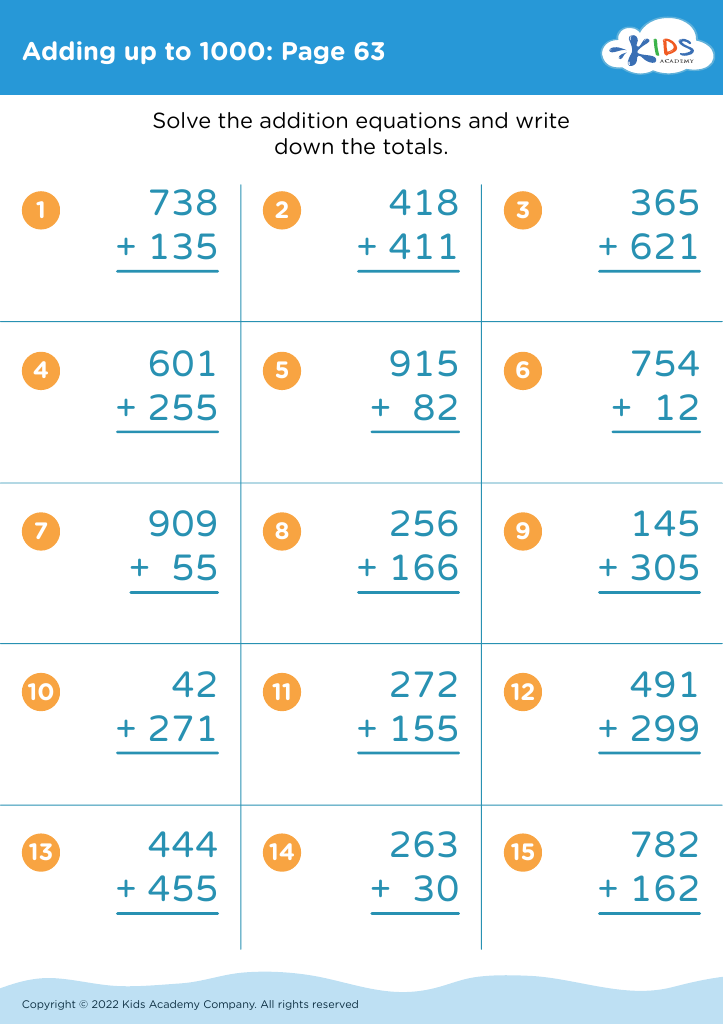






Parents and teachers should prioritize basic math concepts for children ages 8-9, as these form the cornerstone of future educational achievements and life skills. This age range is crucial; children's cognitive abilities are developing rapidly, and they are more adept at grasping foundational math topics such as addition, subtraction, multiplication, division, and the understanding of fractions and shapes.
Having a solid grasp of these basic math concepts ensures that children can comfortably progress to more complex mathematical operations in higher grades. It also helps build a child's confidence in their abilities, fostering a positive attitude toward learning, which can extend to other subjects and areas of life. Research shows that early mathematical competence is a strong predictor of later academic success, not just in math, but across the educational spectrum.
Furthermore, math skills are integral to everyday life—from managing money, telling time, to following recipes—and thus are essential for developing practical life skills. Encouraging proficiency and enthusiasm in math from an early age opens doors to a wide range of future opportunities in STEM (Science, Technology, Engineering, and Mathematics) fields, which are increasingly important in our technology-driven world. By prioritizing these basic concepts, parents and teachers pave the way for a lifelong appreciation and understanding of mathematics.








