Check out this FREE "Comparing Fractions" Trial Lesson for age 8-9!

Exactly the Same, or Not

Favorites
With answer key
Interactive
  • 8-9
  • Comparing Fractions
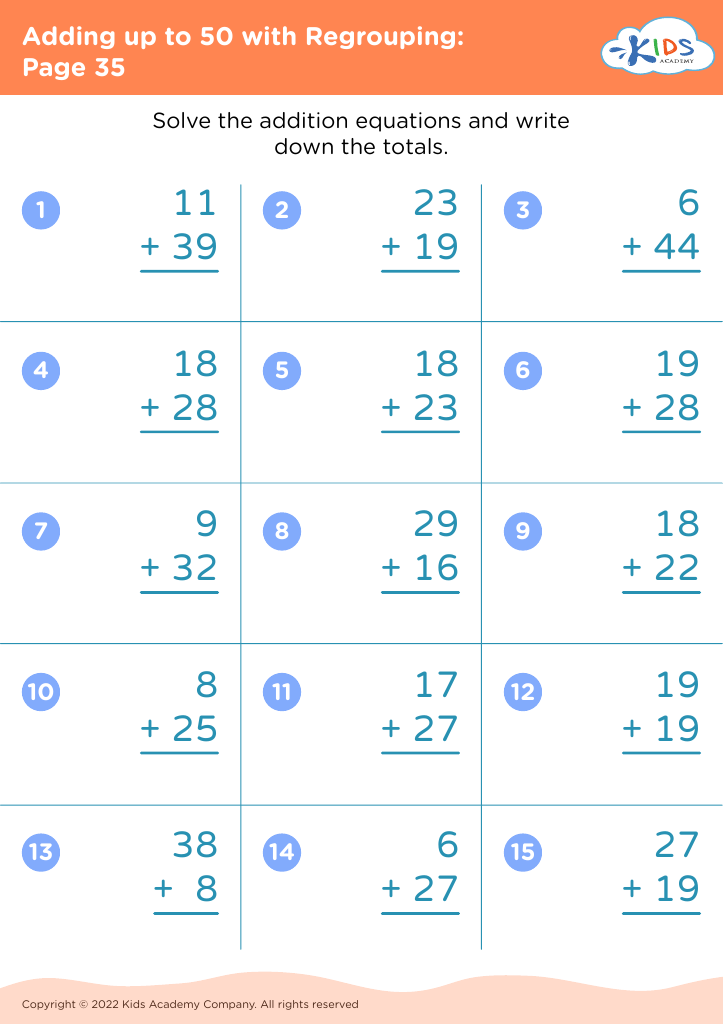
Adding up to 50 with Regrouping: Page 35
Worksheet
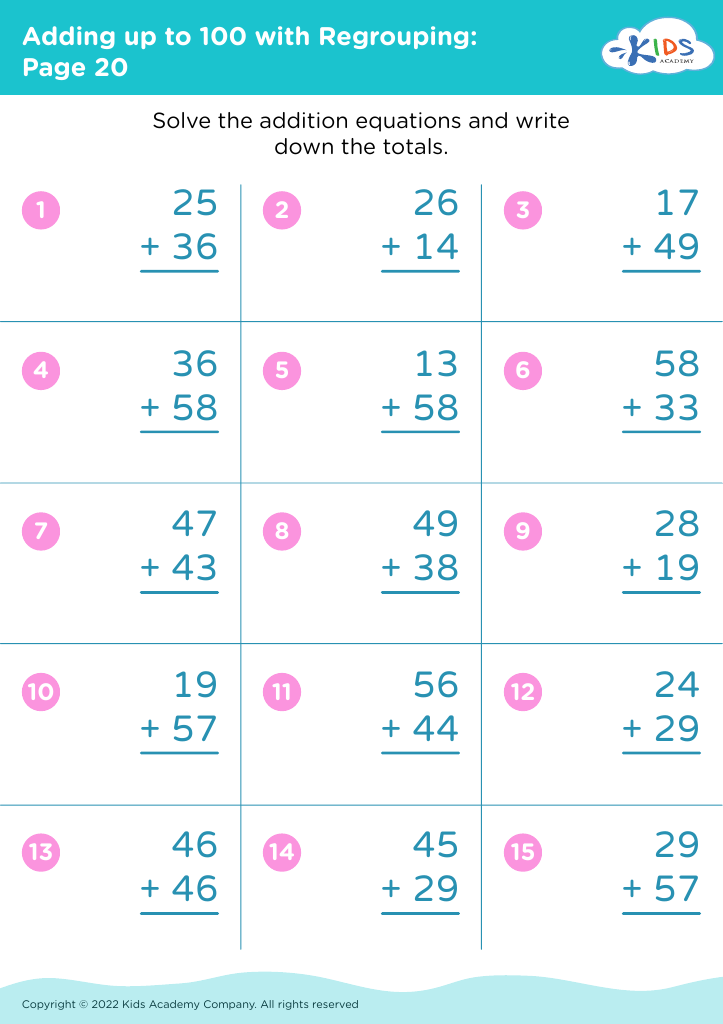
Adding up to 100 with Regrouping: Page 20
Worksheet
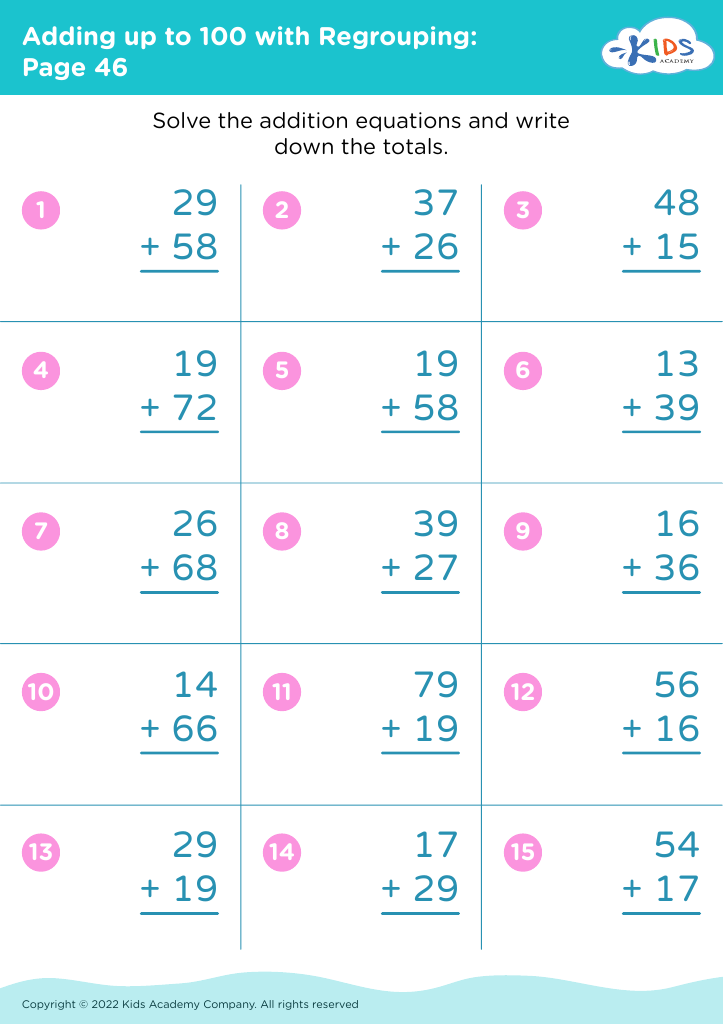
Adding up to 100 with Regrouping: Page 46
Worksheet
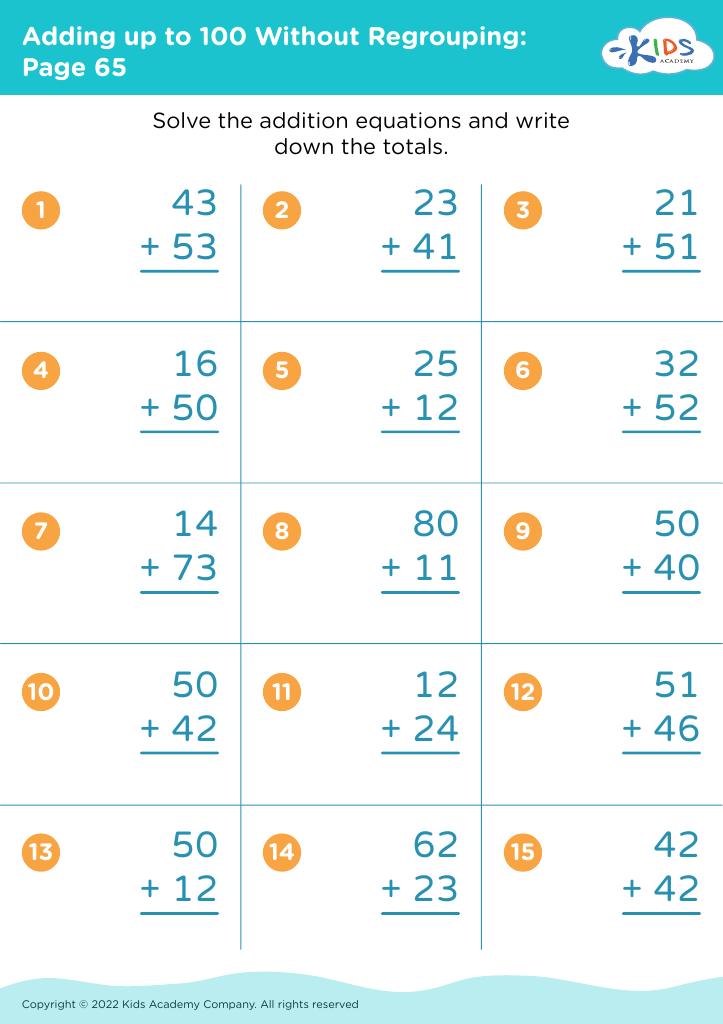
Adding up to 100 Without Regrouping: Page 65
Worksheet
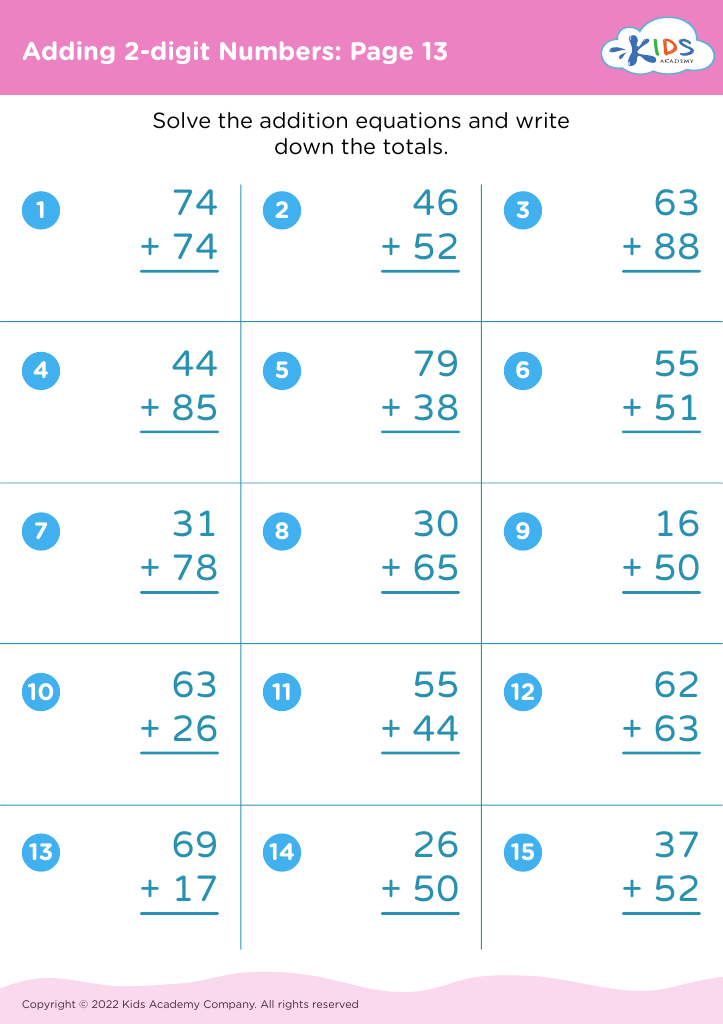
Adding 2-digit Numbers: Page 13

Adding 2-digit Numbers: Page 13

Adding 2-digit Numbers: Page 13
Worksheet
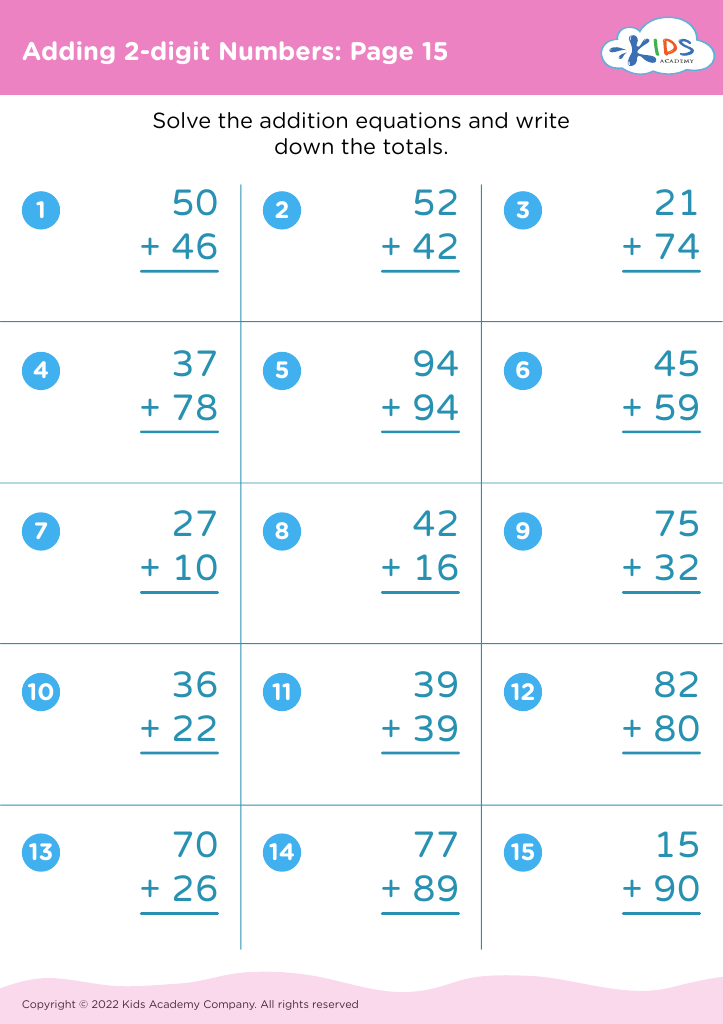
Adding 2-digit Numbers: Page 15

Adding 2-digit Numbers: Page 15

Adding 2-digit Numbers: Page 15
Worksheet
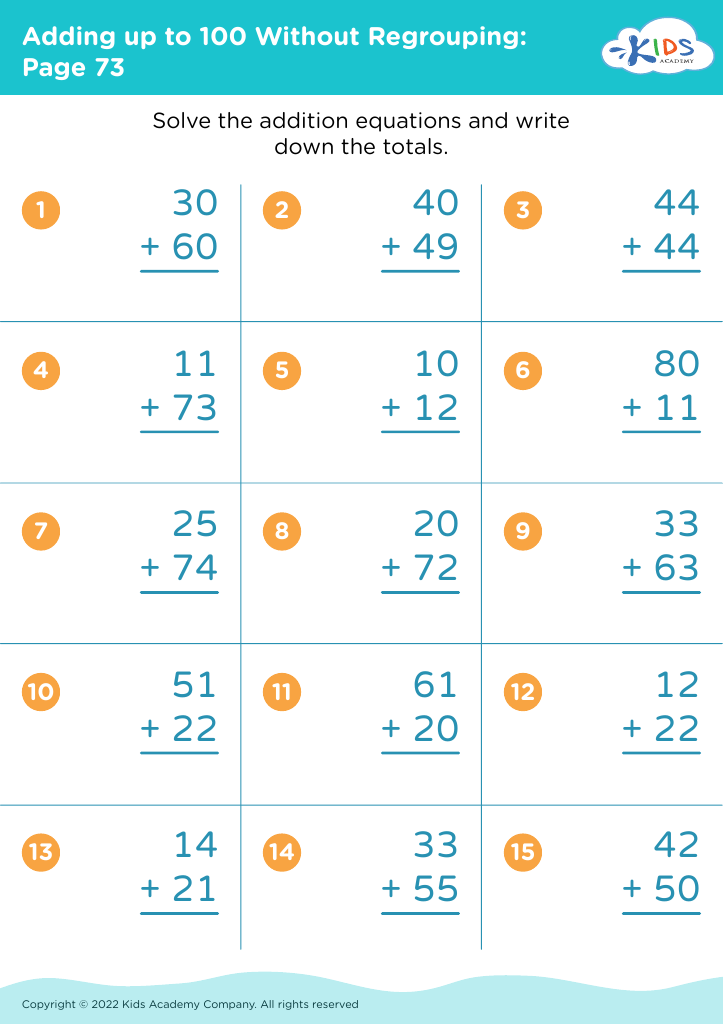
Adding up to 100 Without Regrouping: Page 73
Worksheet
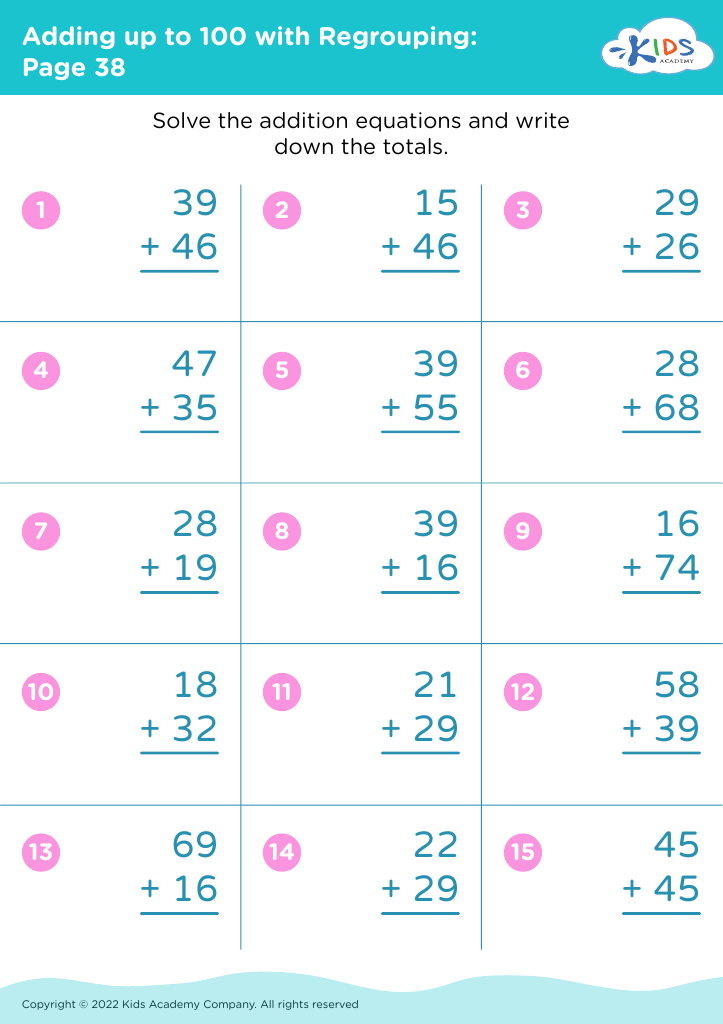
Adding up to 100 with Regrouping: Page 38
Worksheet
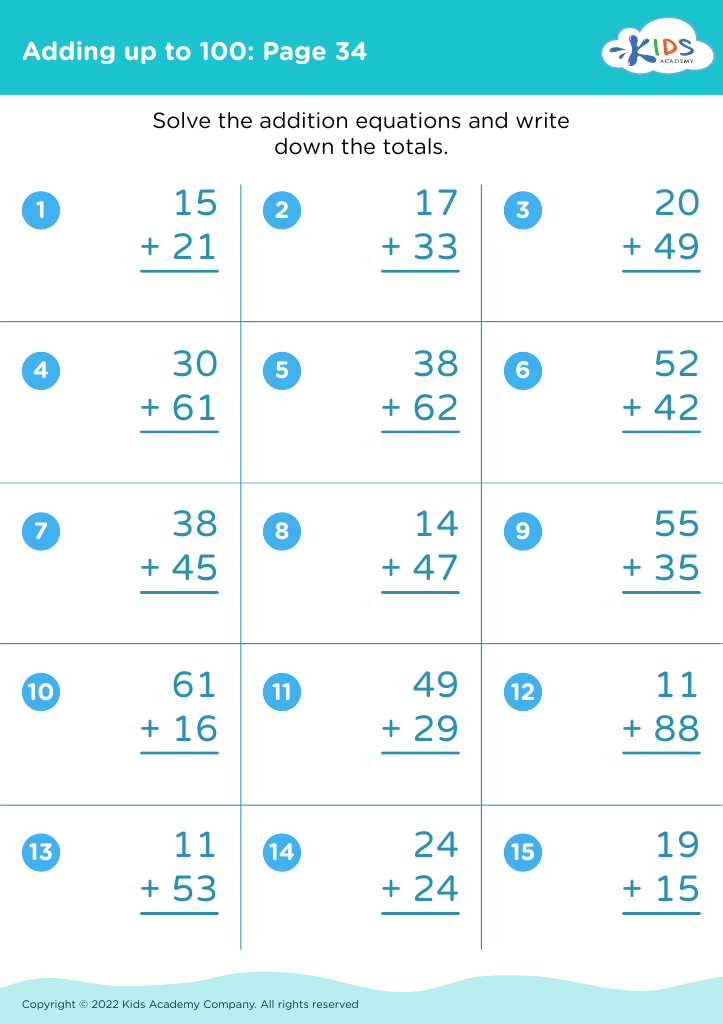
Adding up to 100: Page 34

Adding up to 100: Page 34

Adding up to 100: Page 34
Worksheet
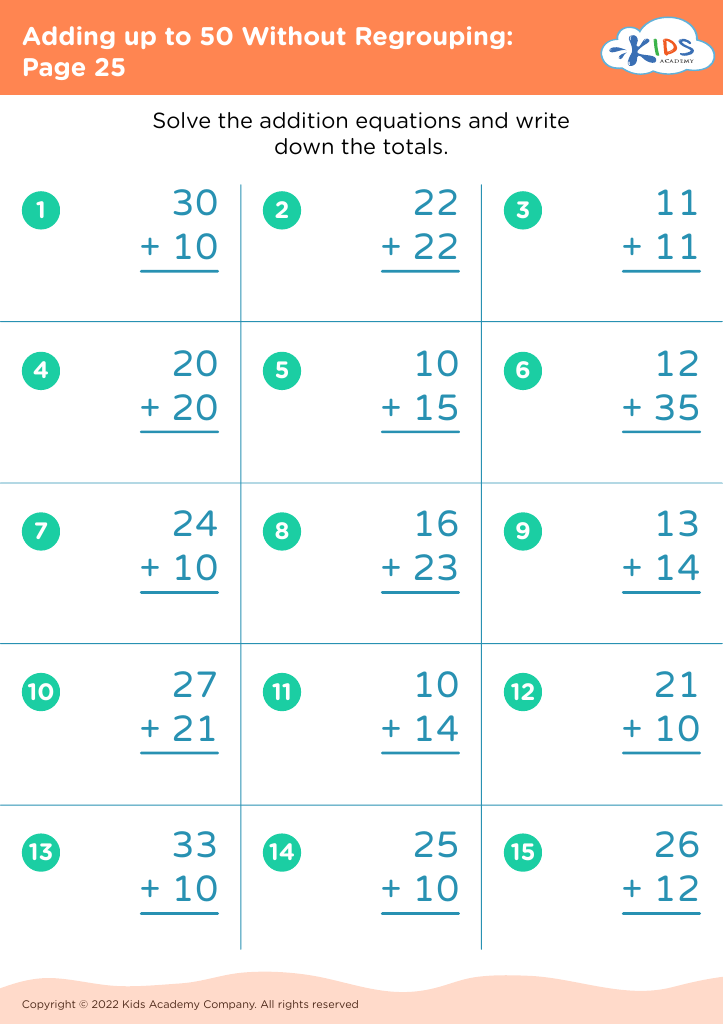
Adding up to 50 Without Regrouping: Page 25
Worksheet
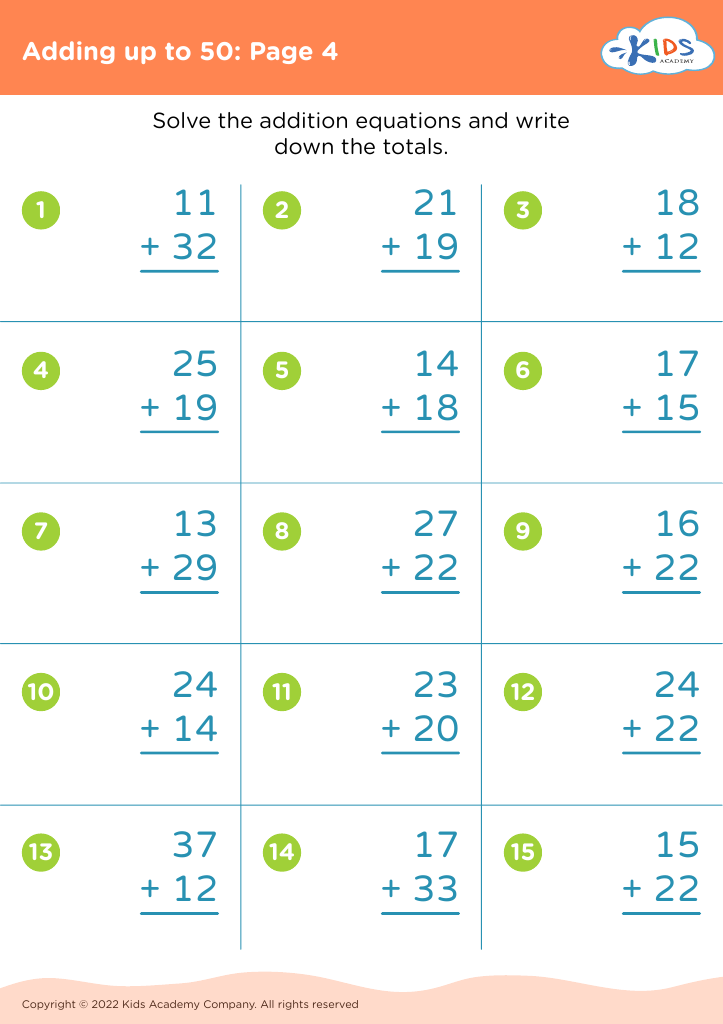
Adding up to 50: Page 4

Adding up to 50: Page 4

Adding up to 50: Page 4
Worksheet
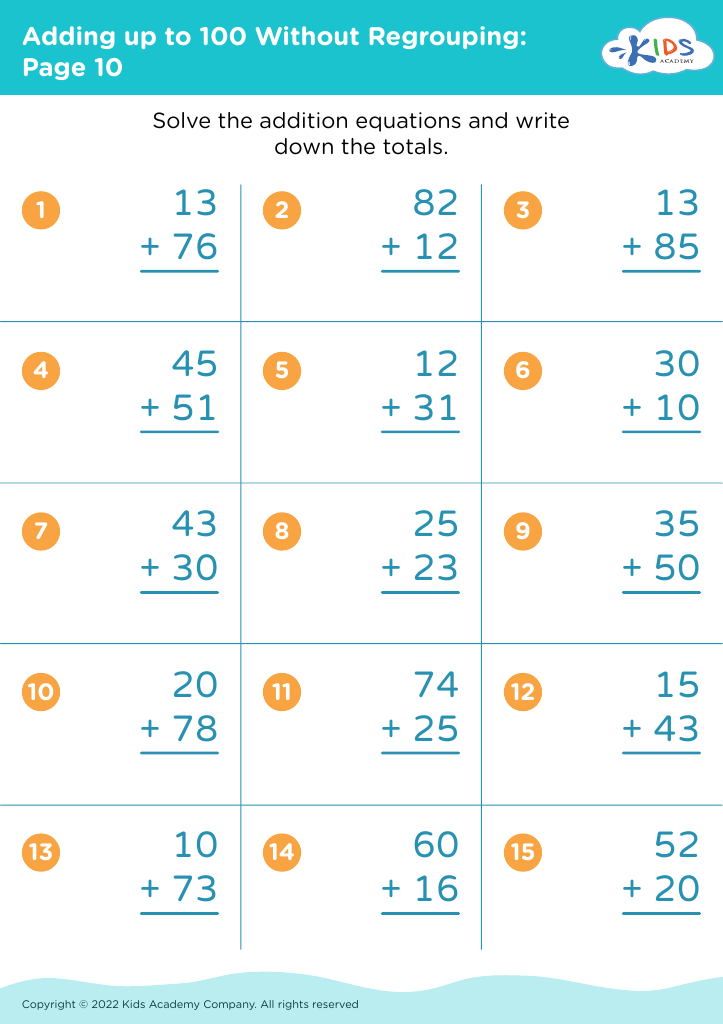
Adding up to 100 Without Regrouping: Page 10
Worksheet
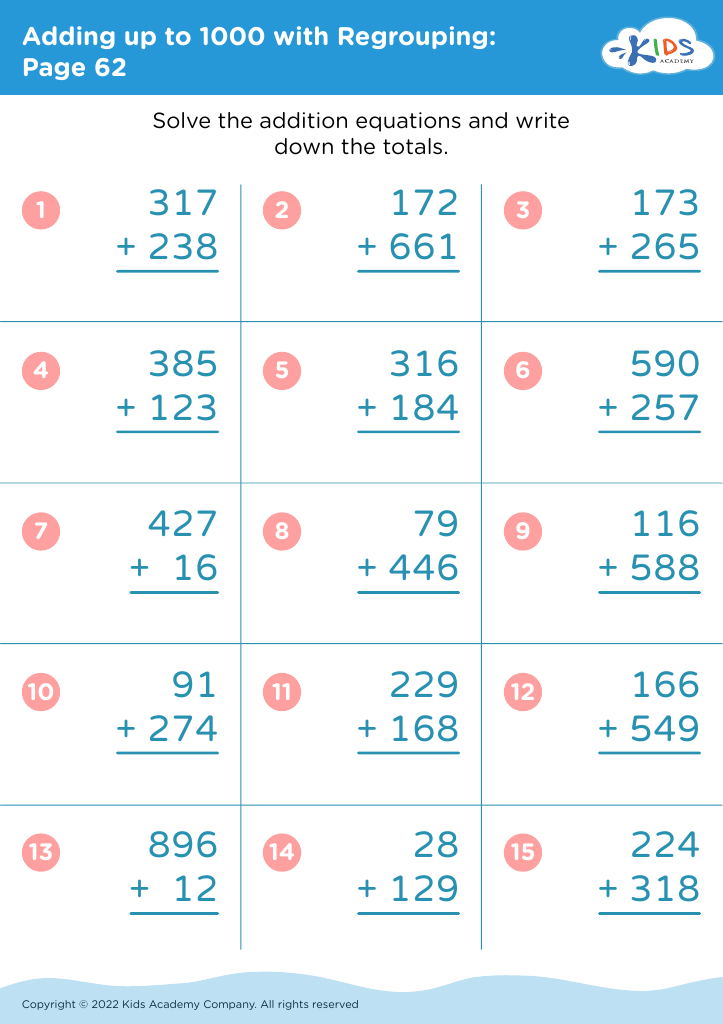
Adding up to 1000 with Regrouping: Page 62
Worksheet
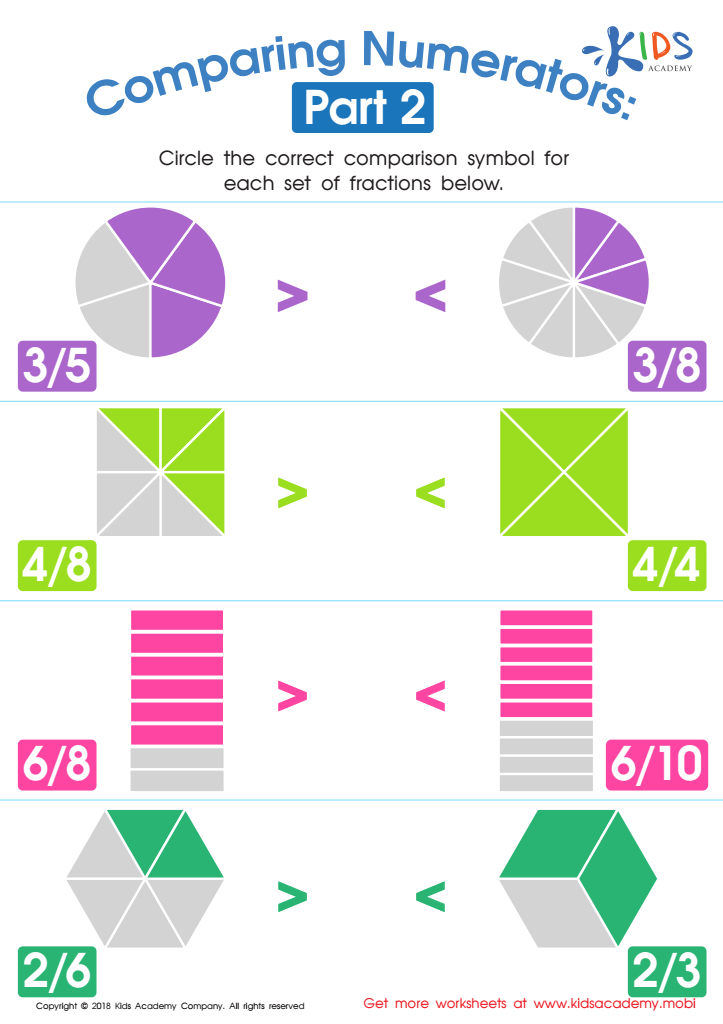
Comparing Numerators Part 2 Worksheet

Comparing Numerators Part 2 Worksheet

Before beginning this exercise, your child should have knowledge of fractions, including counting and identifying them in shaded areas of shapes. In the pdf, they must compare two fractions in each set and circle the symbol for the larger fraction. Help them as needed.
Comparing Numerators Part 2 Worksheet
Worksheet
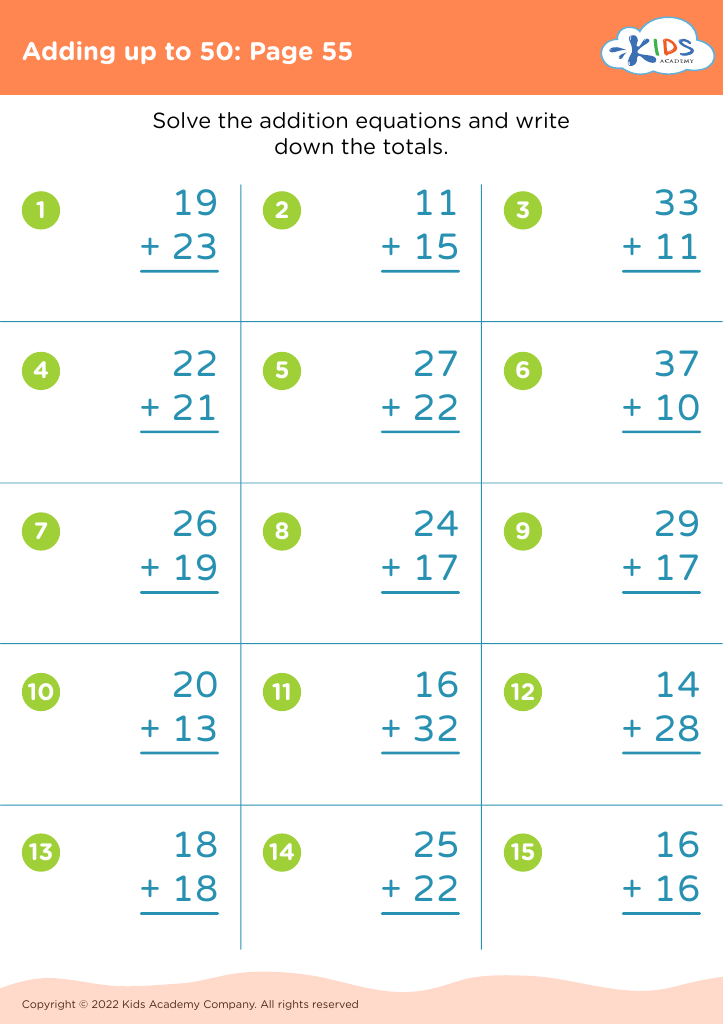
Adding up to 50: Page 55

Adding up to 50: Page 55

Adding up to 50: Page 55
Worksheet
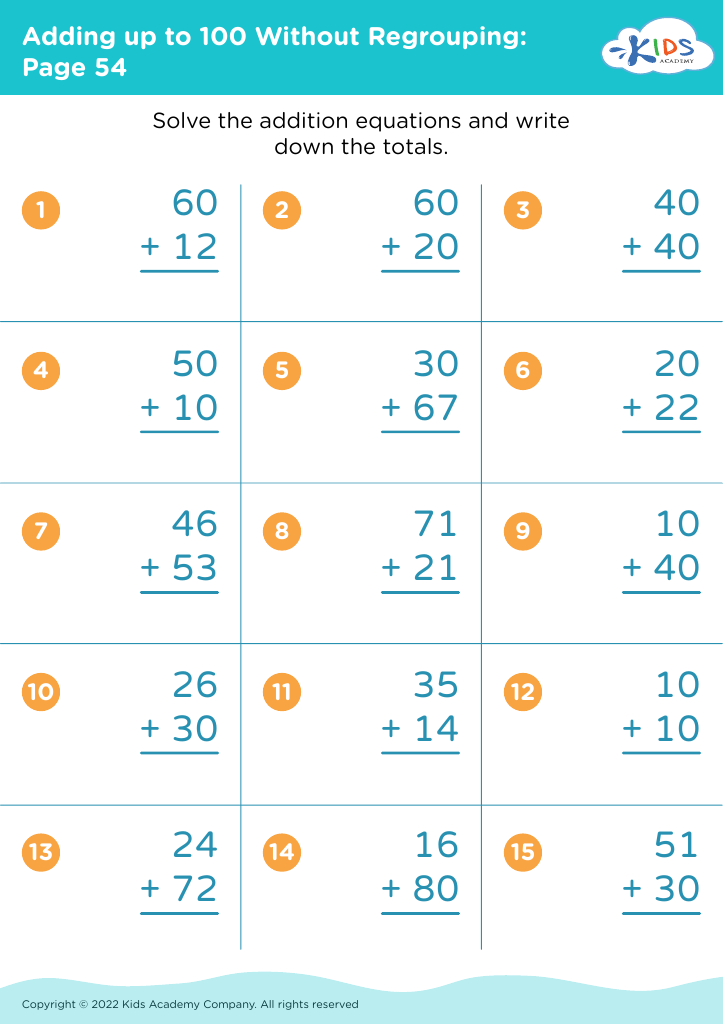
Adding up to 100 Without Regrouping: Page 54
Worksheet
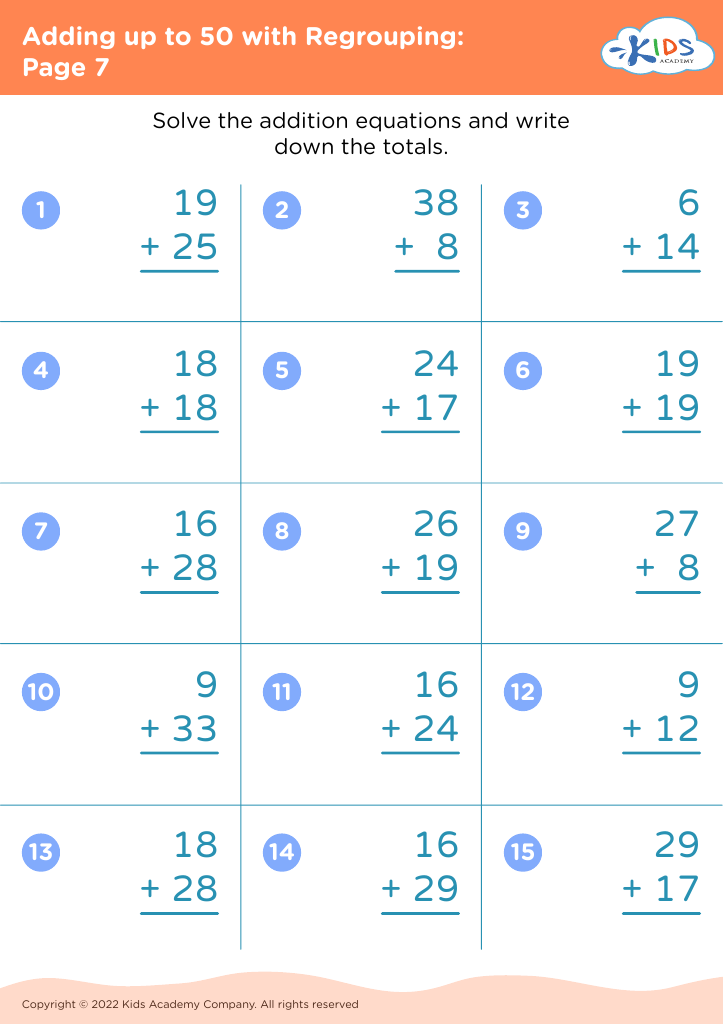
Adding up to 50 with Regrouping: Page 7
Worksheet
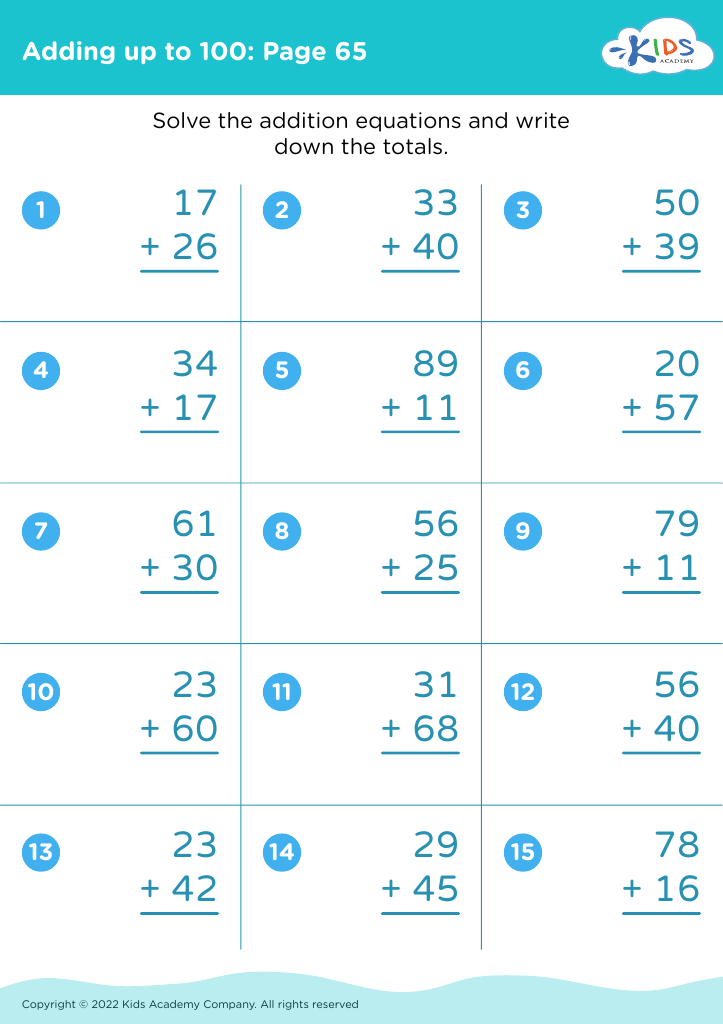
Adding up to 100: Page 65

Adding up to 100: Page 65

Adding up to 100: Page 65
Worksheet
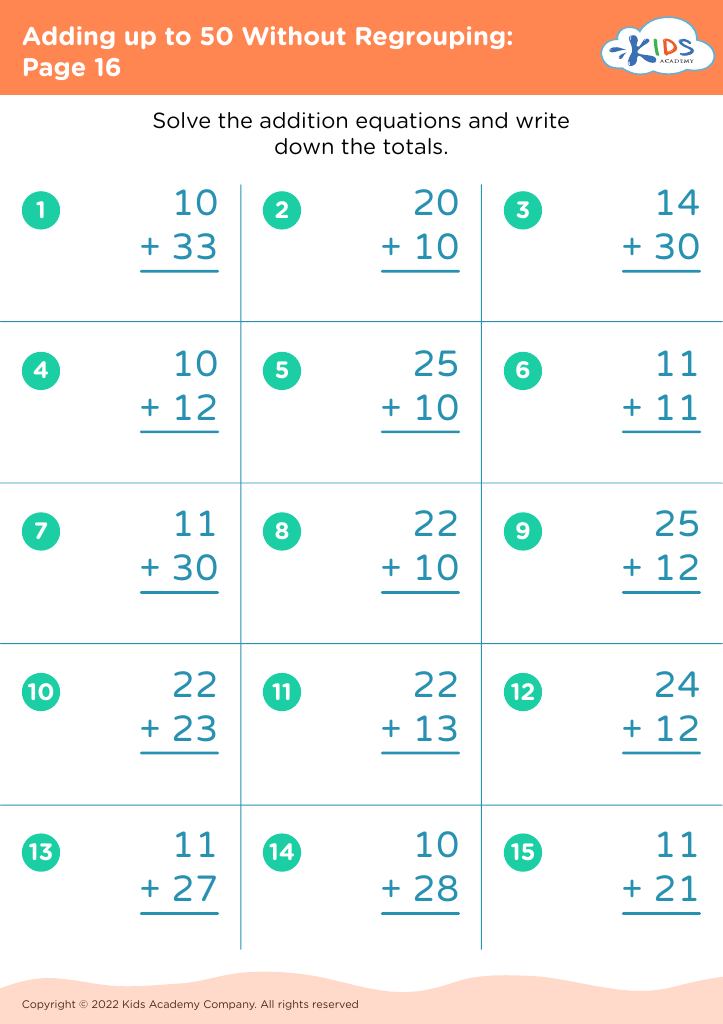
Adding up to 50 Without Regrouping: Page 16
Worksheet
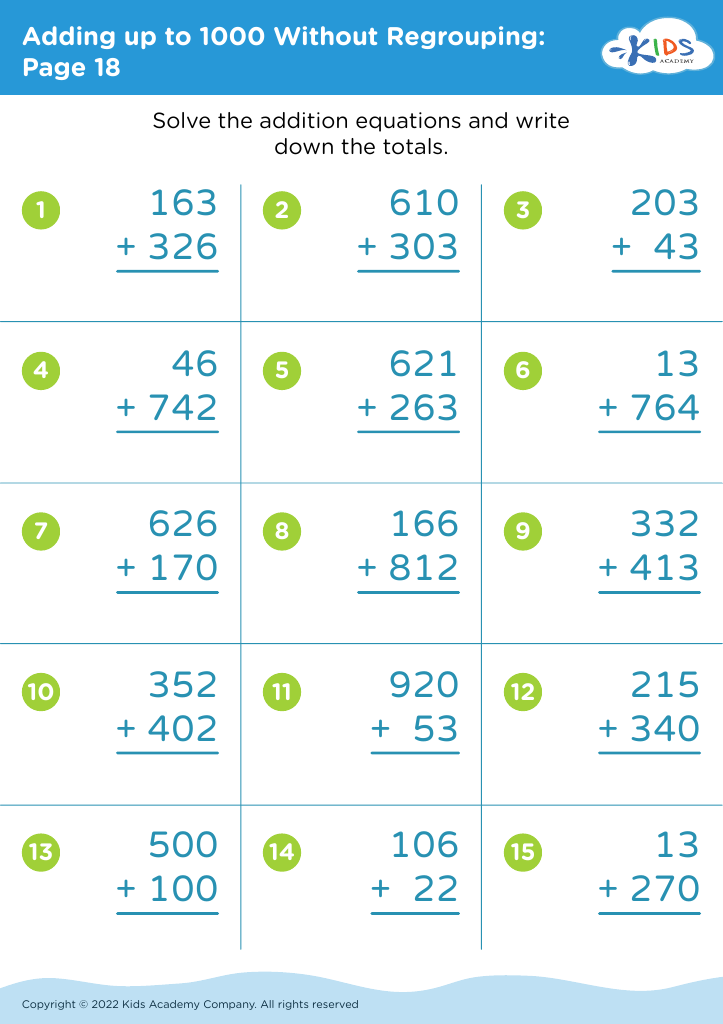
Adding up to 1000 Without Regrouping: Page 18
Worksheet
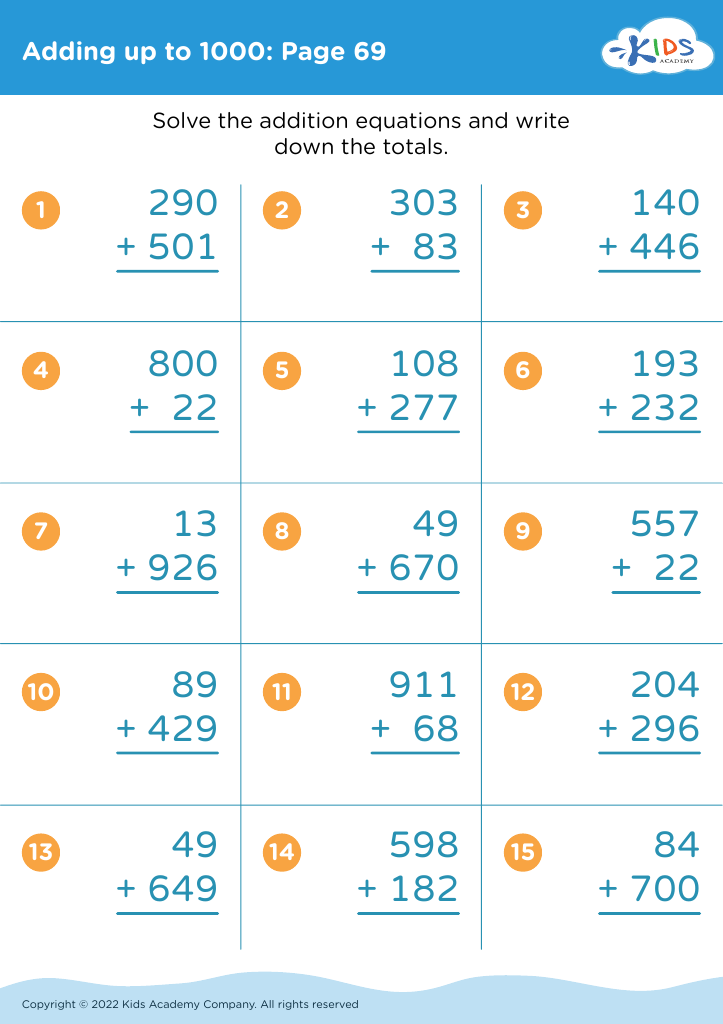
Adding up to 1000: Page 69

Adding up to 1000: Page 69

Adding up to 1000: Page 69
Worksheet
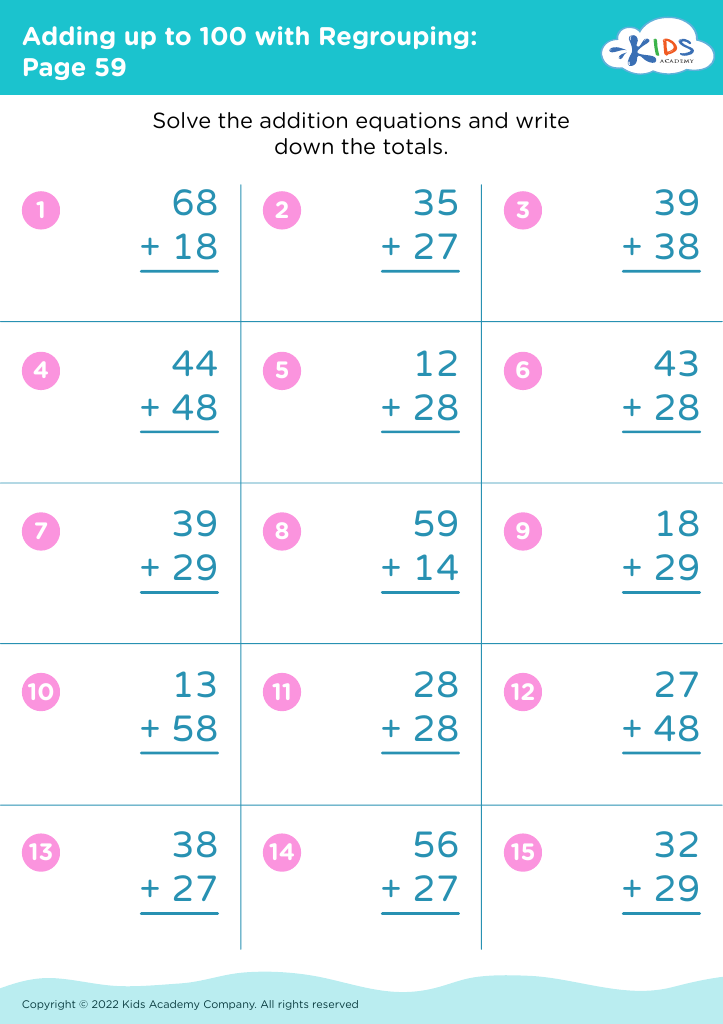
Adding up to 100 with Regrouping: Page 59
Worksheet
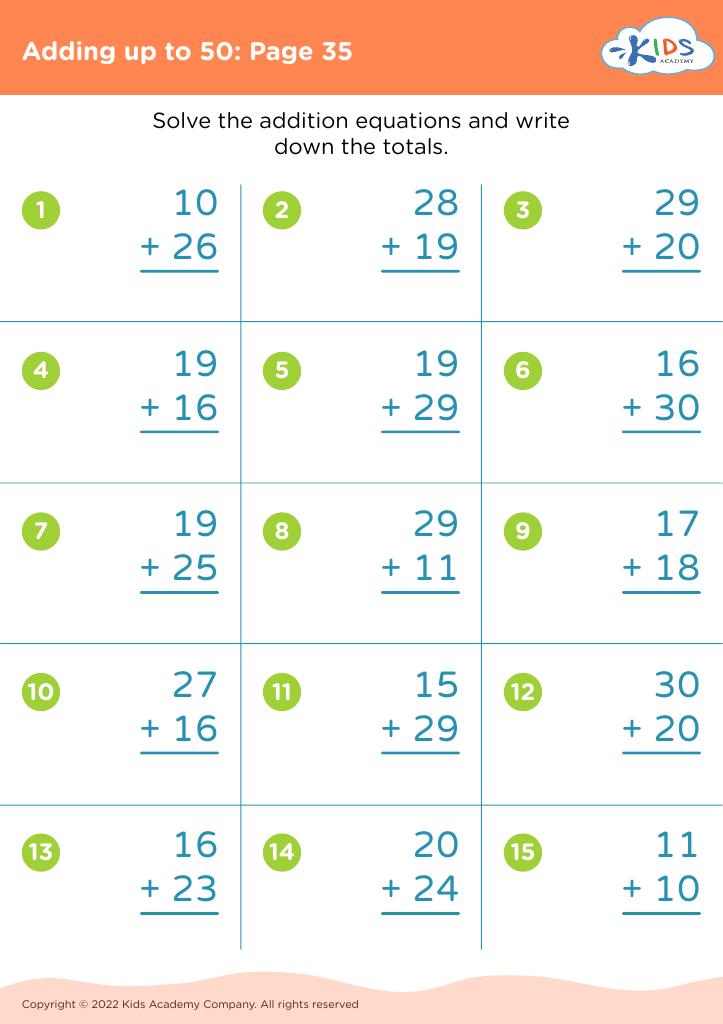
Adding up to 50: Page 35

Adding up to 50: Page 35

Adding up to 50: Page 35
Worksheet
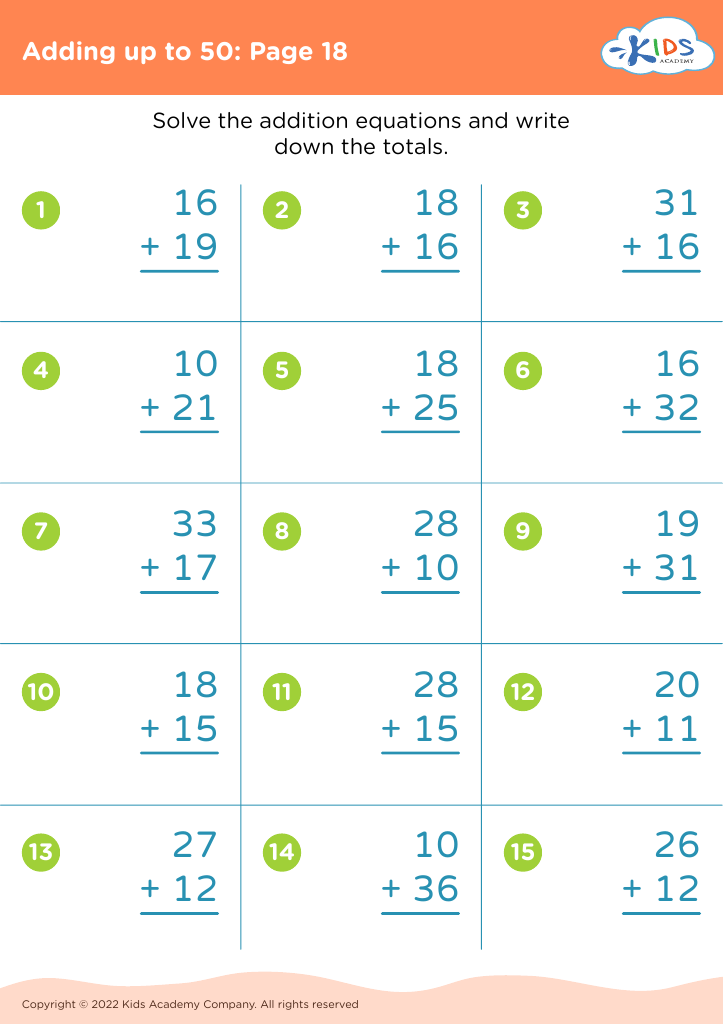
Adding up to 50: Page 18

Adding up to 50: Page 18

Adding up to 50: Page 18
Worksheet


Teaching children aged 8 to 9 how to compare fractions is not just a mathematical skill, but a fundamental building block for their overall cognitive development. At this age, understanding fractions extends far beyond classroom applications; it has real-life relevance, such as sharing portions of food, and helps kids make sense of the world around them.

Parents and teachers need to care about this topic because comparing fractions develops critical thinking and problem-solving skills. When children compare fractions, they learn to recognize patterns, understand part-to-whole relationships, and make reasoned decisions based on numerical evidence. These abilities are crucial for more advanced math topics and subjects like science and engineering, as well as everyday decision-making.

Furthermore, mastering fractions boosts a child's confidence in their math abilities. Early success in understanding and comparing fractions can combat math anxiety, laying the foundation for a positive and proactive attitude towards more complex math in the future. Through engaging with fractions, children also improve their ability to concentrate, persevere through challenges, and think logically, skills essential across all areas of learning and life.

Ultimately, teaching children how to compare fractions equips them with versatile tools for both academic success and practical daily activities, making it a critical focus for any educator or parent.