Comparing quantities Worksheets for Ages 8-9
9 filtered results
-
From - To
Our Comparing Quantities Worksheets for ages 8-9 are designed to make learning math fun and engaging. These expertly crafted resources help children develop crucial skills in comparing numbers, understanding volume, size, and value differences. With visually appealing activities, they can practice real-world applications, enhancing their ability to order, measure, and evaluate quantities. Ideal for classroom use or home practice, these worksheets support educators and parents in cultivating logical thinking and problem-solving abilities in young learners, ensuring a solid mathematical foundation for future learning. Explore our selection and empower your child’s math journey today!
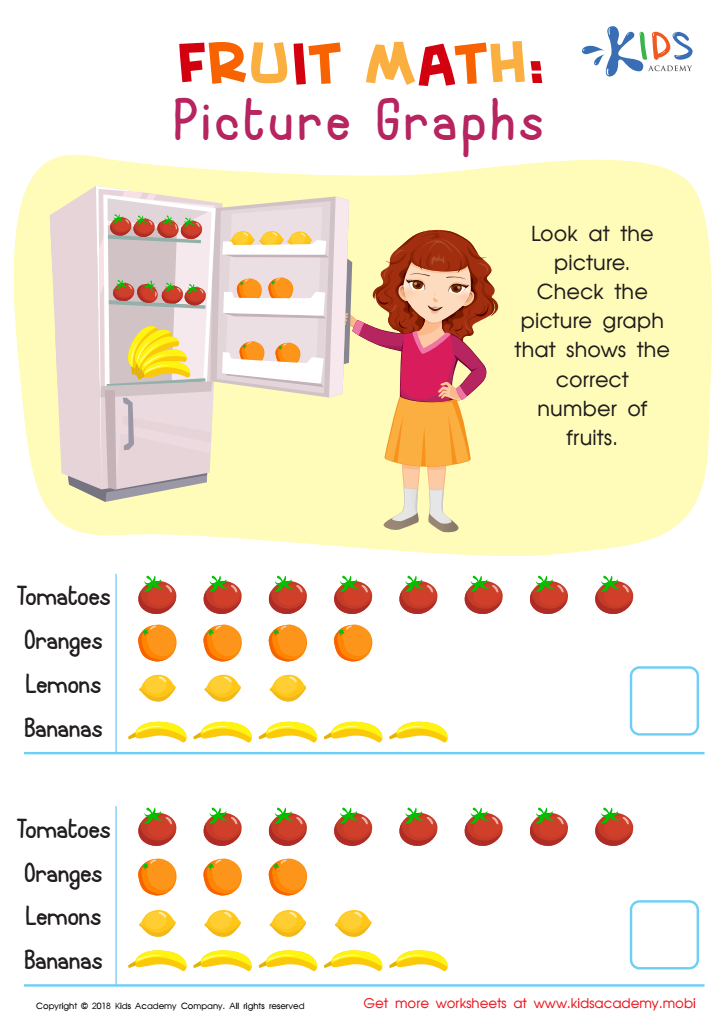
Fruit Math: Picture Graphs Worksheet
 Assign to My Students
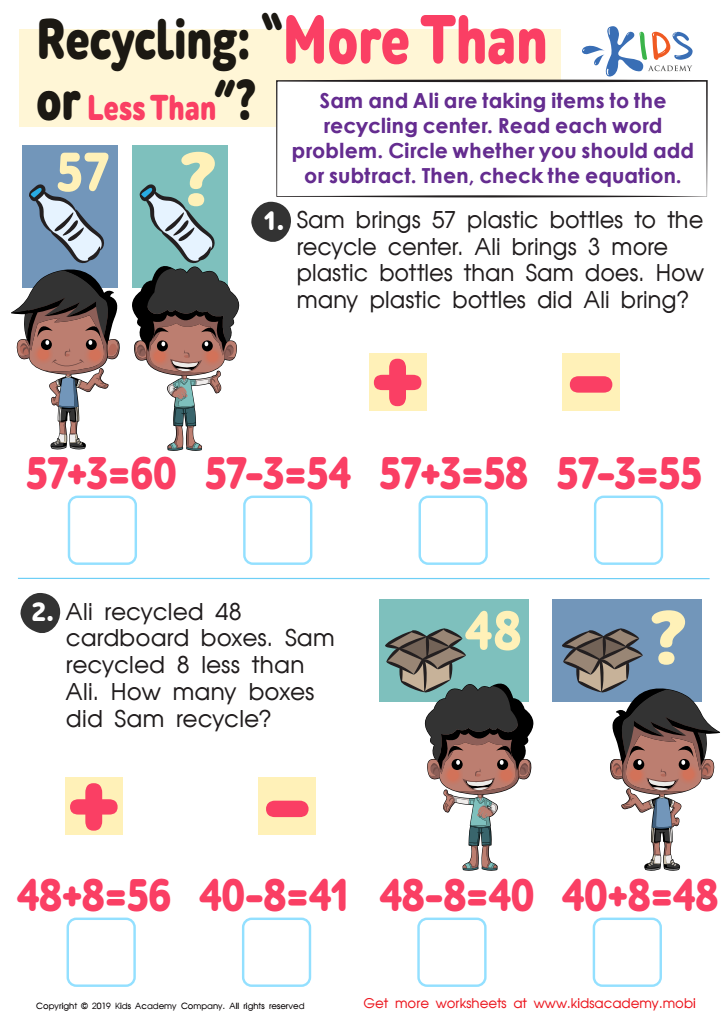
Recycling - More or Less Worksheet


.jpg)





Comparing quantities is a foundational math skill that is critical for children ages 8-9 to grasp, as it lays the groundwork for more advanced mathematical concepts. At this age, children are transitioning from simple arithmetic to more complex operations, and understanding how to compare quantities helps solidify their ability to think critically and analytically about numbers.
When parents and teachers emphasize the importance of comparing quantities, they help children develop strong reasoning and problem-solving skills. For example, activities like determining which of two groups has more items, or ordering a series of numbers from smallest to largest, engage children in making logical decisions based on numerical information. This not only boosts their math confidence but also enhances their ability to think quantitatively in various contexts, including science and daily life situations.
Moreover, comparing quantities is an integral part of understanding concepts like measurement, fractions, and even basic algebra. As children advance in their education, these skills become crucial for tackling more complex subjects. Parents and teachers who prioritize this aspect of math education provide children with tools that promote academic success across multiple disciplines. This nurturing of mathematical literacy can significantly contribute to a child's overall cognitive development and better prepare them for future academic endeavors.








