Data analysis Worksheets for Ages 8-9
3 filtered results
-
From - To
Explore our engaging data analysis worksheets designed specifically for ages 8-9! These fun and interactive resources help young learners develop essential skills in organizing, interpreting, and analyzing data. Perfect for enhancing critical thinking and reasoning abilities, our worksheets cover various topics, including bar graphs, pictographs, and charts. Each worksheet promotes problem-solving and fun learning experiences, aligning with early math standards. Ideal for classroom learning or at-home practice, these user-friendly printable worksheets will keep children motivated and eager to master data analysis concepts. Equip your child with the tools they need for academic success while enjoying engaging activities tailored just for them!
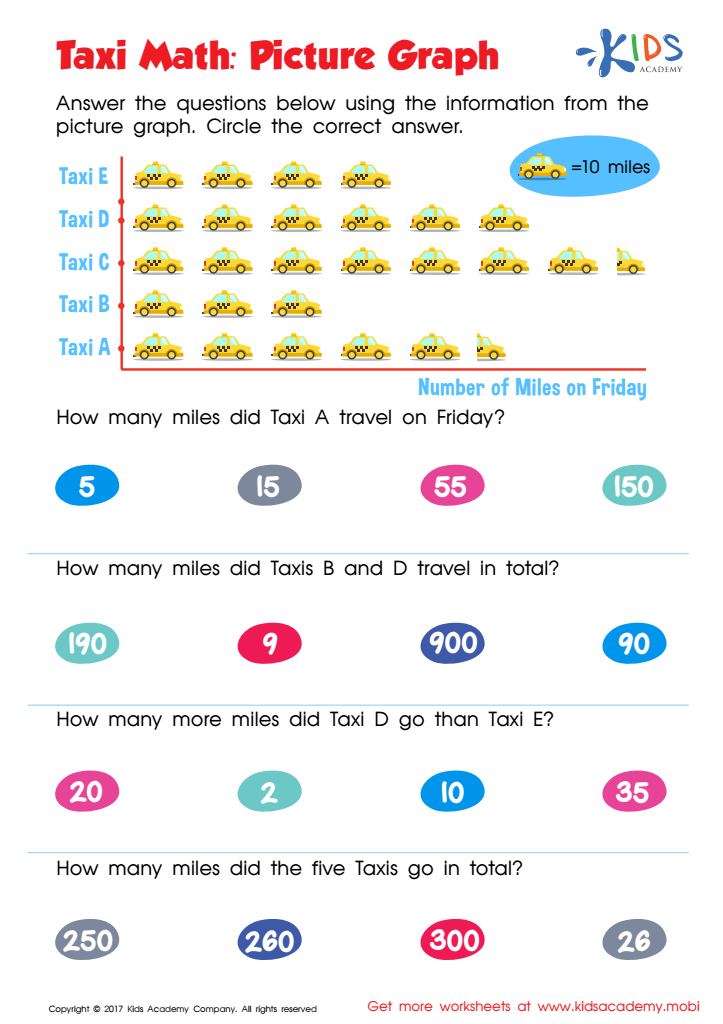
Taxi Math Worksheet
 Assign to My Students
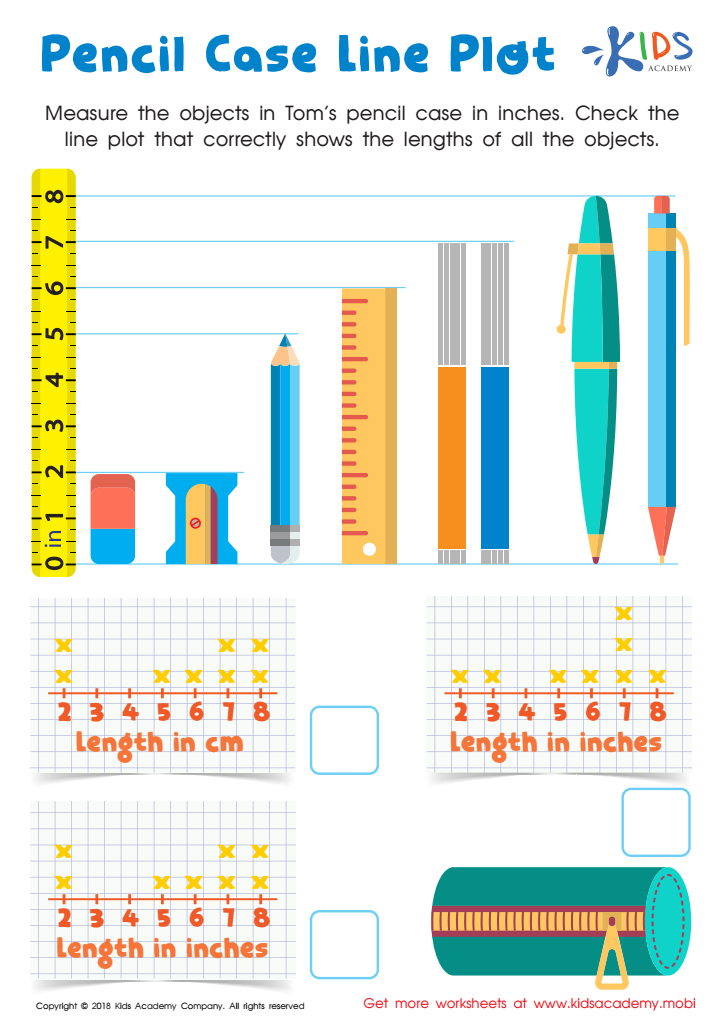
Pencil Case Line Plot Worksheet
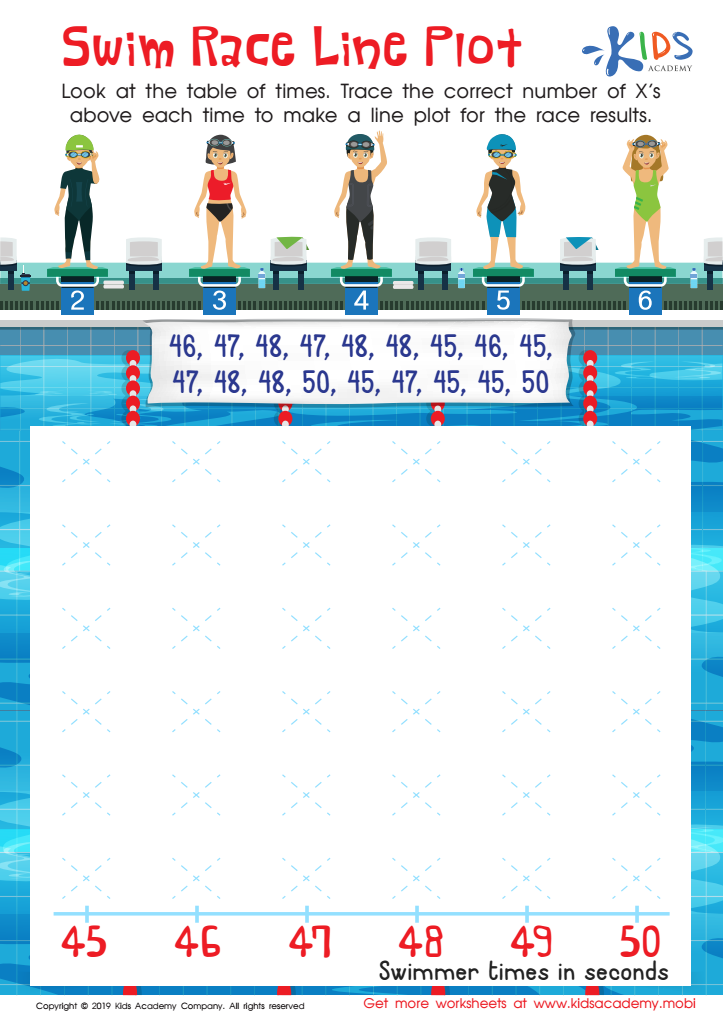
Swim Race Line Plot Worksheet







Data analysis for children aged 8-9 is crucial as it fosters essential skills needed for their academic and personal development. At this age, children are beginning to understand the world around them more complexly, and introducing data analysis helps them develop critical thinking and problem-solving skills. Engaging with data allows students to interpret information, recognize patterns, and make informed decisions—skills that are vital for success in a data-driven society.
Moreover, understanding data concepts enhances subjects like mathematics and science. When children learn to collect, represent, and analyze data, they gain a deeper understanding of mathematical operations and scientific processes. This hands-on experience transforms abstract concepts into concrete applications, making learning more engaging and meaningful.
For parents and teachers, supporting data analysis is essential for identifying each child’s strengths and areas for improvement. By utilizing data, educators can tailor instruction to meet individual needs, and parents can reinforce learning at home. Furthermore, fostering an early interest in data literacy prepares children for the future job market, where analytical skills are increasingly in demand. Ultimately, integrating data analysis into education equips children not just with knowledge, but the ability to thrive in an increasingly complex world.








