Enhance observation skills Worksheets for Ages 8-9
3 filtered results
-
From - To
Unlock your child's potential with our "Enhance Observation Skills Worksheets" designed specifically for ages 8-9! These engaging resources focus on sharpening visual discrimination, critical thinking, and attention to detail. Through a variety of fun activities—like matching games, hidden object challenges, and creative puzzles—your child will develop essential observation skills while enjoying the learning process. Ideal for home or in-class use, these worksheets cater to different learning styles and encourage independent discovery. Watch as your child grows more confident and attentive in their surroundings. Transform observation into an exciting adventure with our dynamic printable worksheets today!
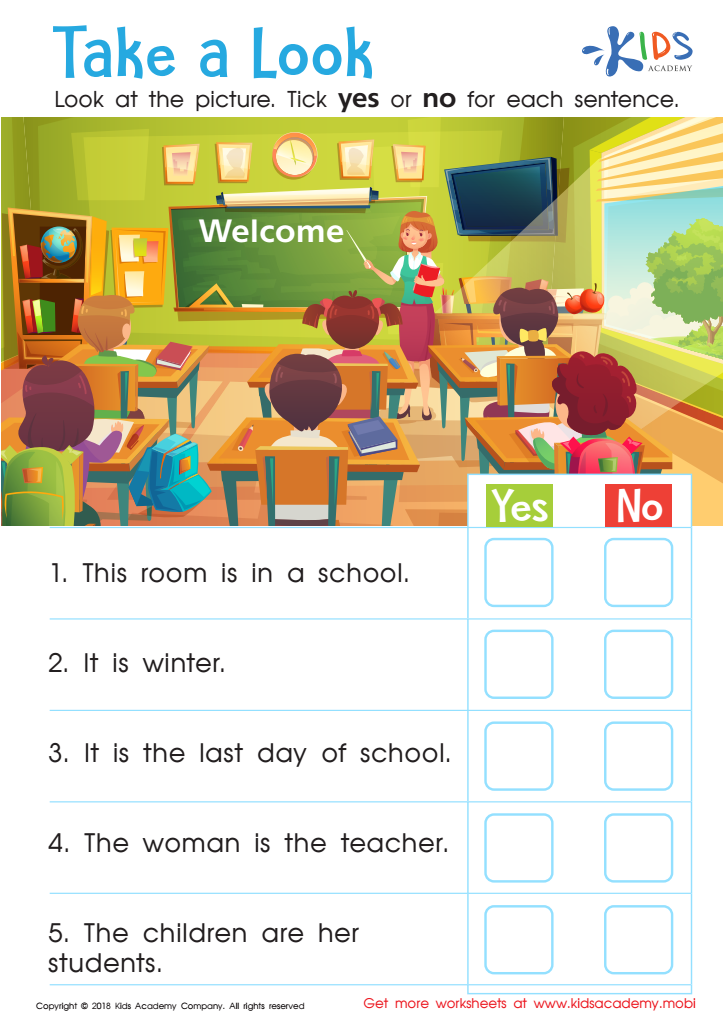
Take a Look - Part 2 Worksheet
 Assign to My Students





Enhancing observation skills for children aged 8-9 is crucial for their overall development and learning. At this stage, children are discovering their environment and honing their cognitive abilities. Strong observation skills support critical thinking, enabling children to analyze information, ask questions, and draw conclusions based on evidence. This not only fosters curiosity but also enhances problem-solving skills essential for academic success.
Parents and teachers play a pivotal role in nurturing these skills. Observant children are more likely to notice details in their surroundings, whether in nature, during reading, or participating in activities. This awareness promotes creativity and experimentation, encouraging children to engage with learning material actively, rather than passively consuming it.
Moreover, enhanced observation skills contribute to better social interactions. Children who observe details about their peers' emotions and behaviors are more empathetic and better at resolving conflicts. As they learn to navigate relationships, these skills become foundational for teamwork and collaboration in the classroom.
Investing time in exercises to improve observation—like nature walks, art projects, or storytelling—creates a rich learning environment that aligns academic and social learning, laying the groundwork for lifelong skills. Therefore, both parents and teachers should prioritize developing these skills.








