Improving subtraction skills Worksheets for Ages 8-9
3 filtered results
-
From - To
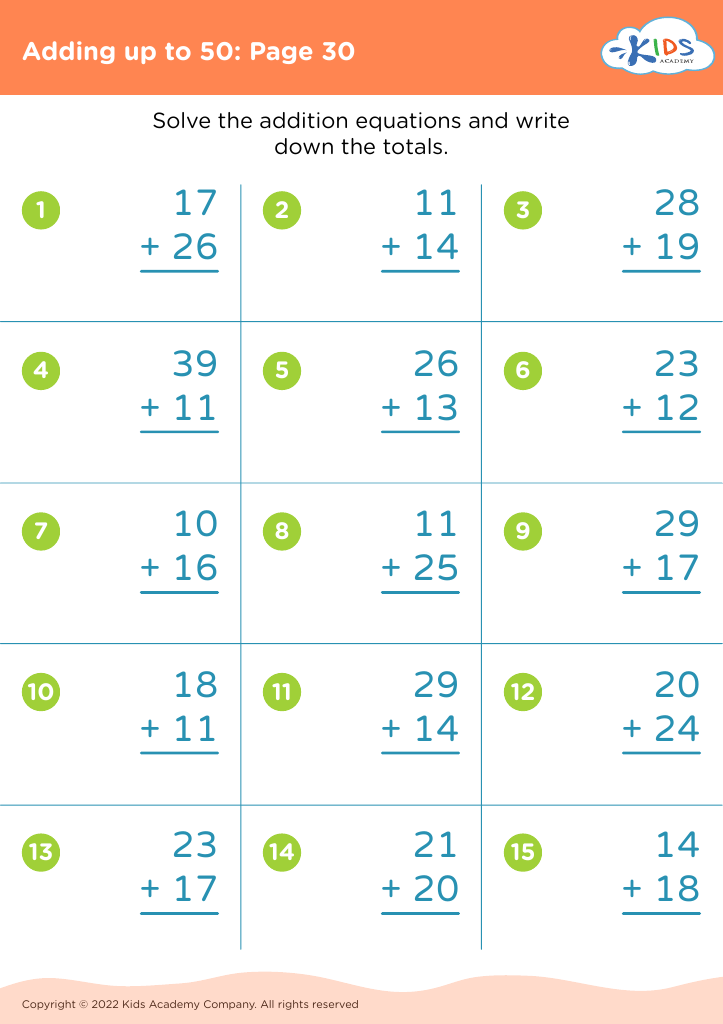
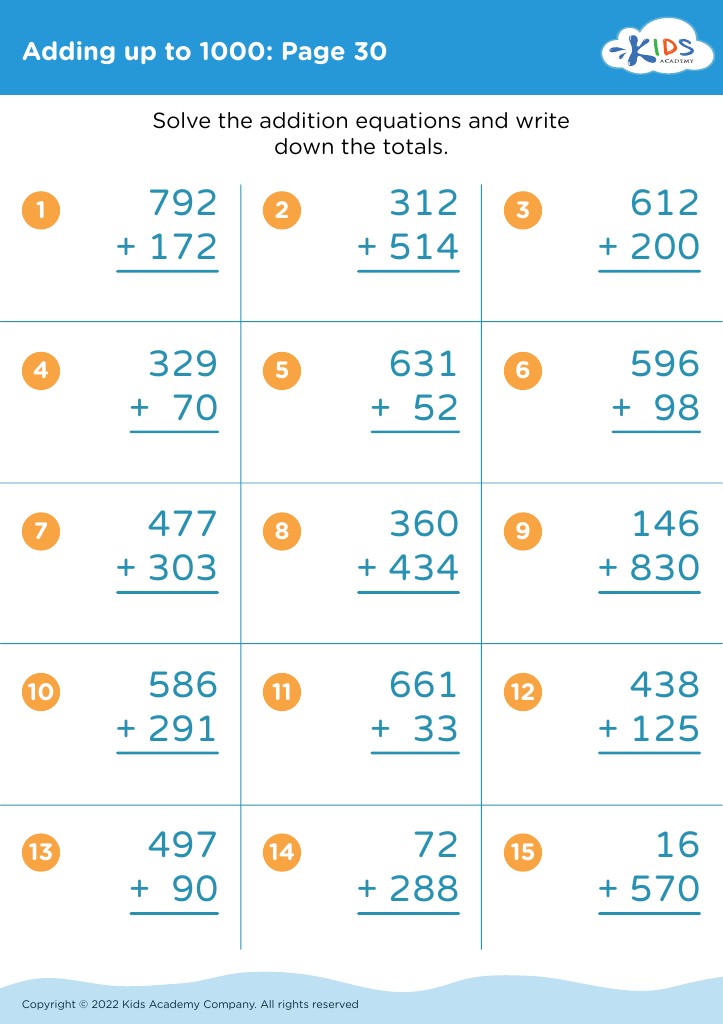
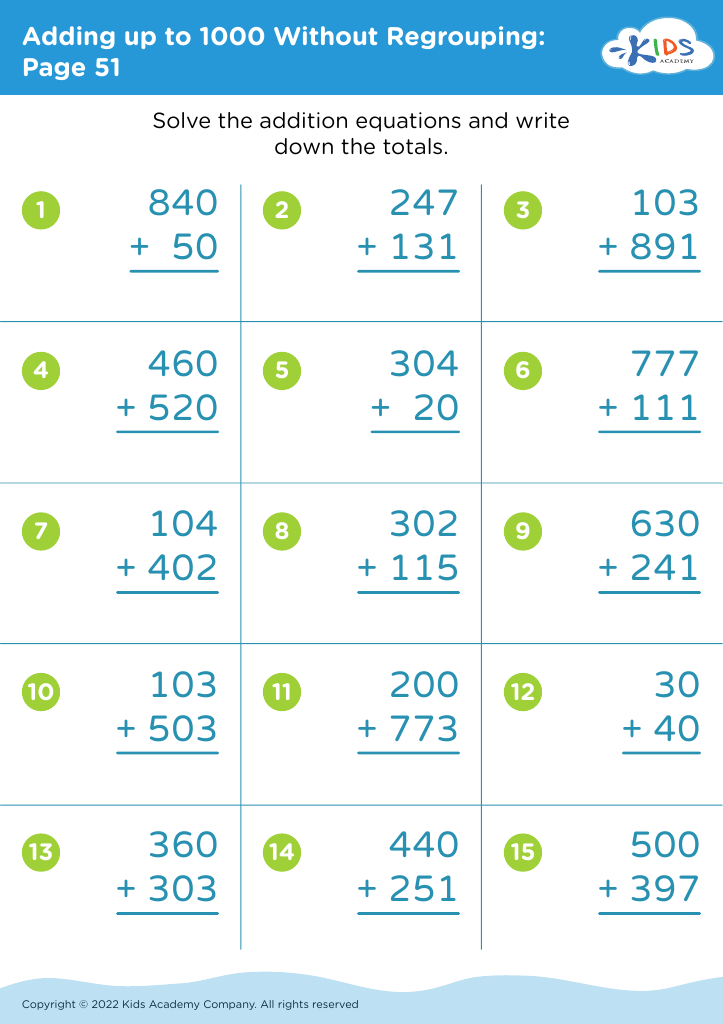
Enhance your child's subtraction skills with our engaging worksheets designed specifically for ages 8-9! Our resources focus on essential concepts such as regrouping, borrowing, and solving word problems, providing a comprehensive approach to subtraction mastery. Each worksheet is crafted to offer clear explanations and fun exercises that motivate young learners to practice and improve their math abilities. With a variety of interactive activities, kids will build confidence and fluency in subtraction, preparing them for more advanced math challenges. Explore our collection today and watch your child's math skills flourish! Perfect for classroom use or at-home practice.


.jpg)





Parents and teachers should prioritize improving subtraction skills for children aged 8-9 because these foundational skills are critical for academic success and everyday problem-solving. At this age, children begin to encounter more complex mathematical concepts, such as multi-digit subtraction, fractions, and word problems, which depend significantly on their proficiency in subtraction.
Strong subtraction skills enhance a child's ability to think critically and approach problem-solving with confidence. These abilities are not only essential for mathematics but also play a role in understanding real-life situations, such as budgeting, measuring, and assessing quantities. Furthermore, fluency in subtraction helps reduce math anxiety, enabling students to engage more fully in learning opportunities.
Additionally, this age group is developing crucial social skills; mathematical competencies often coincide with collaborative learning, where students work together to solve problems. Proficient subtraction skills allow children to contribute meaningfully to group activities, fostering teamwork and communication.
Lastly, a solid grasp of subtraction benefits future learning in STEM and other subjects where mathematics plays an integral role. By investing time and resources to improve subtraction skills, parents and teachers empower children to embrace learning with enthusiasm and resilience.








