Math problem-solving skills Worksheets for Ages 8-9
4 filtered results
-
From - To
Unlock your child's potential with our "Math Problem-Solving Skills Worksheets for Ages 8-9" from Kids Academy! Designed specifically for young learners, these worksheets help nurture critical thinking and analytical abilities. Our engaging and fun activities cover a range of topics such as addition, subtraction, multiplication, and division. Each worksheet is crafted to make problem-solving approachable and enjoyable, ensuring your child builds confidence and mastery in math concepts. Ideal for both classroom and at-home learning, our printable resources provide the practice necessary for academic success. Give your child the tools to excel with Kids Academy today!
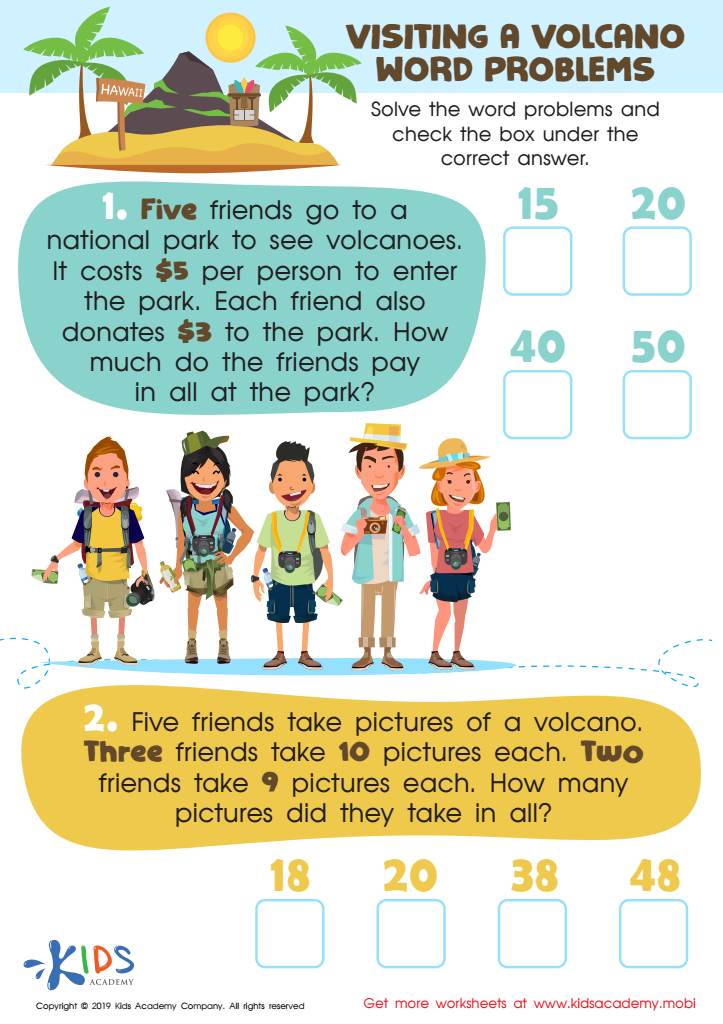
Visiting a Volcano Word Problems Worksheet
 Assign to My Students


.jpg)

.jpg)



Math problem-solving skills are crucial for children ages 8-9, as they lay the foundation for both academic success and practical life skills. At this developmental stage, children develop their cognitive abilities and critical thinking, which are essential for understanding more complex concepts in later years.
Teachers and parents should prioritize these skills because they help children learn to think logically and systematically. Through solving math problems, children enhance their ability to reason, see patterns, and make connections, which are not only vital for mathematics but are transferable skills that benefit other subjects such as science, reading comprehension, and even social studies.
Moreover, strong problem-solving skills foster resilience and patience in children. They learn that problems may not always have an immediate solution and that persistence and different approaches can lead to success. This mindset is valuable beyond the classroom and can help children navigate various life challenges confidently.
Additionally, for many careers in the future—especially those in growing fields like technology, engineering, and economics—proficiency in math and problem-solving will be indispensable. Early engagement with these skills ensures children are well-prepared for the evolving demands of the workforce.
In essence, focusing on math problem-solving skills enriches children's educational journey and equips them with essential life skills that enable them to thrive in various contexts.








