Reading skills development Worksheets for Ages 8-9
5 filtered results
-
From - To
Enhance your child's reading abilities with our curated collection of Reading Skills Development Worksheets for Ages 8-9. Designed to make learning both engaging and effective, these worksheets cover key aspects like comprehension, vocabulary building, and critical thinking. Each printable activity aligns with educational standards and caters to the unique needs of young readers, ensuring they stay motivated and progress steadily. Perfect for parents, teachers, and tutors, our worksheets provide a structured yet fun approach to mastering essential reading skills. Visit Kids Academy to explore our diverse selection and support your child's literacy journey today!
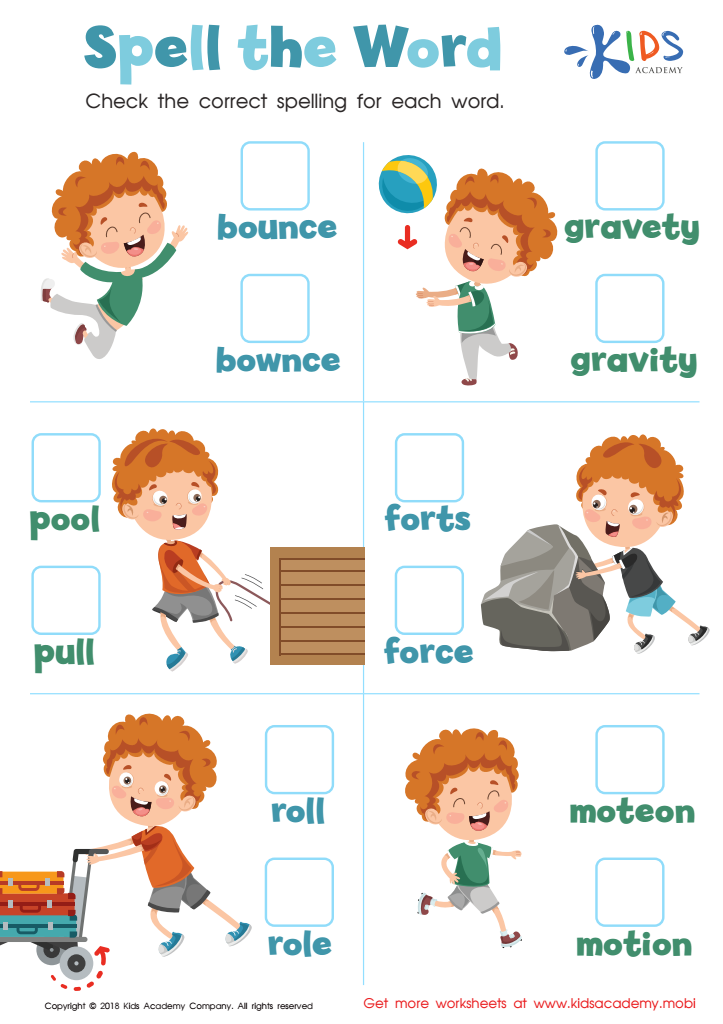
Spell the Word Worksheet
 Assign to My Students
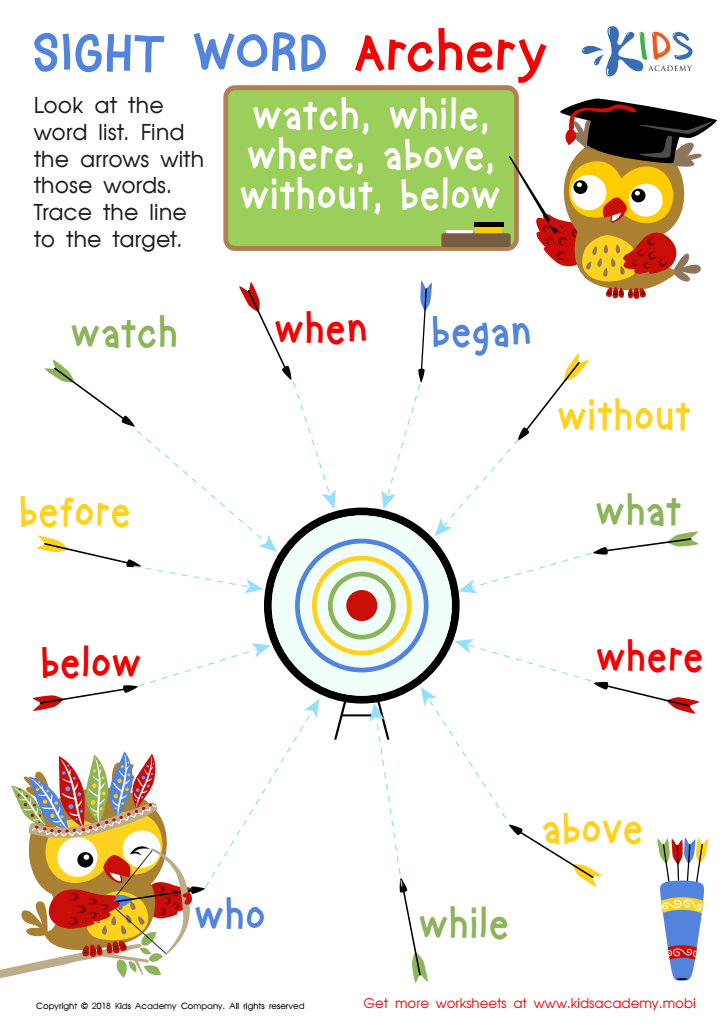
Sight Word Archery Worksheet
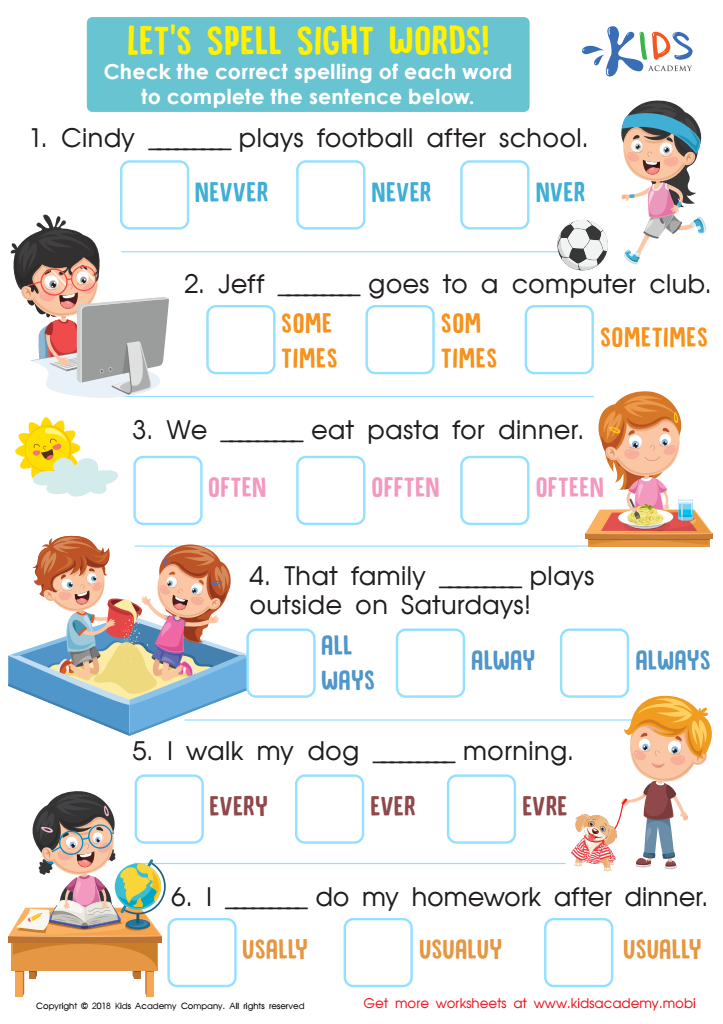
Let's Spell Sight Words Worksheet
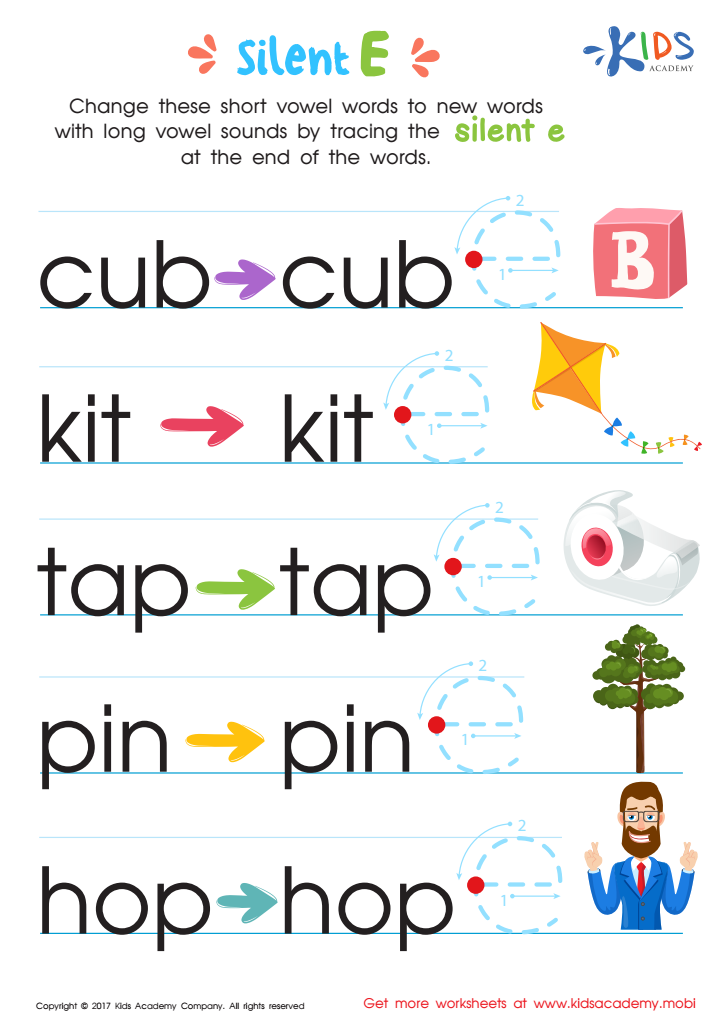
Silent E Words Worksheet
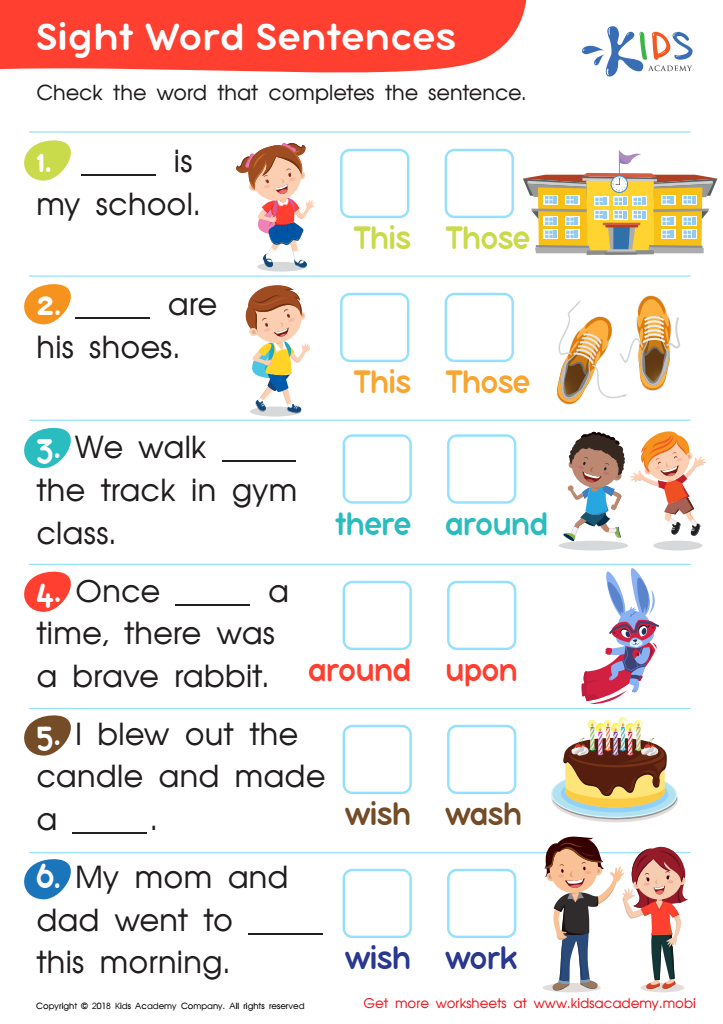
Sight Word Sentences Worksheet








Reading skills development for children aged 8-9 is critically important and merits attention from both parents and teachers. At this developmental stage, children transition from learning to read to reading to learn—an essential shift that influences their academic performance across all subjects. Proficient reading skills enhance comprehension, allowing children to grasp complex concepts, follow instructions accurately, and perform better in subjects like math, science, and social studies.
Moreover, developing strong reading skills at this age fosters a love for learning and encourages intellectual curiosity. Children who read well are more likely to explore topics that interest them, thus broadening their knowledge base and critical thinking skills. Reading also plays a pivotal role in language development by expanding vocabulary, improving grammar, and honing sequencing and inferencing abilities.
Additionally, children gain social and emotional benefits from reading. Stories often introduce diverse perspectives and cultures, helping children develop empathy and understand the broader world.
Inadequate reading skills at this stage can lead to academic struggles, reduced self-esteem, and a lack of motivation. Consequently, investing time and effort into nurturing these skills can set a strong foundation for lifelong learning and personal growth, making it of paramount importance for parents and teachers to prioritize this aspect of development.








