Sequencing events Worksheets for Ages 8-9
4 filtered results
-
From - To
Explore our Sequencing Events Worksheets designed specifically for children ages 8-9! These engaging worksheets help young learners develop critical thinking and comprehension skills by encouraging them to arrange events in the correct order. With a variety of fun exercises, kids will practice recognizing sequences in stories, daily activities, and more, enhancing their understanding of narrative structure. Each worksheet promotes creativity as children can use their imagination to fill in gaps or create their own sequences. Perfect for classrooms or at-home learning, our resources inspire curiosity and foster a love for reading and storytelling. Download these easy-to-use worksheets today!
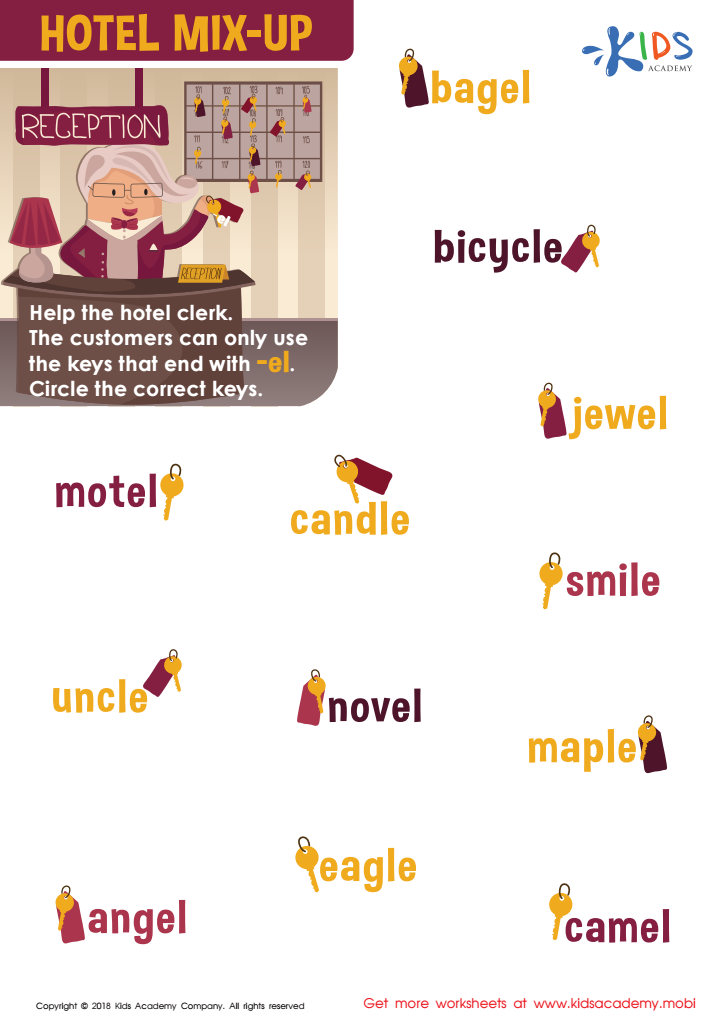
Hotel Mix-up Worksheet
 Assign to My Students
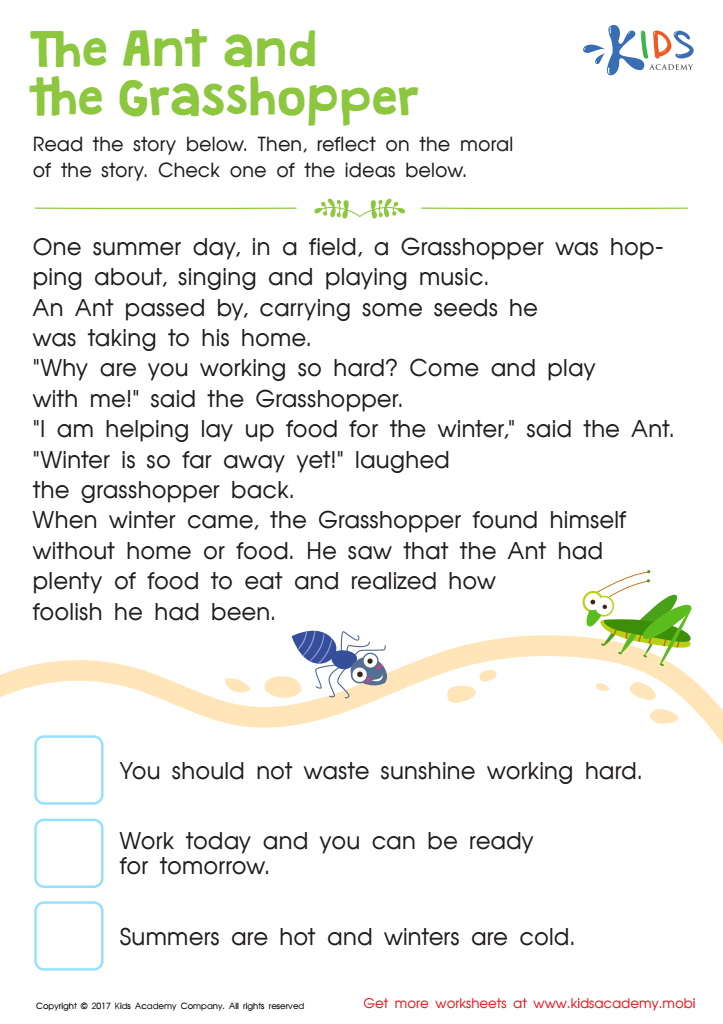
The Ant and The Grasshopper Printable
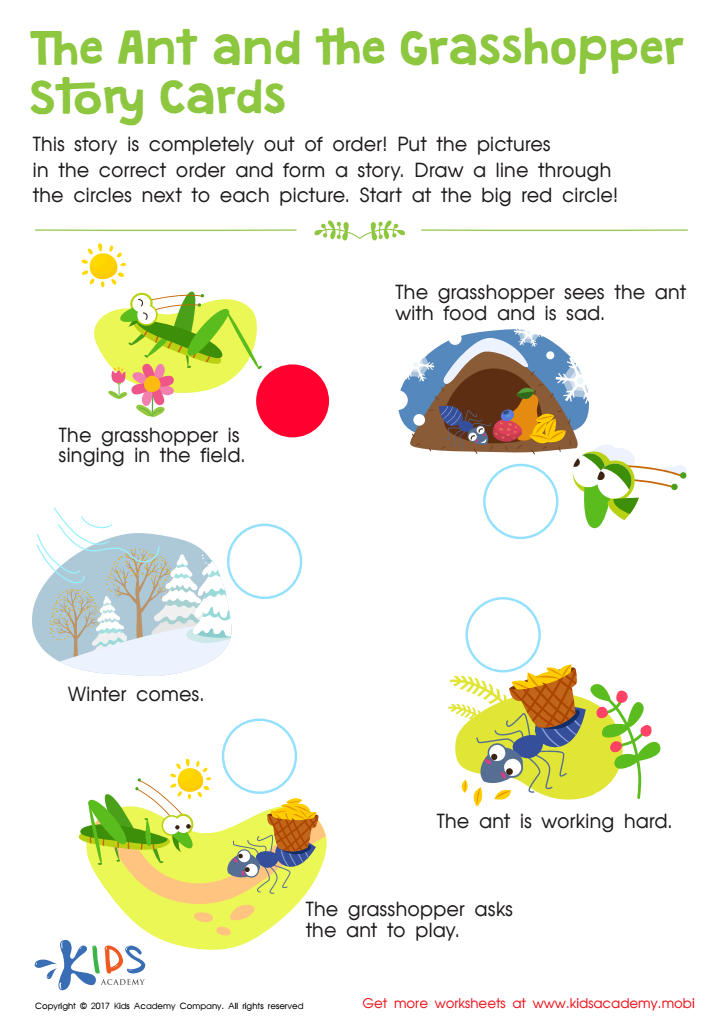
The Ant and The Grasshopper Worksheet
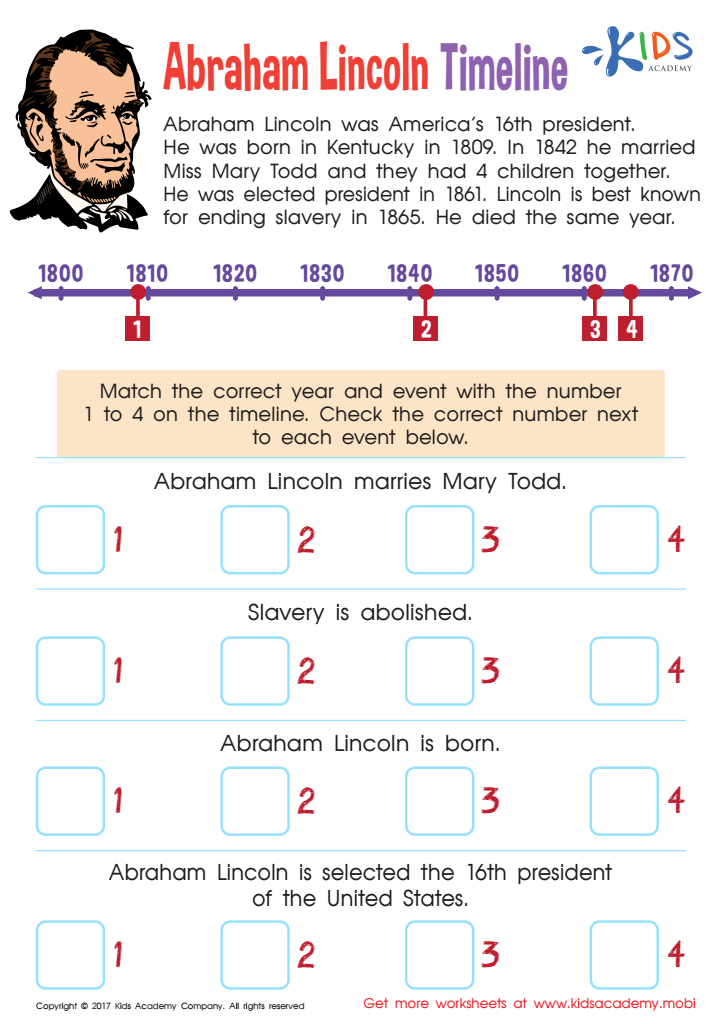
Abraham Lincoln Timeline Worksheet







Sequencing events is a critical skill for children aged 8-9, as it forms the foundation for comprehension and cognitive development. During this stage of learning, children are transitioning from concrete to more abstract thinking, making it vital for them to understand how events are connected in stories, history, or their own experiences.
Teaching sequencing helps children develop their narrative skills, guiding them to clearly express ideas and thoughts logically. This ability improves their reading comprehension; when they understand the order of events in a story, they can better predict outcomes and understand character motivations.
Moreover, sequencing is essential in subjects like science and social studies, where cause and effect and chronological order are crucial for understanding processes and events. By practicing sequencing, children enhance their problem-solving skills as they learn to organize information and prioritize tasks, which translates to better academic performance.
For parents and teachers, nurturing this skill is significant because it sets children on a path to lifelong learning. It supports achievement in school, fosters critical thinking, and equips children with tools they need for effective communication and understanding of the world around them. Encouraging sequencing not only benefits academic success but also boosts confidence and creativity.








