
Solving word problems Worksheets for Ages 8-9
3 filtered results
Difficulty Level
Grade
Age
-
From - To
Subject
Activity
Standards
Our "Solving Word Problems Worksheets for Ages 8-9" are specifically designed to develop essential problem-solving skills. These engaging, printable exercises challenge students to read, comprehend, and solve a variety of real-world math problems. Tailored for young learners, each worksheet integrates addition, subtraction, multiplication, and division to enhance numerical literacy and critical thinking. Perfect for home or classroom use, these activities not only promote confidence in math but also reinforce broader academic skills such as reading comprehension and logical reasoning. Download now to give your child a head start in mastering word problems effectively!
Favorites
With answer key
Interactive
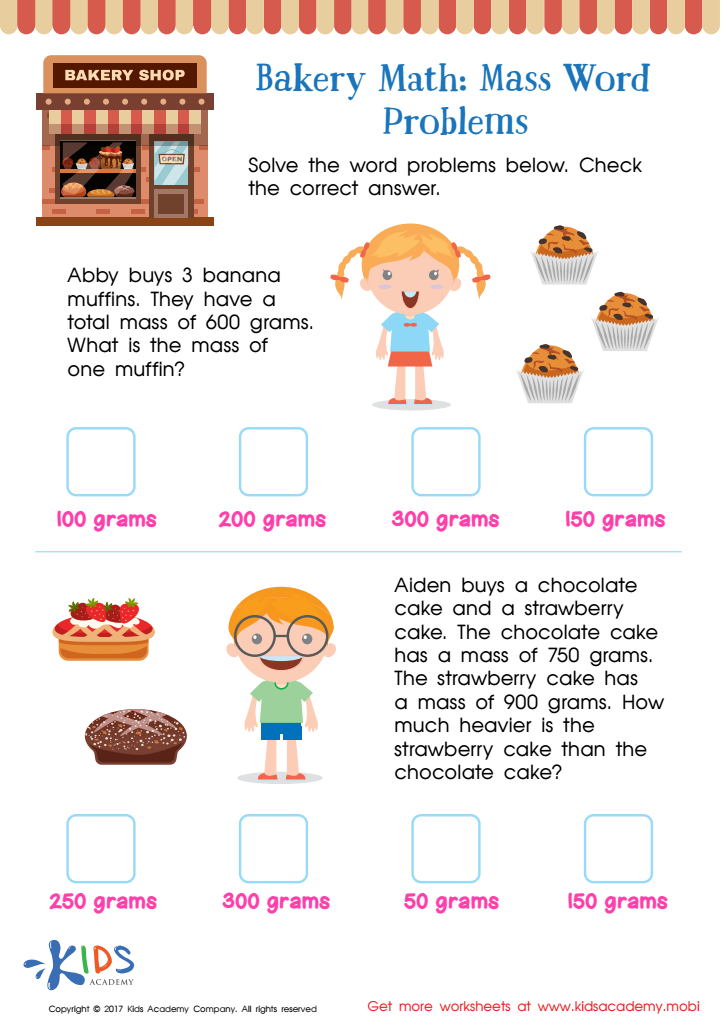
Mass Word Problems Worksheet
This worksheet challenges kids with tricky mass word problems. It offers valuable practice with grams. Through division and subtraction, children gain experience handling mass.
 Assign to My Students
Mass Word Problems Worksheet
Worksheet
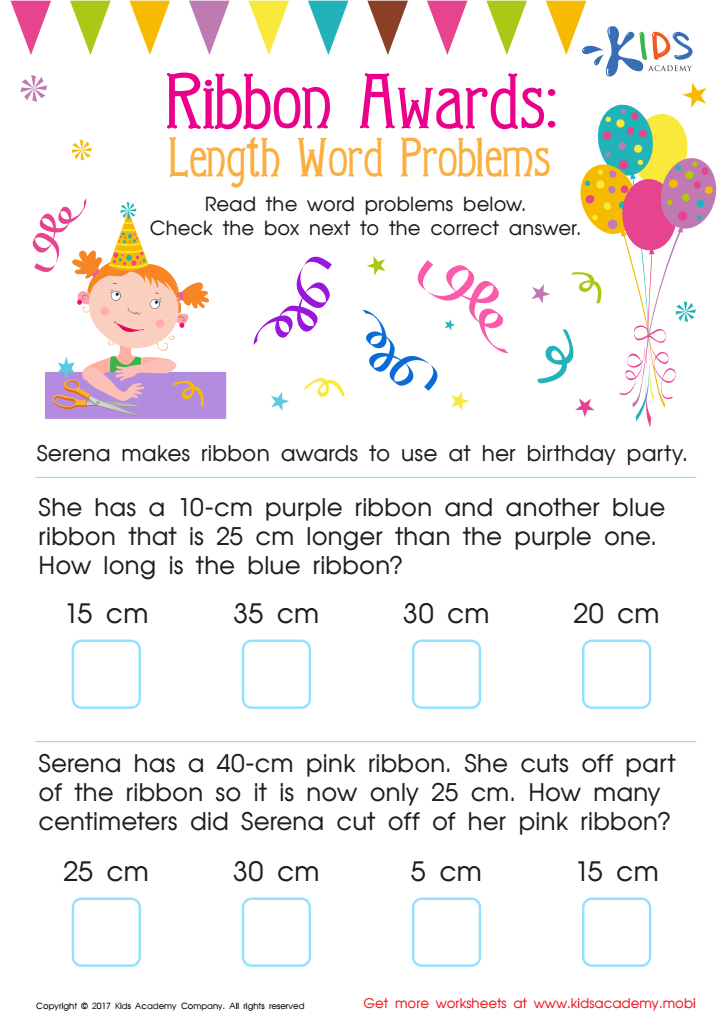
Length Word Problems Worksheet
Word problems help grade 2 students practice measurement using everyday scenarios. This worksheet provides practice in working with centimeters and inches, like measuring ribbon. It's a great way to learn and apply math skills.
Length Word Problems Worksheet
Worksheet
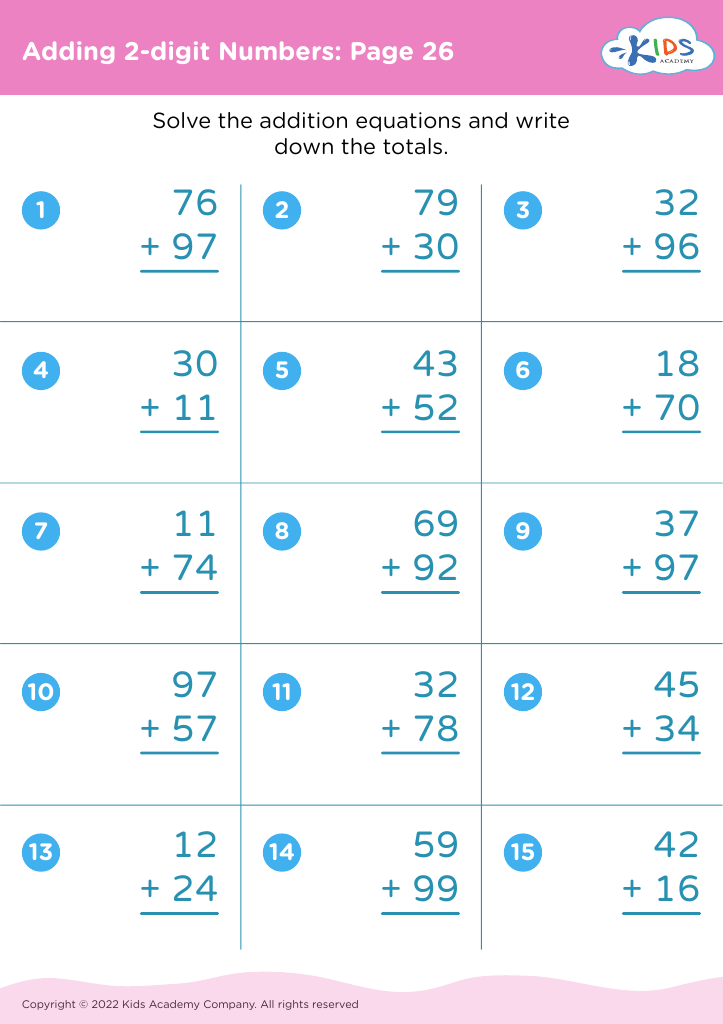
Join Kids Academy for Free
Who is primarily going to use this learning content?





.jpg)


Solving word problems is essential for children ages 8-9 as it plays a crucial role in their cognitive and academic growth. Firstly, word problems help students apply mathematical concepts to real-life situations, making learning more meaningful and relevant. This, in turn, enhances their problem-solving skills and their ability to think critically. Secondly, word problems often involve reading comprehension and logical reasoning, which are key competencies across various subjects, not just mathematics. This interdisciplinary approach fosters a well-rounded educational foundation.
Moreover, solving word problems boosts confidence, as students feel more empowered when they successfully tackle complex tasks. This confidence can translate into a positive attitude towards learning and challenges in general. For parents and teachers, focusing on word problems allows them to gauge a child's understanding and misconceptions, providing an opportunity for targeted intervention and support. Furthermore, collaboration in solving problems can promote social skills such as communication and teamwork.
In an increasingly complex world, these skills are invaluable. By encouraging proficiency in word problems early on, parents and teachers ensure that children are better prepared for future academic pursuits and everyday decision-making. Overall, the practice is foundational for building lifelong learners and problem-solvers.








