Times table familiarity Worksheets for Ages 8-9
3 filtered results
-
From - To
Discover our engaging Times Table Familiarity Worksheets designed specifically for children aged 8-9. These worksheets enhance students' multiplication skills through fun activities and clear examples, encouraging confidence and mastery in working with times tables. Your child will enjoy solving problems while developing essential mathematical understanding, making learning both enjoyable and effective. With various exercises that cater to different learning styles, each worksheet is tailored to foster a love for math. Perfect for classroom use or home practice, our resources will support your child's journey to becoming proficient in multiplication. Visit us today to access a wealth of educational materials for young learners!
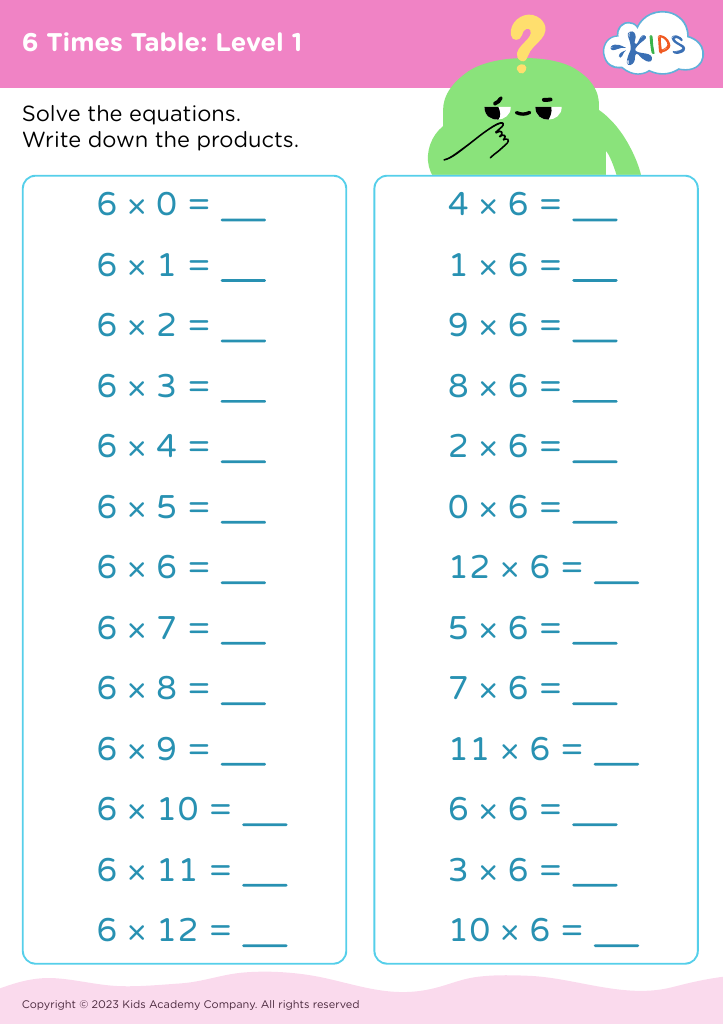
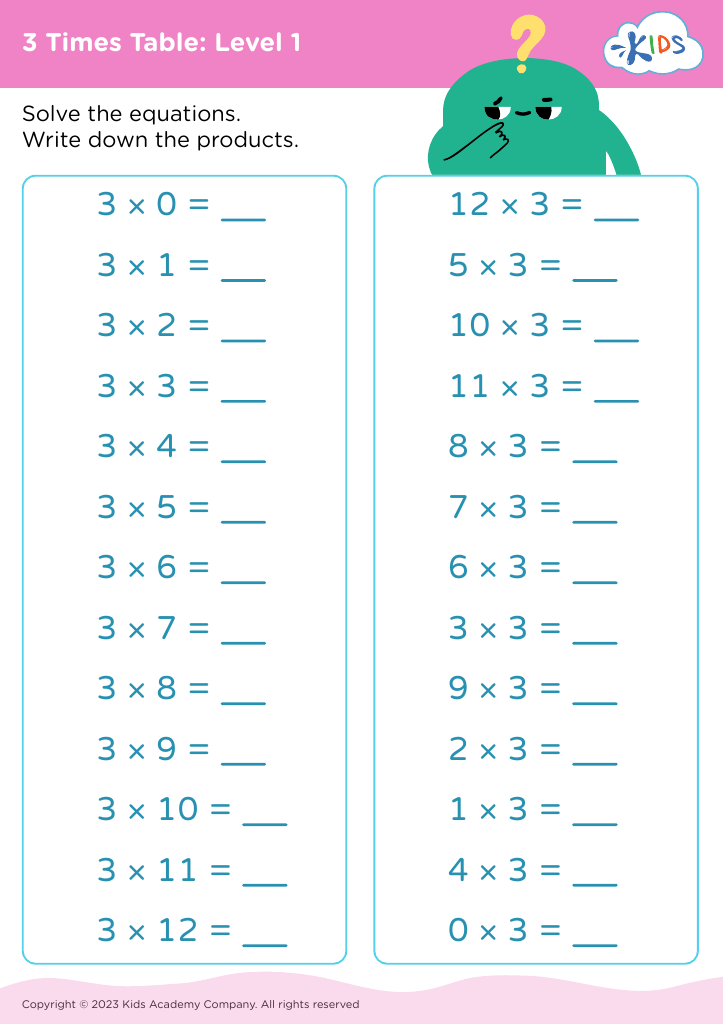
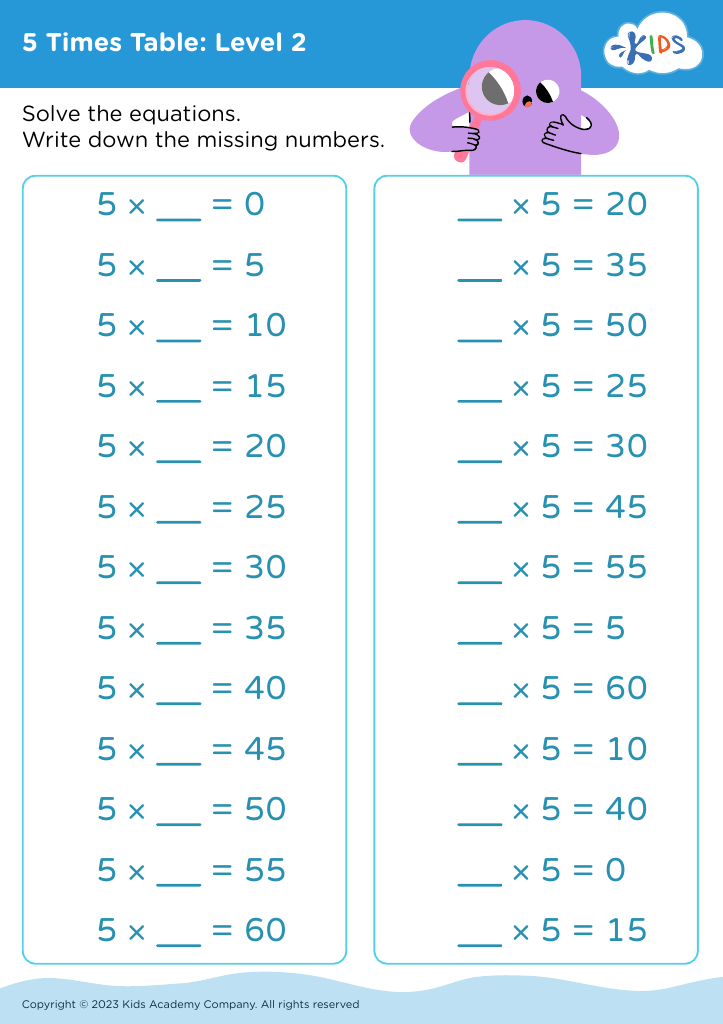


.jpg)





Familiarity with times tables is crucial for children aged 8-9 as it forms the foundation for advanced mathematics. At this developmental stage, children transition from basic arithmetic to more complex problem-solving. A solid grasp of multiplication tables enhances their ability to perform quicker calculations, which is vital in everyday situations and their academic future.
Understanding times tables also fosters confidence in math skills, reducing anxiety during tests and classroom activities. Children who know their multiplication facts can tackle word problems more effectively, apply concepts in real-world situations, and engage with fractions and division—essential components of the curriculum.
Moreover, mastery of times tables encourages exploration of higher-level concepts like factors, multiples, and early algebraic thinking. This foundational knowledge nurtures a love for math and helps develop critical thinking and analytical skills.
Parents and teachers play a vital role in stimulating a supportive environment for learning these tables. Through consistent practice and engaging activities, they can help students achieve fluency, making math an enjoyable subject rather than a daunting one. Ultimately, cultivating times table familiarity is not just about passing exams; it's about providing children with essential tools for lifelong learning and problem-solving.








