Understanding clocks Worksheets for Ages 8-9
3 filtered results
-
From - To
Enhance your child's time-telling skills with our expertly crafted "Understanding Clocks" worksheets for ages 8-9. These engaging resources from Kids Academy guide young learners through reading analog and digital clocks, practicing time intervals, and converting between hours and minutes. The fun, illustrated activities capture kids' attention while reinforcing essential math and life skills. Ideal for classroom or home use, these worksheets provide ample opportunities for hands-on learning, ensuring students grasp time concepts with ease. Visit our page to help your child master the art of telling time and build a solid foundation for future math success.
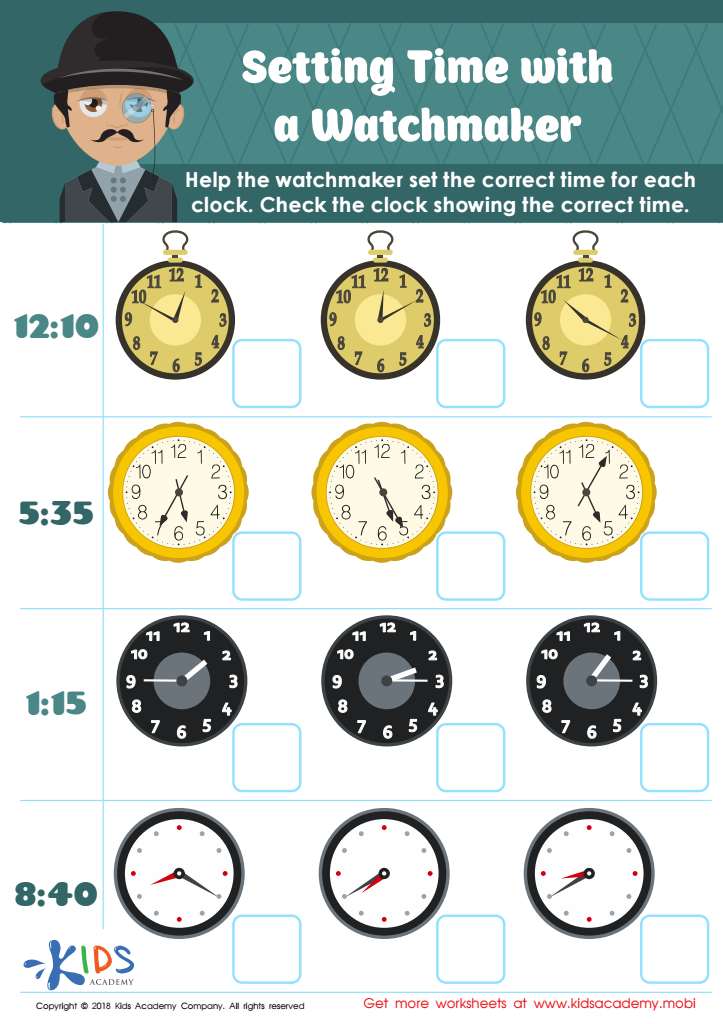
Setting Time with Watchmaker Worksheet
 Assign to My Students
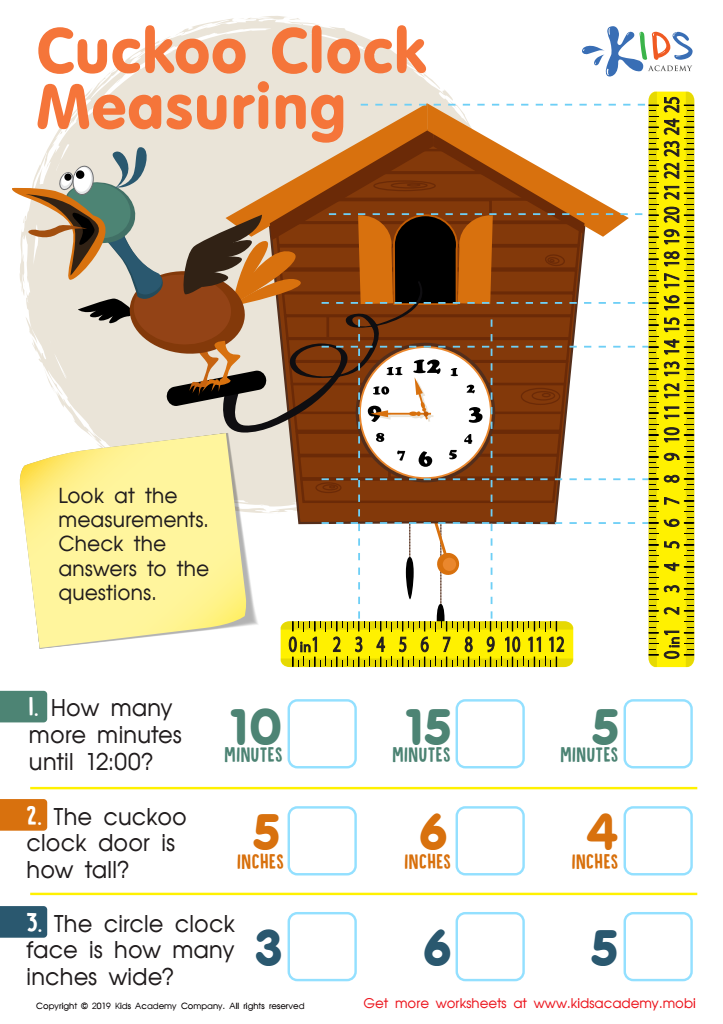
Cuckoo Clock Measuring Worksheet





Understanding clocks is a pivotal skill for children ages 8-9 as it lays the foundation for time management and daily life routines. At this age, kids are beginning to take on more responsibilities, such as getting ready for school, attending extracurricular activities, and completing homework. By learning to read both digital and analog clocks, children develop a concrete sense of time, which is essential for planning and organizing their activities.
Moreover, time-telling skills enhance mathematical ability, as it integrates concepts of division, multiplication, and fractions. For example, recognizing that the clock is divided into 12 hours and that each minute is a fraction of the hour helps children develop a more nuanced understanding of numbers and their relationships.
Parents and teachers have key roles in ensuring children grasp these concepts. Parents can reinforce learning at home by involving children in setting routines, determining meal times, and recognizing time gaps. Teachers can create engaging activities that involve reading clocks and calculating elapsed time. Mastery of these skills not only builds academic proficiency but also instills a sense of responsibility and self-reliance in children, equipping them with an essential life skill that will benefit them for years to come.








