Understanding currency Worksheets for Ages 8-9
3 filtered results
-
From - To
Unlock the world of finance for your 8-9-year-olds with our Understanding Currency Worksheets. These engaging resources from Kid’s Academy help demystify money concepts, allowing kids to practice identifying coins and bills, making change, and performing simple transactions. Designed to align with educational standards, our worksheets blend math skills with practical financial literacy. Filled with fun activities, puzzles, and real-world scenarios, these printables make learning about currency exciting and hands-on. Ideal for both classroom and home use, inspire confidence and essential life skills in your young learners today! Visit Kid’s Academy to download your worksheets.
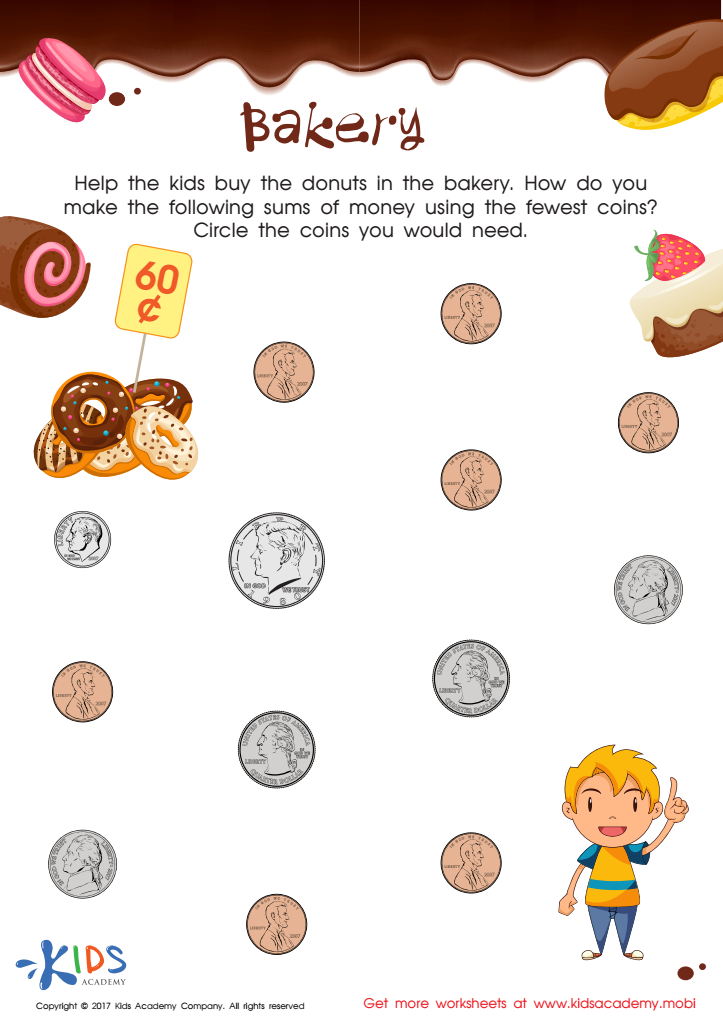
Counting Coins Worksheet
 Assign to My Students
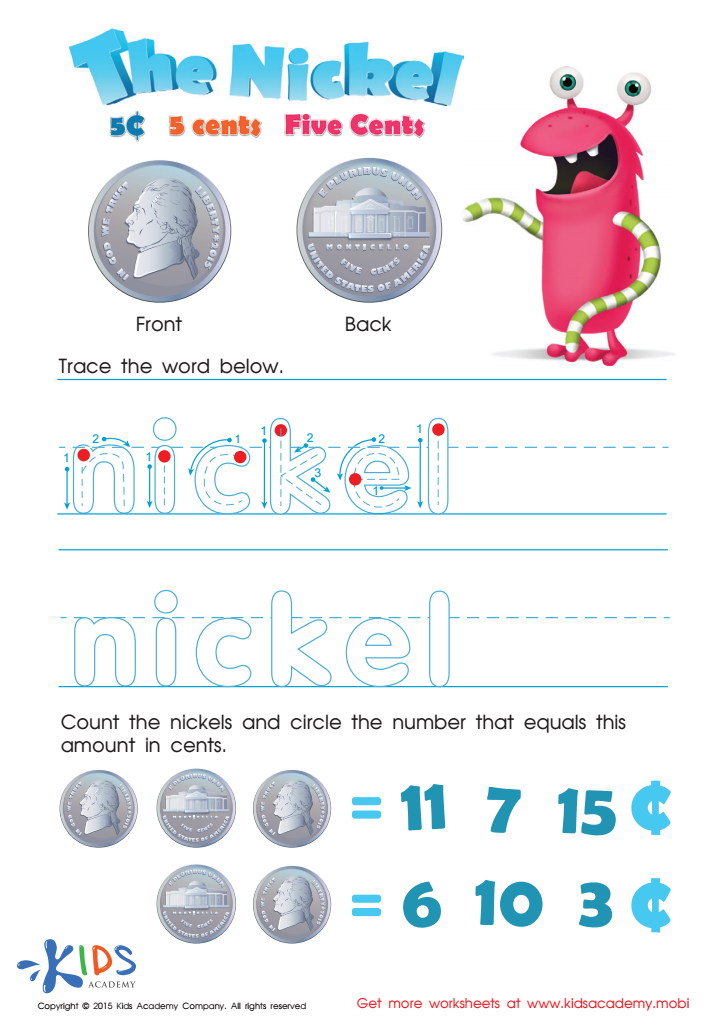
Five Cents or the Nickel Money Worksheet
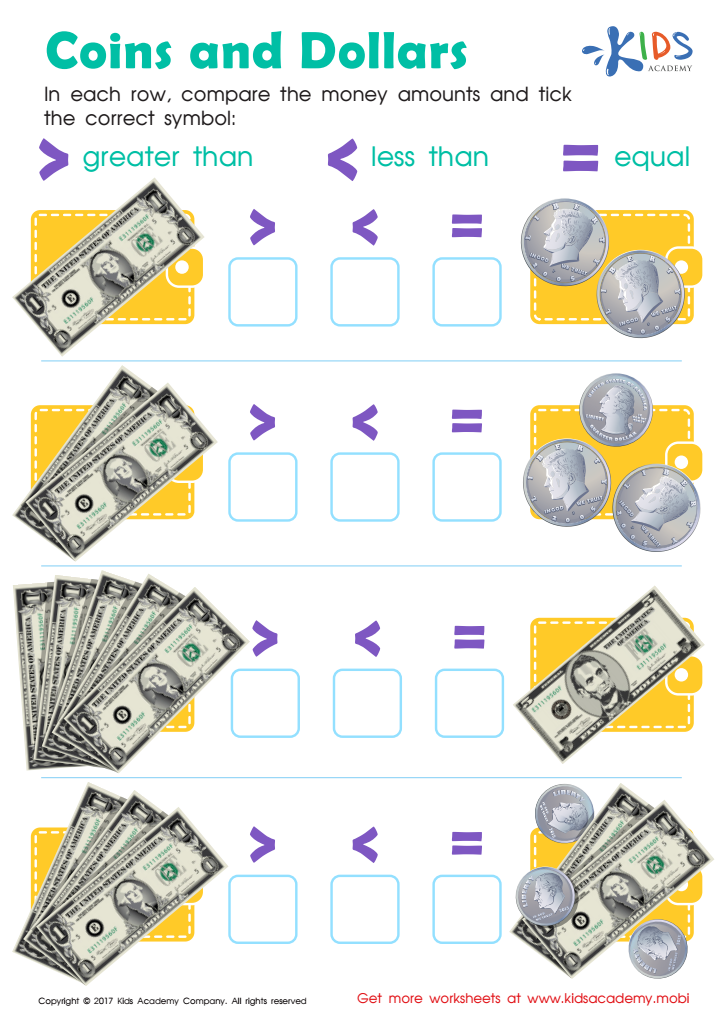
Money: Coins Dollars Printable







Understanding currency is an essential skill for children aged 8-9 as it lays the groundwork for financial literacy, which is crucial for their future independence and success. At this age, children are developing basic math skills and beginning to understand the concept of value, making it an ideal time to introduce them to money.
For parents, ensuring that their children grasp the idea of currency equips them with practical skills for real-life situations, such as making purchases, budgeting allowance, and saving. This foundational knowledge helps prevent poor financial habits early on and encourages smart spending decisions. By engaging in activities like counting coins, making change, or understanding the cost of everyday items, children also sharpen their problem-solving and critical-thinking abilities.
Teachers play a critical role in integrating currency concepts into the curriculum, reinforcing math skills in a practical, relatable way. Lessons involving money can enhance arithmetic learning, making abstract concepts more concrete and understandable. Moreover, understanding currency helps children connect classroom learning to the real world, fostering a sense of responsibility and independence.
In summary, grasping the basics of currency benefits children by instilling essential life skills, promoting better financial habits, and enhancing their overall numeracy. Both parents and teachers should actively support this learning to ensure their children grow into financially responsible adults.








