Understanding division Worksheets for Ages 8-9
8 filtered results
-
From - To
Explore our engaging "Understanding Division Worksheets" tailored for ages 8-9, designed to build a solid foundation in division concepts. These worksheets provide a fun and interactive way for young learners to grasp key division principles, from basic facts to more complex word problems. With a variety of exercises including visual aids and step-by-step instructions, children will improve their problem-solving skills and enhance their number sense. Perfect for classroom use or at-home practice, these worksheets encourage kids to learn at their own pace. Help your child master division with our expertly crafted resources designed to support their learning journey!
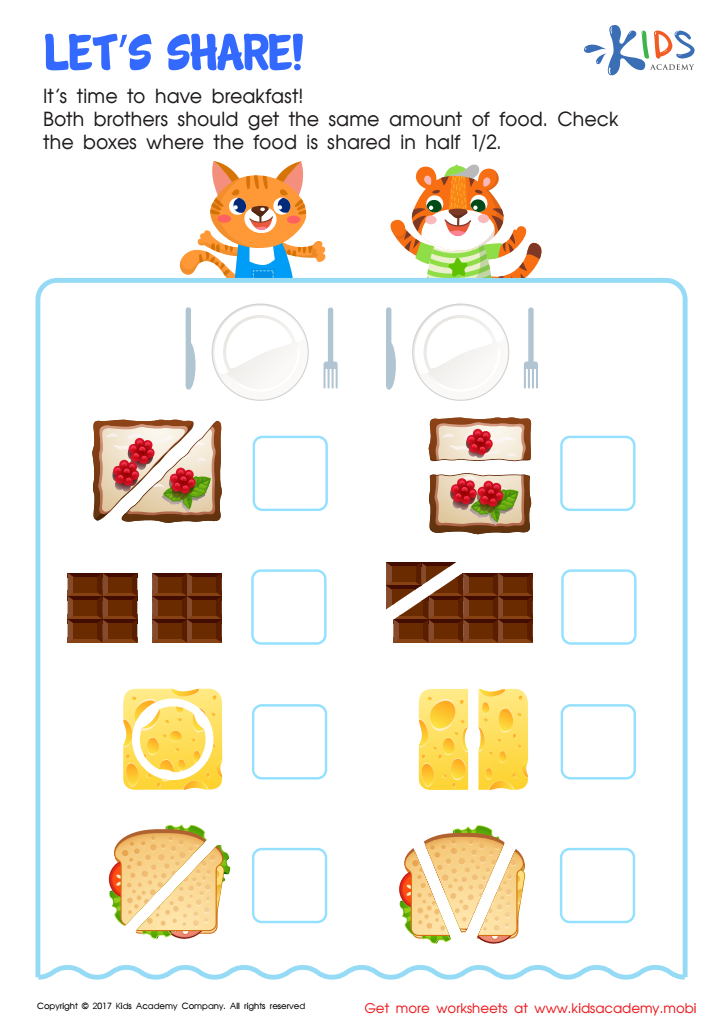
Let's Share Worksheet
 Assign to My Students
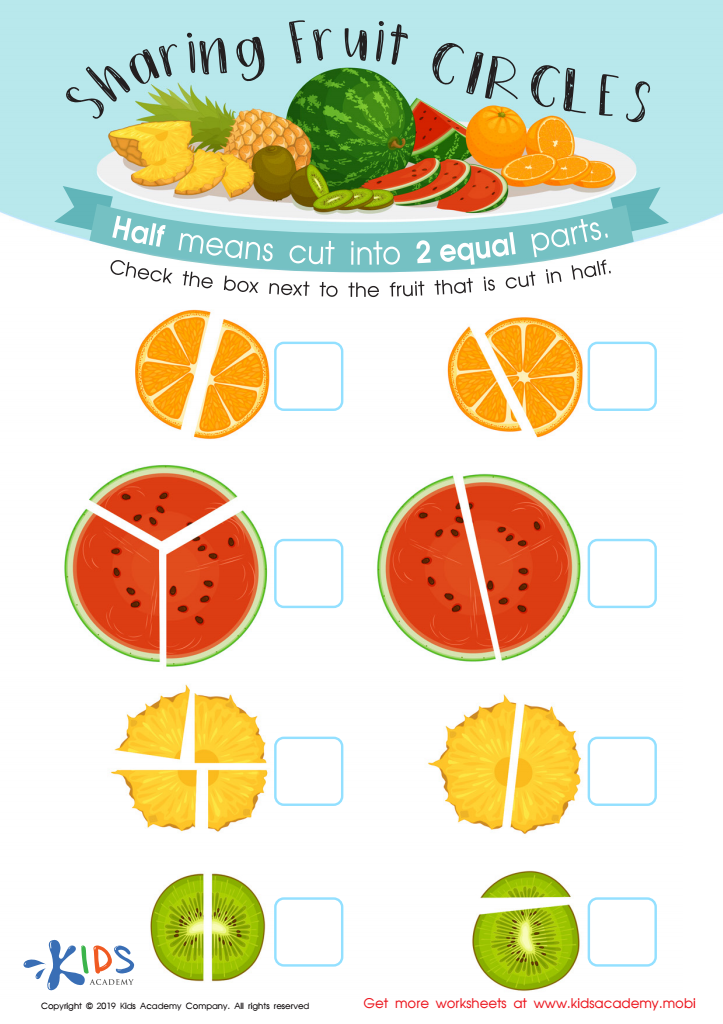
Sharing Fruit Circles Worksheet
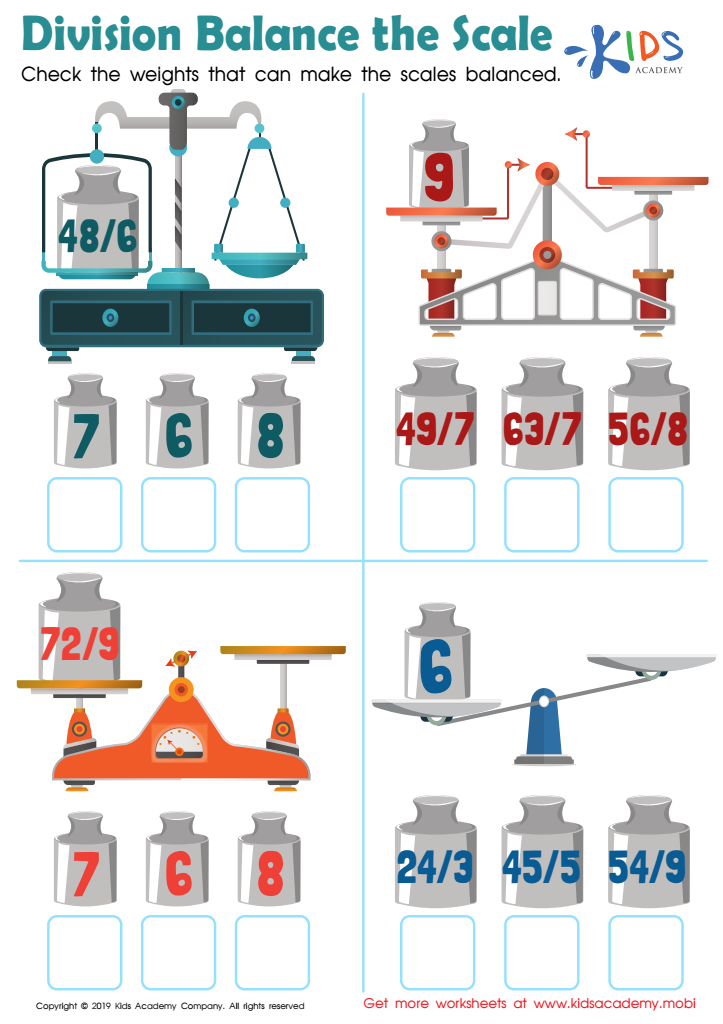
Division Balance the Scale Worksheet







Understanding division is crucial for children aged 8-9, as it forms the foundation for more advanced mathematical concepts and problem-solving skills. At this age, children develop critical thinking and reasoning abilities, making it essential for them to grasp the concept of division, which goes beyond mere memorization of facts.
Division helps children understand how quantities are related and promotes a deeper comprehension of multiplication, which is its inverse operation. This foundational knowledge supports their ability to tackle real-world problems, such as sharing resources equally or calculating scenarios involving equal groups. By mastering division, students decrease math anxiety later on and gain confidence in their overall mathematical abilities.
Moreover, division plays a key role in developing important social skills. Engaging in division activities encourages collaboration, as students often work together to solve problems or organize sharing activities. It cultivates teamwork and communication, essential skills outside of the classroom.
Teachers and parents should care about fostering division skills in children to ensure they build a strong mathematical foundation, develop critical life skills, and encourage a positive attitude toward learning. By nurturing these skills early, we equip children for future academic success and practical application of mathematics in everyday life.








