Understanding food chains Worksheets for Ages 8-9
3 filtered results
-
From - To
Our "Understanding Food Chains Worksheets for Ages 8-9" are expertly crafted to help children grasp the essential concepts of food chains. These engaging printable worksheets are designed to simplify complex ecological relationships, making learning both enjoyable and effective. With fun activities, colorful illustrations, and thought-provoking questions, kids will explore how plants, herbivores, and carnivores interact within an ecosystem. Perfect for both classroom and home use, our worksheets underscore the importance of each organism in maintaining the balance of nature. Ignite your child’s curiosity and understanding of the natural world with our comprehensive, age-appropriate resources today!
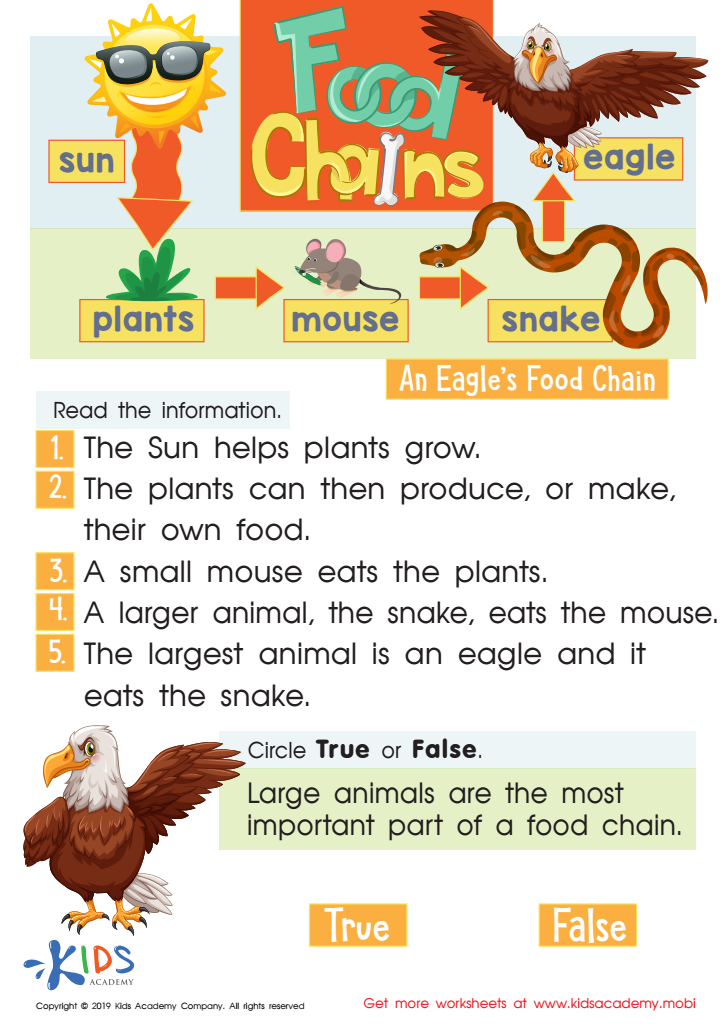
Food Chains Worksheet
 Assign to My Students
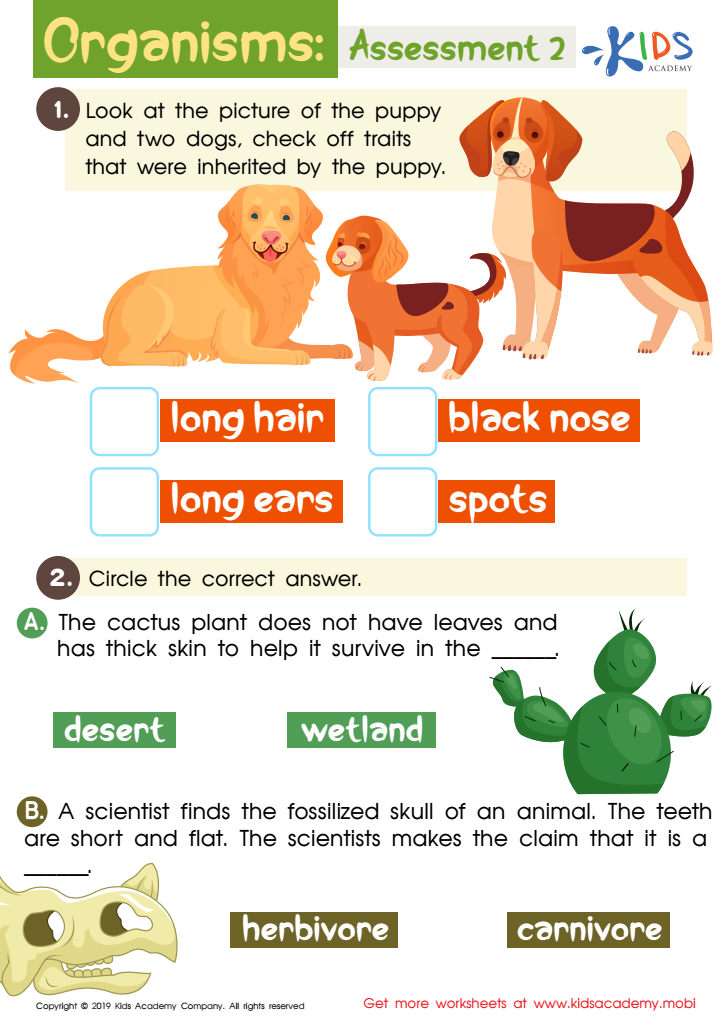
Organisms: Assessment 2 Worksheet
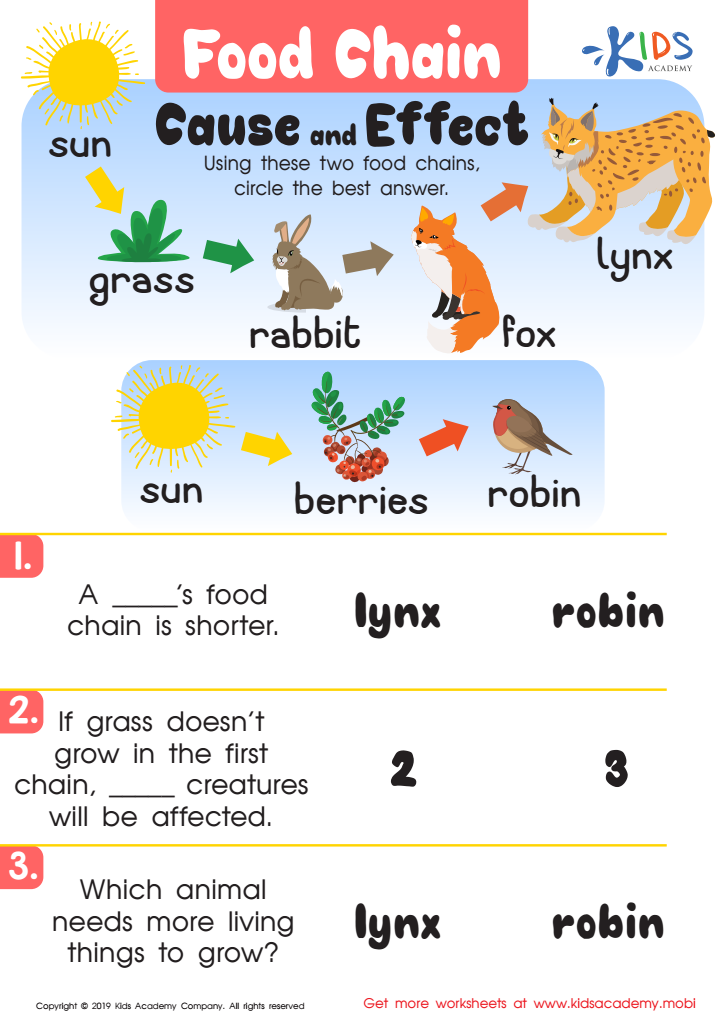
Food Chain Cause Worksheet







Understanding food chains is a crucial aspect of early science education for children aged 8-9. For parents and teachers, this knowledge serves multiple beneficial purposes in a child's developmental journey.
Firstly, understanding food chains helps kids grasp basic ecological concepts. It provides a clear picture of how energy is transferred from one organism to another, illustrating the interconnectedness of all living beings. This concept fosters a sense of environmental stewardship and a deeper appreciation of nature, instilling values that can shape responsible, eco-conscious adults.
Secondly, discussing food chains enhances critical thinking skills. Children learn to categorize organisms into producers, consumers, and decomposers, and understand their roles in the ecosystem. This kind of systematic classification helps improve problem-solving abilities and logical reasoning.
Moreover, learning about food chains can supplement nutritional education. Understanding where food comes from helps children make informed choices about their own diets, promoting healthier lifestyles.
Lastly, bringing real-world examples of food chains into the classroom or home can enrich a child’s observational and social skills. Activities like creating food chain diagrams, participating in science projects, or even visiting a local farm can promote teamwork and interactive learning.
In summary, parents and teachers should prioritize teaching food chains to develop ecological awareness, critical thinking, healthier choices, and enhanced social interaction in young learners.








