Understanding number relationships Worksheets for Ages 8-9
3 filtered results
-
From - To
Our "Understanding Number Relationships" worksheets for ages 8-9 are designed to help your child grasp pivotal math concepts. These engaging, printable resources build foundational skills in comparing, ordering, and sequencing numbers. By exploring number patterns, addition, subtraction, and other relationships, children gain a robust understanding of how numbers interact. Suitable for both classroom and home use, our worksheets transform learning into a fun and fruitful journey, making math intuitive and enjoyable. Dive into a world where numbers come alive, boosting confidence and academic success in your young learner. Start enhancing your child's numerical proficiency today!
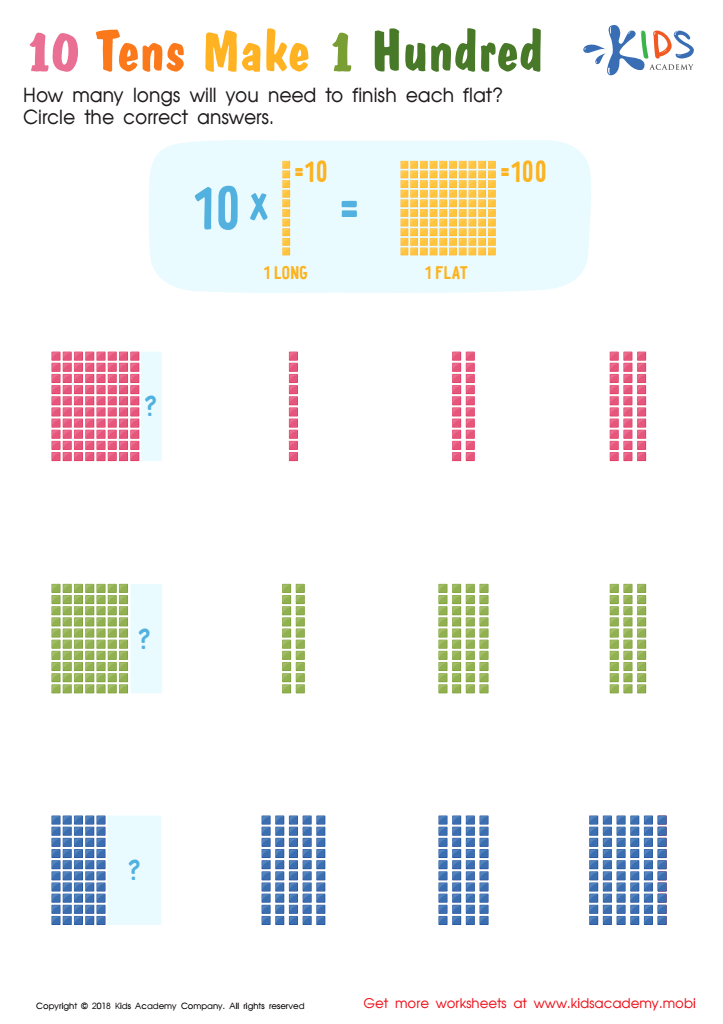
10 Tens Make 1 Hundred Worksheet
 Assign to My Students
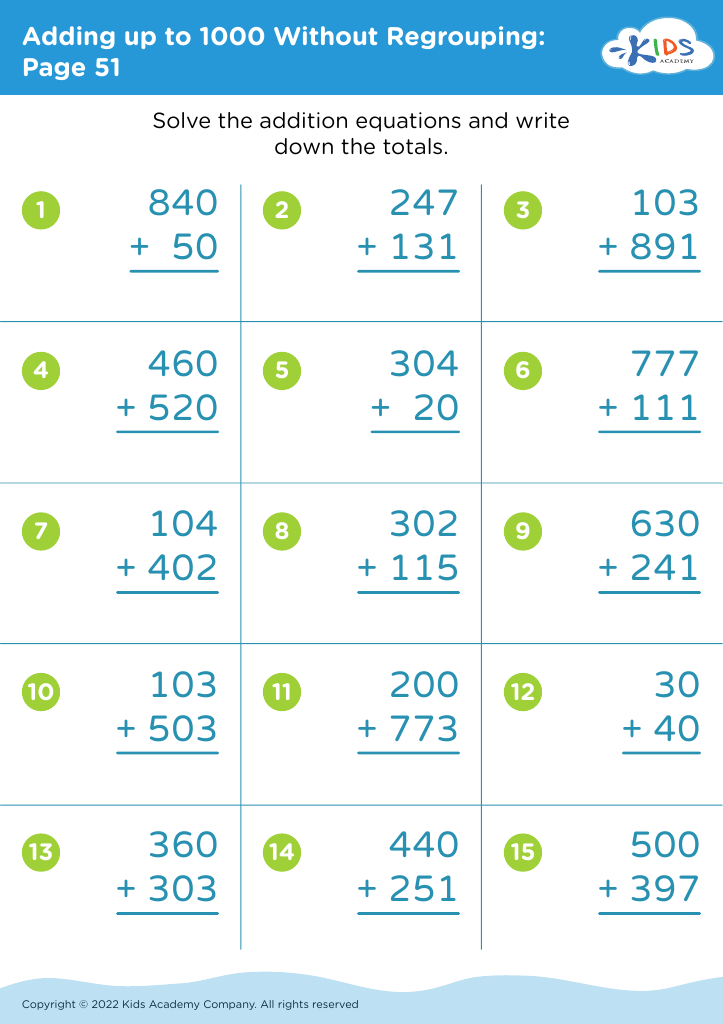
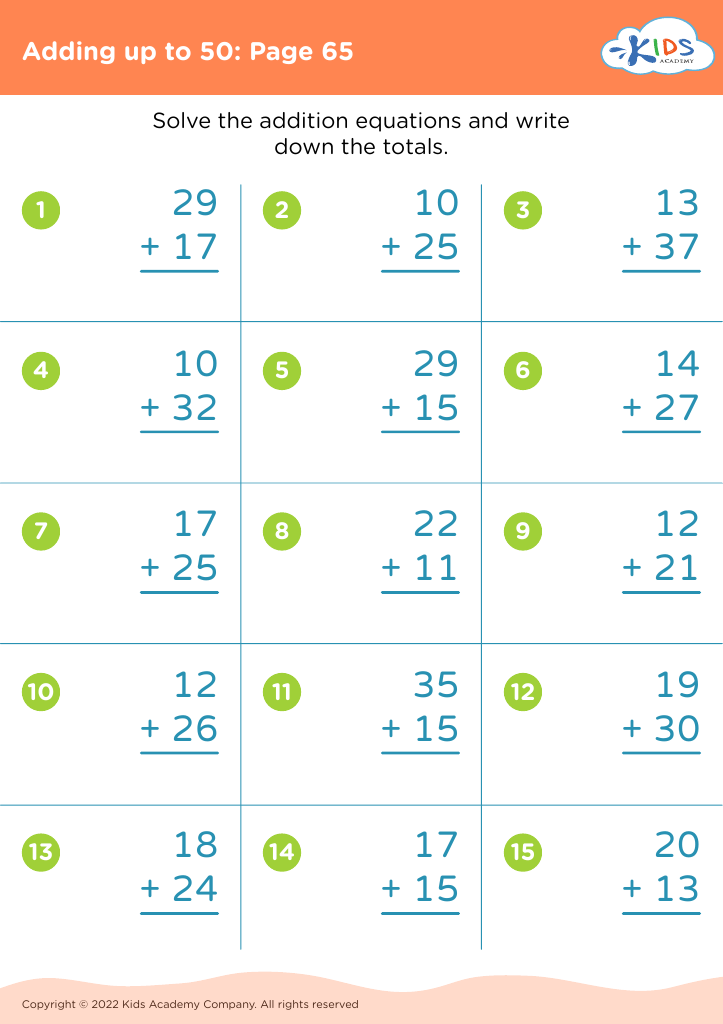








Understanding number relationships is crucial for children aged 8-9 because it forms a foundation for advanced mathematical concepts and critical thinking. At this age, children transition from basic arithmetic to more complex problem-solving and analytical skills. Grasping number relationships helps them see patterns and connections in math, which is essential for learning multiplication, division, fractions, and later, algebra.
For parents and teachers, fostering an understanding of number relationships means encouraging children to think flexibly about numbers. This flexibility promotes mental math skills, improving their ability to solve problems quickly and efficiently. It helps children understand that numbers are not just isolated digits but part of a larger, interconnected system. For instance, recognizing that 8 + 7 is the same as 8 + 8 - 1 can reinforce their understanding of addition while introducing subtraction naturally.
Moreover, strong number sense supports overall cognitive development, enhancing skills like memory, logical reasoning, and even language. It prepares children for real-world situations, from making change in a store to understanding time and measurement.
In essence, focusing on number relationships sets children up for future academic success and practical life skills, making it a critical area of focus for both parents and teachers.








