Understanding plurals Worksheets for Ages 8-9
3 filtered results
-
From - To
Introduce your child to the world of plurals with our "Understanding Plurals Worksheets" designed for ages 8-9. These engaging resources simplify the concept of pluralizing nouns through colorful illustrations and stimulating exercises. Perfect for reinforcing grammar skills, our worksheets support your child in identifying, forming, and correctly using plural nouns. Ideal for both classroom and home use, these printables provide comprehensive practice, boosting language proficiency and confidence. Help your child master plurals with activities that transform learning into a fun-filled adventure. Let's make grammar exciting and accessible for young learners!
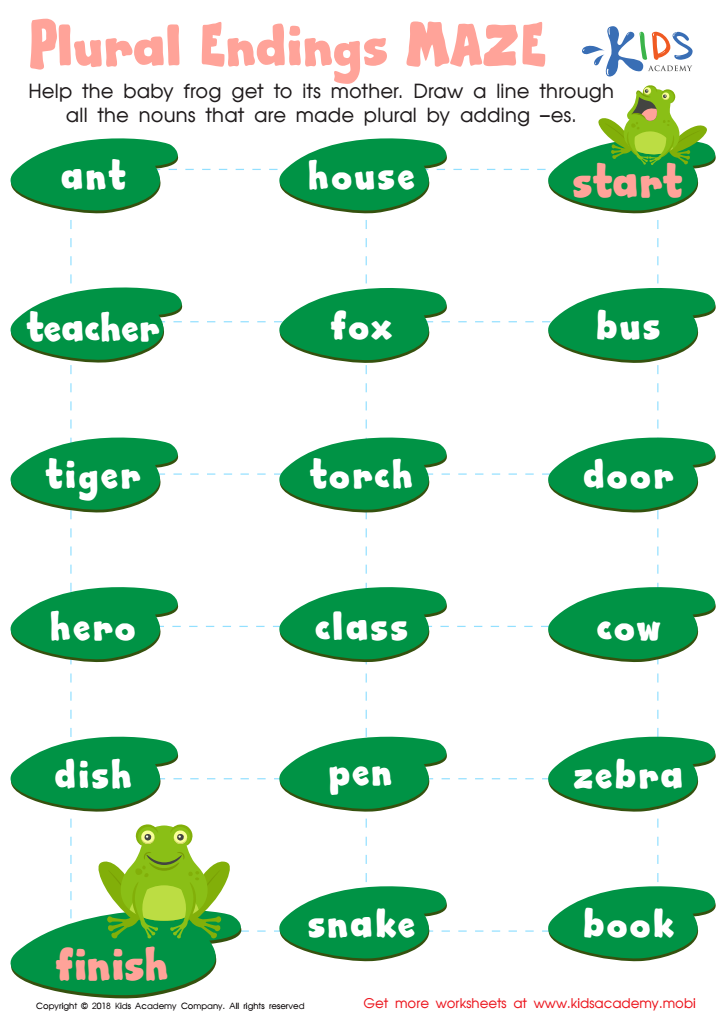
Plural Endings Maze Worksheet
 Assign to My Students
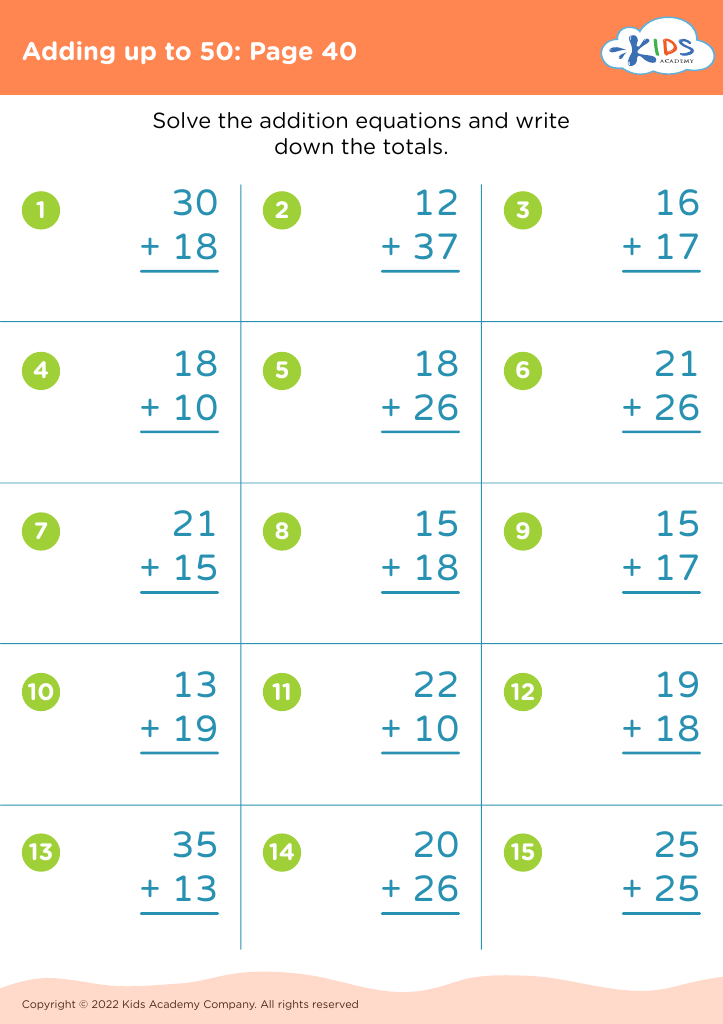
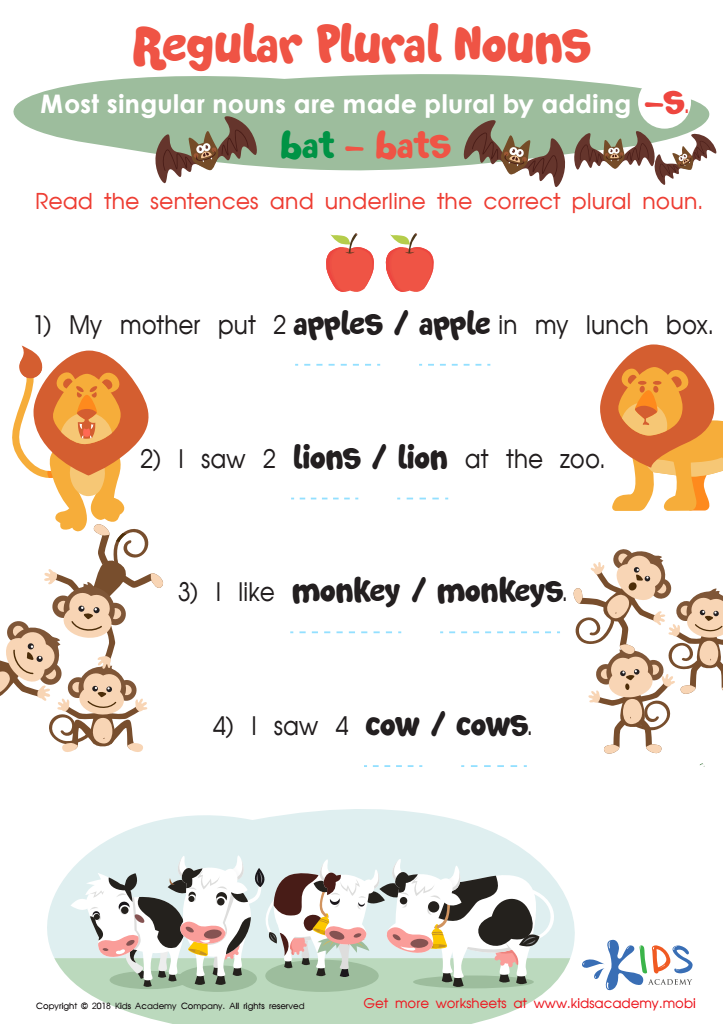
Regular Plural Nouns Worksheet







Understanding plurals is crucial for children aged 8-9 because it forms a foundational element of linguistic development and communication skills. At this age, children are transitioning from simple sentence construction to more complex grammatical structures. Mastering plurals helps them accurately describe objects, actions, and experiences, thereby enhancing both their spoken and written communication. This skill is directly tied to their reading comprehension and overall language proficiency.
For parents and teachers, emphasizing the importance of plurals is essential. Grasping plurals aids children in understanding the concept of quantity, which is beneficial not just for language arts but also for subjects like math and science. Proper use of plurals helps in expanding their vocabulary, enabling them to express ideas more precisely. For instance, knowing the difference between “child” and “children” or “mouse” and “mice” helps in creating clearer and more effective sentences.
Teaching plurals also involves critical thinking as children must learn various rules and exceptions, such as regular plurals (adding -s or -es) and irregular plurals that don't follow typical patterns. This cognitive exercise enhances problem-solving skills and linguistic flexibility, setting a robust foundation for future education. Therefore, understanding plurals is more than just a language skill; it's an integral part of a child's holistic development.








