Understanding pollination Worksheets for Ages 8-9
4 filtered results
-
From - To
Discover our engaging "Understanding Pollination Worksheets for Ages 8-9". Designed specifically for young learners, these printable worksheets make the fascinating process of pollination easy to understand. Through a variety of activities, children explore how plants reproduce, the role of pollinators like bees and butterflies, and why pollination is essential for our ecosystem. These worksheets integrate science, reading comprehension, and critical thinking skills to offer a rounded educational experience that captivates young minds. Ideal for classroom or home use, our pollination worksheets provide a fun and interactive way for children to connect with nature and understand vital ecological processes.
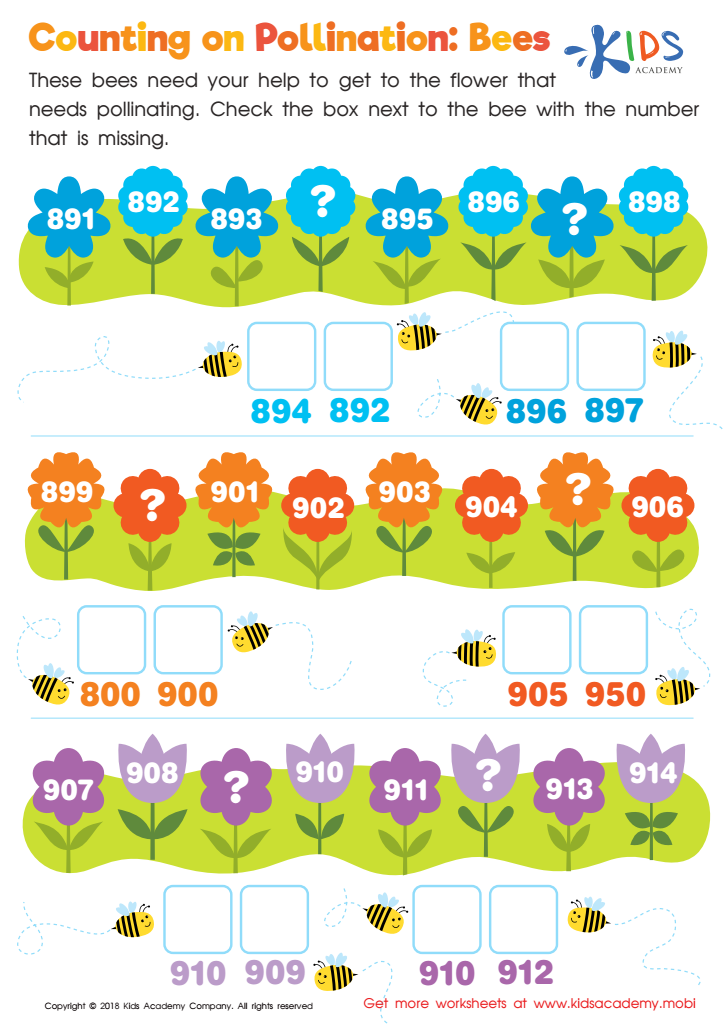
Counting on Pollination: Bees Worksheet
 Assign to My Students
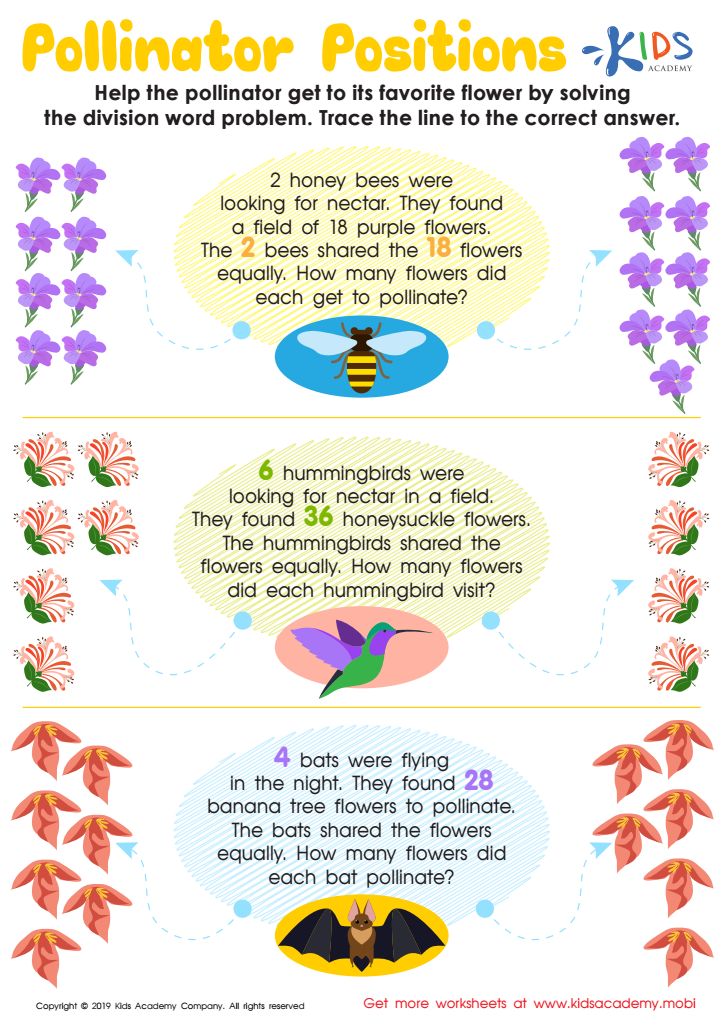
Pollinator Positions Worksheet
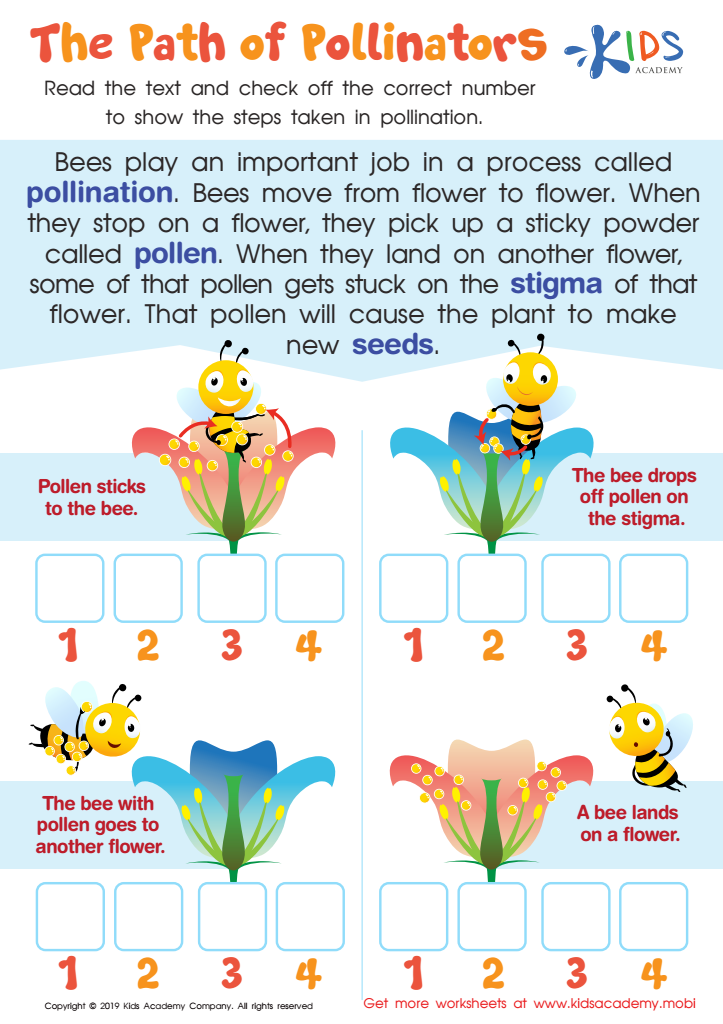
The Path of Pollinators Worksheet
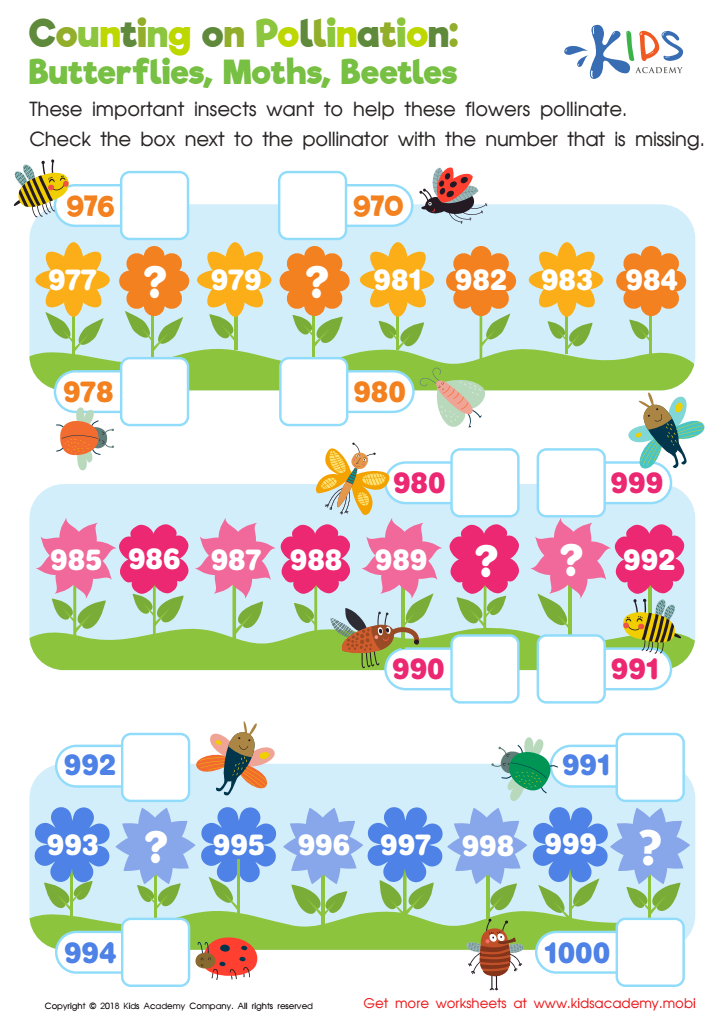
Counting on Pollination: Butterflies, Moths, Beetles Worksheet







Understanding pollination is crucial for children aged 8-9 as it lays a foundation for their scientific literacy and fosters a deeper appreciation for the natural world. Pollination is fundamental to the growth of fruits, vegetables, and flowers, thus directly affecting food supplies and ecosystems. Early awareness equips kids with knowledge about the importance of bees, butterflies, and other pollinators, highlighting how these creatures contribute to our well-being and the environment.
For parents and teachers, conveying this information reinforces critical thinking and curiosity in children. It empowers young students to make connections between classroom lessons and real-world ecology, fostering a sense of responsibility toward nature. Teaching pollination can enhance kids' comprehension of wider concepts such as life cycles, plant biology, and interdependence of species, which are pivotal in standard curriculums. Activities like observing gardens or visiting botanical centers transform abstract concepts into tangible experiences, reinforcing learning through engagement.
Furthermore, grasping the significance of pollination nurtures environmental stewardship from an early age. In an era of climate change and declining pollinator populations, raising environmentally conscious children equipped with this knowledge is vital for future conservation efforts. It results in a generation of informed individuals capable of making positive impacts by advocating for and practicing environmentally-sustainable behaviors.








