Understanding times tables Worksheets for Ages 8-9
6 filtered results
-
From - To
Explore the essential Understanding Times Tables worksheets designed for children aged 8-9 at Kids Academy! These interactive resources simplify the learning process, helping young learners grasp multiplication concepts with ease. Our worksheets include engaging exercises that reinforce skills through fun, Hands-on activities, enabling students to master multiplication facts quickly. With a variety of formats, children can practice at their own pace, all while building confidence in their math abilities. Perfect for reinforcing classroom learning at home or on the go, these worksheets are an invaluable tool for any child looking to understand and excel in times tables. Start your child’s math journey today!
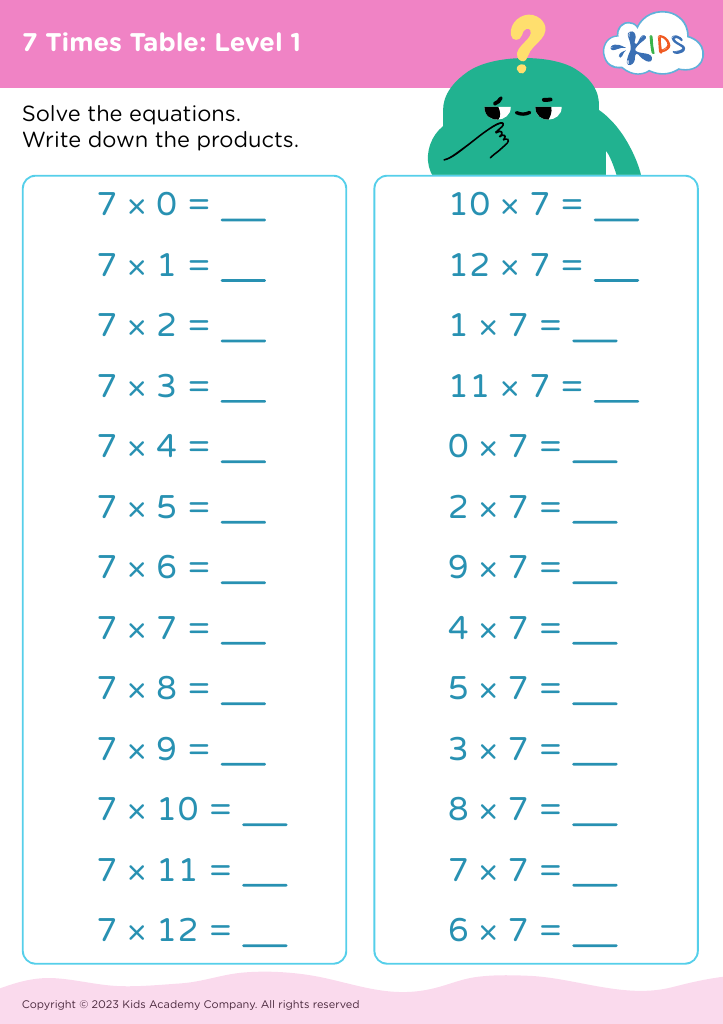
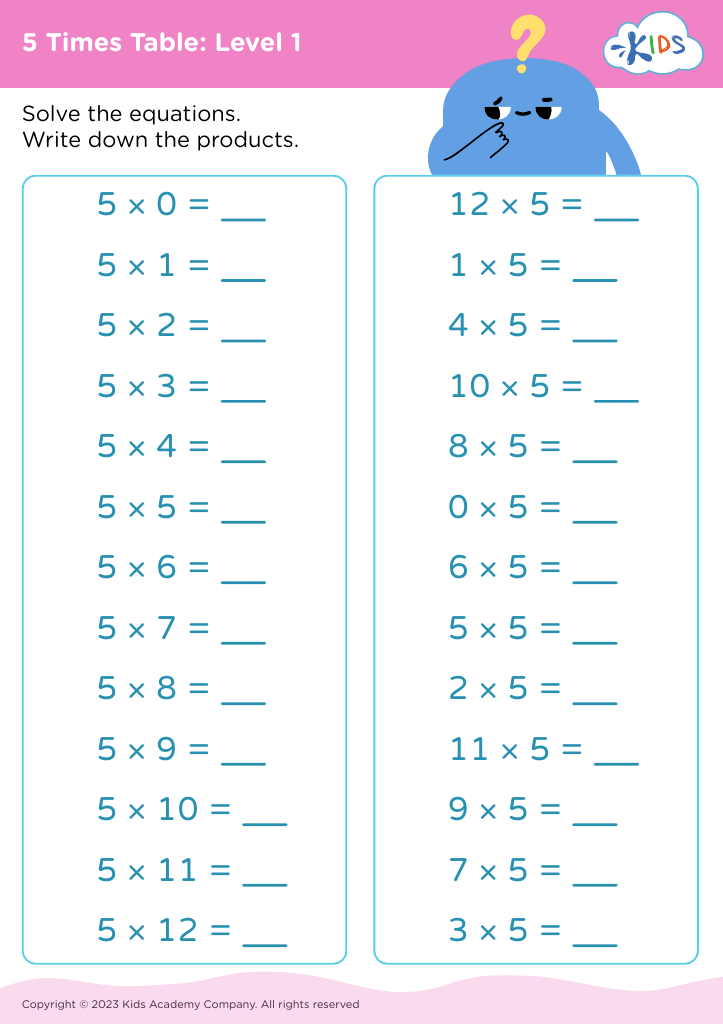
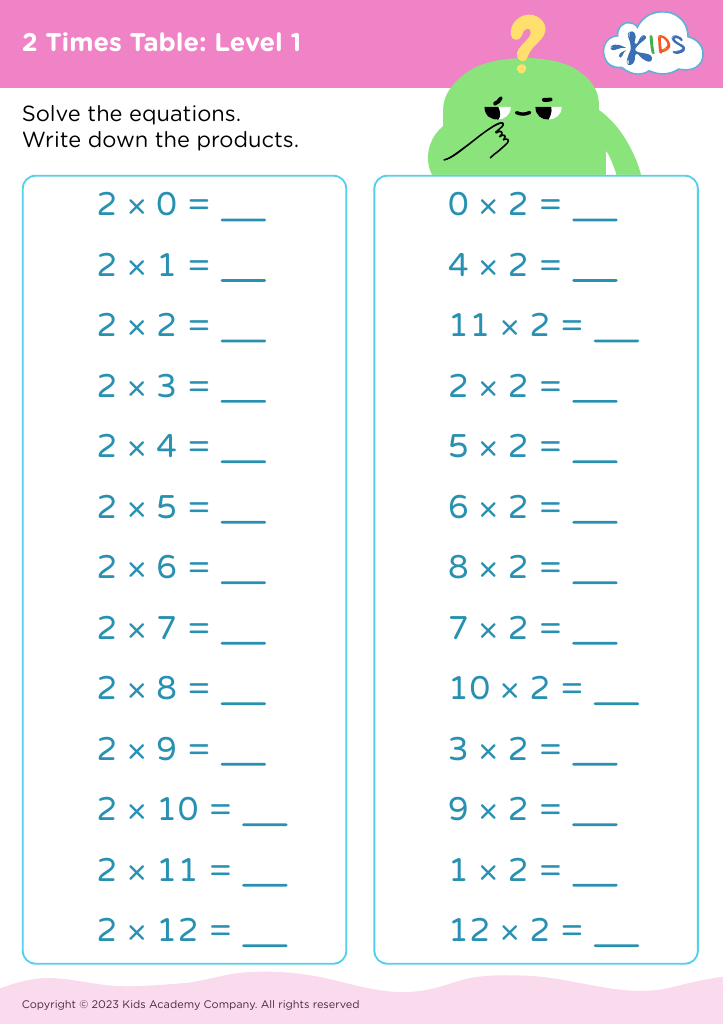
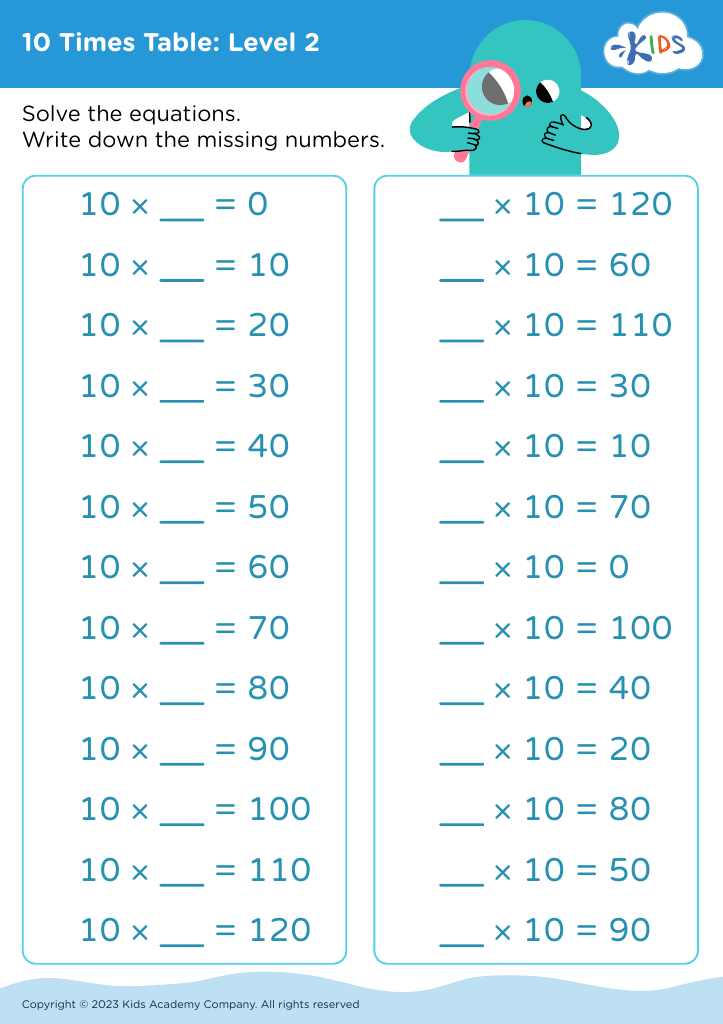
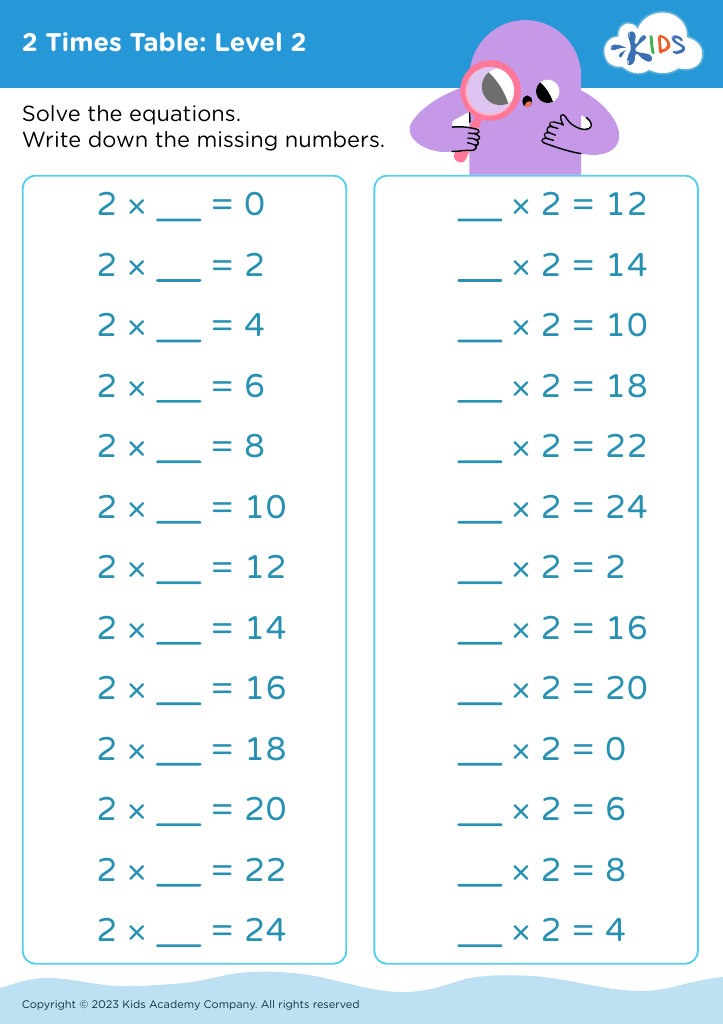
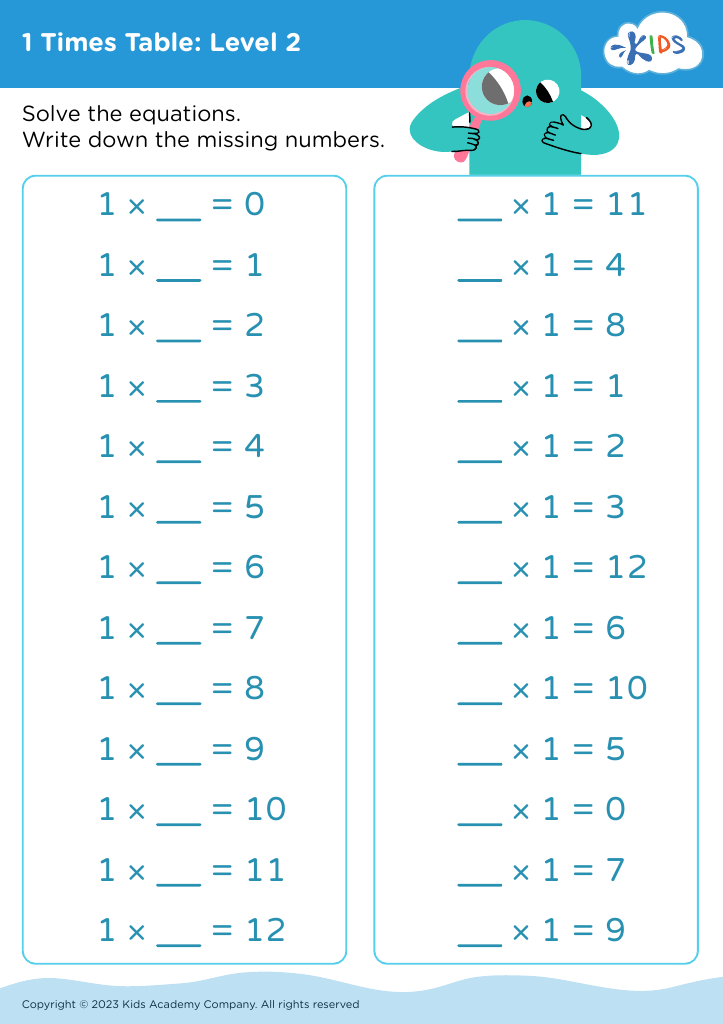






Understanding times tables is crucial for children aged 8-9 as it lays the foundation for their mathematical proficiency. At this stage, children transition from basic number recognition to more advanced concepts. Mastery of times tables enhances their ability to tackle addition, subtraction, and division problems, making overall mathematics learning more manageable.
Moreover, fluency in times tables promotes confidence in their mathematical abilities. Children who struggle with basic multiplication may feel anxious or discouraged, which could affect their performance in future math-related subjects. By solidifying these fundamental skills, teachers and parents can help cultivate a positive attitude towards math, ensuring students approach challenging concepts with confidence and resilience.
Additionally, many real-world applications, such as budgeting, cooking, and problem-solving in daily life, rely on strong multiplication skills. By emphasizing the importance of times tables, educators and parents can help children understand how math is relevant beyond the classroom.
Lastly, fostering a positive attitude towards learning at this age is essential; a solid grasp of times tables empowers children, encouraging them to engage actively with mathematical topics and see them as interesting challenges rather than insurmountable obstacles. This foundational understanding will serve them well throughout their entire educational journey and in life beyond school.








