Vocabulary enhancement 2D Shapes Worksheets for Ages 8-9
3 filtered results
-
From - To
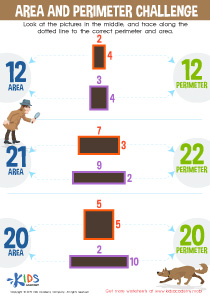
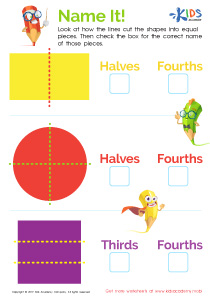
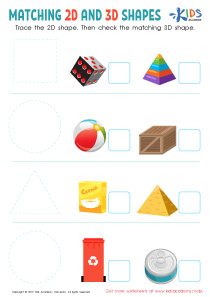
Enhance your child's vocabulary with our engaging 2D Shapes Worksheets designed for ages 8-9! These interactive resources focus on building understanding and terminology related to various shapes, such as circles, squares, triangles, and rectangles. Through fun activities and exercises, children will improve their language skills while exploring geometric concepts. Each worksheet is crafted to provide an enjoyable learning experience that helps reinforce shape identification and vocabulary usage. Perfect for at-home practice or classroom learning, our comprehensive worksheets support educators and parents in fostering essential math skills, making learning about 2D shapes both educational and enjoyable. Start shaping your child's vocabulary today!
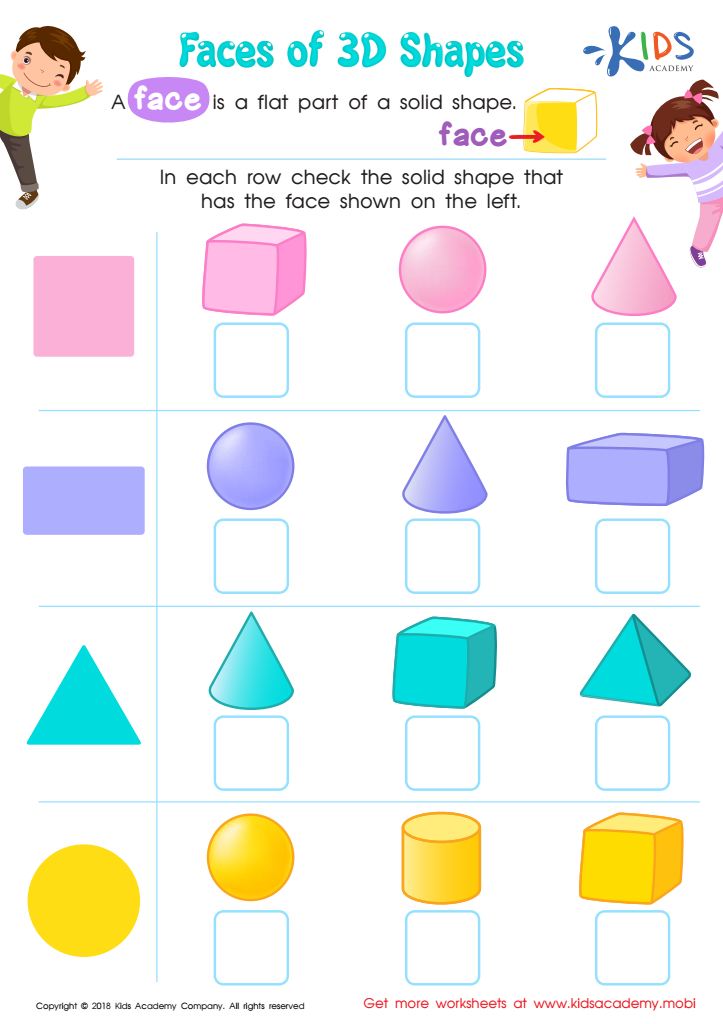
Faces of 3D Shapes Worksheet
 Assign to My Students


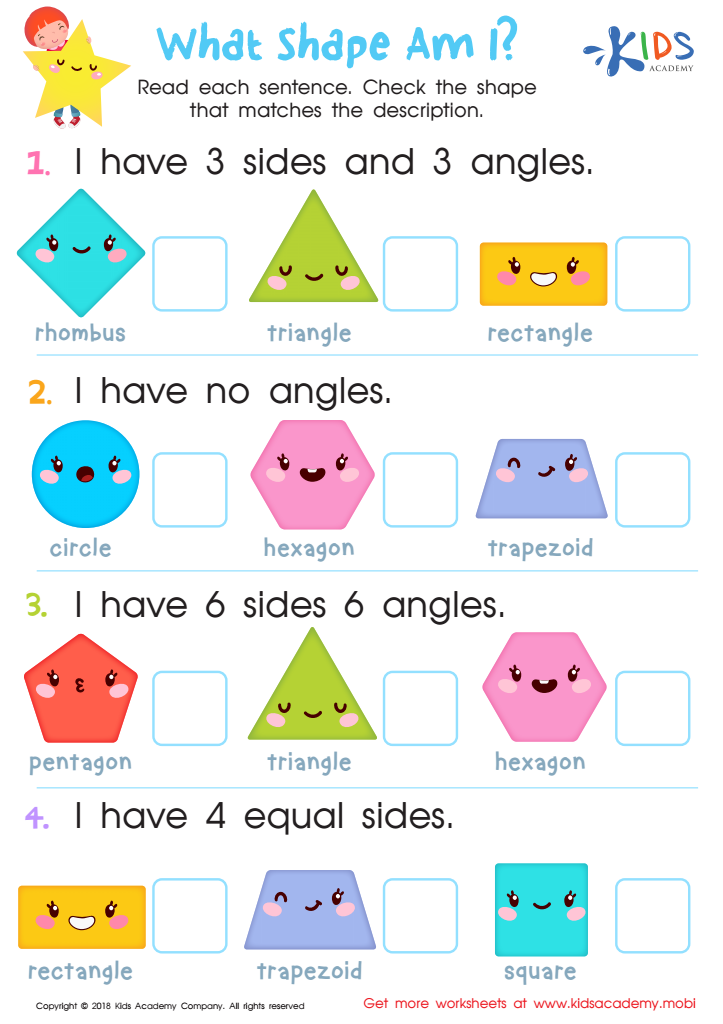
What Shape Am I? Worksheet
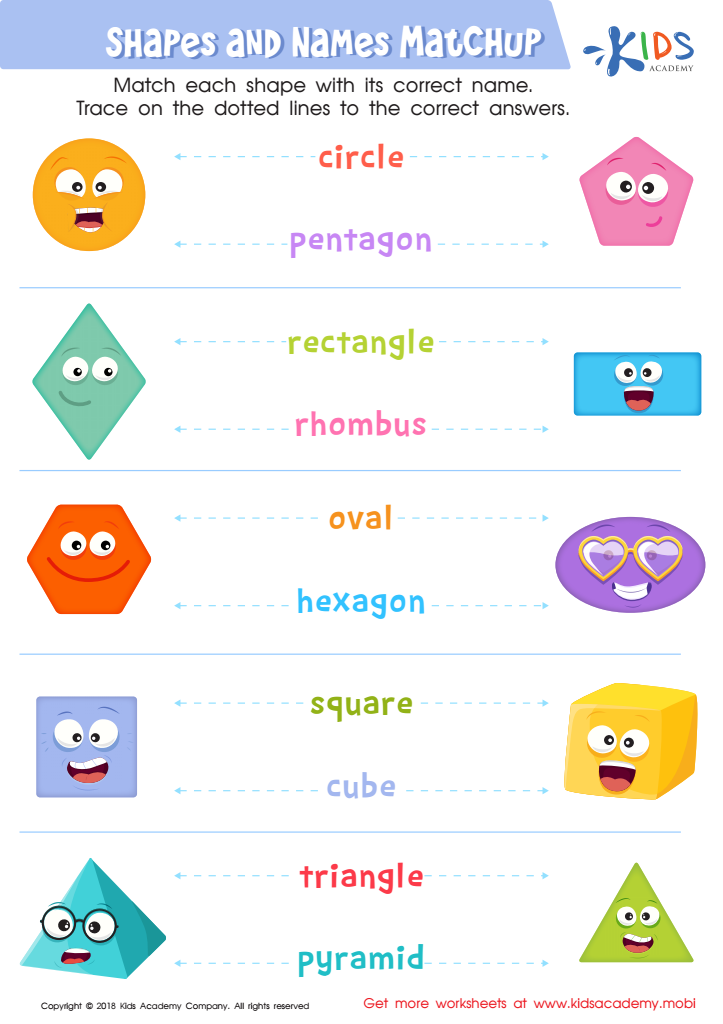
Shapes and Names Matchup Worksheet








Vocabulary enhancement related to 2D shapes for children aged 8-9 is crucial for multiple reasons. Firstly, at this age, children are developing critical thinking and analytical skills. Understanding terms like "hexagon," "parallelogram," and "acute angle" not only bolsters their mathematical vocabulary but also allows them to articulate their thoughts more clearly when discussing geometric concepts. By strengthening their vocabulary, children boost their confidence in expressing ideas and asking questions.
Additionally, a strong grasp of vocabulary enhances reading comprehension, particularly with educational texts and problems that involve geometry. As mathematics increasingly incorporates language, the ability to understand and utilize specific terms becomes essential for mastering concepts. This foundation aids in creating a seamless transition to more complex topics in the future.
Furthermore, knowing geometric vocabulary improves collaborative skills. As children engage in discussions or group projects, the ability to use precise language helps them communicate effectively with peers, enhancing teamwork and problem-solving abilities.
In summary, enhancing vocabulary around 2D shapes not only supports mathematical proficiency but also fosters overall cognitive development, communication skills, and collaborative learning among children. Parents and teachers should prioritize this aspect of education to mitigate future learning challenges.