Problem-Solving Skills Adding 2-digit Numbers Worksheets for Ages 8-9
10 filtered results
-
From - To
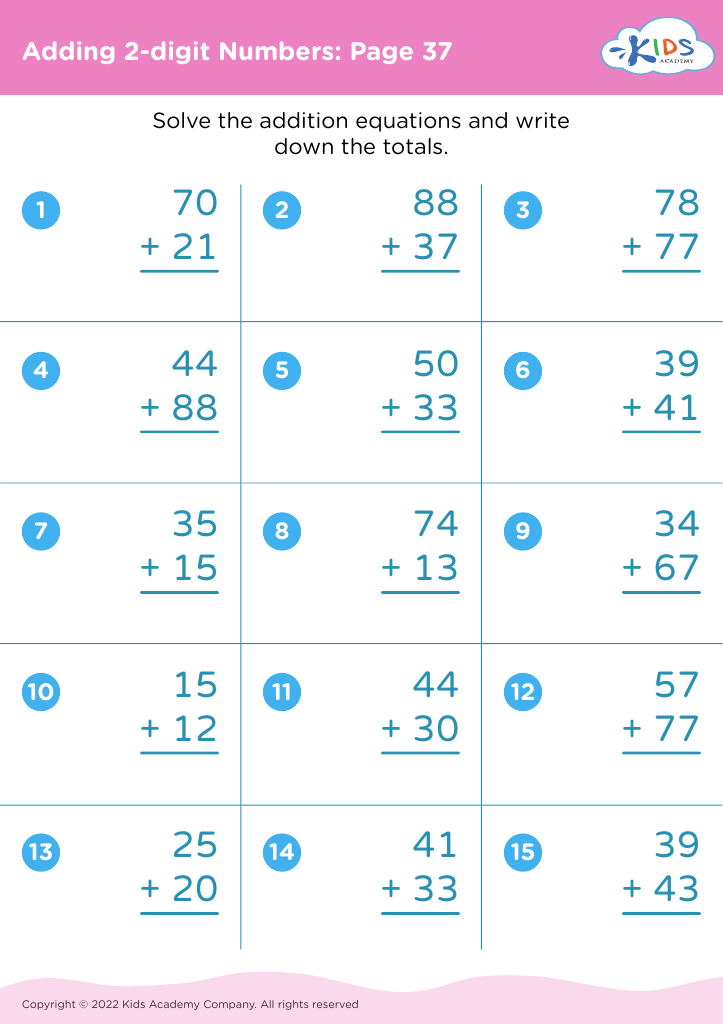
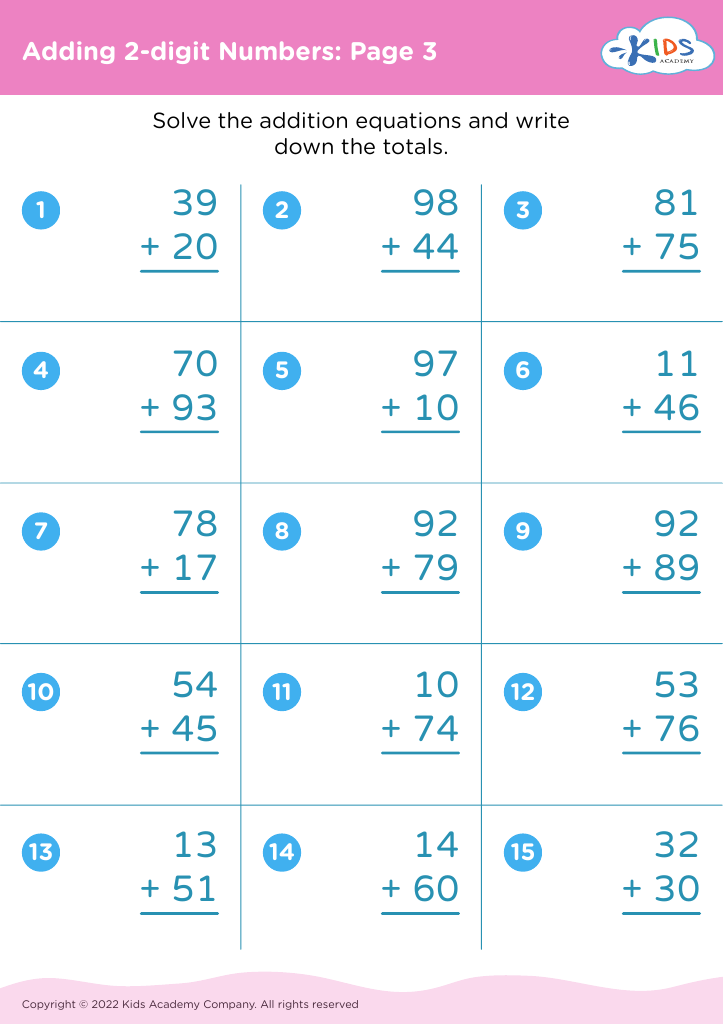
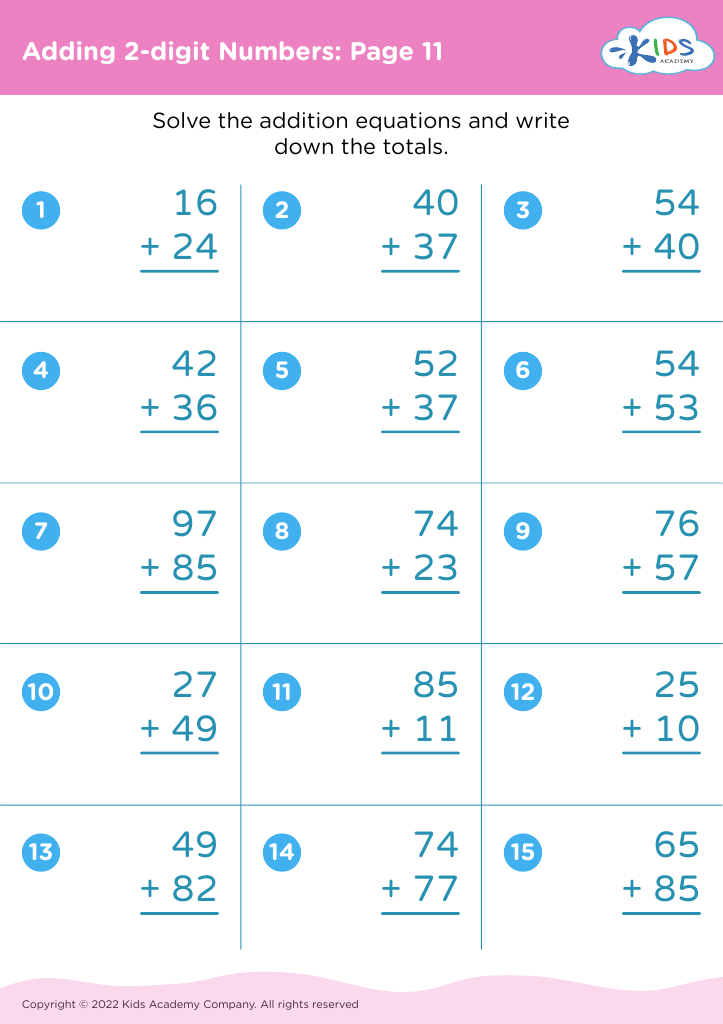
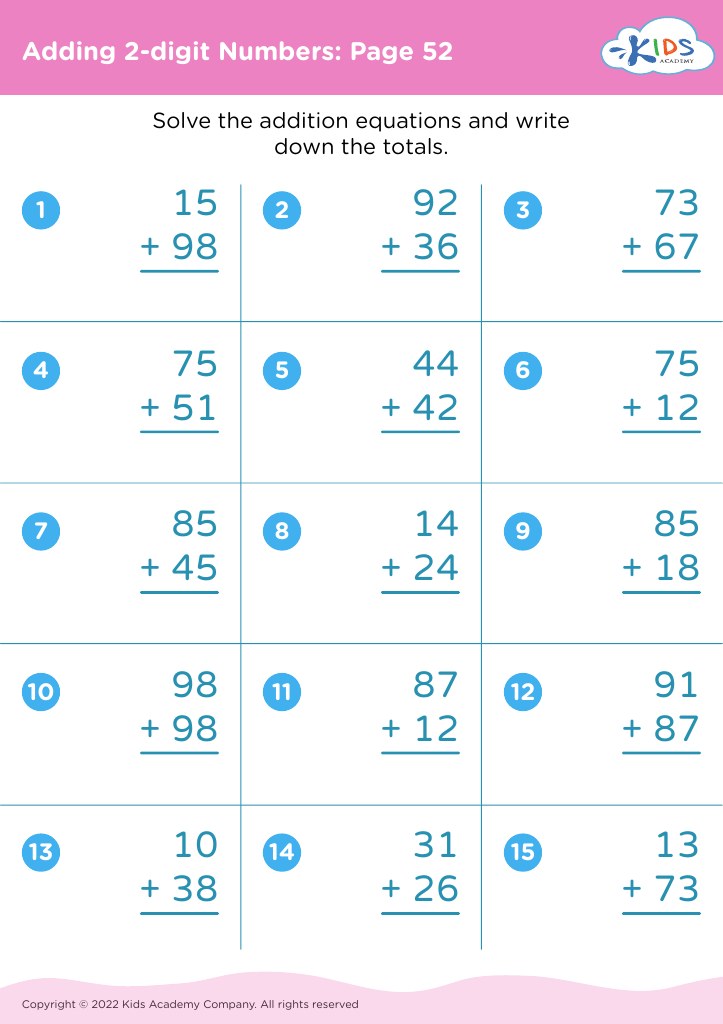
Boost your child's mathematical prowess with our Problem-Solving Skills Adding 2-Digit Numbers Worksheets, specially designed for ages 8-9. These engaging worksheets blend core arithmetic practice with fun problem-solving exercises to reinforce addition skills. Each worksheet offers a variety of challenges, encouraging young learners to apply critical thinking and step-by-step strategies. Ideal for classroom use or extra practice at home, our worksheets ensure comprehensive skill development. Tailored for educational success, these printables help children gain confidence in their math abilities while stimulating their minds through innovative and thoughtful arithmetic activities. Perfect for consolidating their knowledge and love for math!
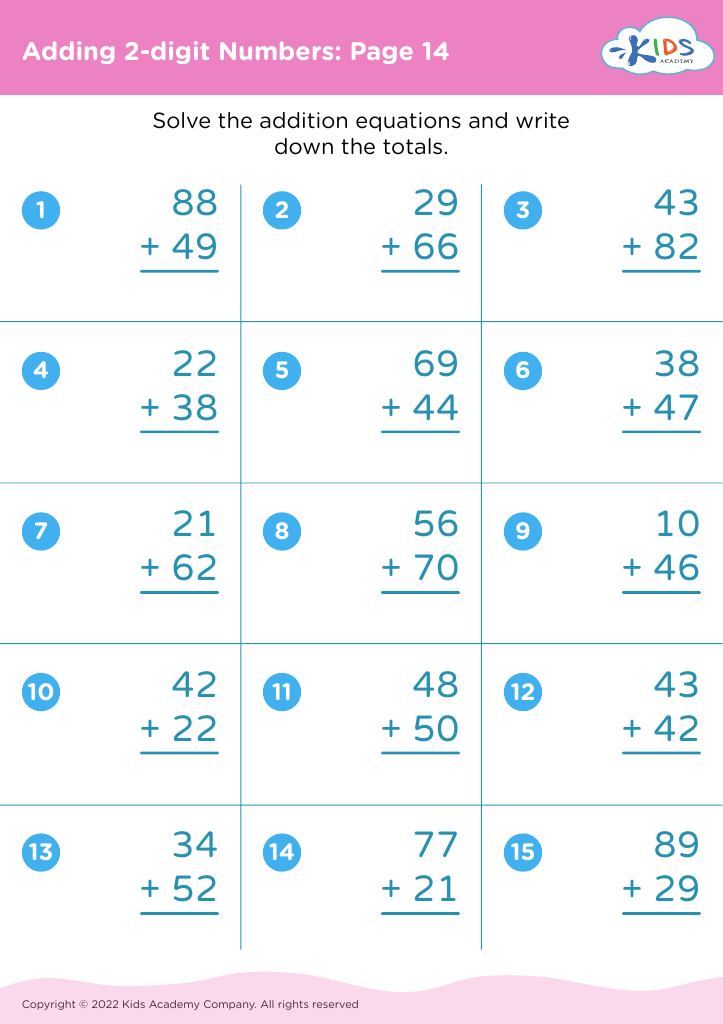
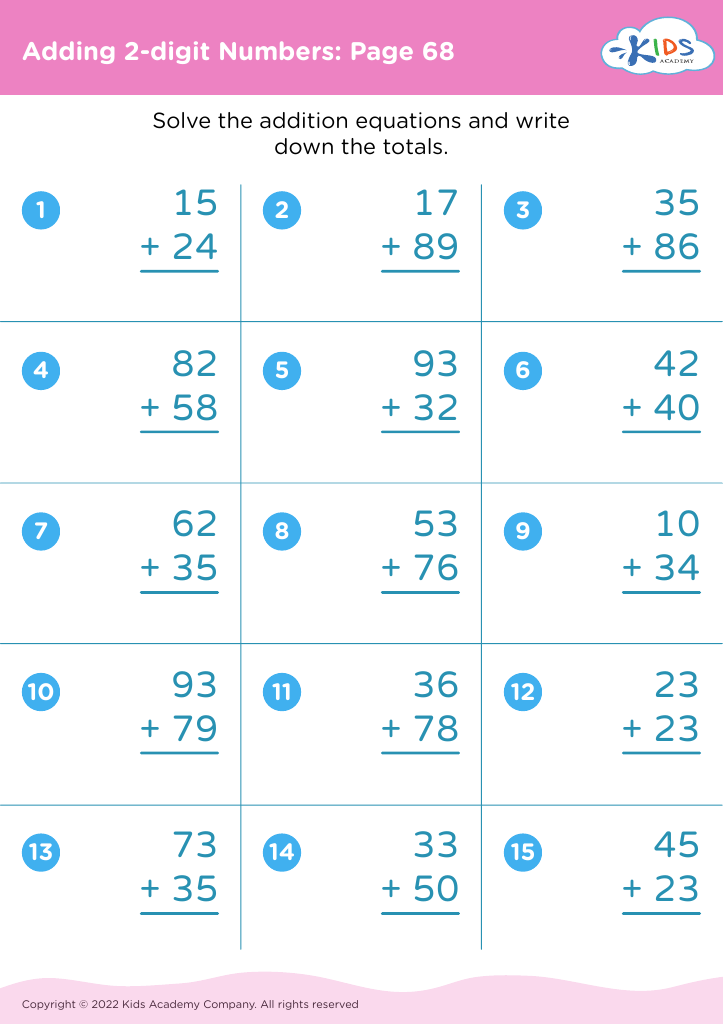
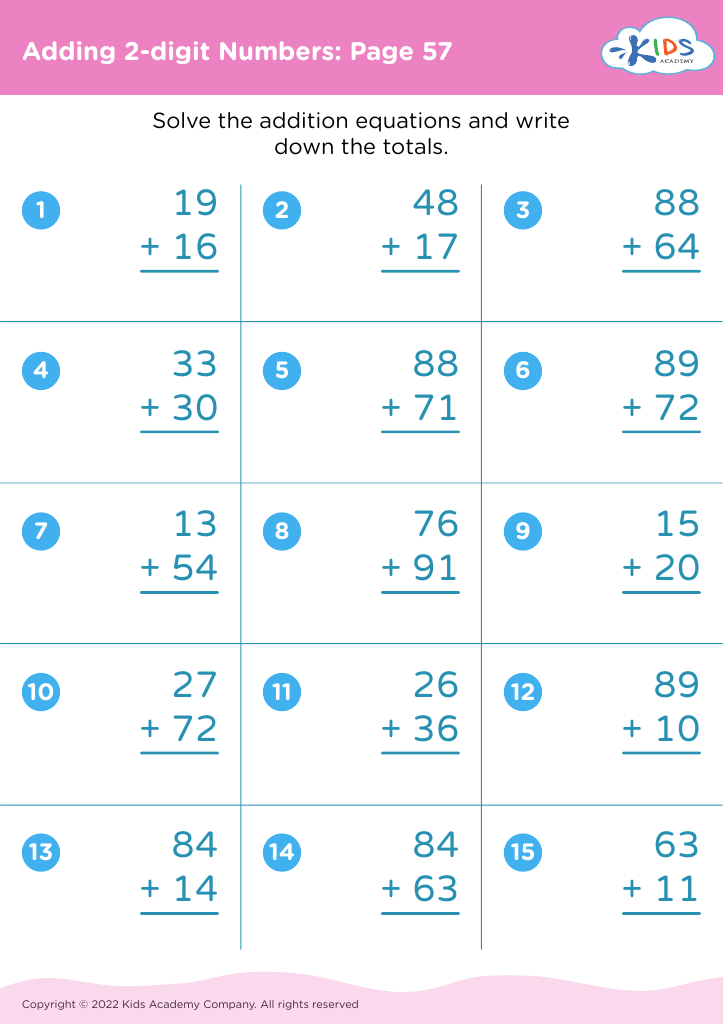
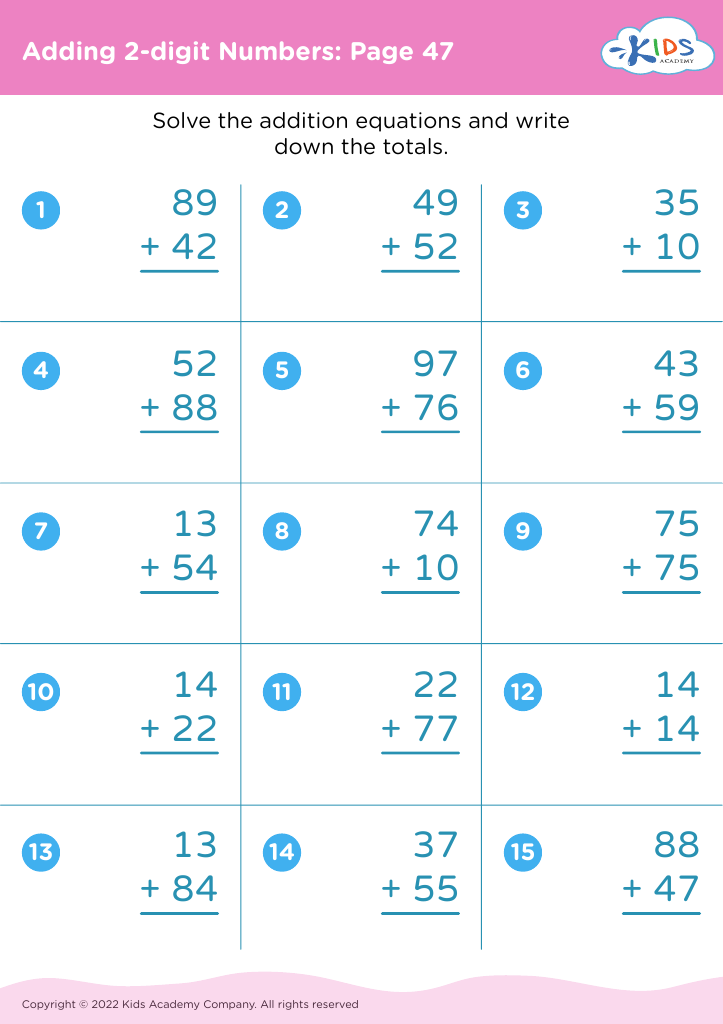
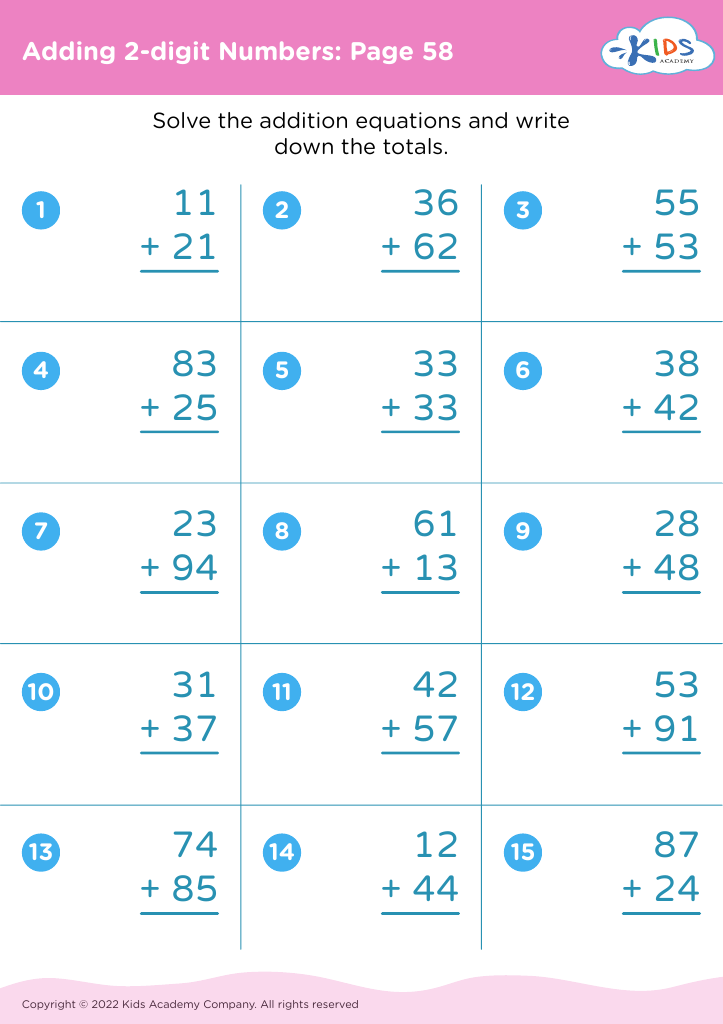
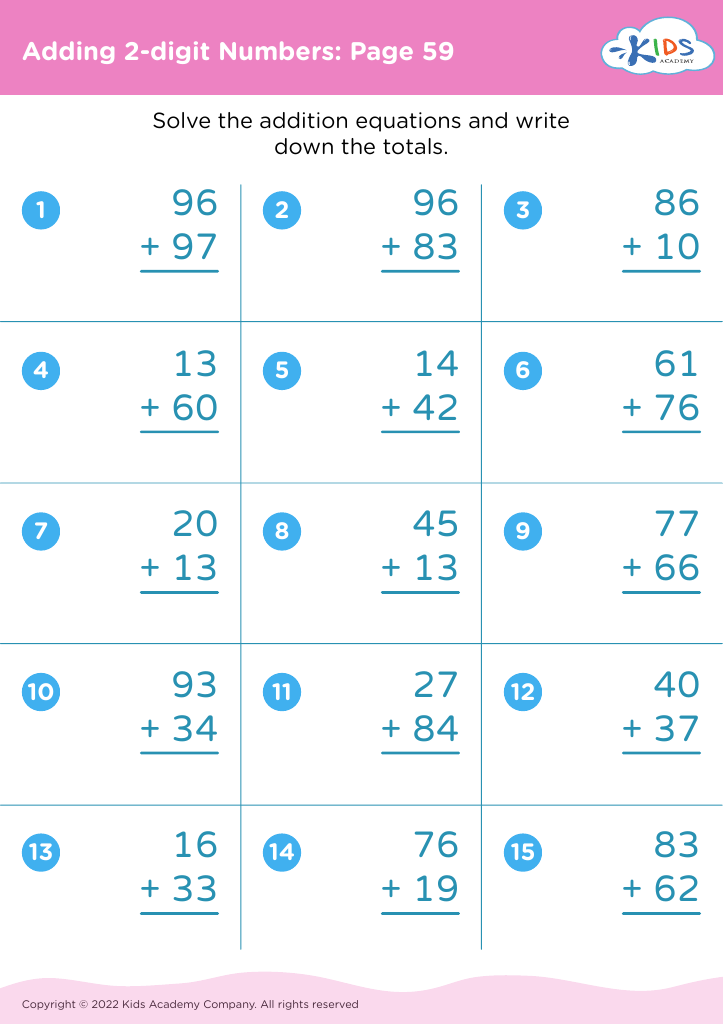








Parents and teachers should place significant attention on developing problem-solving skills when adding 2-digit numbers for children aged 8-9, as it lays a foundational step in their mathematical journey and critical thinking development. This age is crucial as children transition from simple arithmetic to more complex math concepts. Mastering 2-digit addition helps in fostering number sense, which allows children to comprehend and manipulate numbers with greater ease.
Focusing on these skills promotes logical thinking and perseverance. When children solve problems involving 2-digit numbers, they learn to break down challenges into manageable steps, enhancing their overall cognitive abilities. Additionally, this expertise assists in honing their estimation and mental math capabilities; such abilities are crucial for everyday decision-making and higher-level math.
Moreover, proficient problem-solving skills in early math education cultivate a sense of achievement and confidence. When children overcome mathematical challenges, they build self-esteem and a positive attitude towards learning. These early successes are instrumental in developing lifelong learners who are not afraid to tackle complicated subjects.
Investing effort and attention in these skills ensures that children are not just memorizing procedures but truly understanding the concepts. This kind of comprehensive learning equips them with the tools they need for academic success well beyond their elementary school years.








