Number Recognition Adding up to 100 Misc Worksheets for Ages 8-9
8 filtered results
-
From - To
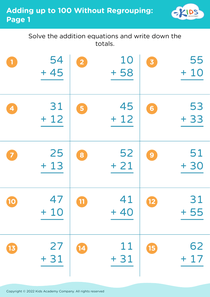
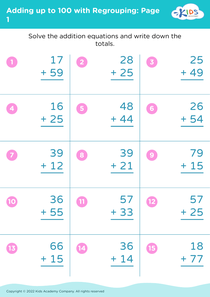
Discover our engaging "Number Recognition Adding up to 100 Misc Worksheets" specifically designed for children aged 8-9. These worksheets aim to enhance students' number recognition skills while providing a fun and interactive learning experience. Packed with a variety of exercises, your child will practice identifying, tracing, and manipulating numbers up to 100, fostering a solid mathematical foundation. Ideal for classrooms or at-home learning, our materials support diverse learning styles and promote critical thinking. Empower your child’s confidence in math today with these stimulating resources that make learning to recognize numbers an enjoyable adventure! Try them out and watch their skills grow!
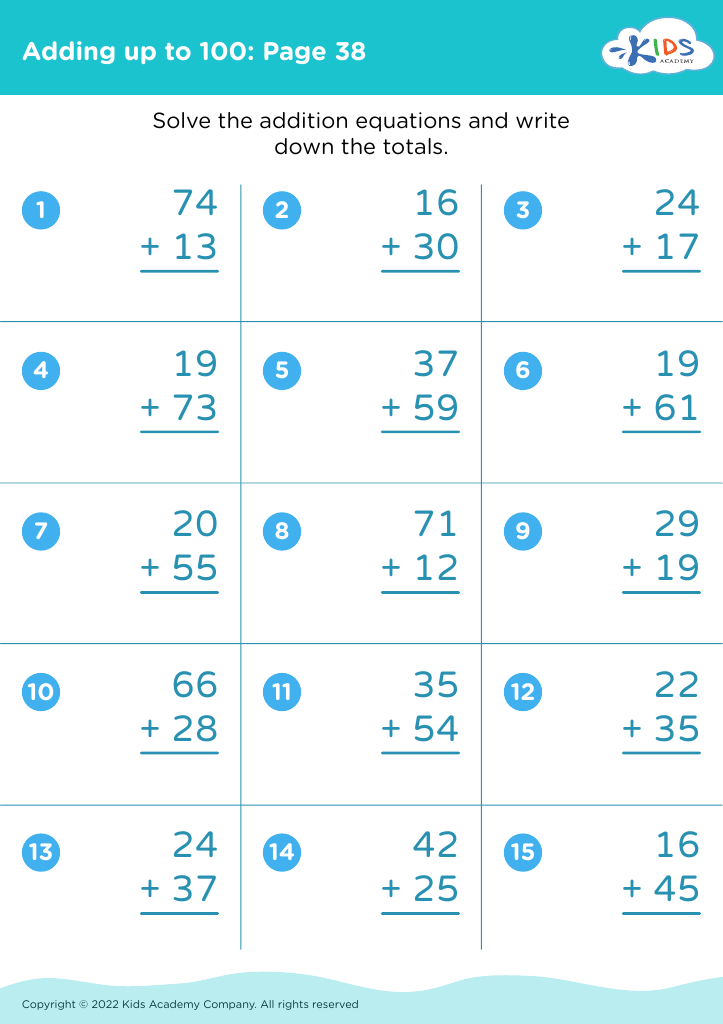
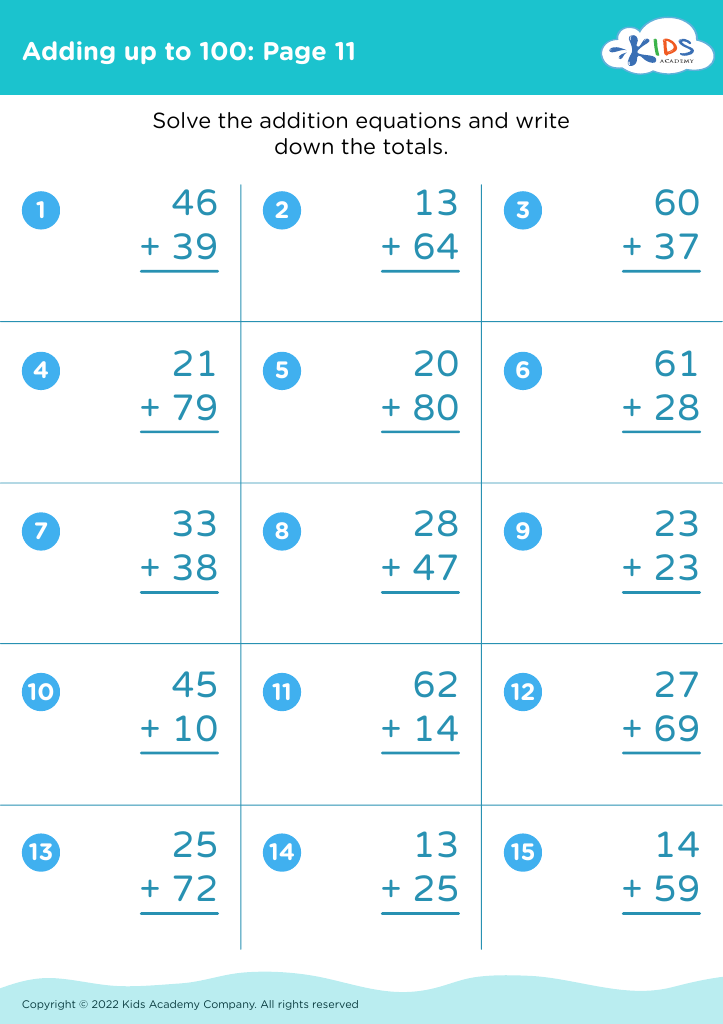
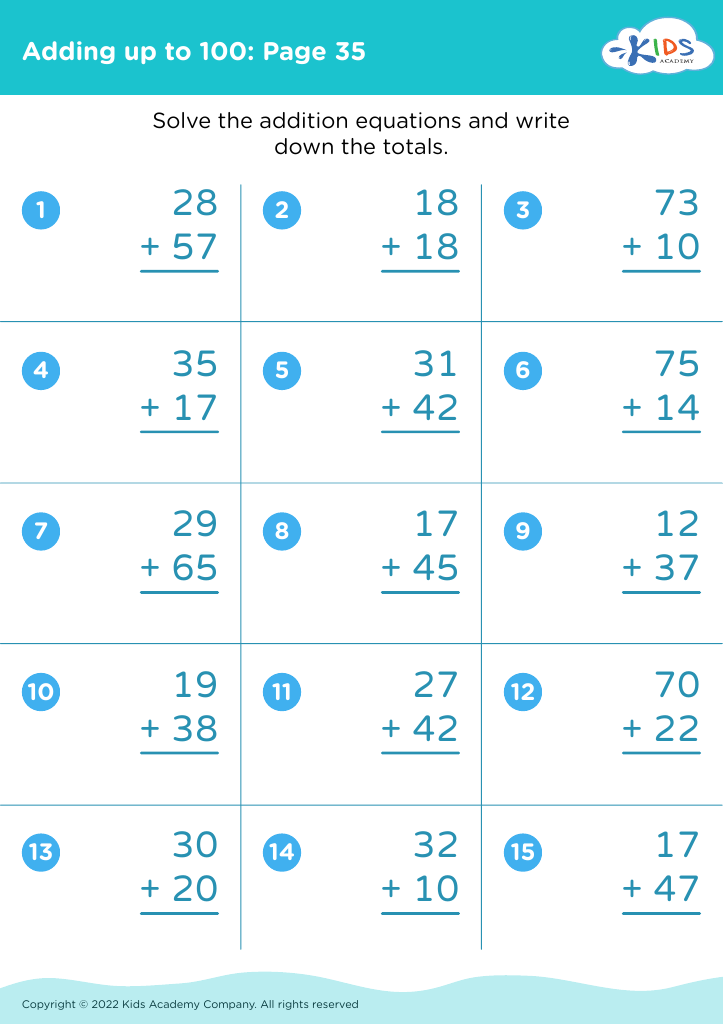
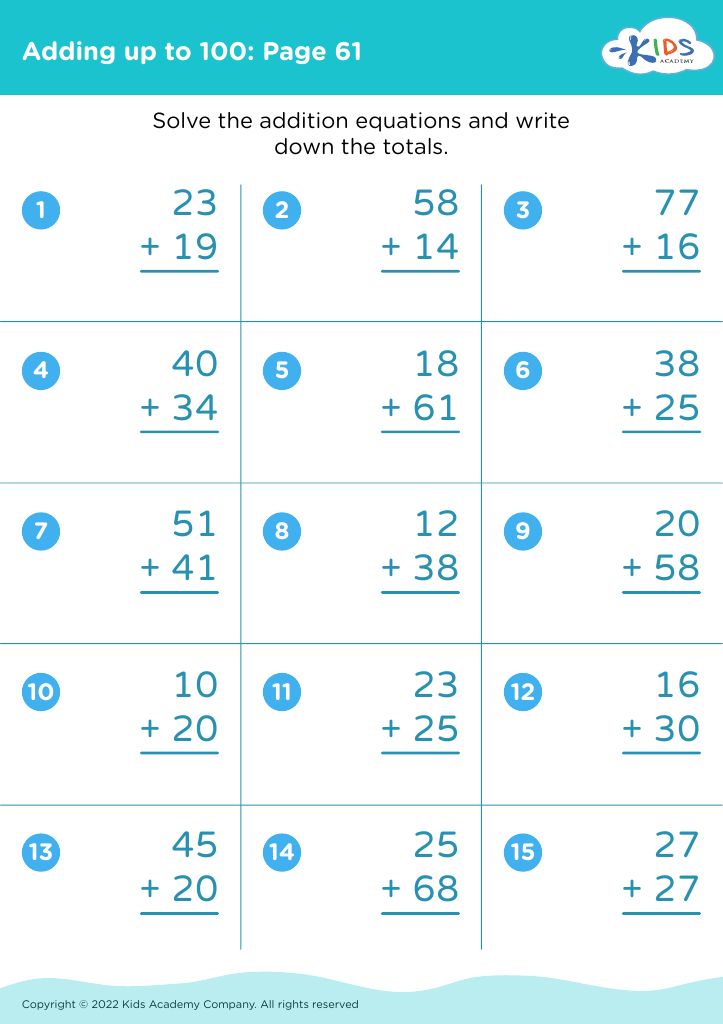
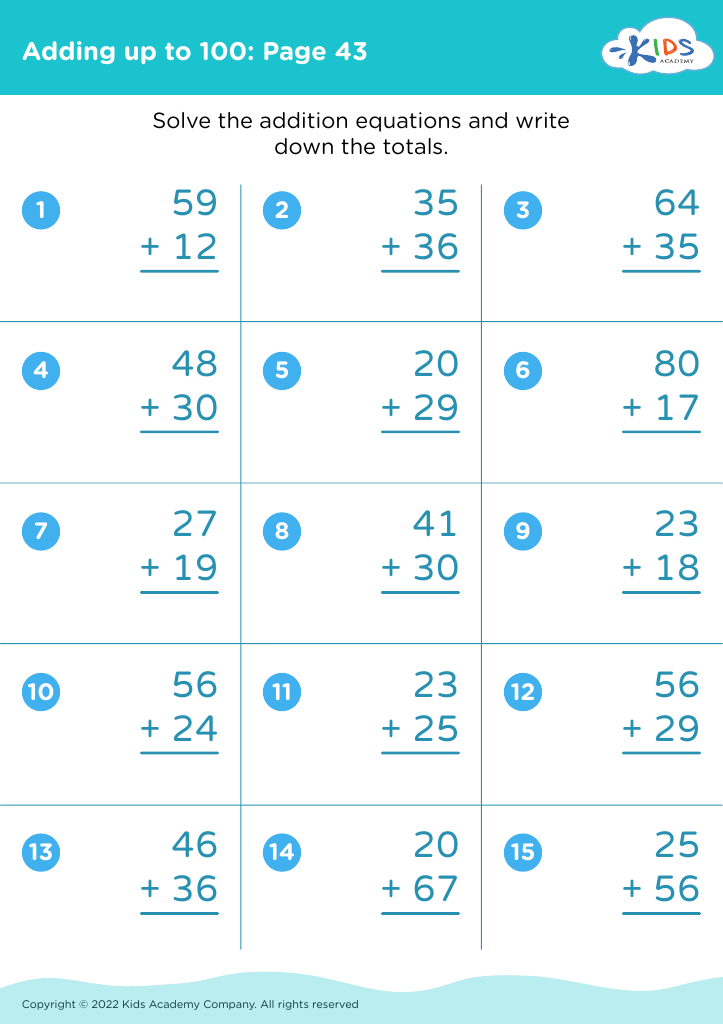
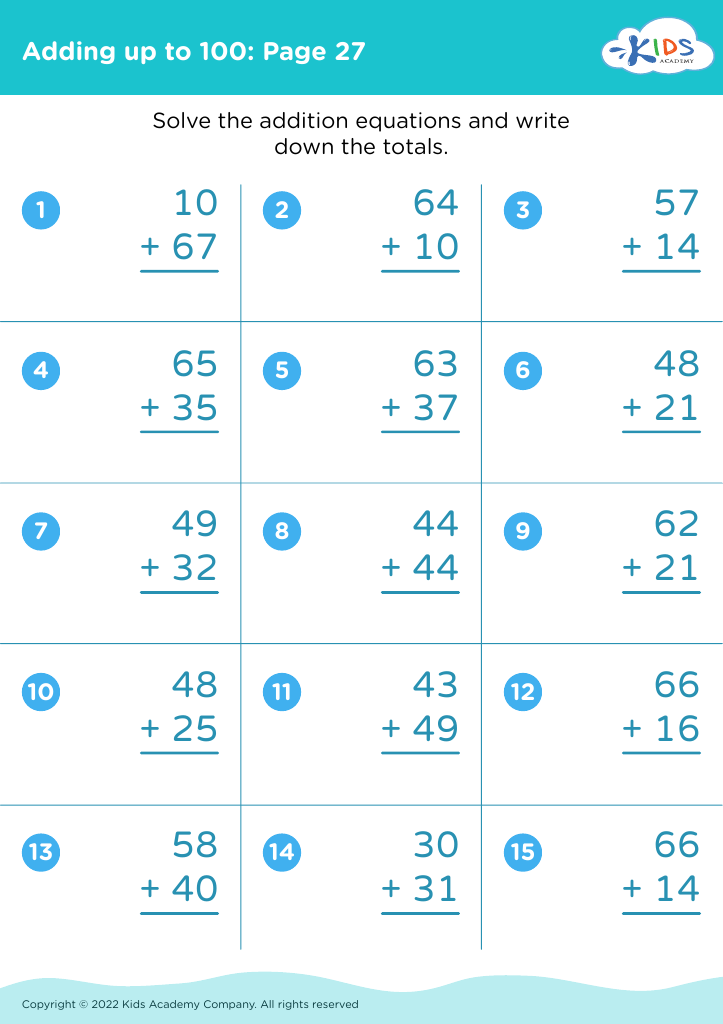
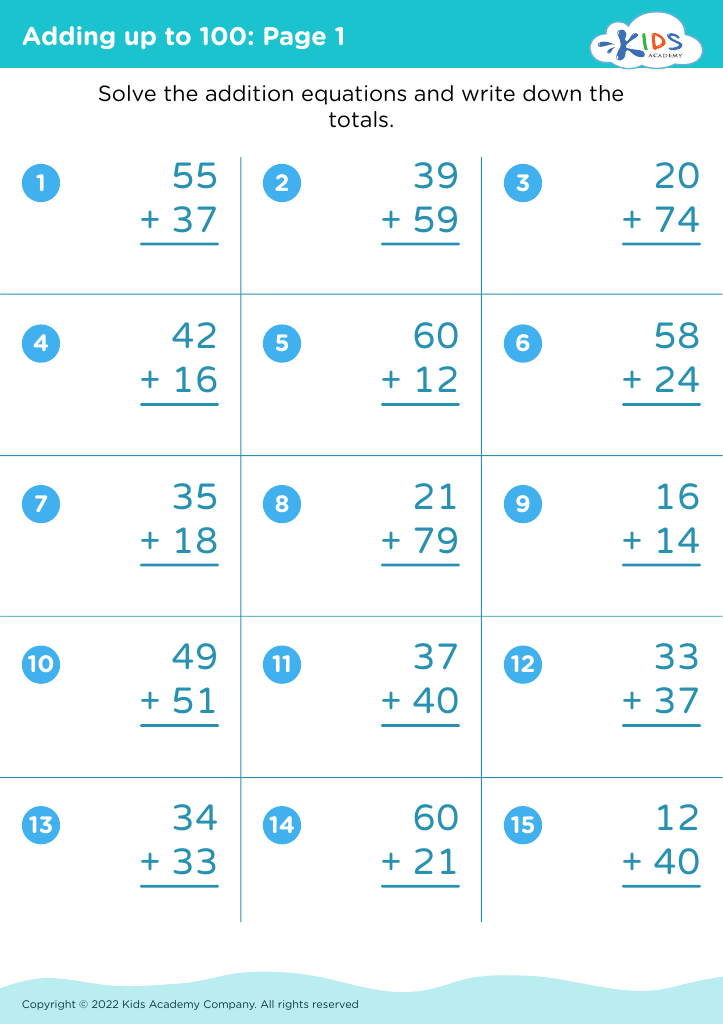
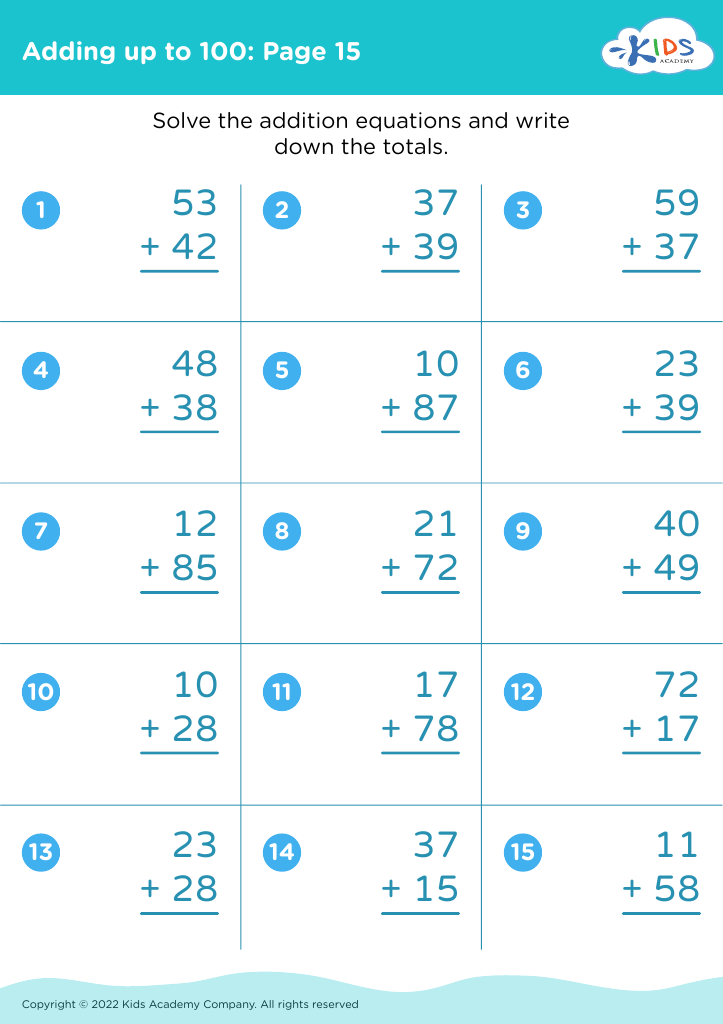


Number recognition is foundational for children's early mathematical development, particularly as they transition to more complex concepts around ages 8-9. Understanding numbers up to 100 not only fosters basic numeracy, but it also builds confidence in young learners. At this age, children begin to encounter more substantial math operations, and recognizing numbers accurately is crucial for following instructions and solving problems effectively.
Moreover, mastery of number recognition facilitates the development of essential skills such as addition, subtraction, and even early multiplication. As they combine numbers to reach totals of 100, children learn about quantity, value, and place value, which are key concepts in understanding the number system. This foundational knowledge supports future learning in mathematics and other subjects by promoting logical thinking, problem-solving, and analytical attitudes.
Parents and teachers have a pivotal role in this developmental stage by providing engaging activities that encourage number recognition. Simple games, visual aids, and real-world applications can make learning dynamic and enjoyable. Actively supporting children in recognizing and manipulating numbers enhances their readiness for more advanced math and nurtures a lifelong love for learning, ensuring that students are equipped for future academic challenges.