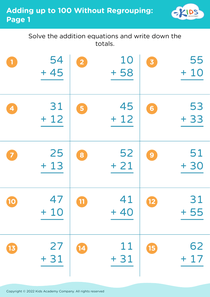
Identify shapes Adding up to 100 with Regrouping Worksheets for Ages 8-9
3 filtered results
-
From - To
Our "Identify Shapes Adding up to 100 with Regrouping Worksheets" for ages 8-9 combine geometry and arithmetic to make math fun and engaging. These worksheets help children practice addition up to 100 with regrouping while also identifying various shapes. By integrating shape recognition, learners enhance both their mathematical and spatial reasoning skills. Trusted by educators, these activities offer a dynamic way to support learners’ understanding, ensuring they master critical math concepts while enjoying themselves. Ideal for classroom use or at-home practice, these worksheets pave the way for math success. Explore now and see the difference in your child’s learning journey!
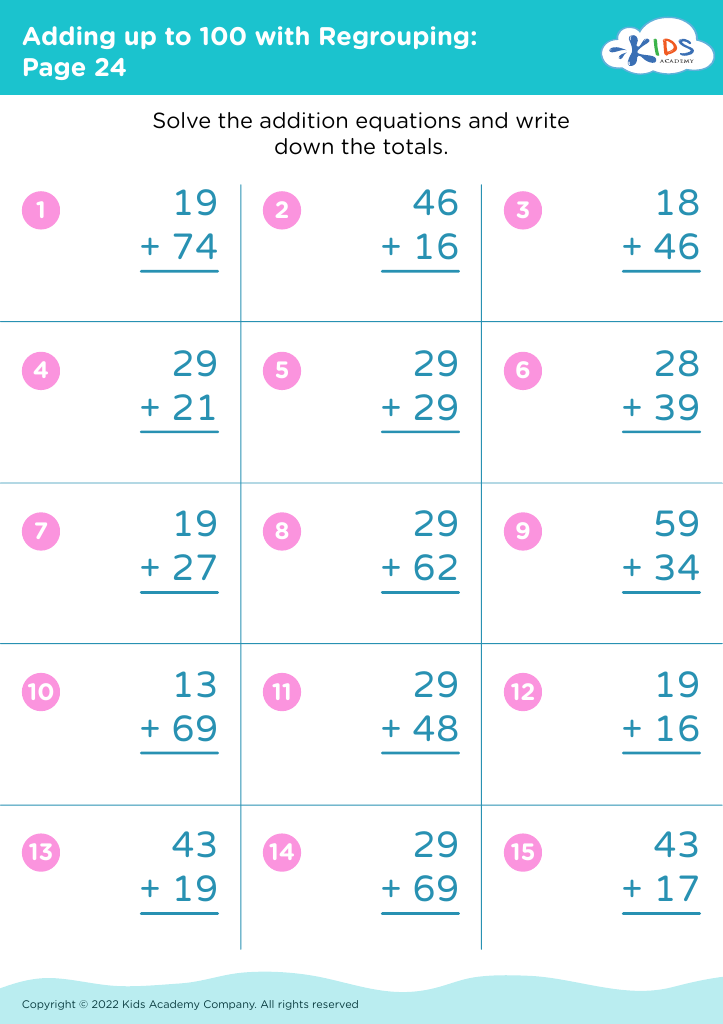
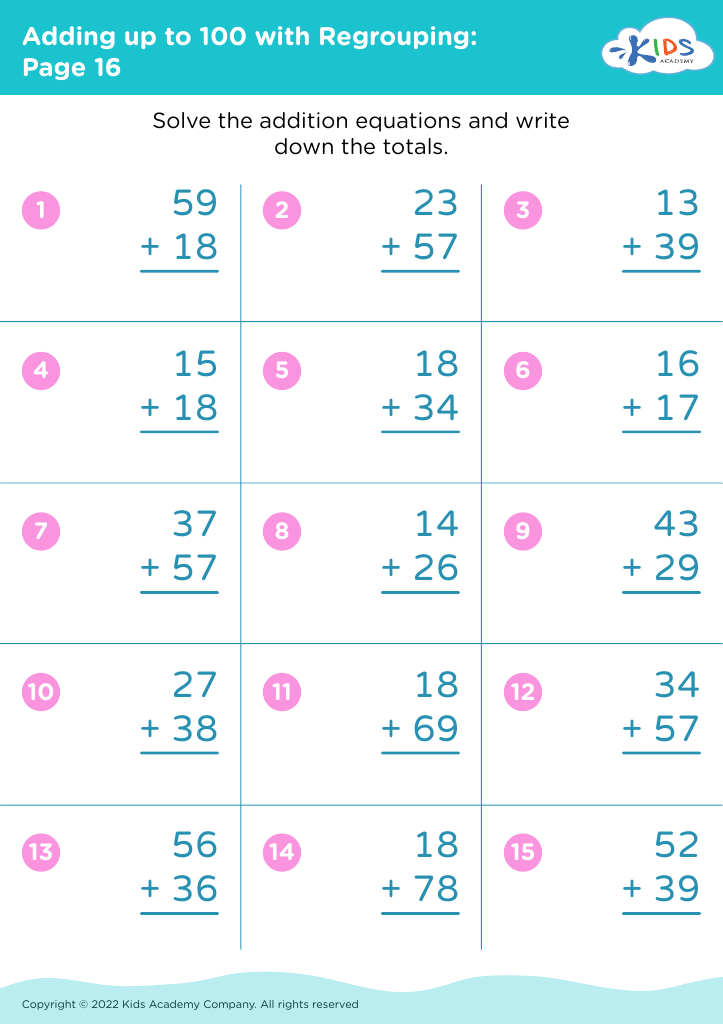
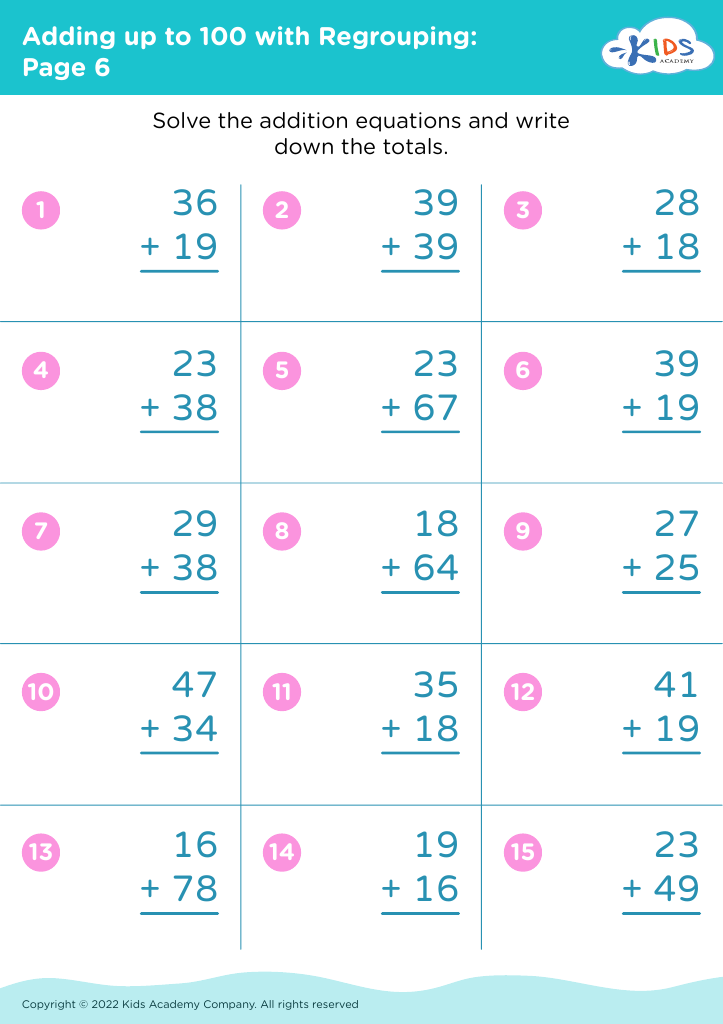




Parents and teachers should care about teaching children aged 8-9 to identify shapes and add numbers up to 100 with regrouping because these foundational skills are crucial for their overall academic development. Geometry and arithmetic are integral areas of elementary math that provide the building blocks for more advanced concepts. Understanding shapes enhances spatial reasoning, a skill that has applications in fields like engineering, art, and architecture. Knowledge of shapes also helps children interpret and describe the world around them, fostering both creative and critical thinking.
Simultaneously, adding numbers up to 100 with regrouping (also known as carrying or borrowing) is an essential arithmetic skill that solidifies a child's understanding of the place value system. Mastering this concept allows children to perform more complex calculations with confidence, laying a solid groundwork for higher-level math topics, such as multiplication and division.
Furthermore, competence in these areas fosters a sense of achievement and boosts self-confidence. It also encourages persistence and problem-solving skills, which are valuable in all areas of learning. By ensuring children are adept at identifying shapes and adding with regrouping, parents and teachers are equipping them with crucial tools for academic success and future real-world problem-solving scenarios.