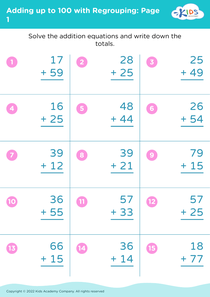
Understanding patterns Adding up to 100 Without Regrouping Worksheets for Ages 8-9
3 filtered results
-
From - To
Explore our engaging "Understanding Patterns: Adding up to 100 Without Regrouping" worksheets designed for ages 8-9. These printable worksheets help children recognize numerical patterns and enhance their addition skills up to 100 without the need for regrouping. Through fun and educational exercises, students will build a strong foundation in math, improve problem-solving skills, and boost their confidence in handling basic arithmetic. Ideal for both classroom and home use, these worksheets provide a perfect blend of learning and enjoyment. Empower your kids with essential math skills and set them on a path to academic success!
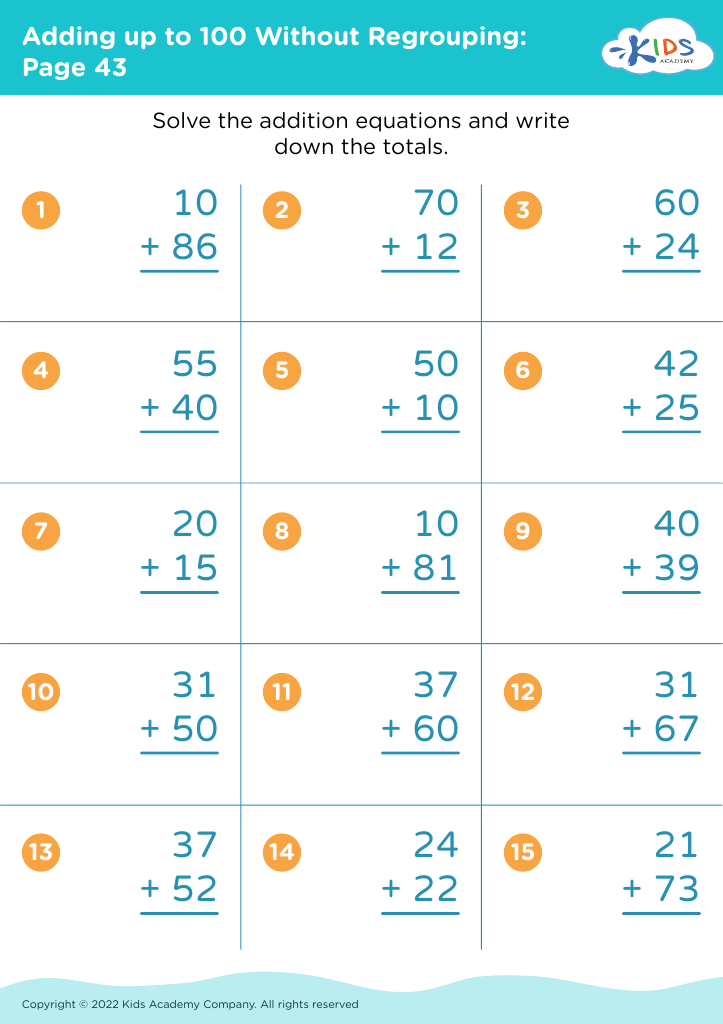
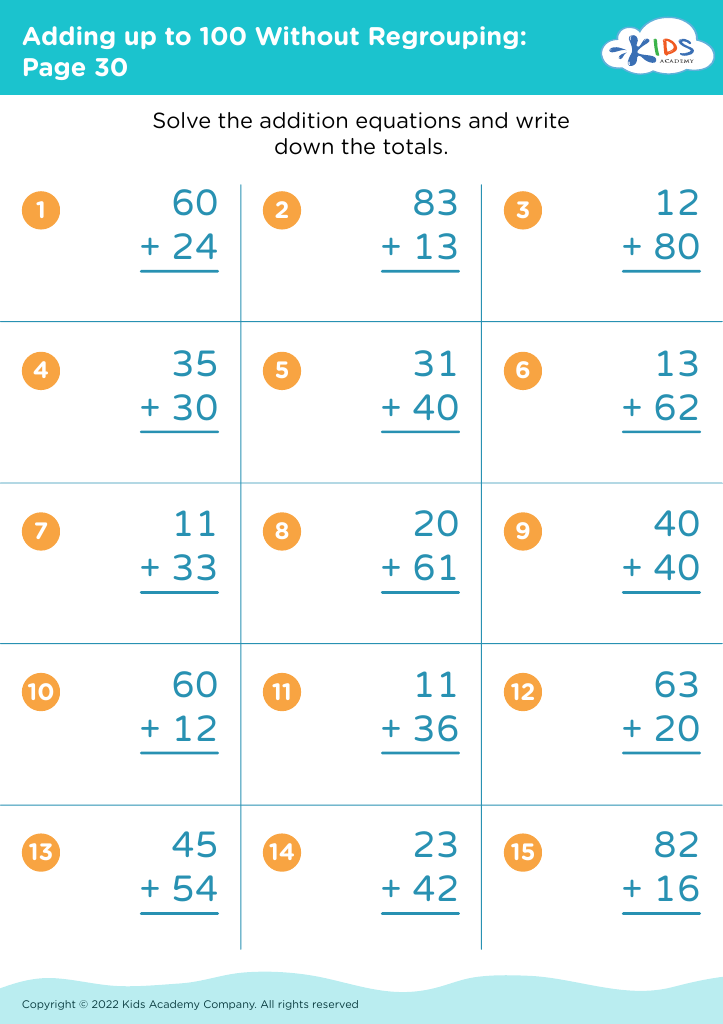
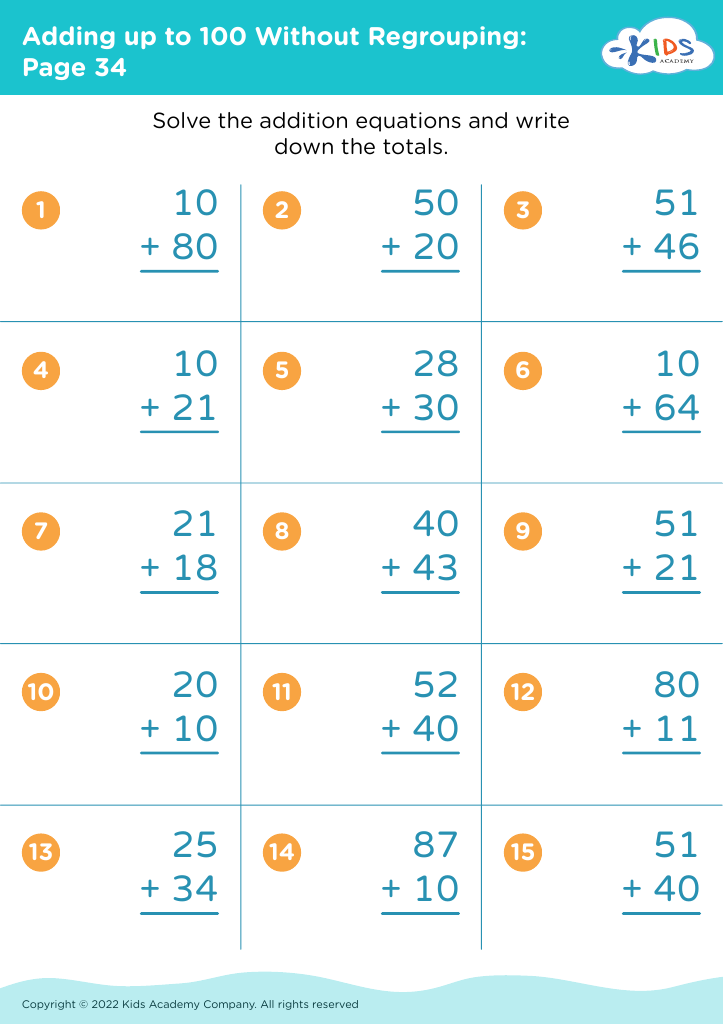




Understanding patterns and mastering addition up to 100 without regrouping is fundamental for children aged 8-9 because it builds a strong foundation for more advanced math skills. Identifying and predicting patterns helps children develop critical thinking and analytical skills. These are crucial not only for math but for other subjects and real-life problem-solving as well.
Mastering addition up to 100 without regrouping ensures a solid grasp of basic arithmetic. This competence lays the groundwork for more complex operations, such as subtraction, multiplication, and division. It also helps children approach larger mathematical concepts with confidence and fluency.
Additionally, success in early math contributes greatly to a child's self-esteem and attitude towards learning. Positive experiences with math encourage curiosity and persistence. Understanding these patterns makes lessons more engaging and relevant. When children recognize that numbers and arithmetic relate directly to their daily lives, their interest and motivation increase.
For parents and teachers, focusing on these areas allows early detection and support of math difficulties, ensuring no child falls behind. By solidifying these core skills, they set students on a path to academic success across various disciplines and create a lifelong appreciation for learning and problem-solving.