Basic Addition Skills Adding up to 100 Worksheets for Ages 8-9
5 filtered results
-
From - To
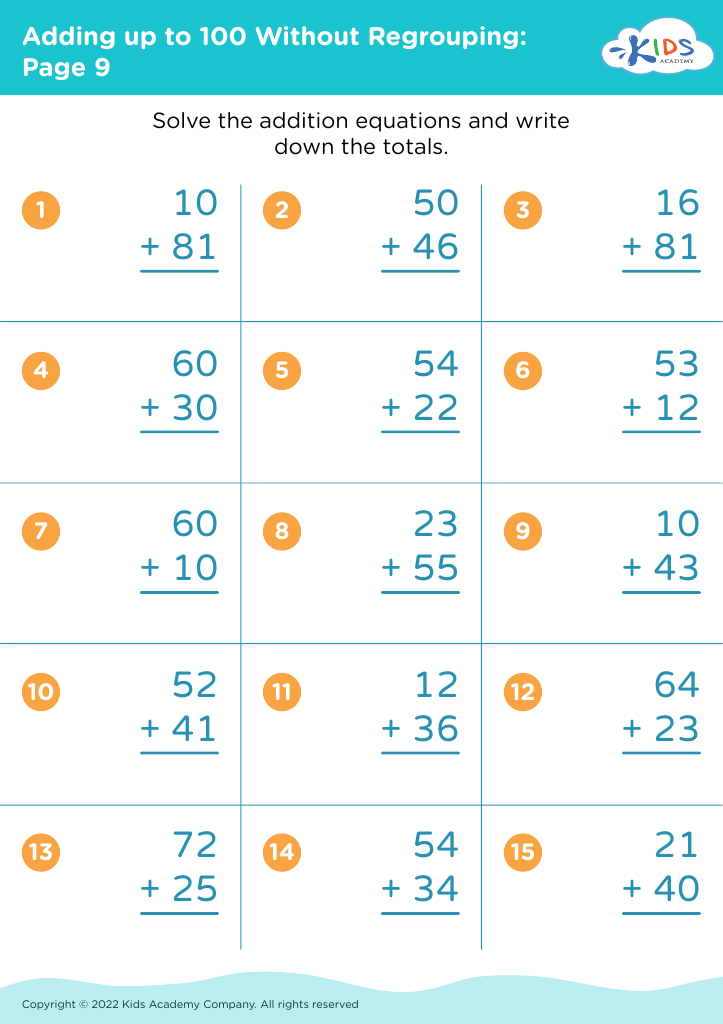
Discover our engaging "Basic Addition Skills Adding Up to 100 Worksheets" specially designed for children ages 8-9. These worksheets provide a fun and interactive way for young learners to master essential addition skills, ensuring they build a strong foundation in mathematics. Packed with colorful visuals and varied exercises, kids will enjoy practicing their addition skills while gaining confidence in their abilities. From simple problems to more challenging scenarios, our resources cater to various learning styles and paces. Enhance your child’s math proficiency and make learning enjoyable with our thoughtfully crafted worksheets that motivate and inspire young mathematicians!
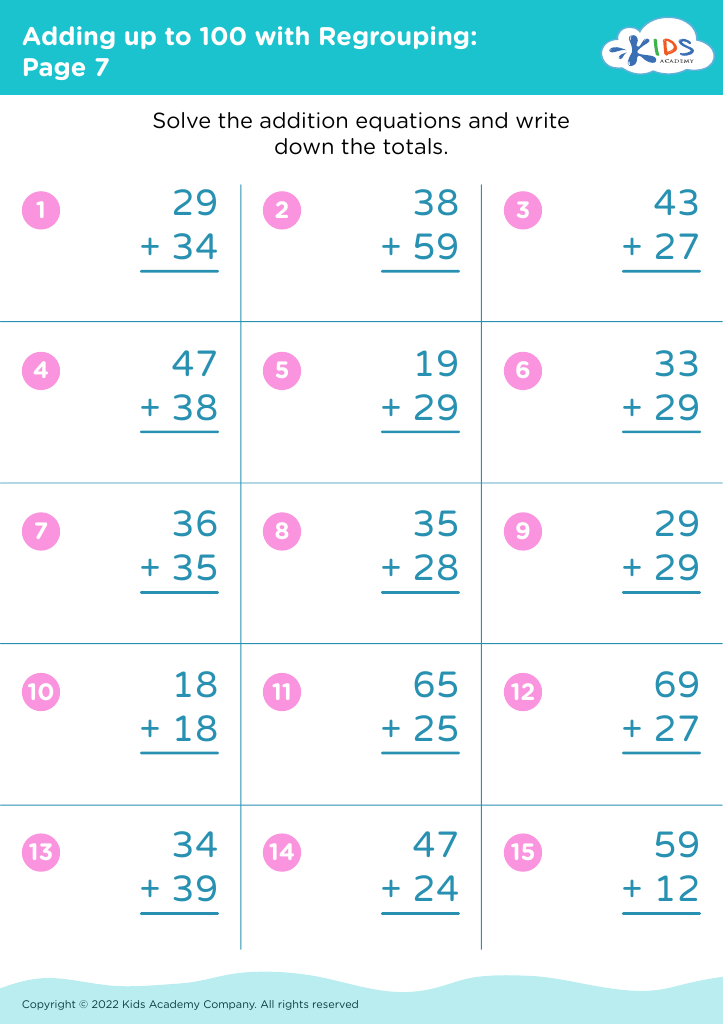
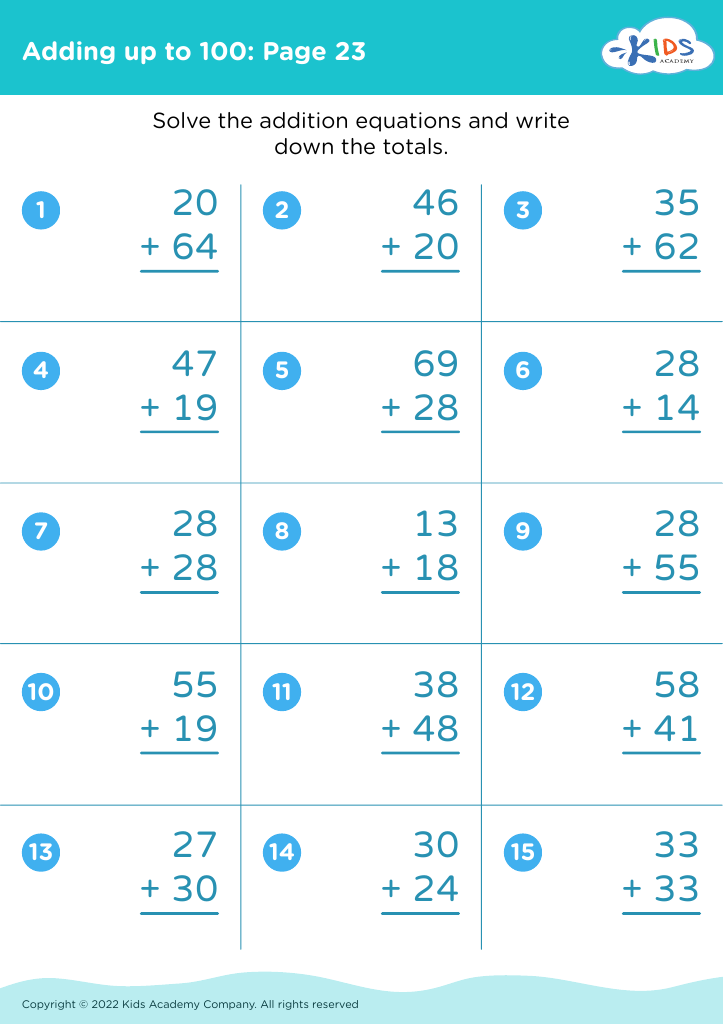
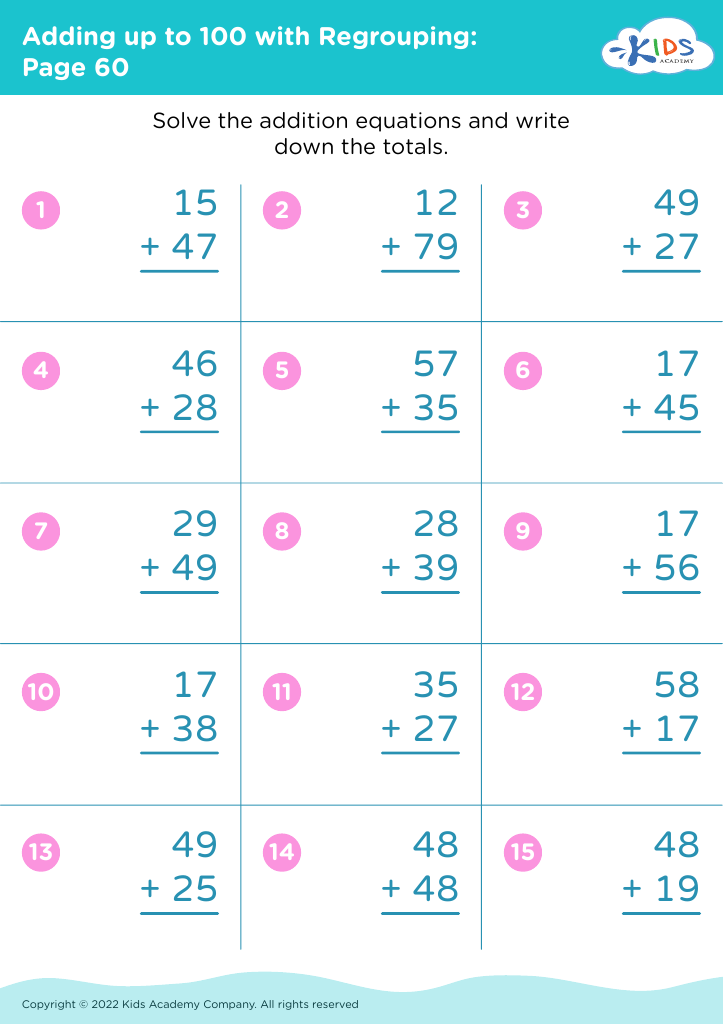
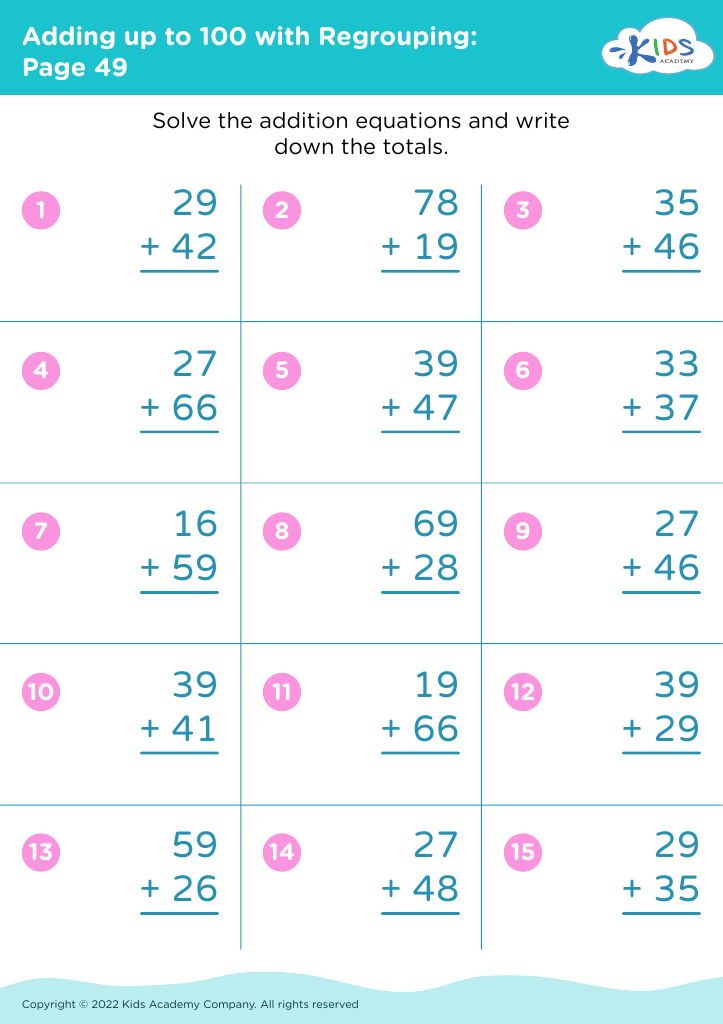




%20(1).jpg)


Basic addition skills are foundational for children aged 8-9, serving as crucial building blocks for all future mathematical learning. Mastering addition up to 100 promotes number sense, helping students understand how numbers work together, which is essential for solving more complex problems later on.
At this developmental stage, students are transitioning from simple arithmetic to more intricate mathematical concepts such as subtraction, multiplication, and even beginnings of fractions. If they haven't grasped basic addition, they may struggle with these advancing topics, impacting their overall confidence and performance in school.
Parents and teachers should also consider the practical applications of these skills in everyday life, such as budgeting, measuring, or even cooking. Proficiency in addition boosts students' problem-solving abilities, promoting critical thinking skills that extend beyond mathematics.
Moreover, learning these skills enhances cognitive development, improves memory, and encourages a positive attitude towards math, reducing math anxiety as they progress in their education. When children have a solid foundation in basic addition, they set themselves up for success, making it imperative for parents and teachers to support and encourage this essential skill through practice and reinforcement.








