Basic arithmetic skills Adding up to 100 Worksheets for Ages 8-9
3 filtered results
-
From - To
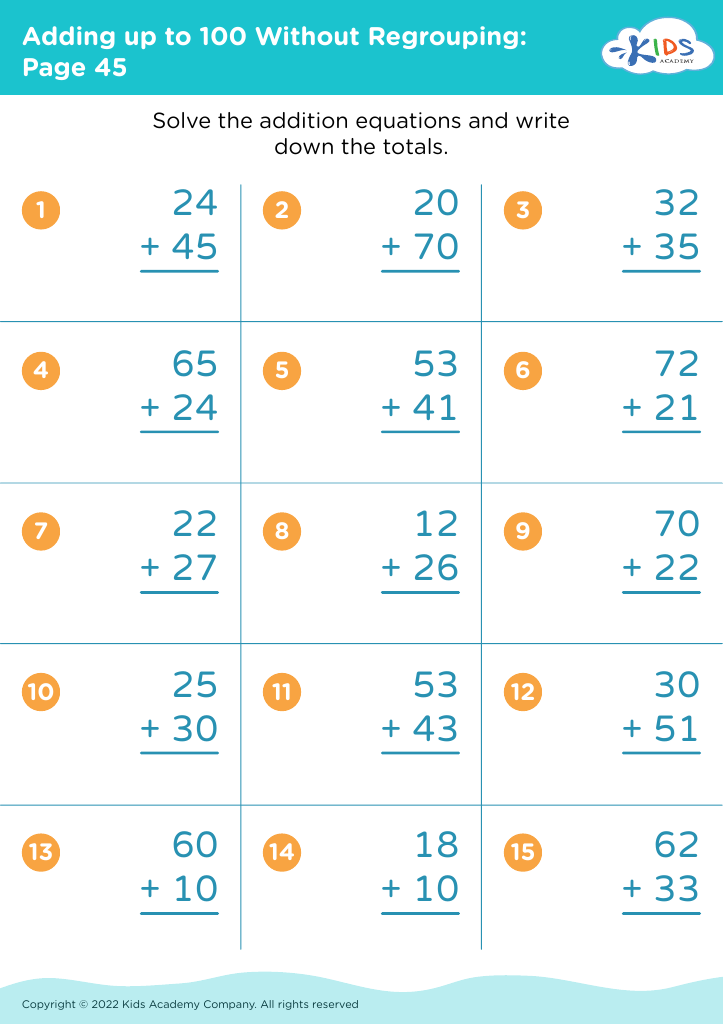
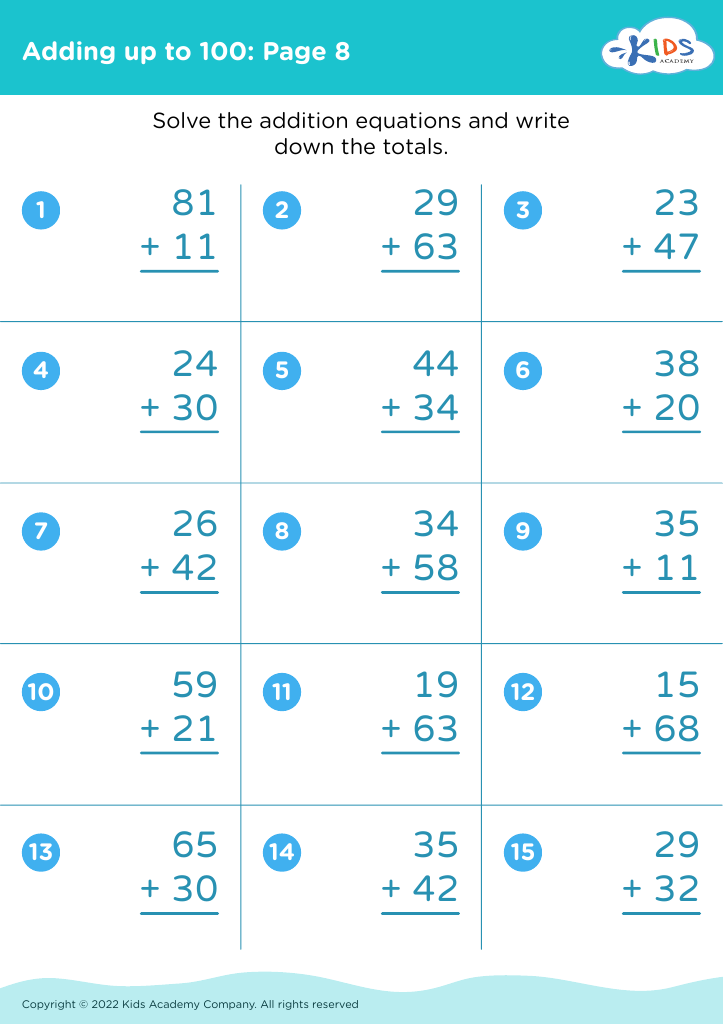
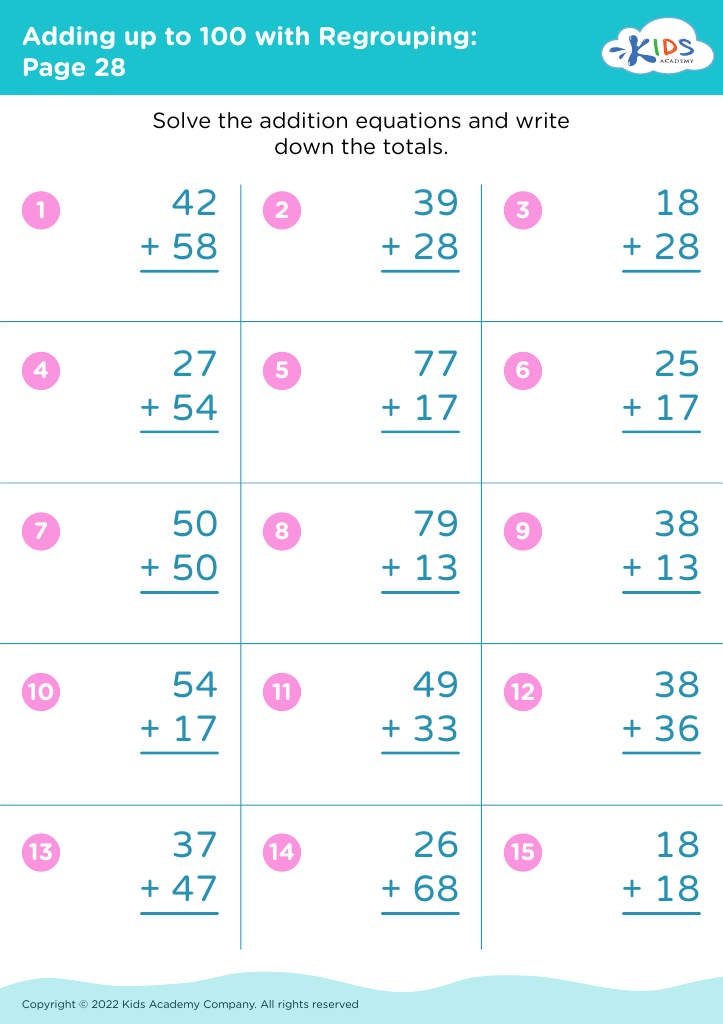
Enhance your child's math abilities with our "Basic Arithmetic Skills Adding Up to 100 Worksheets," designed specifically for ages 8-9. These engaging worksheets focus on fundamental addition concepts, helping students practice and master their arithmetic skills in a fun and interactive way. Featuring a variety of exercises, including simple addition problems and word problems, children can build confidence and fluency in math. Ideal for classroom use or at-home learning, these worksheets cater to different learning styles, ensuring every child can enjoy the journey of learning with numbers. Equip your young learners with essential skills that lay the foundation for future math success!




%20(1).jpg)


Parents and teachers should prioritize the mastery of basic arithmetic skills, particularly addition up to 100, for children aged 8-9. This foundational skill serves as a building block for more complex mathematical concepts. At this age, children are developing their cognitive abilities, and strong arithmetic skills enhance problem-solving and critical thinking.
Understanding addition up to 100 allows children to perform everyday calculations, such as budgeting during shopping trips or measuring ingredients in cooking—skills that are crucial in daily life. Proficiency in these basic skills boosts confidence and fosters a positive attitude toward math, mitigating anxiety and resistance to more advanced topics later on.
Additionally, math is essential for developing logical reasoning and analytical skills. As children learn to add, they begin to recognize patterns and relationships between numbers, which will assist them as they explore subtraction, multiplication, and division in the future. Regular practice with addition up to 100 also helps improve memory and concentration.
Ultimately, nurturing these skills equips children with the tools they need for academic success and lifelong learning, making it imperative that both parents and teachers take an active role in reinforcing addition competency during this important developmental stage.








