Color Identification Adding up to 100 Worksheets for Ages 8-9
8 filtered results
-
From - To
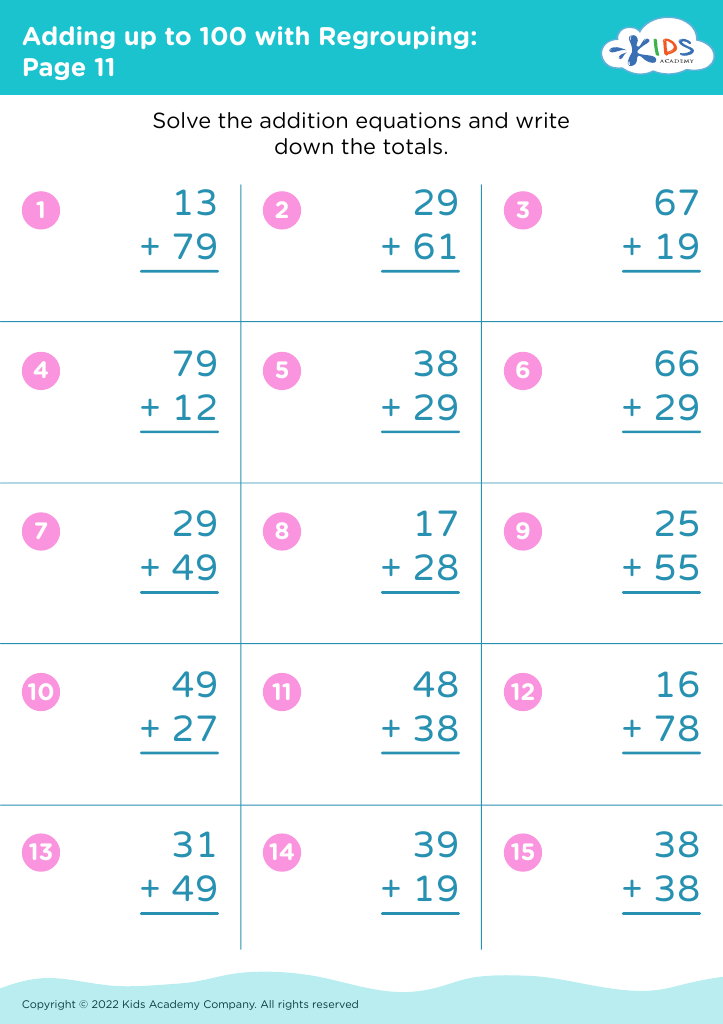
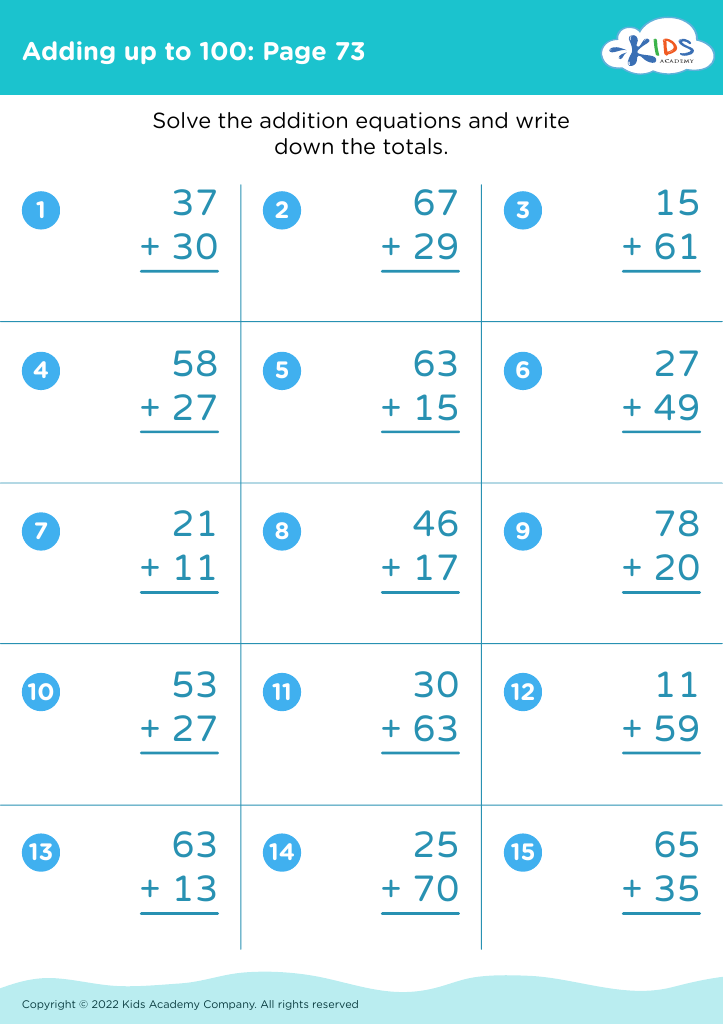
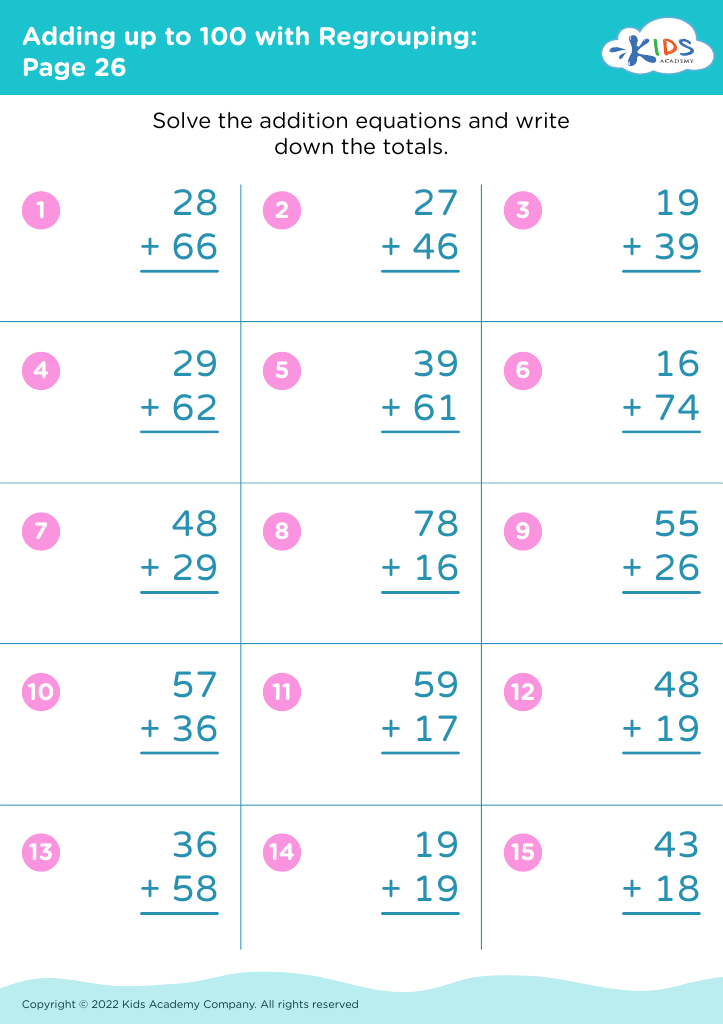
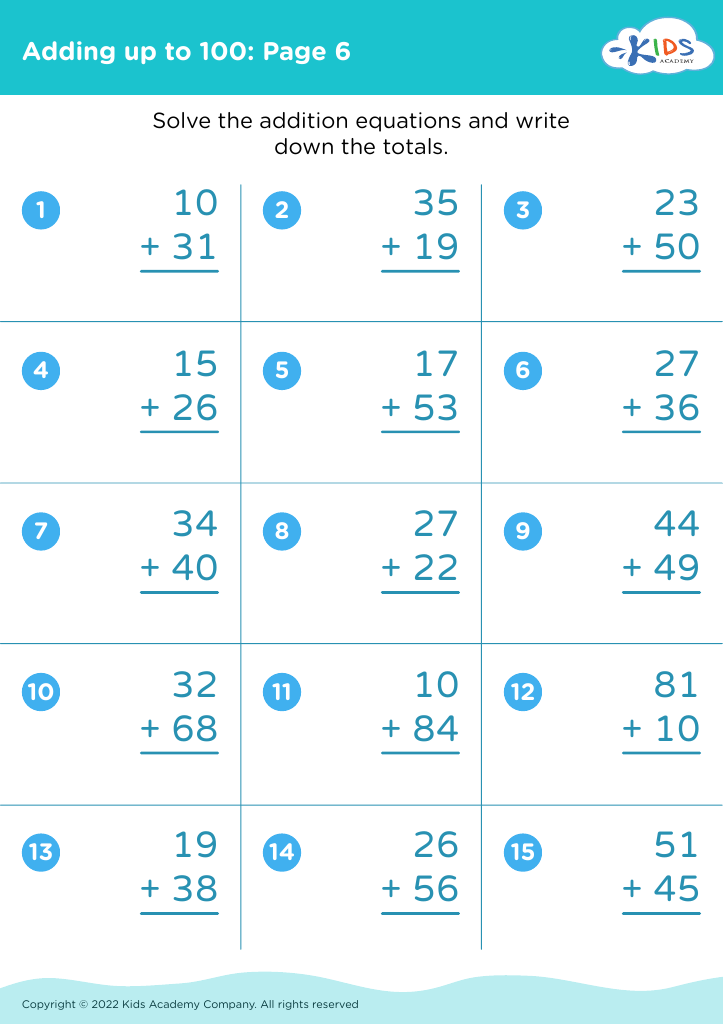
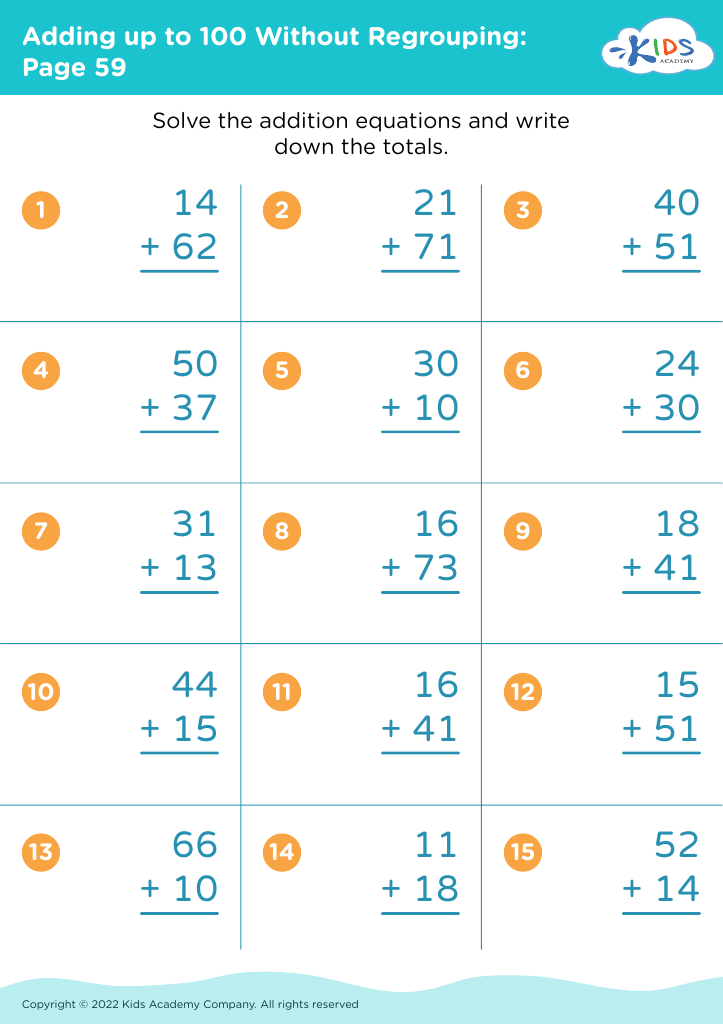
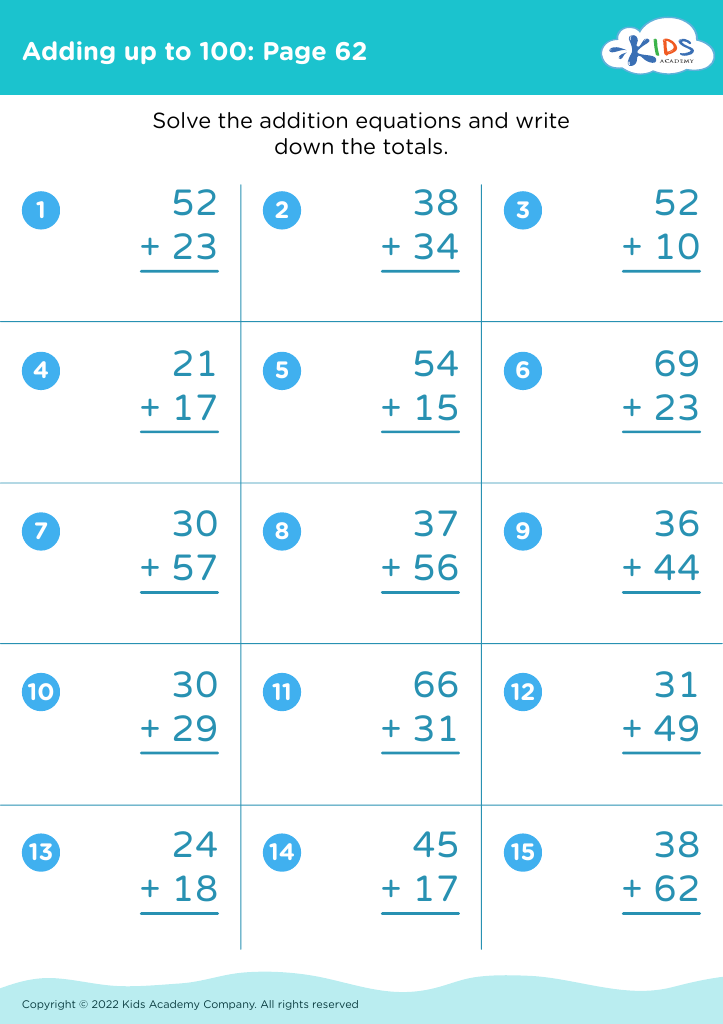
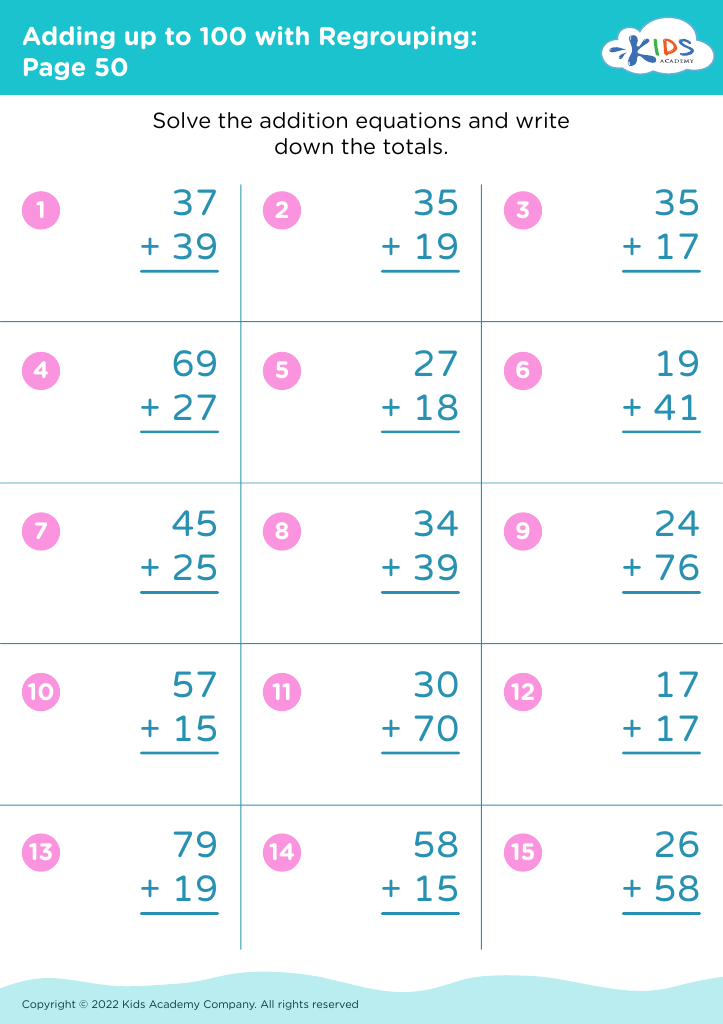
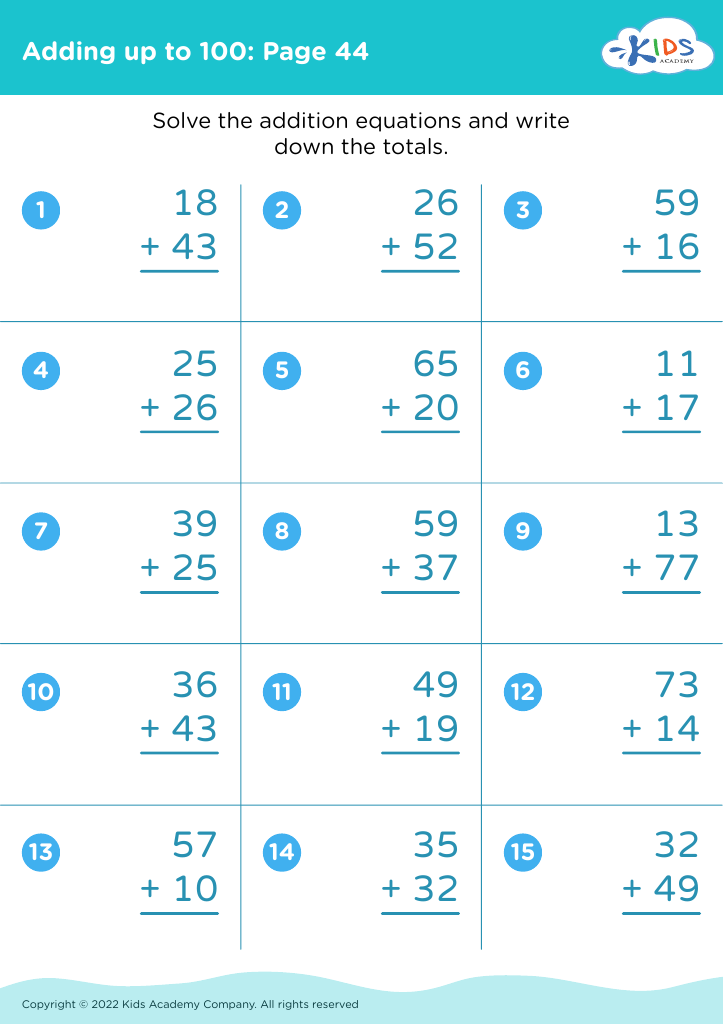
Discover a fun and educational resource with our "Color Identification Adding up to 100 Worksheets" tailored for ages 8-9. These engaging worksheets are designed to help young learners practice addition skills while reinforcing color recognition. Each activity encourages students to solve math problems that sum up to 100 and use their answers to complete vibrant color patterns. By combining math and creativity, these worksheets make learning enjoyable and effective. Perfect for classroom use or at-home practice, they help enhance arithmetic skills and develop keen attention to detail in a fun, interactive way. Transform learning into a colorful adventure today!


%20(1).jpg)




Parents and teachers should care about color identification and its integration with adding up to 100 for children aged 8-9 for several key reasons:
First, combining color identification with math creates a multisensory learning experience that can engage and often excite young learners. At this age, children are typically developing their numerical skills and understanding of basic arithmetic. Adding a visually stimulating element like color can help make abstract concepts more tangible and relatable.
Second, this approach can cater to different learning styles. Some children are visual learners who may benefit from associating colors with numbers, as it can help reinforce memory and comprehension. By using colors as a teaching tool, educators can tap into these different modalities, potentially reaching students who might struggle with more traditional methods.
Additionally, integrating color identification into arithmetic tasks promotes cognitive development beyond just math proficiency. It can enhance skills in pattern recognition, critical thinking, and logical reasoning. Colors can serve as cues that simplify complex problems, making the process of learning more approachable and less intimidating for young children.
Furthermore, this method can make learning more fun and engaging. At ages 8-9, children often have shorter attention spans. Fun and interactive methods like color-coding can hold their interest longer and encourage them to practice more, ultimately leading to greater proficiency and confidence in their math abilities. Thus, this integration of color identification with math is key to fostering a well-rounded and enjoyable educational experience.








