Color recognition Adding up to 100 Worksheets for Ages 8-9
4 filtered results
-
From - To
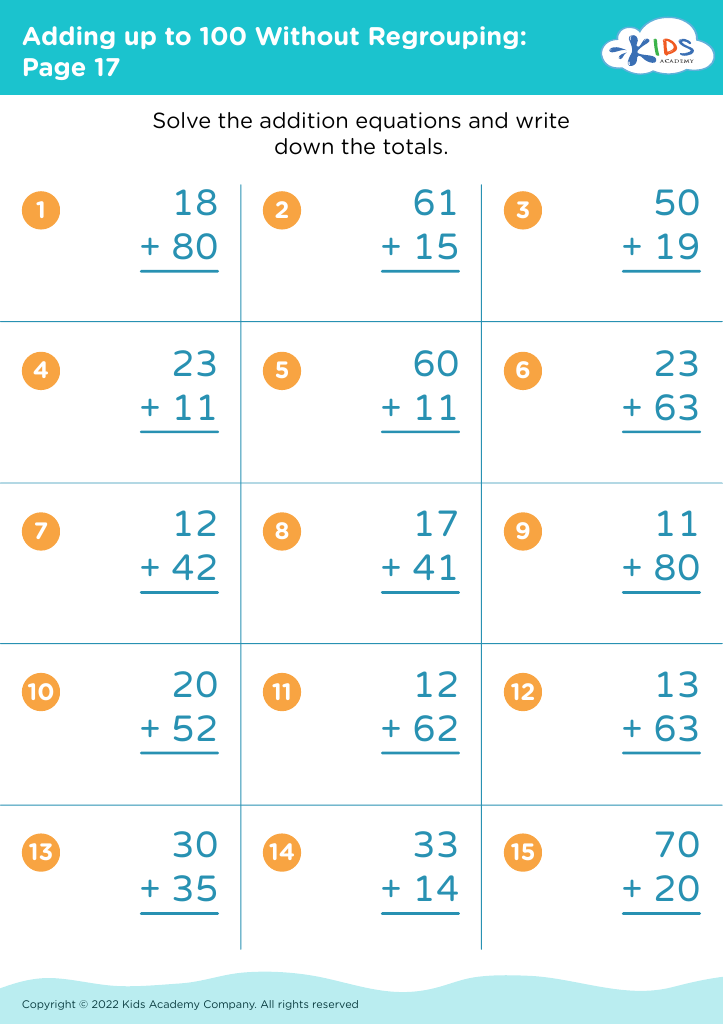
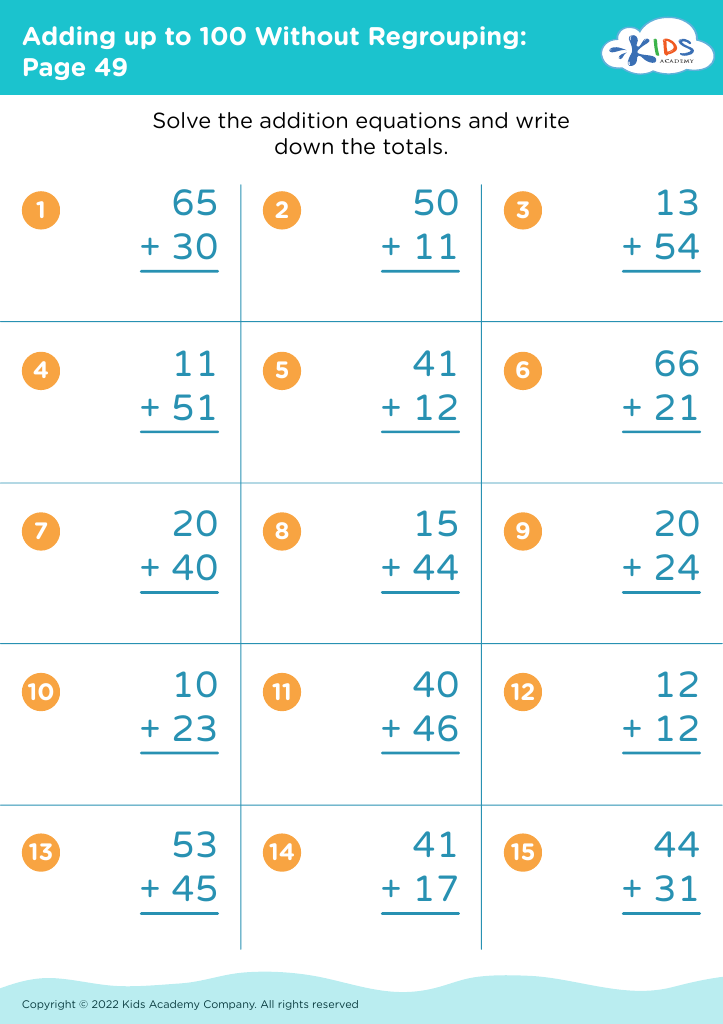
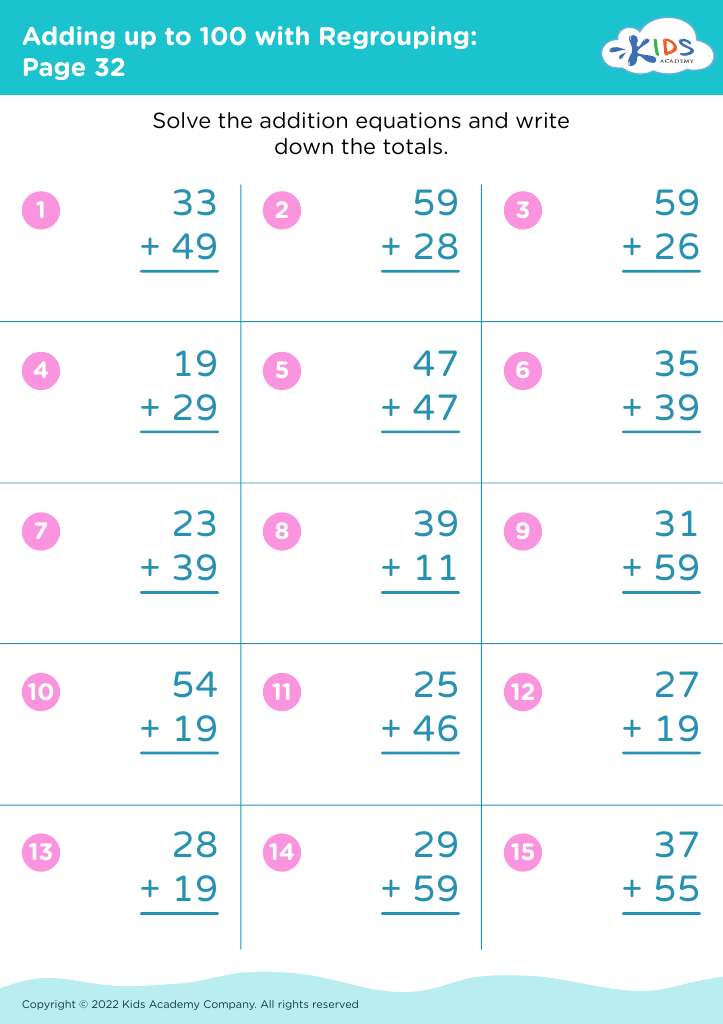
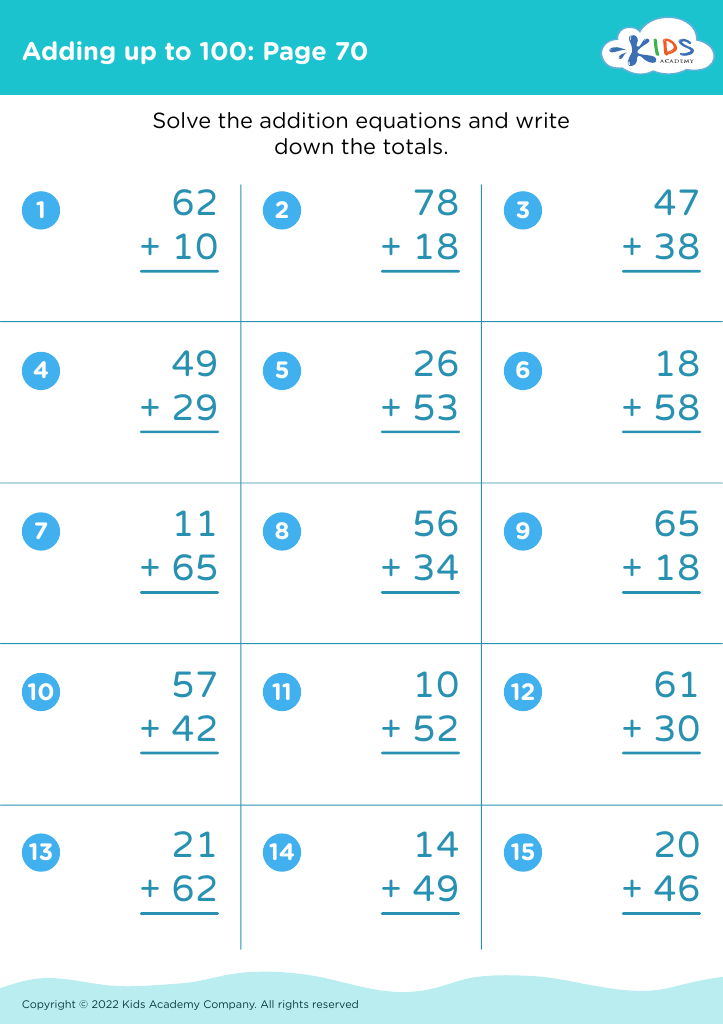
Enhance your child's math and color recognition skills with our engaging "Color Recognition Adding Up to 100 Worksheets" designed for ages 8-9. These vibrant worksheets merge essential math practice with fun color-related activities, making learning enjoyable and effective. Children will solve addition problems up to 100, while simultaneously identifying and coloring shapes, patterns, and numbers. This unique approach boosts comprehension and retention in an interactive way. Perfect for reinforcing classroom learning or as supplementary practice at home. Explore these creative, curriculum-aligned worksheets to support your child's educational journey and foster a love for math and colors today!



%20(1).jpg)



Color recognition and basic addition skills are crucial components of a child's cognitive development, particularly around ages 8-9. When children accurately identify and differentiate colors, it bolsters their visual processing skills, which are essential for tasks like reading, writing, and navigating their environment. Additionally, color recognition can enhance creativity and emotional expression, aiding in both social and academic interactions.
Adding up to 100 is a fundamental math skill that lays the groundwork for more complex mathematical concepts. Mastery of basic addition enhances a child's number sense, mental math ability, and problem-solving skills. These capabilities are not only important for academic achievement but also for everyday tasks that require numerical understanding, like time management and financial literacy.
Combining both skills in educational activities can make learning more engaging and effective. For instance, using colorful objects for addition exercises can help children visualize mathematical concepts, making abstract ideas more concrete. Moreover, activities that integrate color and math simultaneously address different learning styles and stimulate multiple areas of the brain, facilitating deeper comprehension.
Therefore, parents and teachers should prioritize these skills to support holistic development, laying a robust foundation for future learning and everyday functionality.








