Drawing skills Adding up to 100 Worksheets for Ages 8-9
3 filtered results
-
From - To
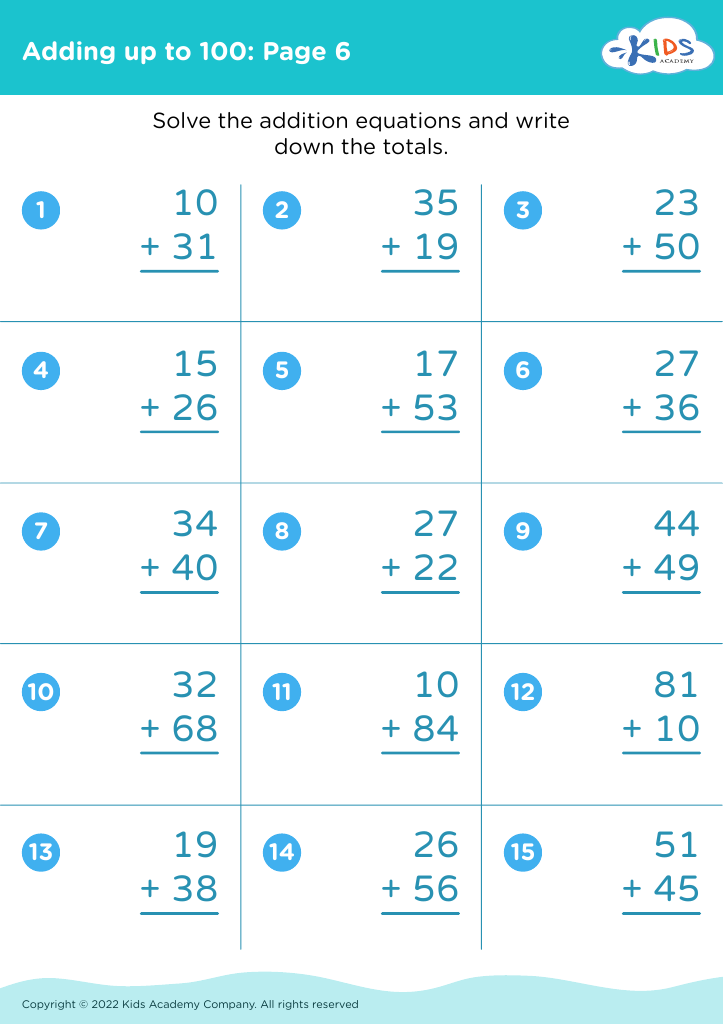
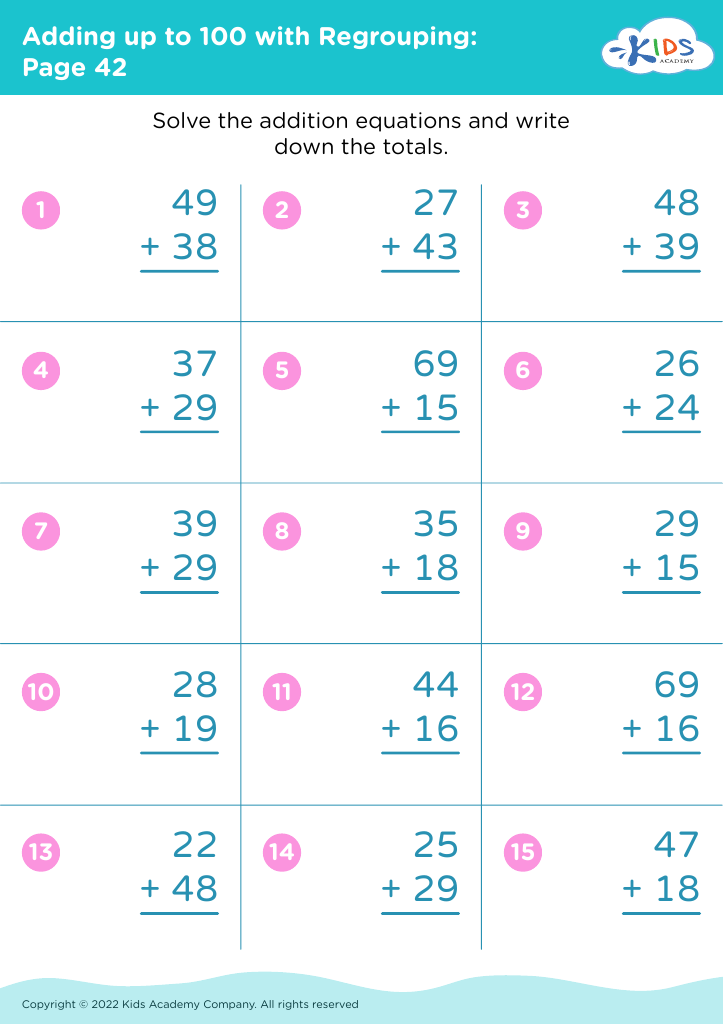
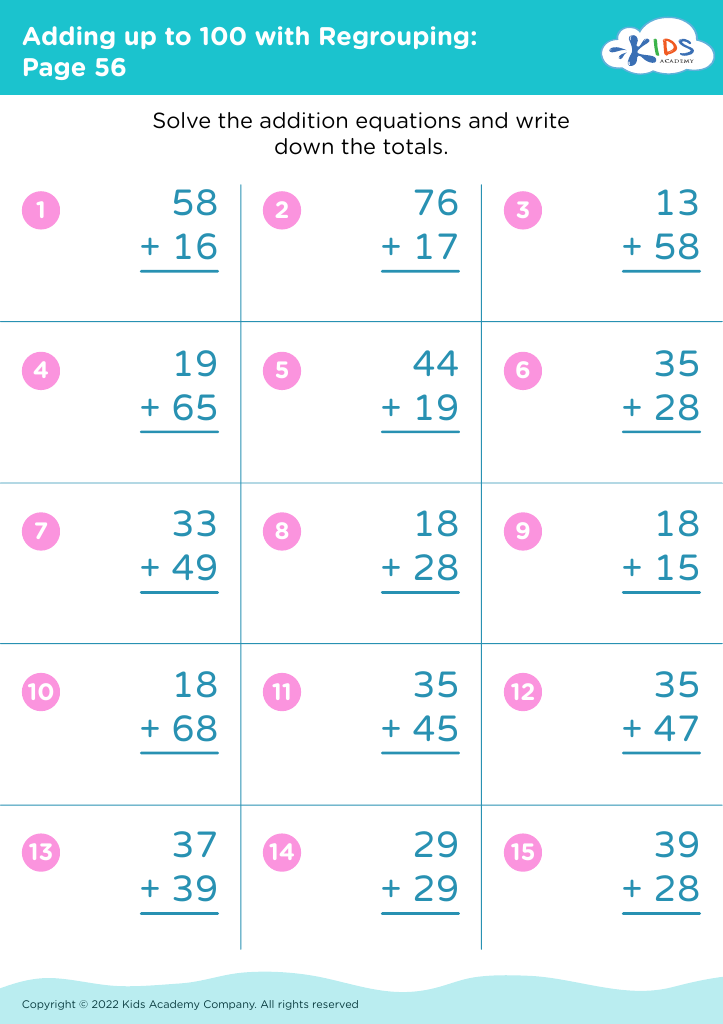
Boost your child’s math and artistic talents with our “Drawing Skills Adding Up to 100 Worksheets for Ages 8-9.” These fun and educational worksheets combine arithmetic practice with creative drawing activities, making learning an enjoyable experience. With a variety of engaging exercises, kids will enhance their addition skills by solving problems up to 100 and then using their answers to complete drawings. Perfect for 8 to 9-year-olds, these worksheets are designed to develop both math proficiency and artistic creativity. Ideal for classroom use or at-home practice, they offer a balanced approach to learning that keeps young minds excited and stimulated.






%20(1).jpg)
Developing drawing skills and adding up to 100 are crucial developmental milestones for children ages 8-9, and they deserve attention from both parents and teachers. Drawing skills in children enhance fine motor skills, hand-eye coordination, and spatial awareness, which are fundamental for writing and other daily tasks. Engaging in creative expression through drawing also fosters imagination, confidence, and emotional well-being, providing a solid foundation for creative problem-solving and self-expression.
On the other hand, mastering basic arithmetic such as adding up to 100 is pivotal for cognitive development. This skill branches into more complex mathematical concepts required for future academic success. It enables children to understand concepts of place value, number sense, and the relationships between numbers. Moreover, these early math skills instill essential problem-solving abilities and logical reasoning, which are valuable in almost all facets of life.
By directing focus towards these developmental areas, parents and teachers create a balanced approach that nurtures both creative and analytical facets of a child's growth. This holistic development ensures children are well-equipped not just academically, but also socially and emotionally. Investing in drawing and basic arithmetic skills at an early age sets a robust groundwork for future learning and life skills.








