Fraction Addition Adding up to 100 Worksheets for Ages 8-9
3 filtered results
-
From - To
Boost your child’s math skills with our “Fraction Addition Adding up to 100 Worksheets” tailored for ages 8-9. Specifically crafted to make learning fun and engaging, these printable worksheets allow young learners to practice fraction addition problems confidently. Students will find a variety of exercises, from simple fraction addition to more complex sums up to 100, reinforcing their understanding and proficiency. These worksheets are perfect for classroom use or home learning, supporting both curricular and extracurricular math practice. Help your child excel in math with these essential resources, turning challenging topics into enjoyable learning experiences.
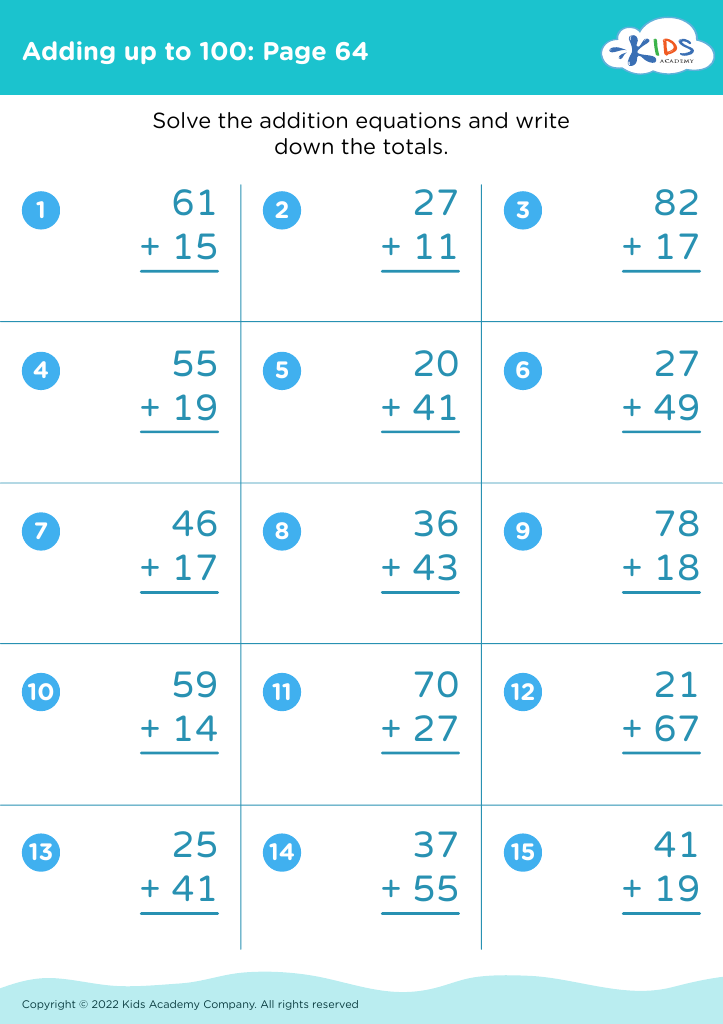
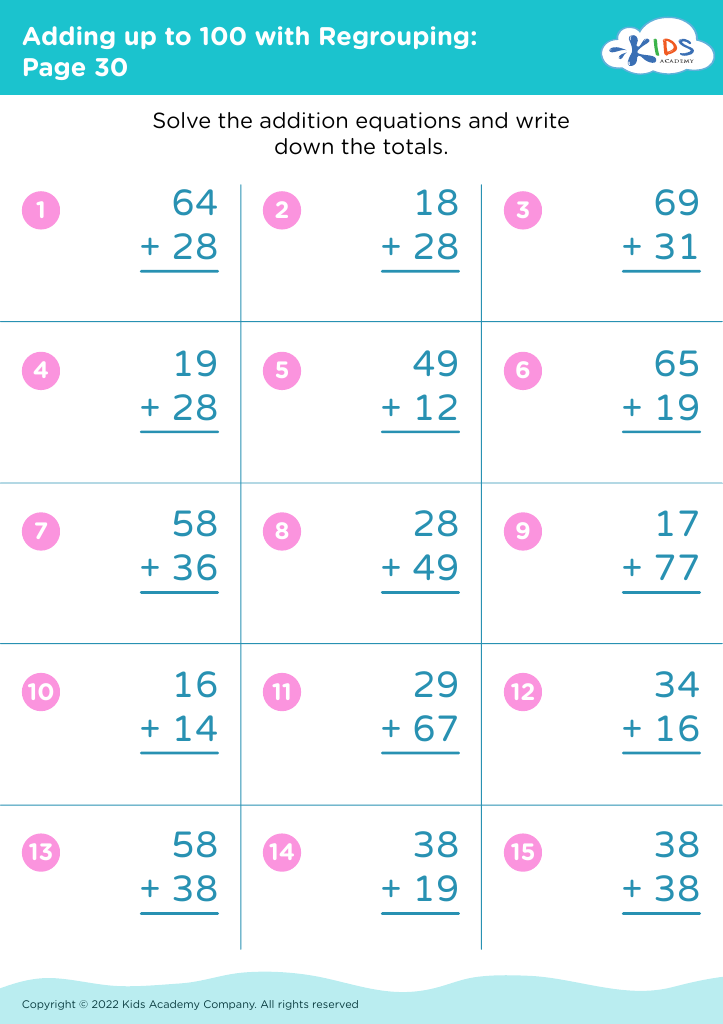
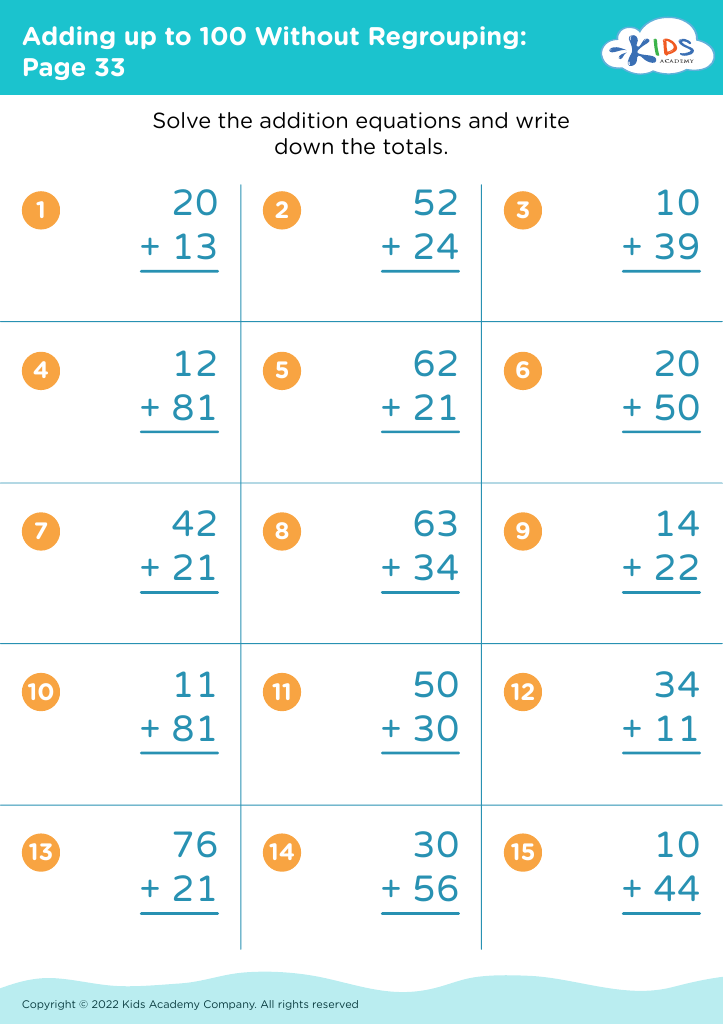


%20(1).jpg)




Understanding fraction addition is crucial for children aged 8-9 as it lays a strong foundation for their future mathematics learning and problem-solving skills. At this developmental stage, mastering how to add fractions, particularly those that sum up to 100, reinforces their comprehension of both fractions and whole numbers. This dual understanding bridges intuitive, everyday math with more intricate, abstract concepts, vital for more advanced studies.
For parents and teachers, emphasizing fraction addition also helps children develop critical thinking and procedural fluency. It encourages them to recognize relationships between numbers, fostering abilities to compare, estimate, and strategize — key components of math literacy. Such skills transcend mathematics and are pertinent to real-world situations, such as cooking, time management, and financial literacy.
Effective teaching of fraction addition to young learners promotes their confidence in math, countering any aversions or self-doubt. By engaging with activities where they add fractions, particularly totaling to 100, children see math as attainable and relevant, cultivating a positive attitude towards persevering in more challenging subjects later.
Therefore, attention to this aspect of math not only equips children with essential computational skills but also imbues them with lifelong problem-solving abilities and a conducive attitude towards learning. For parents and teachers alike, these outcomes are foundational to academic success and holistic growth.








