Fraction comparison Adding up to 100 Worksheets for Ages 8-9
6 filtered results
-
From - To
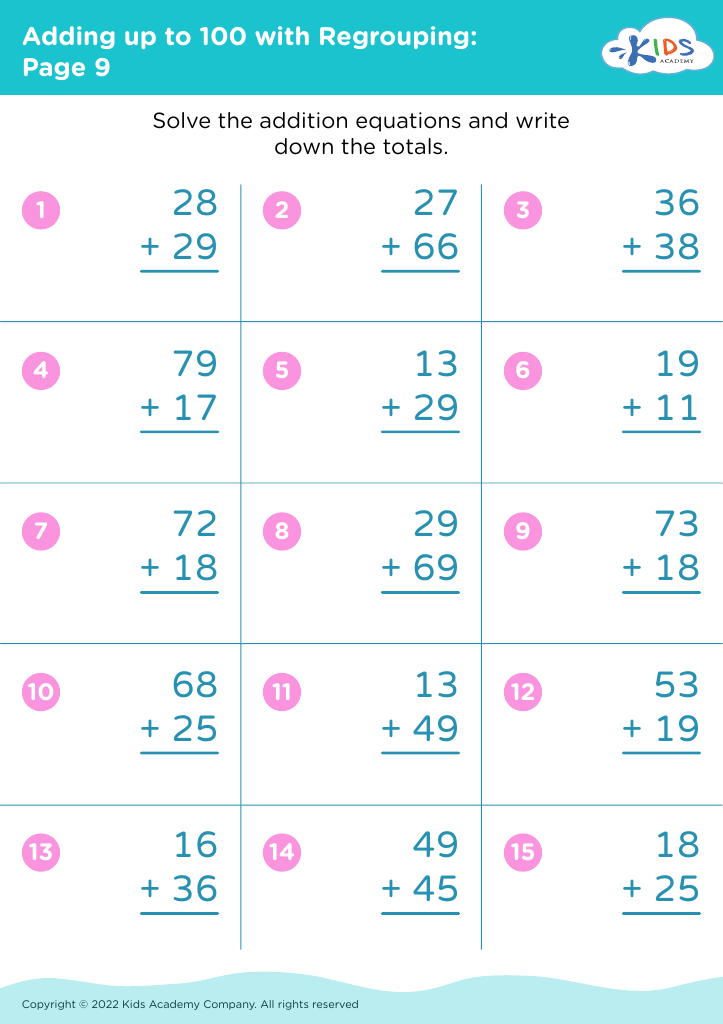
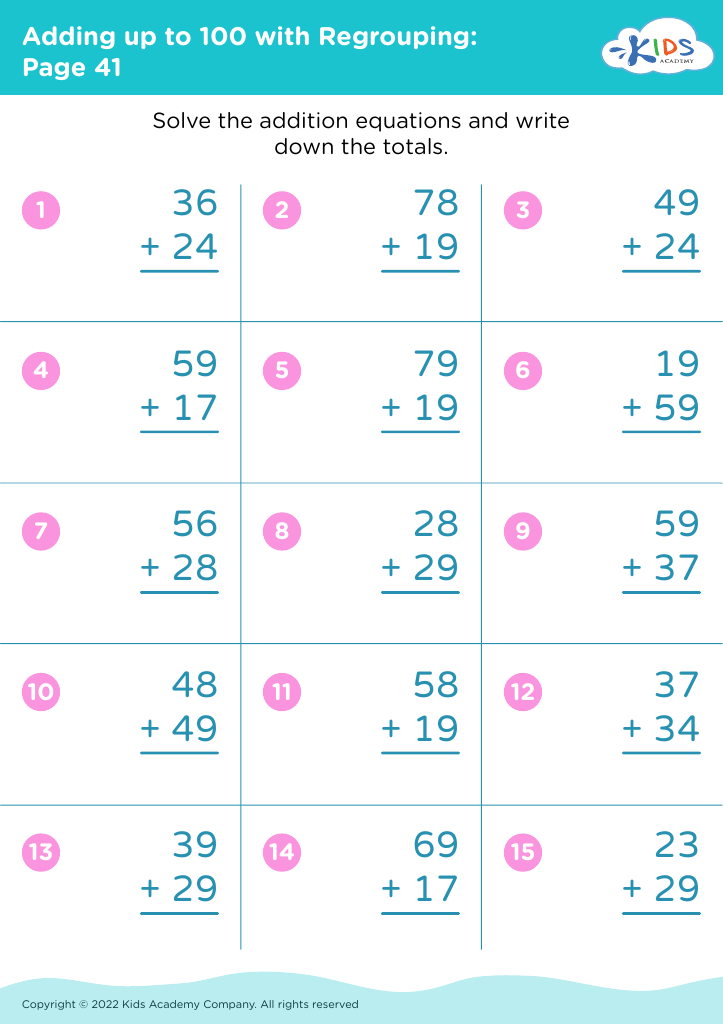
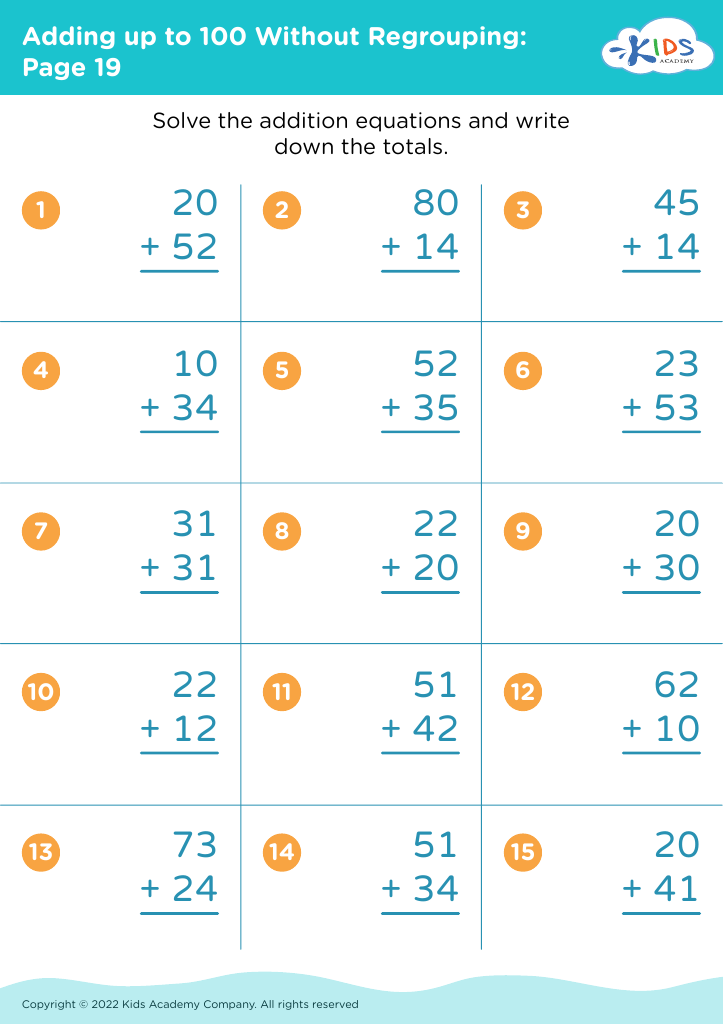
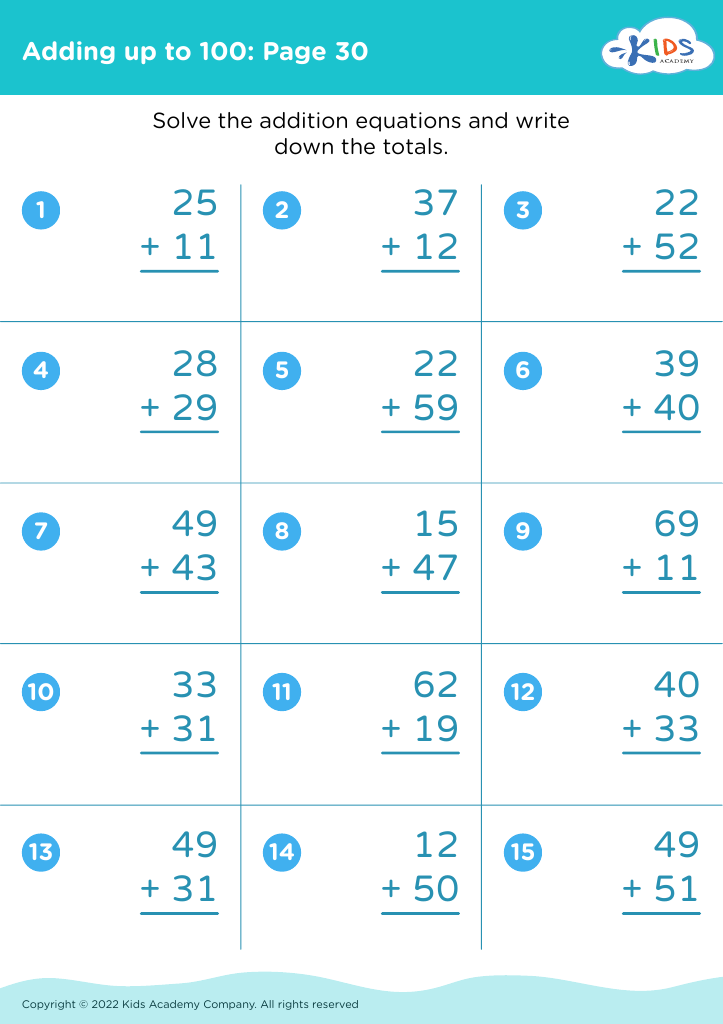
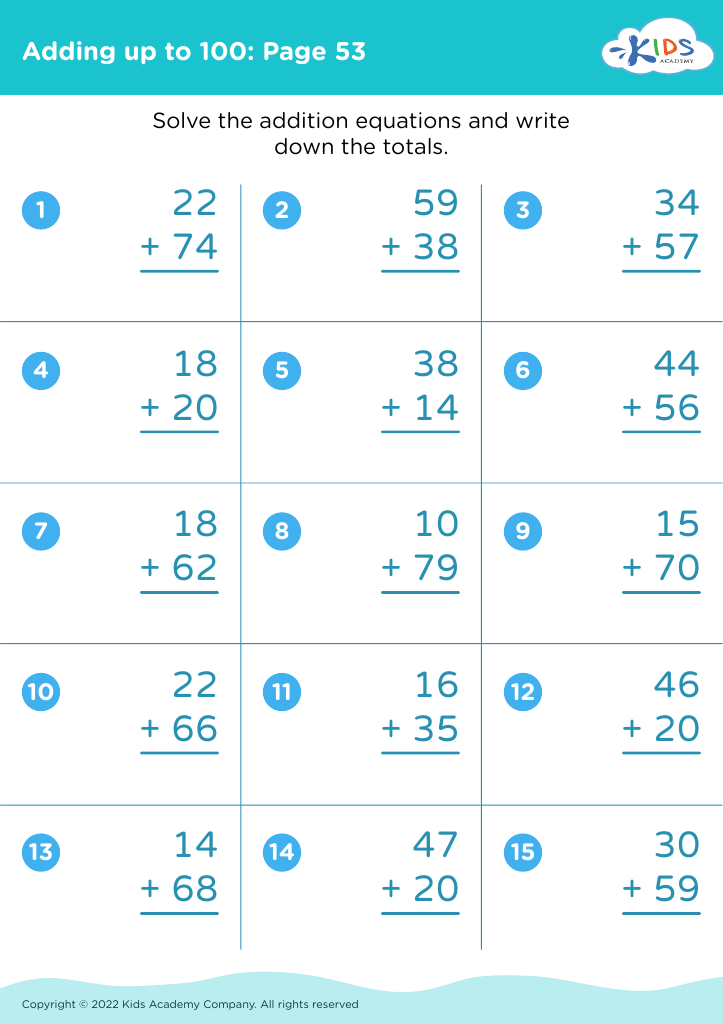
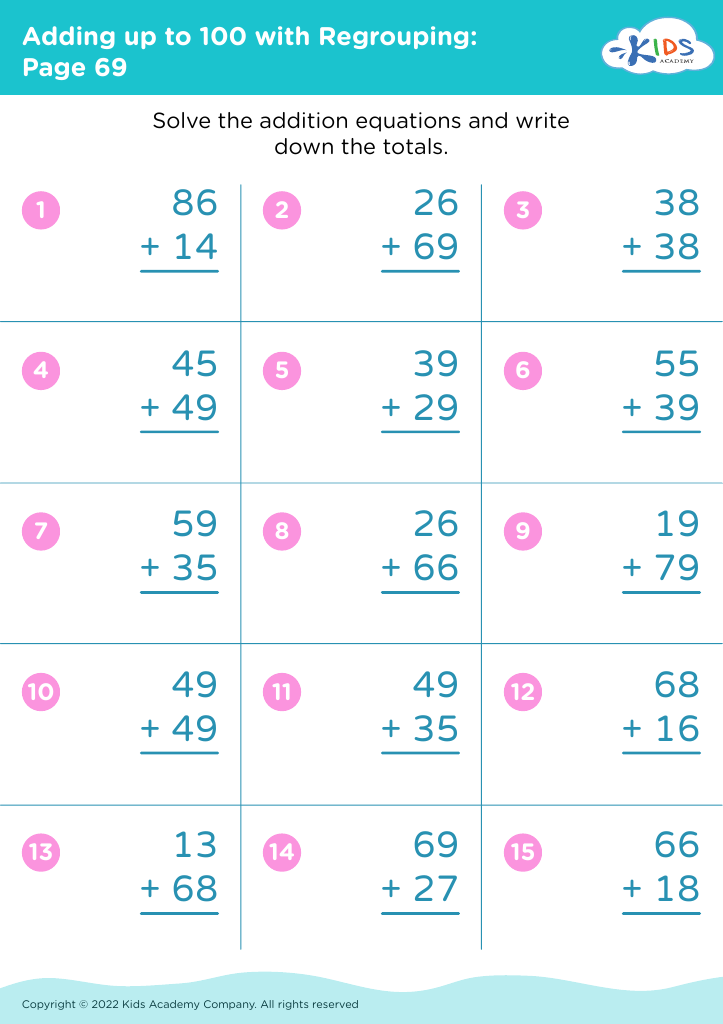
Explore our engaging "Fraction Comparison Adding Up to 100 Worksheets" designed specifically for children ages 8-9! These dynamic worksheets will help young learners master the essential skill of comparing fractions, equipping them with a strong foundation in mathematical concepts. Through fun and interactive exercises, students will practice identifying and working with fractions that sum up to 100, enhancing their problem-solving abilities. Ideal for both classroom and home learning, these worksheets cater to various learning styles, ensuring every child can grasp the concept with confidence. Dive into this educational resource and make fraction learning an enjoyable journey for your child!






%20(1).jpg)
Understanding fraction comparison and adding up to 100 is essential for children aged 8-9 as it forms a foundational skill for their mathematical development. At this age, students are beginning to encounter more complex concepts in mathematics, and the ability to compare fractions lays the groundwork for future learning in ratios, proportions, and more advanced arithmetic.
Parents and teachers should care about this skill because it has direct implications for everyday problem-solving situations. Being able to compare fractions helps children understand concepts of fairness, division, and sharing in real-life contexts—critical skills that apply in both academic and social settings. Moreover, mastering these concepts boosts children's confidence in mathematics, enabling them to tackle more challenging topics in subsequent grades.
Additionally, focusing on fractions cultivates logical thinking and reasoning abilities, essential for overall cognitive development. When children learn to add fractions up to 100, they grasp the importance of whole numbers and parts, resulting in a more robust numerical sense. Engaging with these concepts through interactive activities, visual aids, and practical examples not only makes learning enjoyable but also ensures that students are better prepared for future academic challenges. Investing time in these foundational skills sets children on a path toward mathematical fluency and success.








