Hand-eye Coordination Adding up to 100 Worksheets for Ages 8-9
3 filtered results
-
From - To
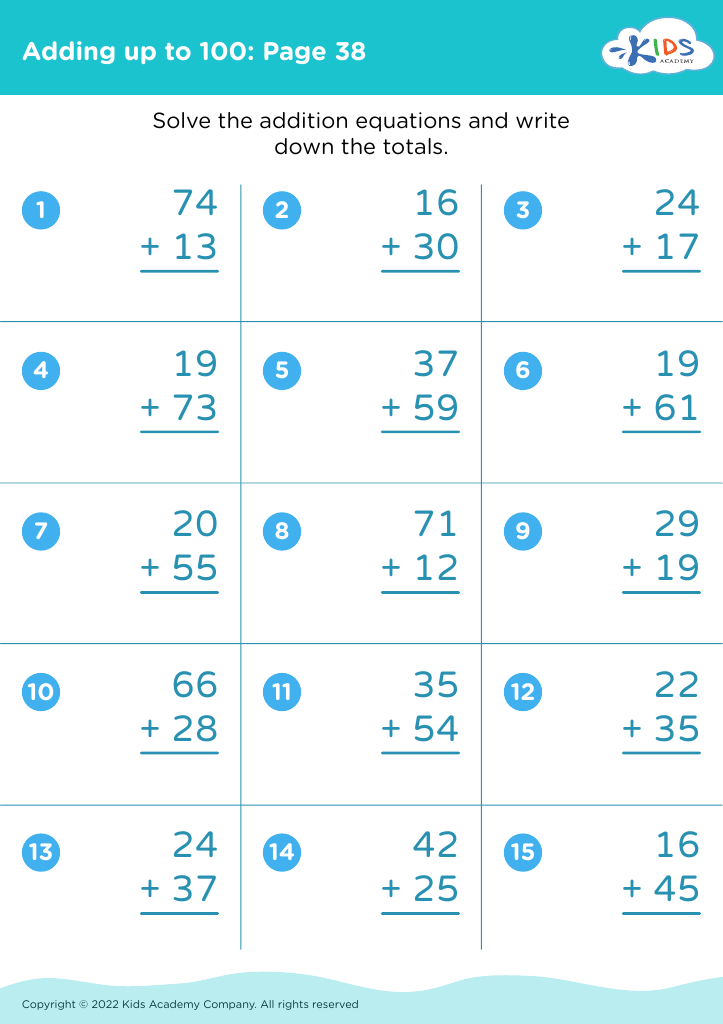
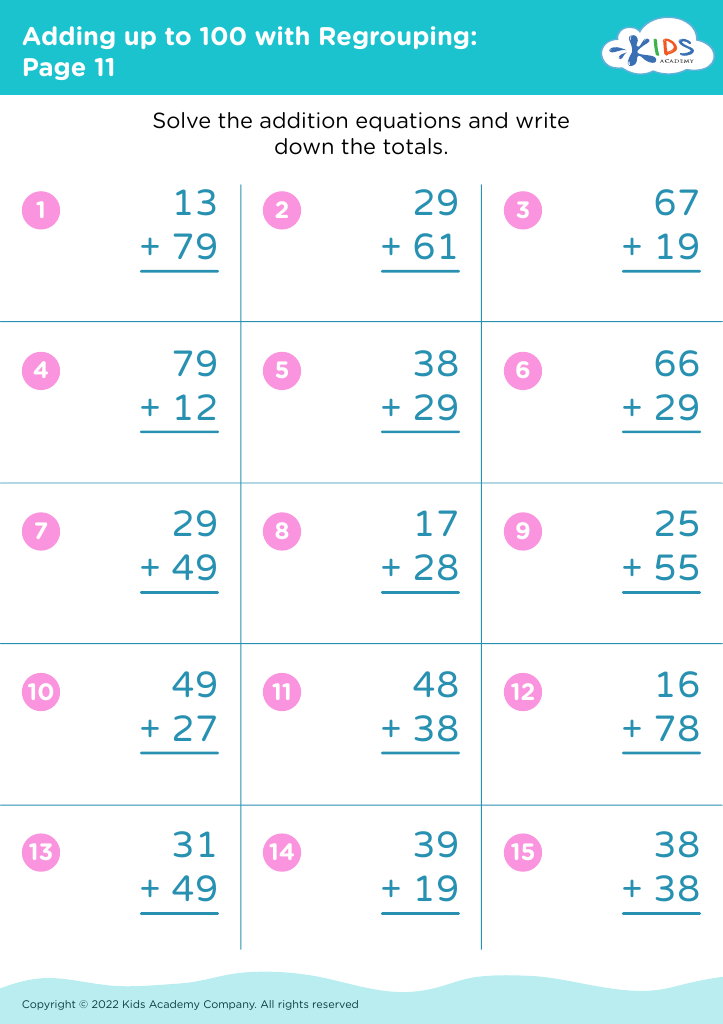
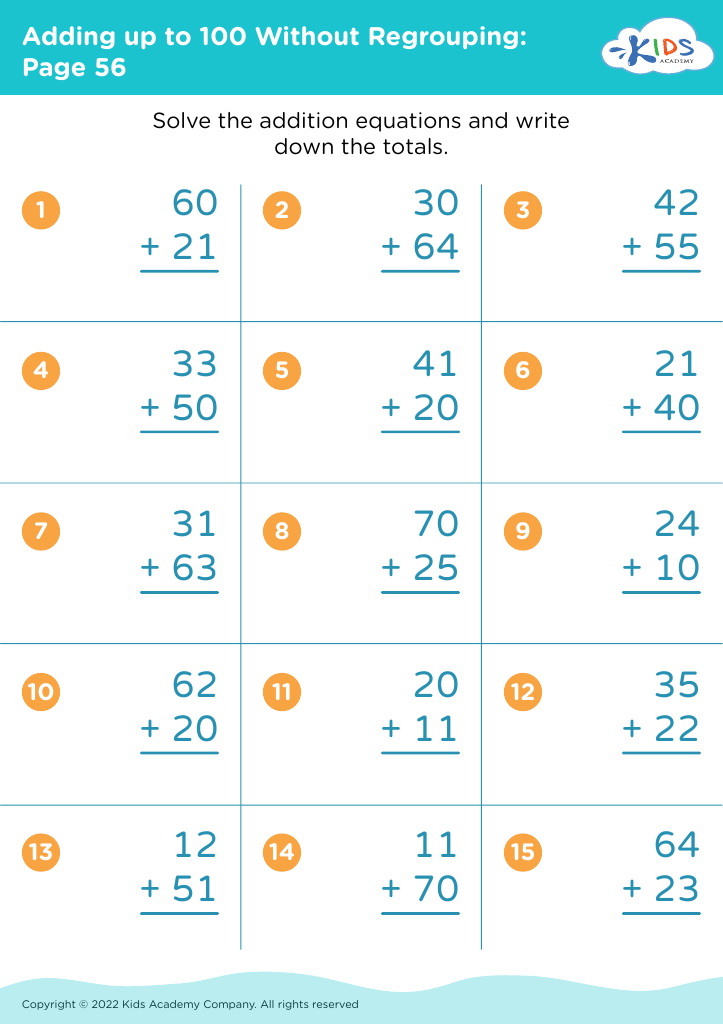
Enhance your child's hand-eye coordination while mastering addition with our interactive "Adding up to 100" worksheets, designed for ages 8-9. These engaging activities not only reinforce essential math skills but also promote physical dexterity as children engage in various exercises. Each worksheet is crafted to challenge students in a fun and exciting way, helping them to develop their mathematical understanding alongside fine motor skills. Perfect for classroom use or at-home learning, our worksheets create an enjoyable learning experience that encourages young learners to explore numbers creatively. Start building your child's confidence in math while improving their coordination today!


%20(1).jpg)




Hand-eye coordination is crucial for children ages 8-9, as it significantly impacts their academic performance and overall development. At this age, children are refining their motor skills and need proficient hand-eye coordination for various activities, from sports to writing. This skill is essential for tasks like catching a ball, typing, or drawing, which bolster their physical confidence and ability to engage in play and group activities.
Additionally, developing hand-eye coordination relates to cognitive skills like problem-solving and mathematical understanding. When children learn to add up to 100, for instance, they can visualize numbers and their corresponding quantities. Engaging in hands-on activities that require counting or sorting enhances their ability to grasp these mathematical concepts. Coordinated movement facilitates brain development, allowing children to connect physical actions with mental processes.
Encouraging activities like crafting, playing sports, or interactive math games not only enhances hand-eye coordination but also fosters teamwork, perseverance, and balanced emotional wellbeing. Therefore, both parents and teachers should prioritize activities that promote this skill, as they lay a foundation for academic success and lifelong physical competence. Hand-eye coordination is not merely a physical necessity; it is interconnected with a child's cognitive and emotional growth.








