Improve math skills Adding up to 100 Worksheets for Ages 8-9
6 filtered results
-
From - To
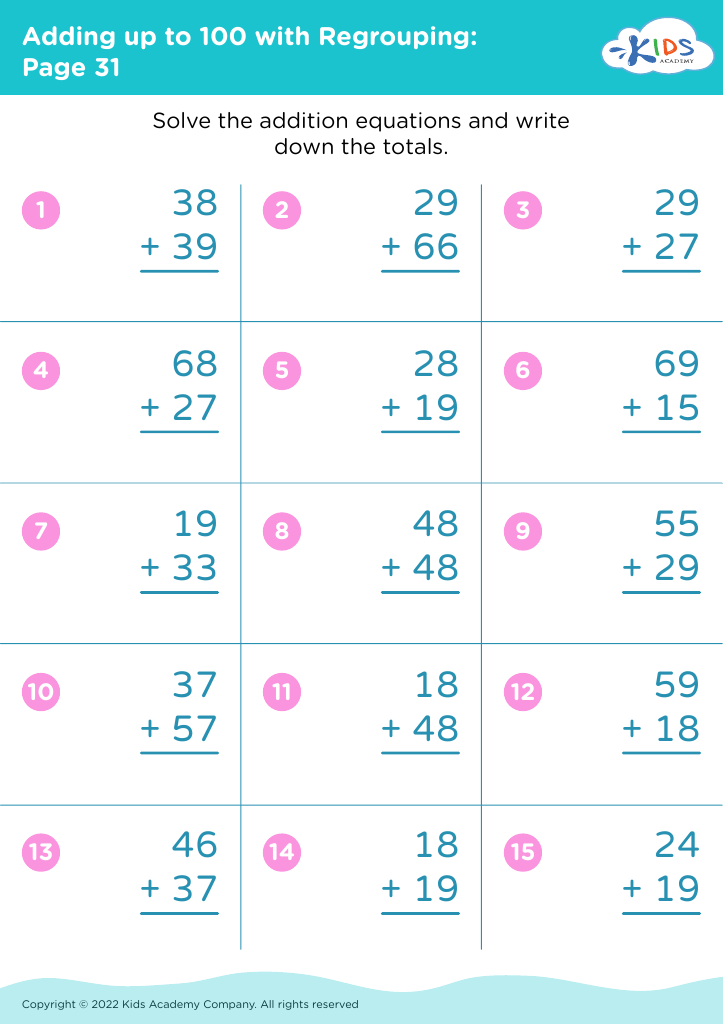
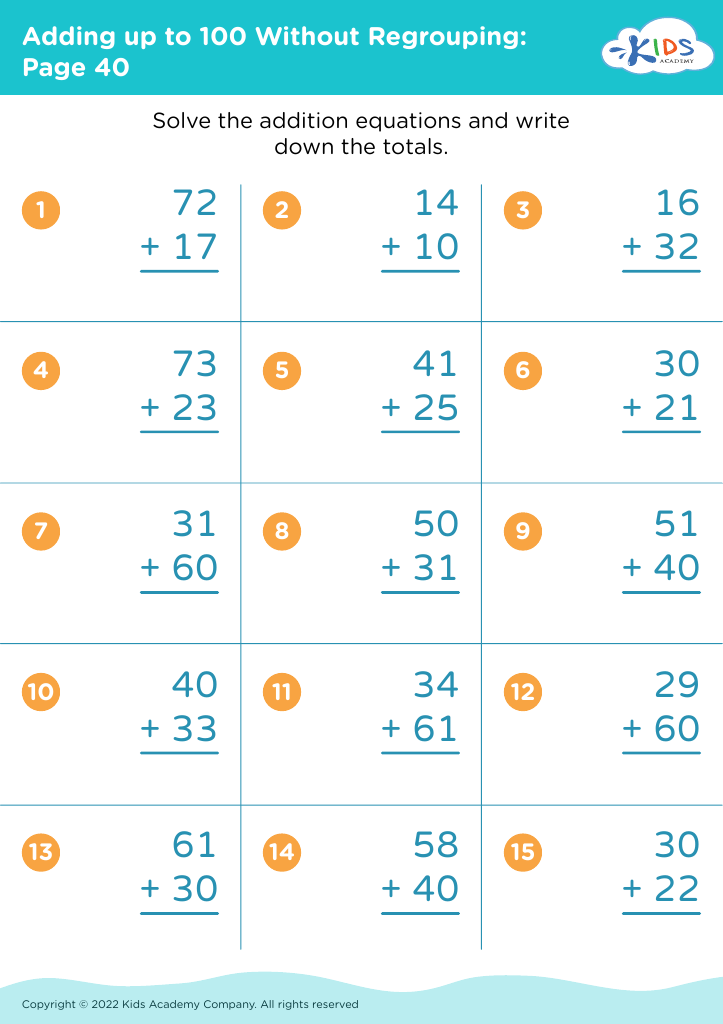
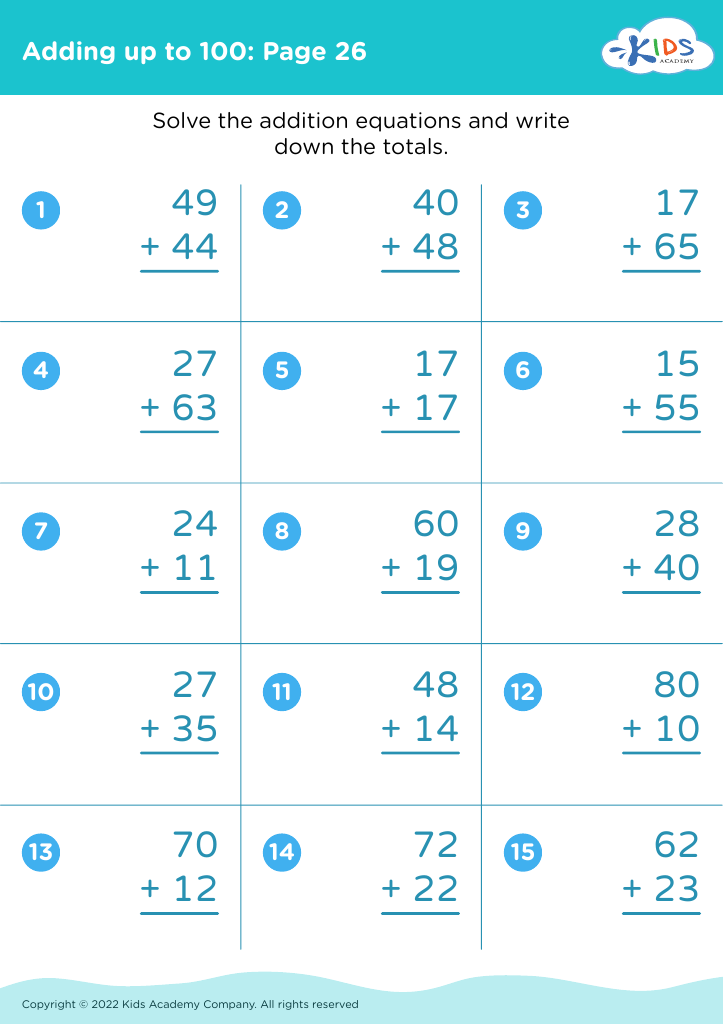
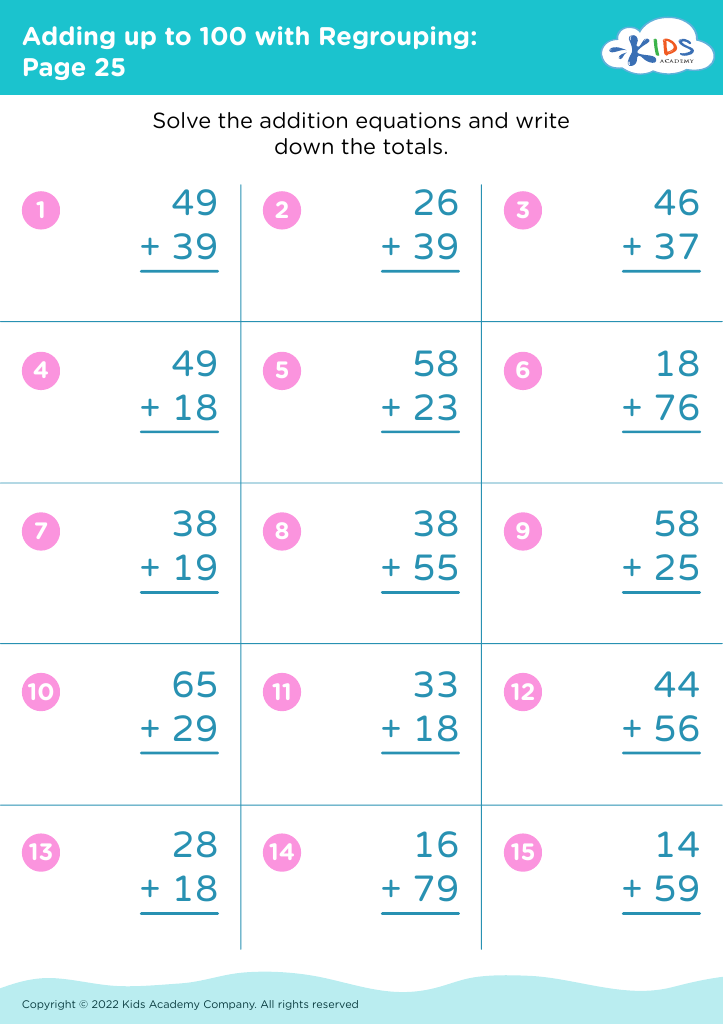
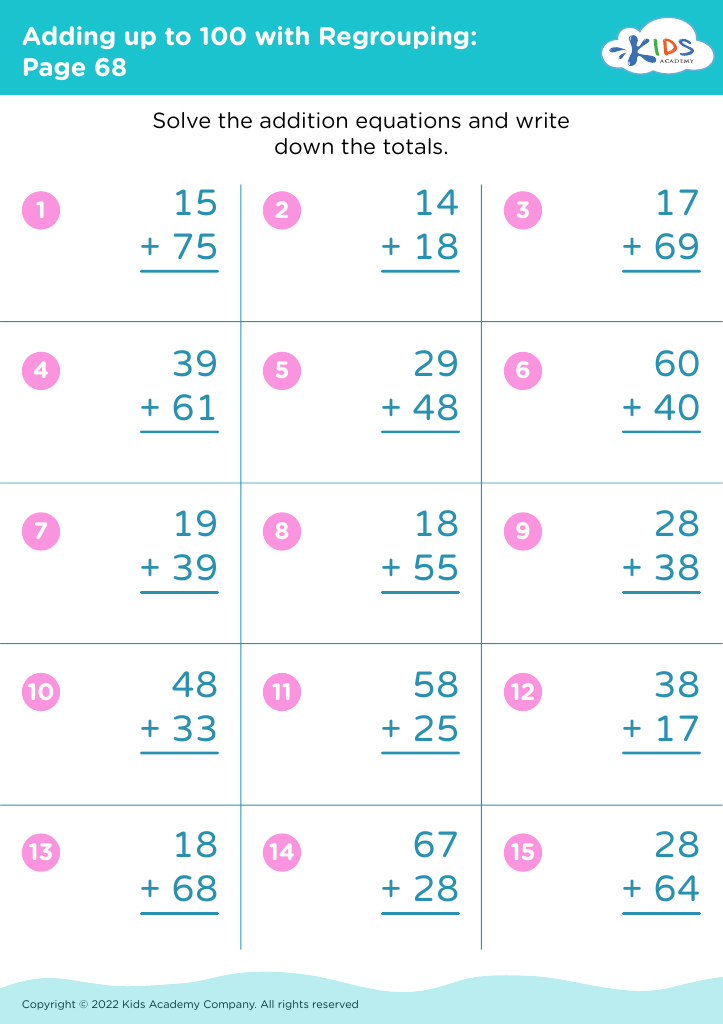
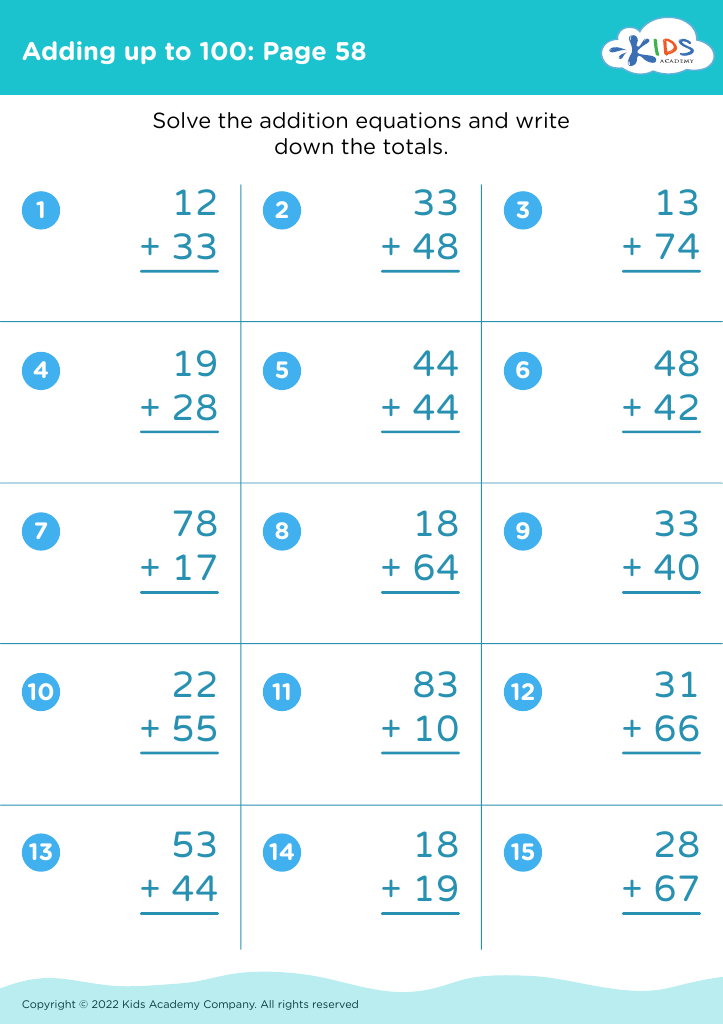
Unlock your child's potential with our "Adding Up to 100" worksheets, specially designed for ages 8-9. These engaging and interactive worksheets provide students with essential practice in addition, helping them build confidence and proficiency in math. Children will enjoy working through various exercises that challenge their skills and encourage critical thinking. Each worksheet is crafted to ensure a solid understanding of number relationships and addition strategies, making math fun and accessible. Perfect for at-home practice or classroom use, these resources are an ideal tool to improve math skills and prepare your child for future math challenges. Start learning today!


%20(1).jpg)




Improving math skills, particularly in adding up to 100 for children aged 8-9, is crucial for several reasons. First, this age group is at a pivotal stage in their cognitive development, where foundational arithmetic skills significantly influence future mathematical concepts. Mastery of addition sets the groundwork for more complex operations, including subtraction, multiplication, and division, fostering a well-rounded numerical understanding.
Additionally, engaging children's abilities to add up to 100 enhances their problem-solving skills, critical thinking, and confidence in their mathematical abilities. It promotes mental math strategies, which can enable them to perform calculations more quickly and efficiently, fostering independence in both academic and everyday contexts.
For parents and teachers, emphasizing math skills helps students move beyond rote memorization to a more comprehensive understanding of math principles. This leads not only to better performance in school but also to enhanced analytical and logical reasoning skills, beneficial in real-life scenarios. Improved math competencies bolster children's overall academic success, showing them the relevance of mathematics beyond the classroom and preparing them for a future where numerical proficiency is increasingly vital. Ultimately, nurturing these skills forms a foundation that will support children as they pursue more advanced educational paths.








