Improve reading comprehension Adding up to 100 Worksheets for Ages 8-9
4 filtered results
-
From - To
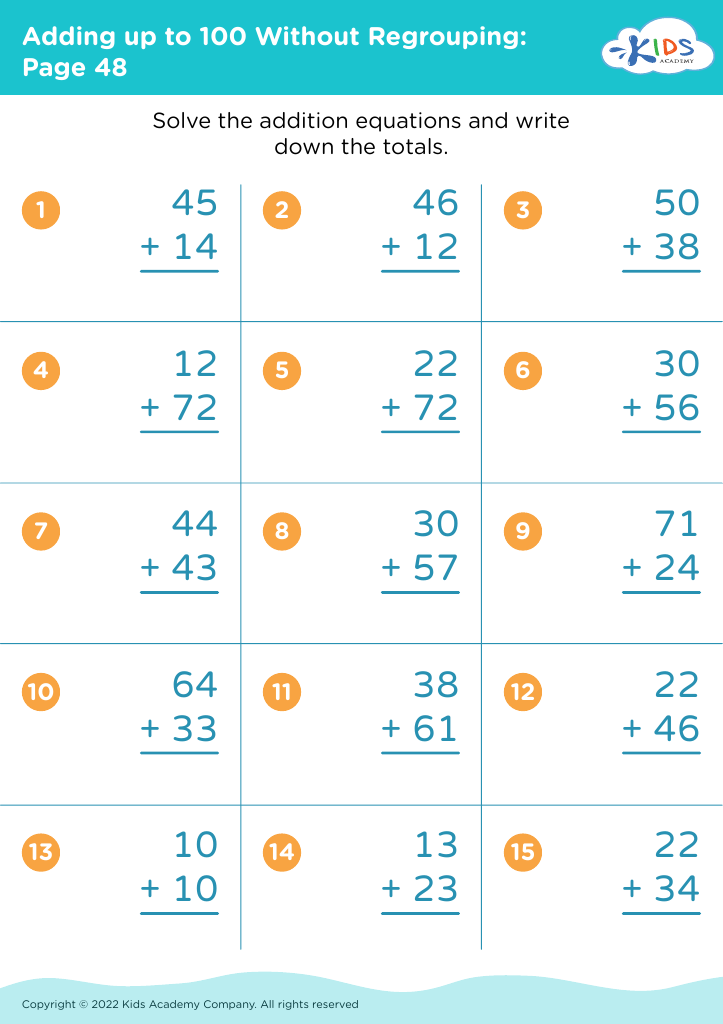
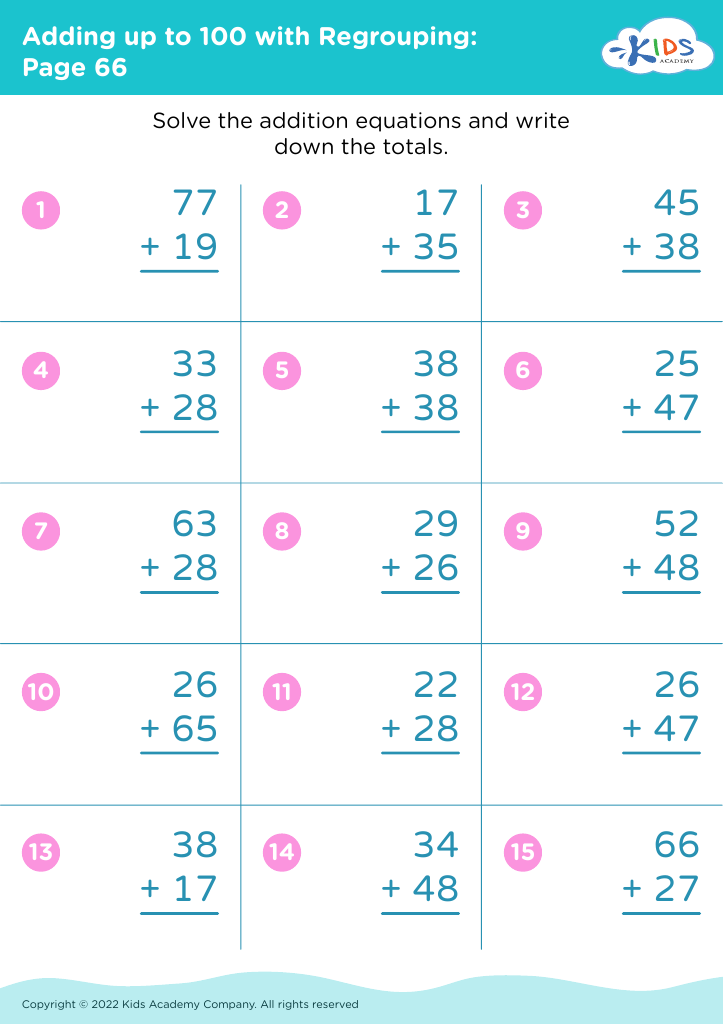
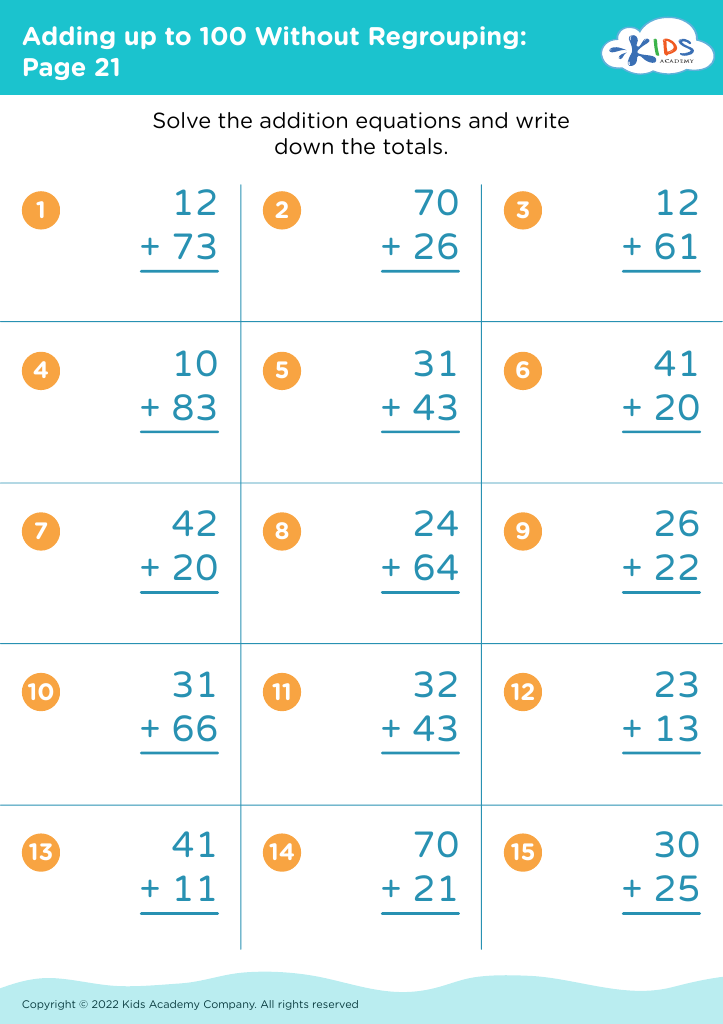
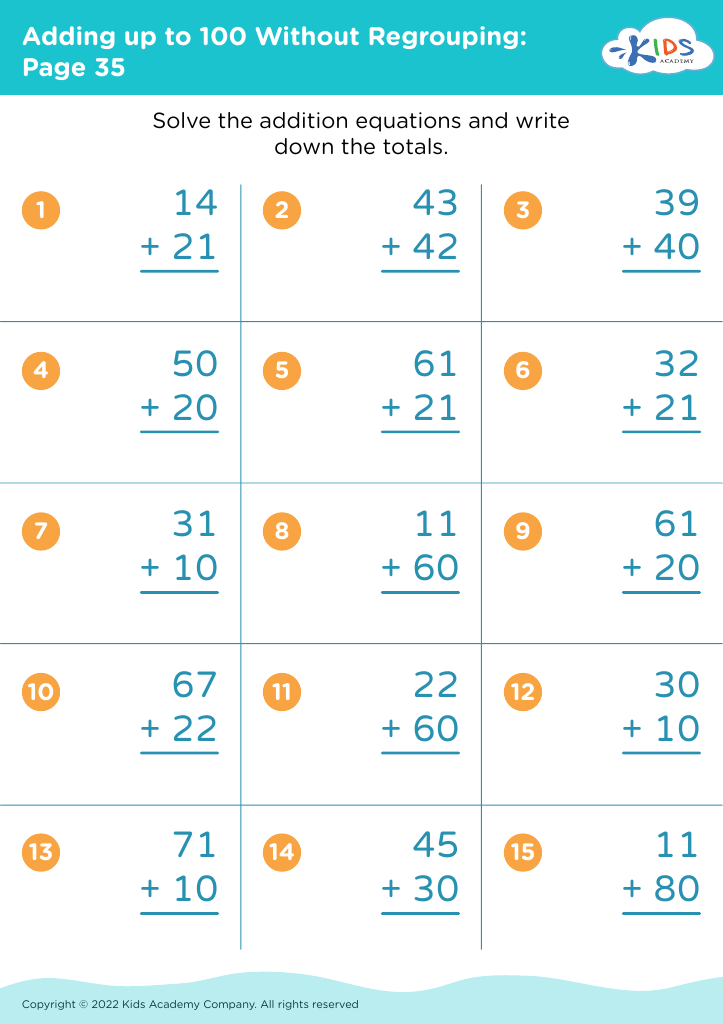
Enhance your child's reading comprehension with our "Adding Up to 100" worksheets designed for ages 8-9! These engaging resources not only focus on mathematical skills but also foster critical thinking and reading abilities. Each worksheet blends fun with learning, encouraging kids to solve math problems while improving their understanding of written concepts. As they work through problems that involve the number 100, students practice reading instructions, interpreting questions, and deriving solutions, all essential for academic success. Perfect for parents and teachers alike, these worksheets provide a valuable tool to strengthen both math and reading skills in an enjoyable way!



%20(1).jpg)



Improving reading comprehension for ages 8-9 is crucial for multiple reasons. At this stage, children transition from learning to read to reading to learn, making reading comprehension essential for academic success across subjects. Effective comprehension skills allow children to grasp core concepts in science, social studies, and other areas, laying the foundation for future learning.
Moreover, strong comprehension abilities contribute to a child’s overall confidence and engagement in the classroom. Children who understand what they read are more likely to participate in discussions, ask questions, and express their thoughts, fostering a love for literacy. Parents and teachers play a pivotal role in nurturing these skills by providing engaging reading materials and encouraging discussions about stories.
Additionally, proficient reading comprehension impacts children’s everyday lives, aiding them in interacting with instructions, advertisements, and conversations. This literacy skill empowers children to navigate the world more effectively and independently. Failure to improve reading comprehension can lead to frustrations and learning difficulties, affecting a child's attitude toward learning.
Ultimately, investing time and resources in developing strong reading comprehension lays a solid foundation for lifelong learning and personal growth, making it an essential focus for both parents and educators.








