Numeracy skills Adding up to 100 Worksheets for Ages 8-9
4 filtered results
-
From - To
Enhance your child's numeracy skills with our engaging "Adding Up to 100" worksheets, specifically designed for ages 8-9. These printable resources focus on helping students master addition concepts and develop confidence in their math abilities. The worksheets include a variety of fun and interactive exercises that challenge young learners to practice adding two-digit numbers, reinforcing their understanding of basic arithmetic operations. Perfect for home or classroom use, these worksheets cater to different learning styles, ensuring that every student can improve their math skills effectively. Help your child excel by providing the tools they need to succeed in mathematics!
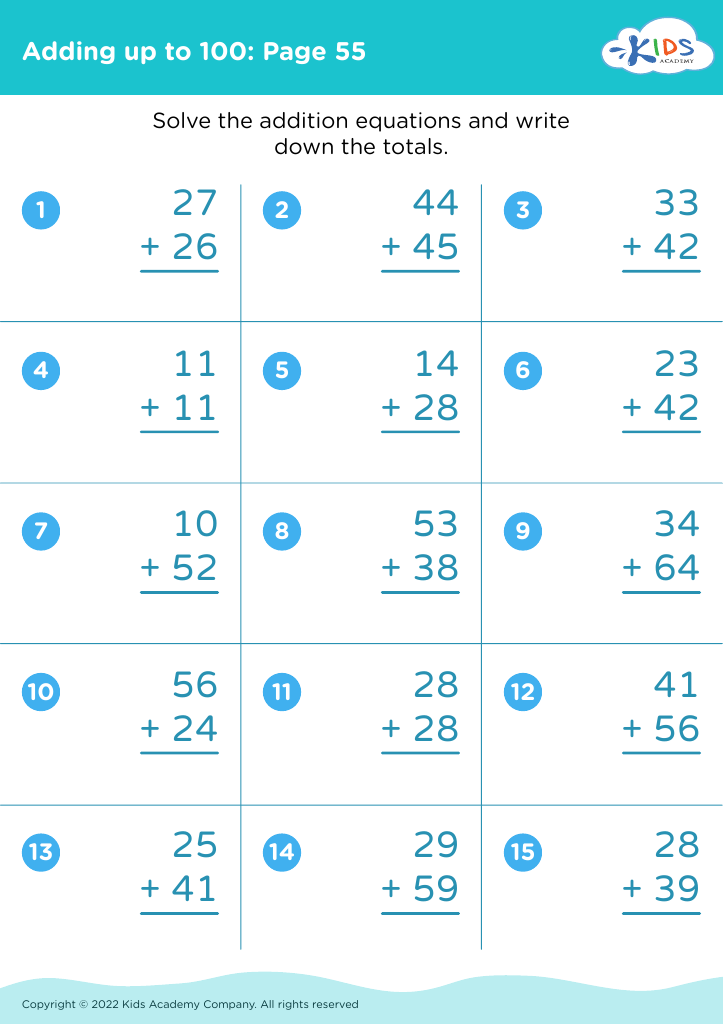
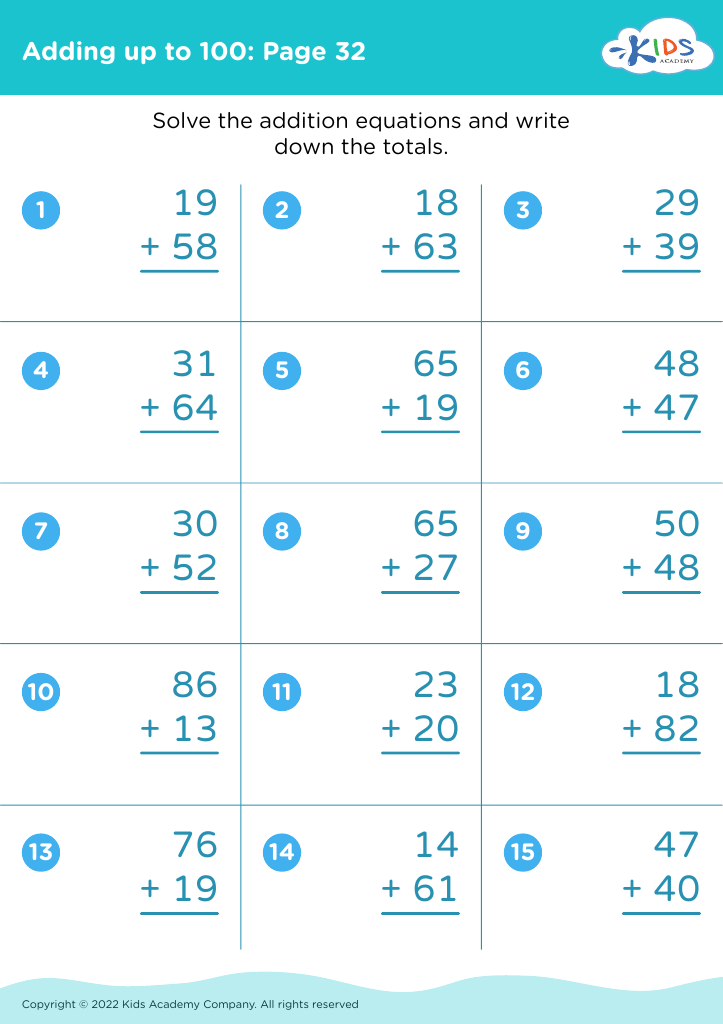
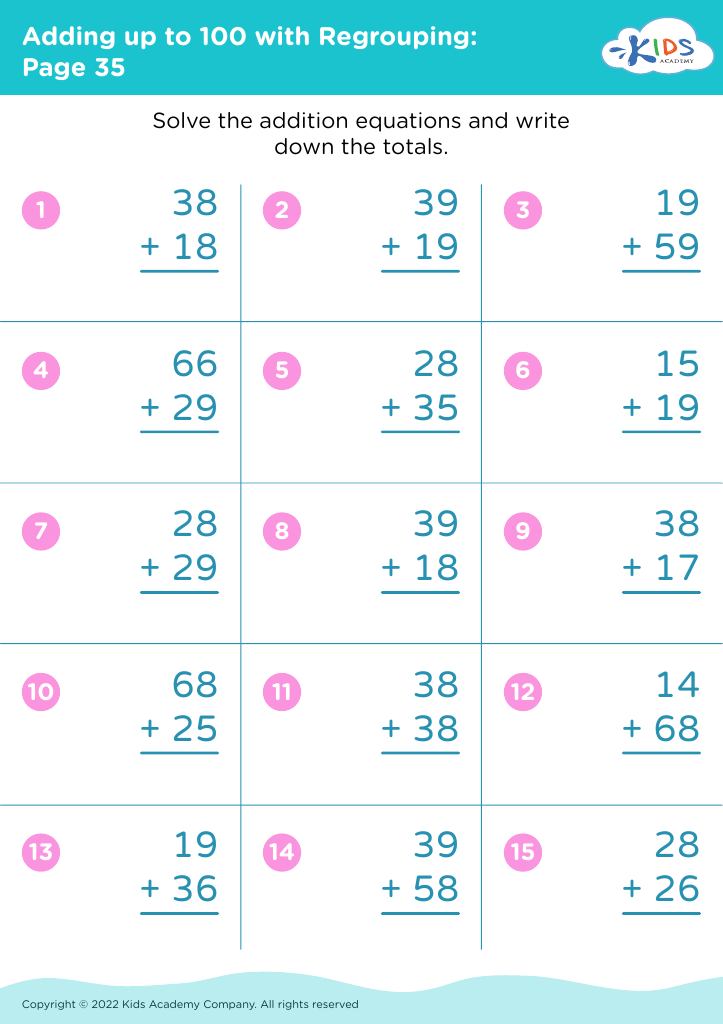
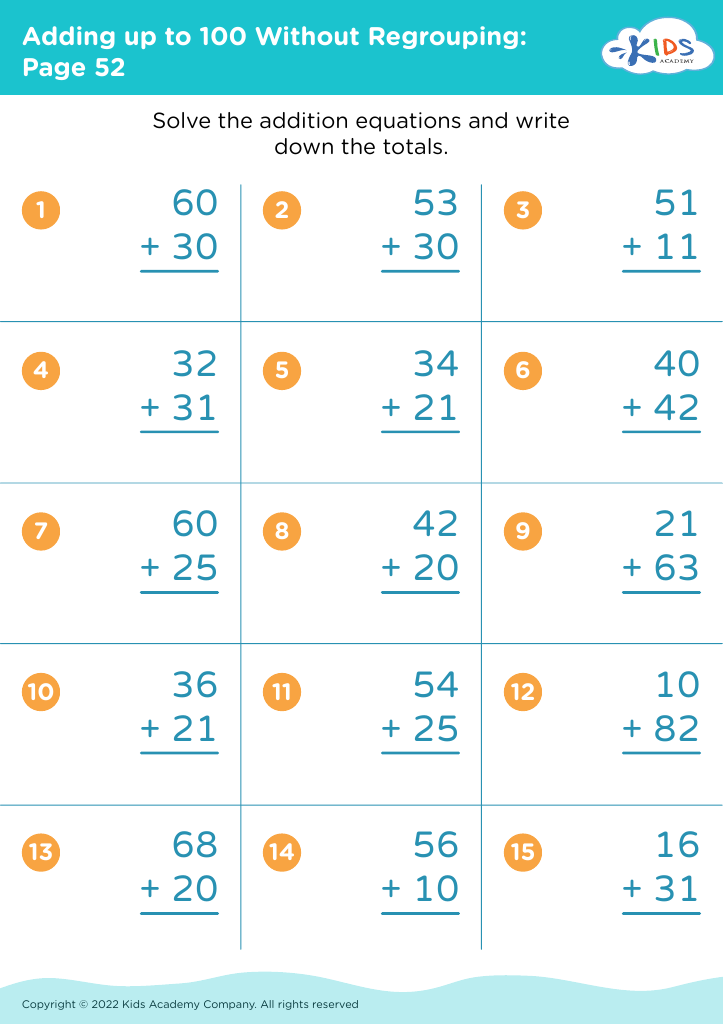





%20(1).jpg)

Numeracy skills, particularly the ability to add up to 100, are crucial for children aged 8-9, laying a foundation for future mathematical learning and everyday problem-solving. At this age, students are transitioning from basic arithmetic to more complex concepts, making it essential to master addition within this range. Proficiency in adding numbers up to 100 enhances their confidence and equips them to tackle multi-digit problems, estimation, and mental math.
Furthermore, strong numeracy skills foster critical thinking and analytical reasoning, essential qualities not only in foundational math but across subjects and everyday scenarios—whether it’s budgeting, measuring ingredients for a recipe, or planning activities. For teachers, integrating engaging methods of teaching addition reinforces a love for mathematics, promoting a positive learning environment. For parents, supporting and encouraging practice at home reinforces these skills, as they often extend mathematics beyond the classroom—from grocery shopping calculations to timing games.
Ultimately, prioritizing numeracy skills is a vital investment in children’s education that cultivates lifelong skills, enabling them to become adept problem solvers and informed citizens in an increasingly quantitative world. Elevating their ability to add up to 100 is a critical step in ensuring their academic success and promoting resilience in tackling numerical challenges ahead.








