Problem-solving practice Adding up to 100 Worksheets for Ages 8-9
5 filtered results
-
From - To
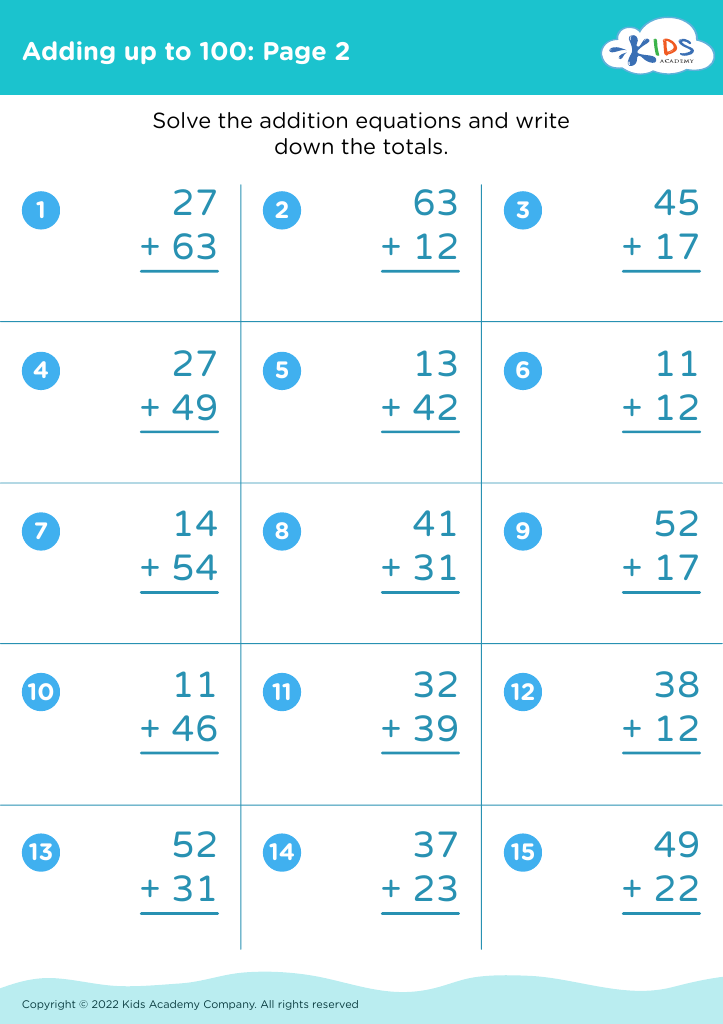
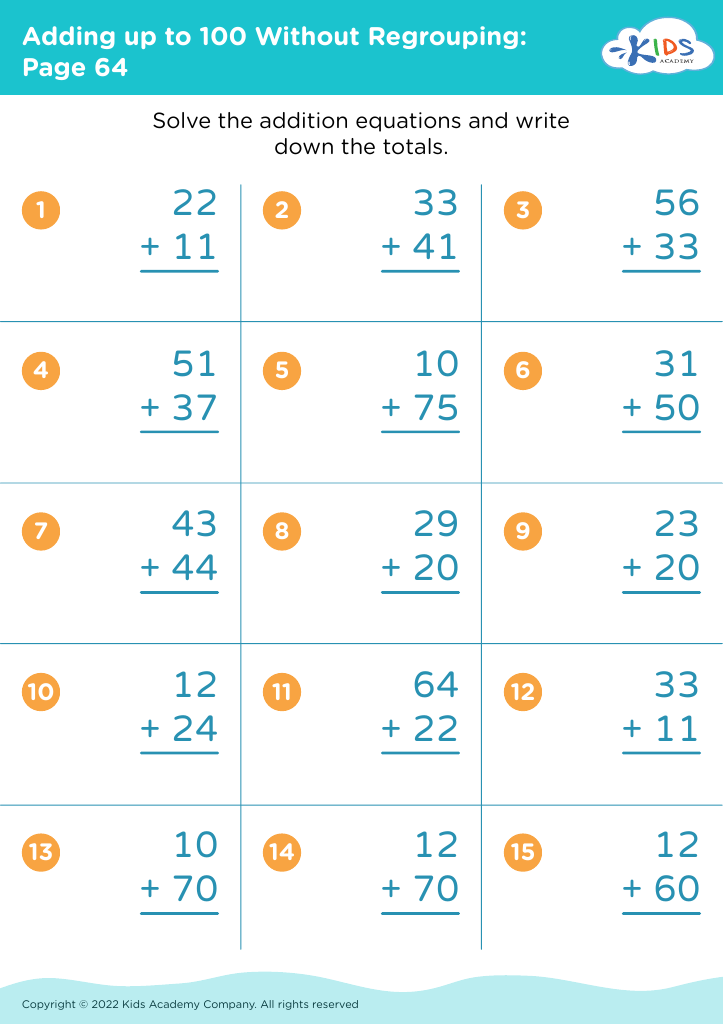
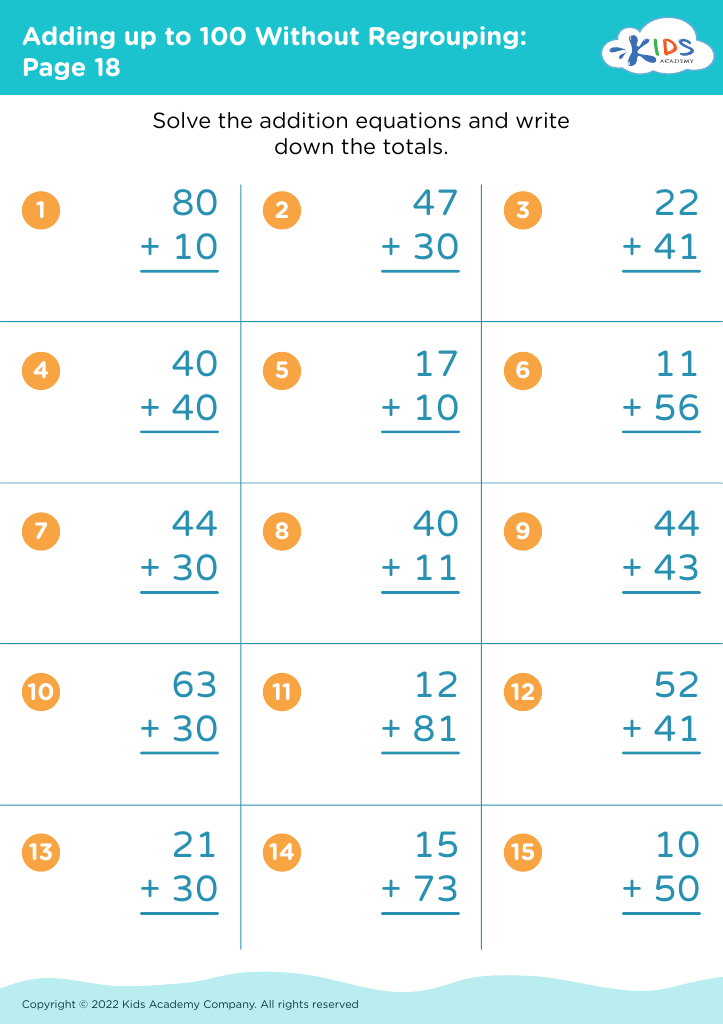
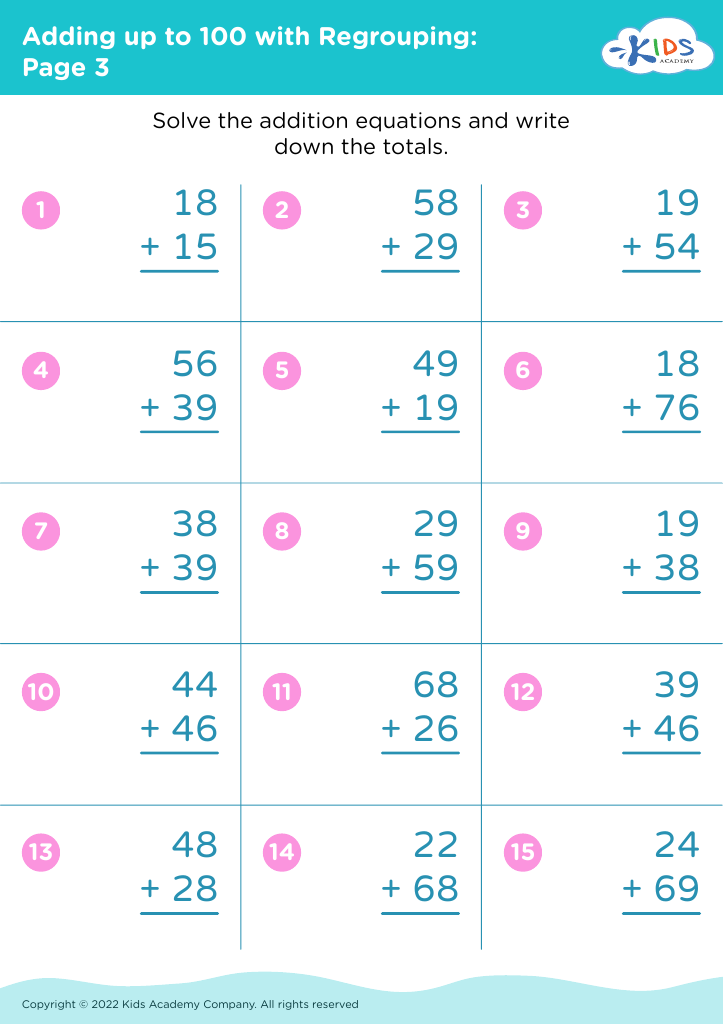
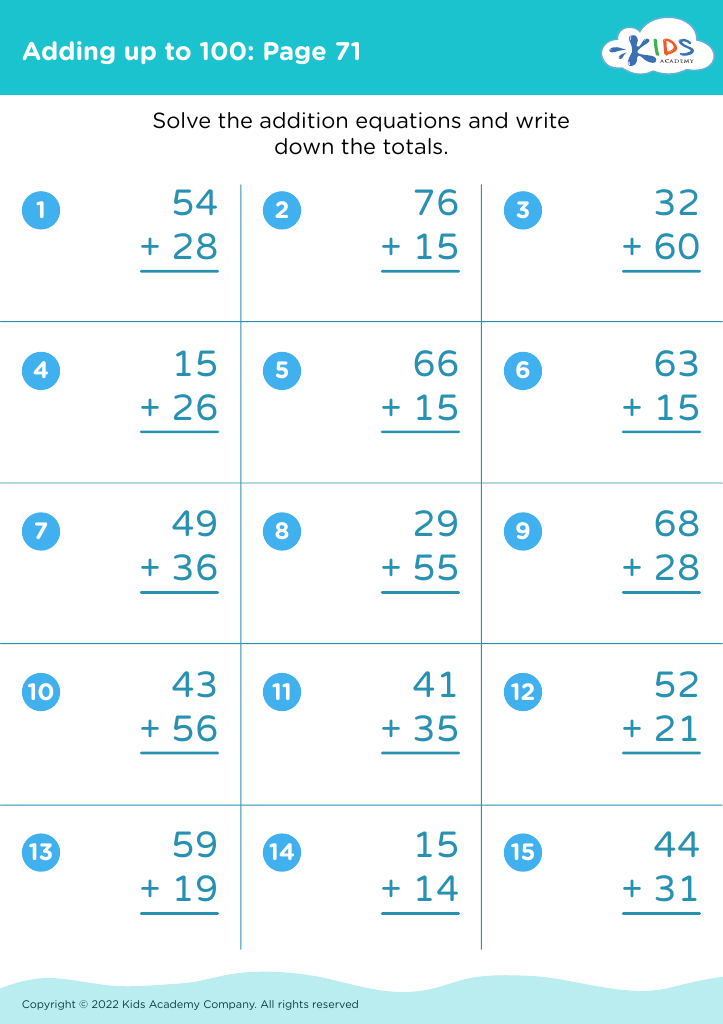
Discover our "Problem-Solving Practice: Adding up to 100 Worksheets" designed specifically for children ages 8-9. These engaging worksheets foster critical thinking skills while helping students master addition concepts up to 100. With a variety of problems to solve, including word problems and visual aids, our resources encourage kids to apply mathematical strategies in real-life scenarios. Perfect for both classroom and home use, these worksheets not only enhance numerical skills but also boost confidence in problem-solving abilities. Get your students excited about math as they explore, solve, and achieve with our fun and interactive activities!






%20(1).jpg)
Problem-solving practice, specifically focusing on adding up to 100, is crucial for children aged 8-9 for several reasons. At this pivotal age, students are transitioning from basic arithmetic to more complex mathematical concepts. Mastering addition within this range fosters confidence and competence in their overall math skills, laying a foundation for future learning.
First, engaging with problem-solving enhances critical thinking skills. Children learn to strategize, analyze different approaches, and find efficient solutions. This reinforces their understanding of numbers and relationships, empowering them to tackle more advanced math problems later on.
Secondly, practicing addition to 100 cultivates persistence and resilience. Children often encounter challenges during problem-solving; overcoming these obstacles builds a growth mindset, teaching them that effort leads to improvement.
Moreover, when parents or teachers emphasize problem-solving in a fun and supportive environment, it enhances children’s enjoyment of math. This positive association encourages ongoing exploration and curiosity, making learning a more engaging experience.
In conclusion, focusing on adding up to 100 is beneficial for emotional, cognitive, and social development, ultimately preparing children for future academic success and everyday life skills.








