Shape identification Adding up to 100 Worksheets for Ages 8-9
3 filtered results
-
From - To
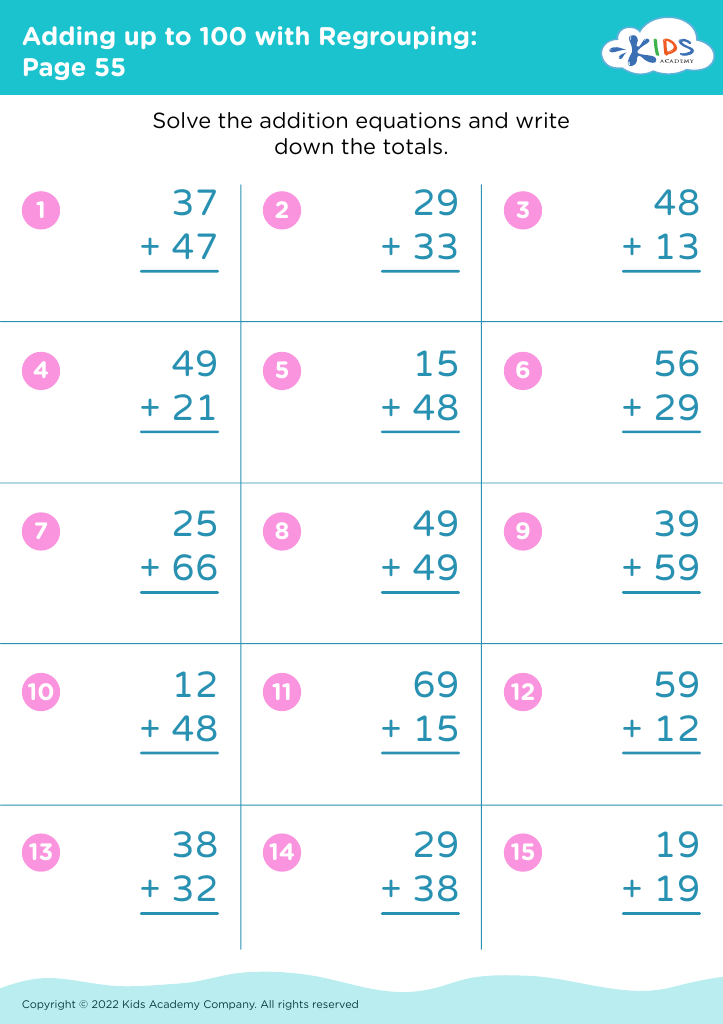
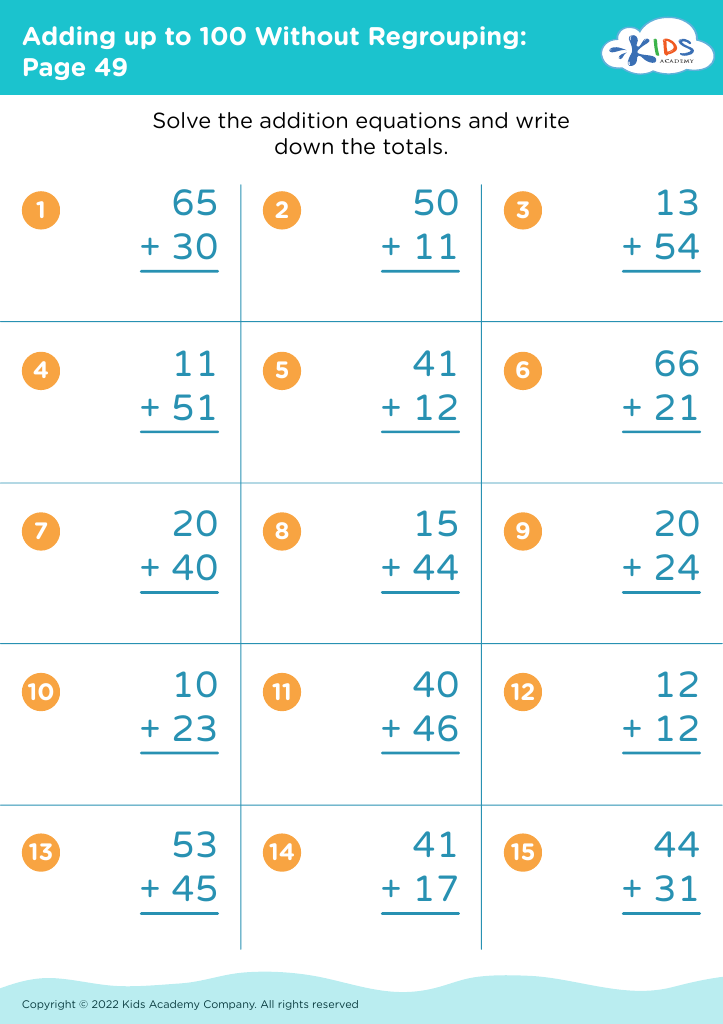
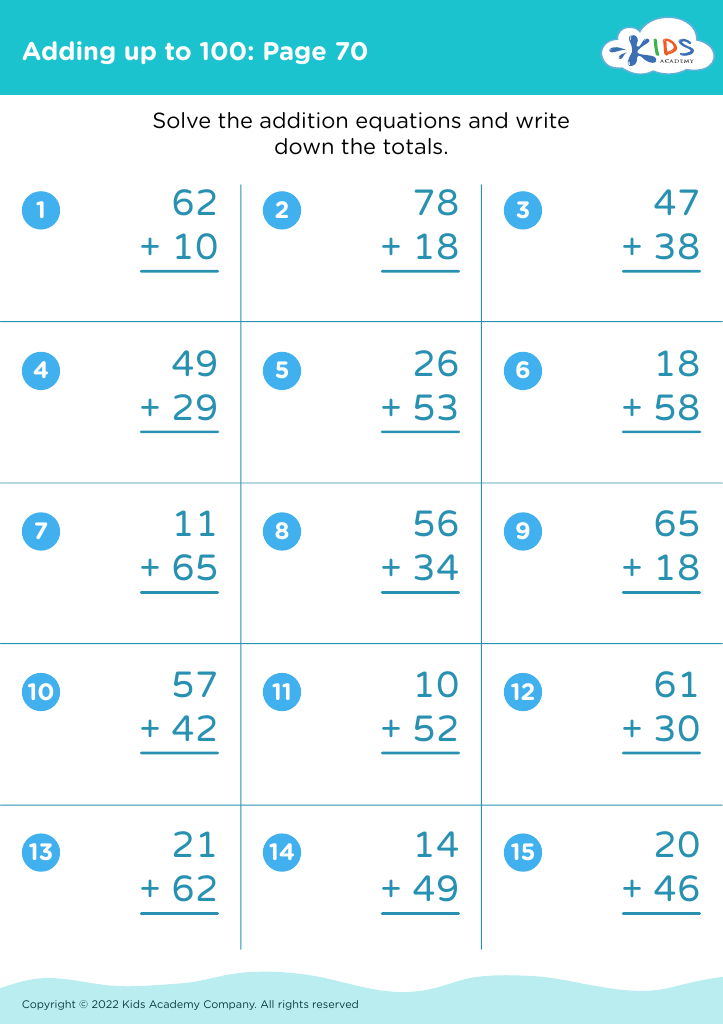
Discover our engaging "Shape Identification Adding Up to 100 Worksheets" designed specifically for children aged 8-9! These interactive worksheets combine the fun of shape recognition with essential math skills, encouraging young learners to identify various shapes while practicing addition exercises that sum up to 100. Each worksheet is thoughtfully crafted to enhance critical thinking and problem-solving skills, making learning enjoyable and effective. Perfect for classrooms or at-home practice, these worksheets offer a balanced mix of creativity and learning, ensuring students build a strong foundation in both geometry and arithmetic. Download now and watch your child excel in shape identification and addition!


%20(1).jpg)




Shape identification and understanding how to add up to 100 are foundational skills for children aged 8-9, making them essential areas of focus for parents and teachers. First, shape recognition enhances spatial awareness, promoting cognitive development and helping children understand their environment. This skill becomes crucial later in subjects like geometry and art, fostering creativity and problem-solving abilities.
Second, adding up to 100 represents a key milestone in mathematical literacy. Mastering this concept builds a strong number sense, enabling students to tackle more complex arithmetic, such as multiplication and division. With a solid grasp of number relationships and patterns, children develop confidence in their mathematical abilities, which can positively affect their overall academic performance.
Moreover, these skills are interlinked; understanding shapes lays the groundwork for comprehension of measurements and graphs, which often relate to data representing quantities up to 100. Additionally, engaging children in games and activities that involve shapes and numbers can make learning fun and interactive, further enhancing motivation and retention.
Ultimately, prioritizing shape identification and the ability to add up to 100 supports academic achievement and prepares young learners for future success in mathematics and other related disciplines. This strong foundation is vital for lifelong learning and problem-solving skills.








