Shape Recognition Adding up to 100 Worksheets for Ages 8-9
8 filtered results
-
From - To
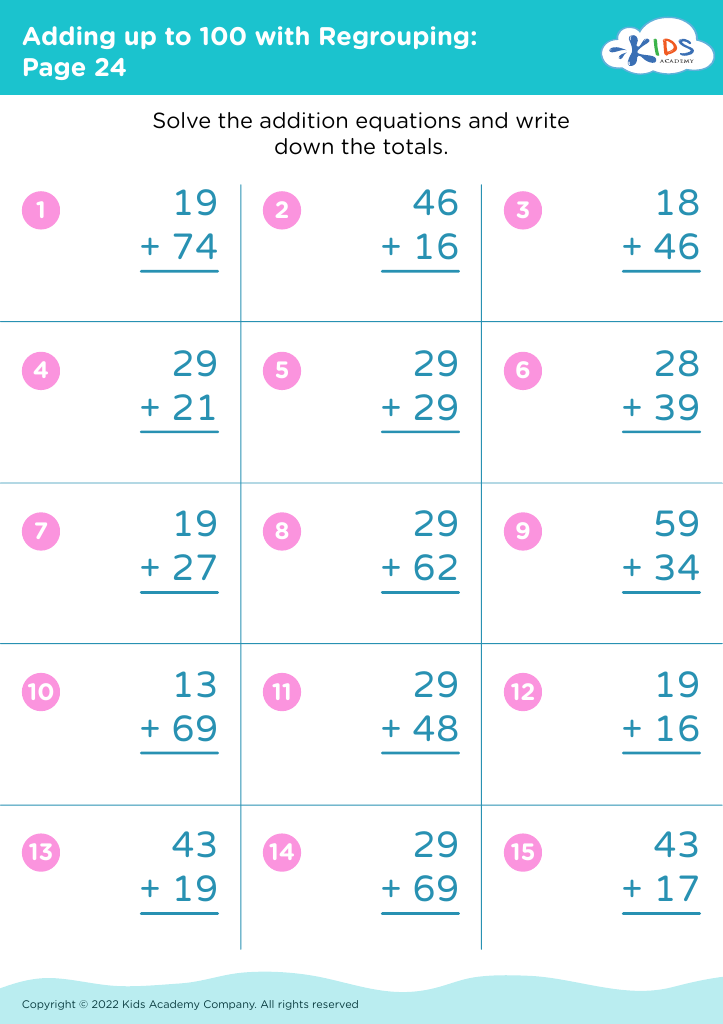
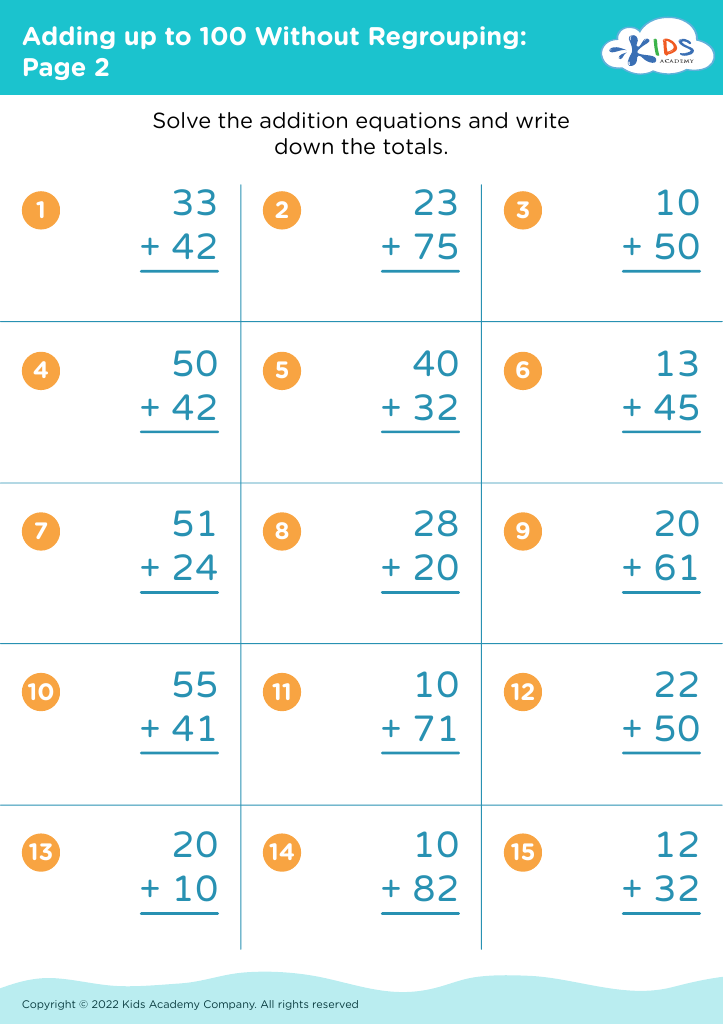
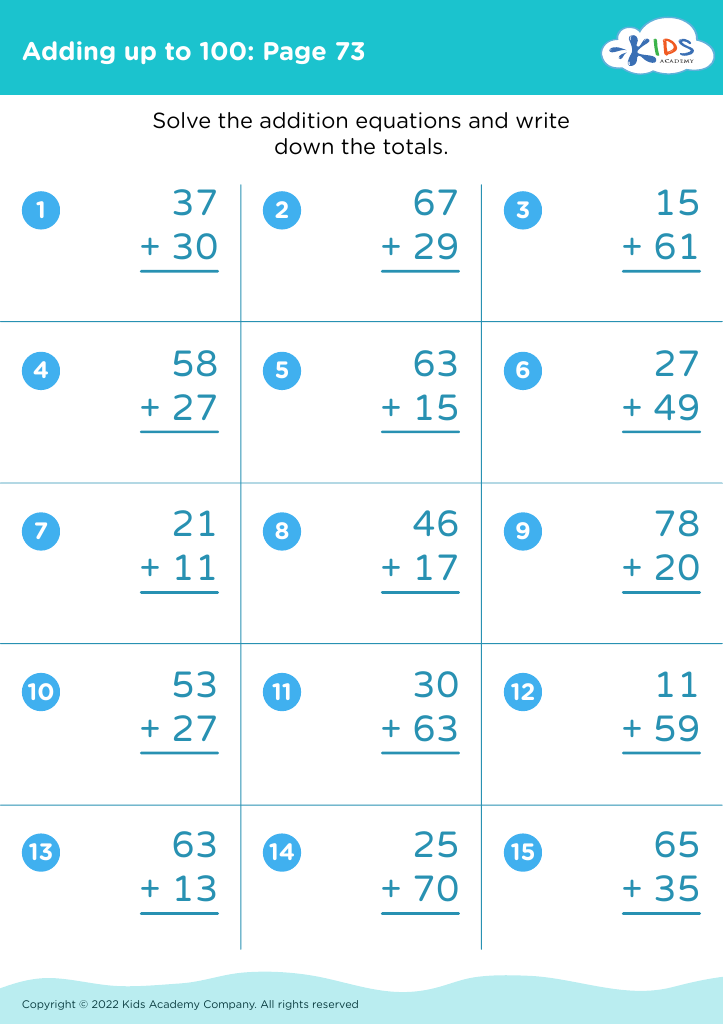
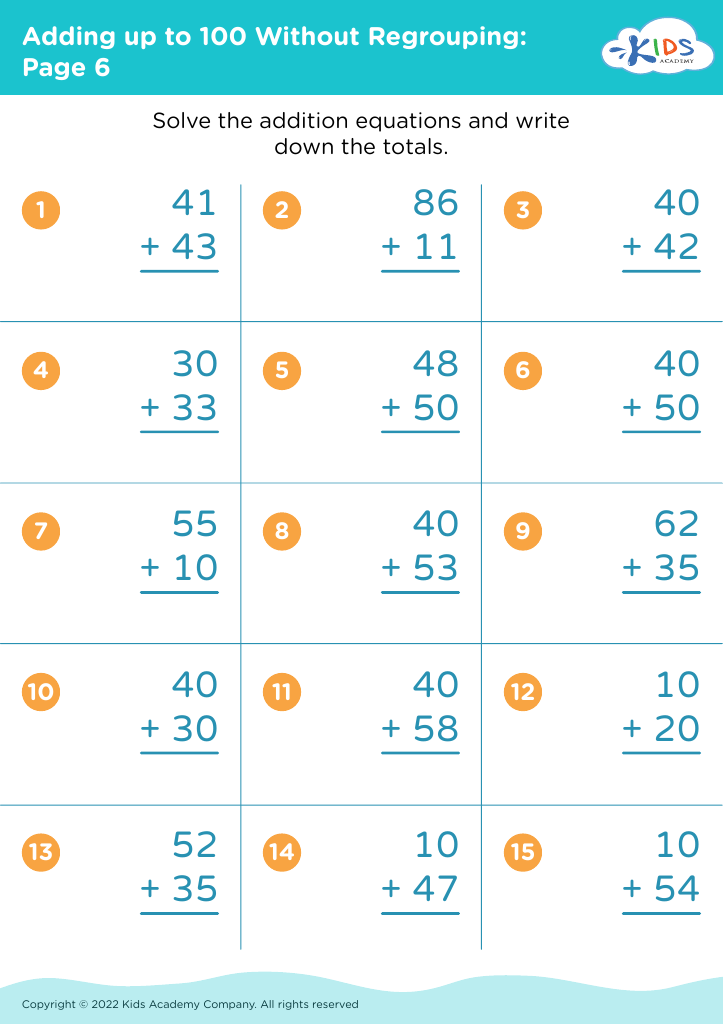
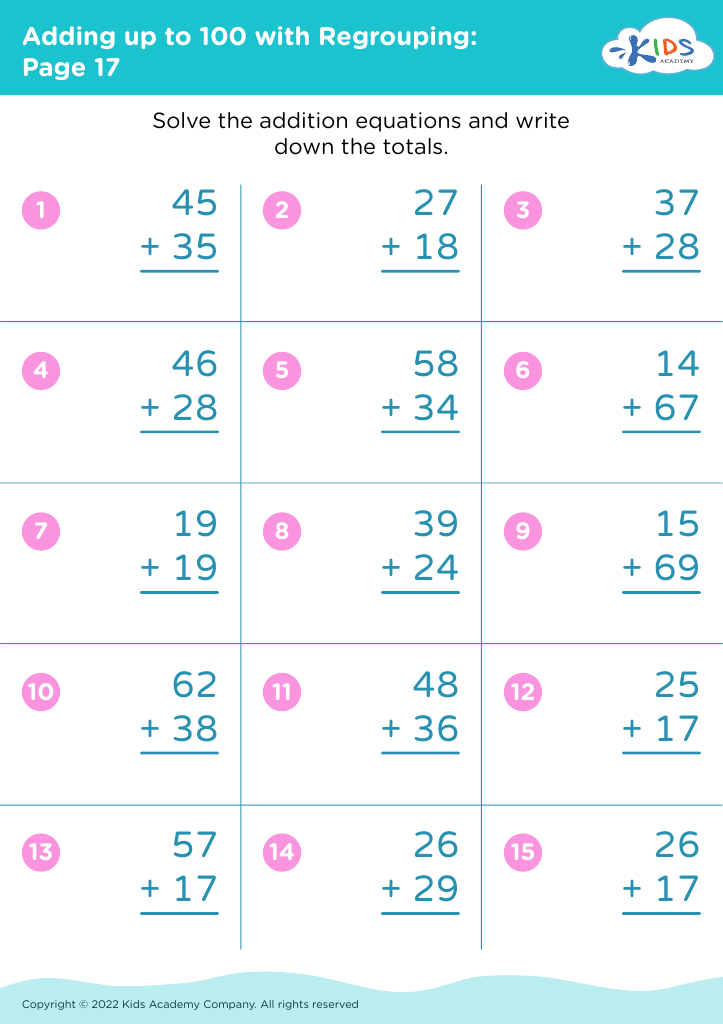
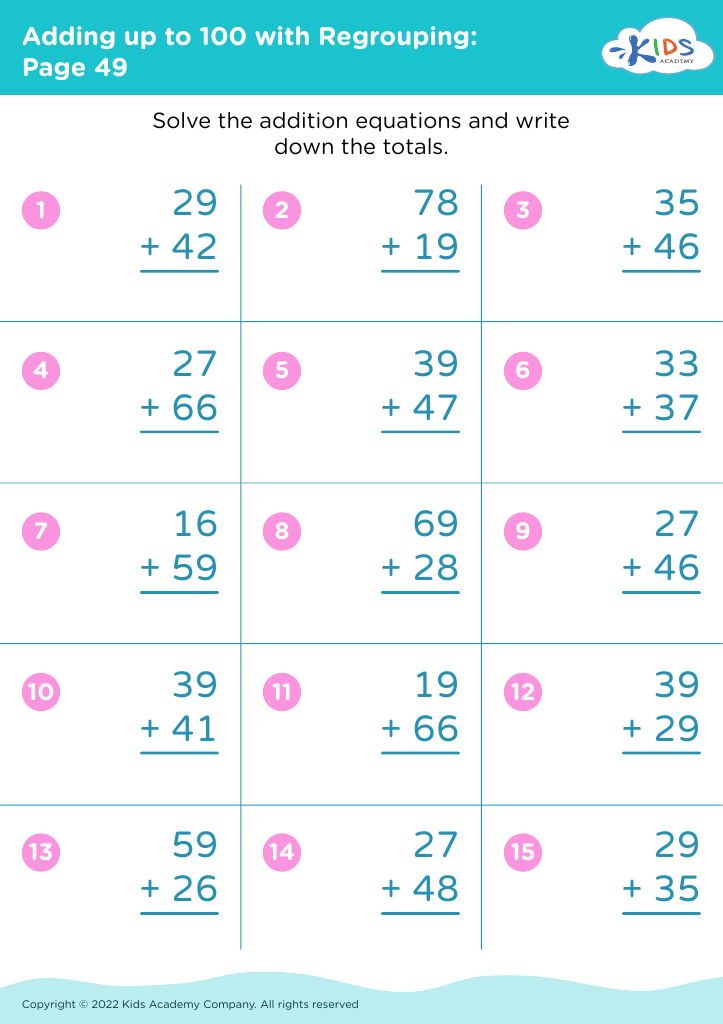
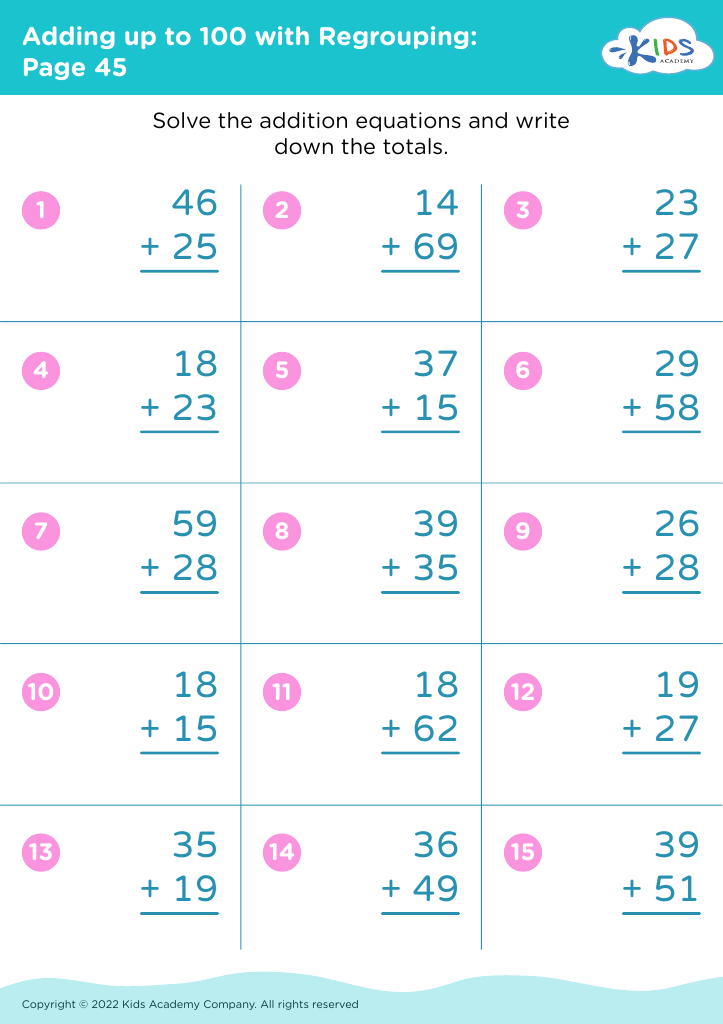
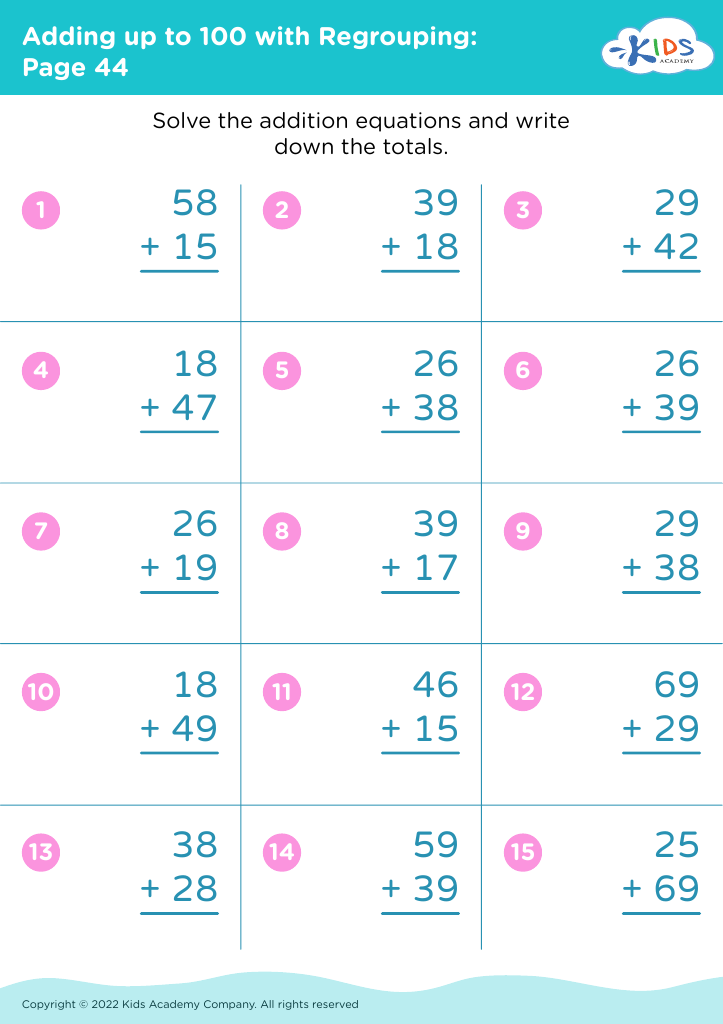
Discover an engaging collection of Shape Recognition Adding up to 100 worksheets designed specifically for children aged 8-9. These worksheets combine essential math skills with fun visual learning, helping students recognize shapes while mastering addition skills up to 100. Through interactive exercises, kids will develop their geometric understanding and enhance their math proficiency simultaneously. Ideal for classroom or home use, these worksheets foster critical thinking and problem-solving abilities. Encourage your young learners to explore shapes like squares, circles, and triangles while reinforcing their arithmetic skills. Unlock the joy of learning math with our creative and educational worksheet series today!






%20(1).jpg)
Shape recognition and the ability to add up to 100 are crucial skills for children aged 8-9, playing a vital role in their cognitive development and mathematical understanding. For parents and teachers, promoting these skills fosters a child’s spatial awareness, critical thinking, and problem-solving abilities.
Firstly, shape recognition is essential for developing geometry concepts, which form the foundation for more advanced mathematical topics. By understanding different shapes and their properties, children are better equipped to analyze and categorize objects in their environment, enhancing their observational skills.
Similarly, mastering addition skills, especially adding numbers to 100, builds a child’s number sense and arithmetic fluency. This proficiency is necessary not only for academic success but also for daily life scenarios, such as budgeting and time management.
Furthermore, combining shape recognition with arithmetic can lead to engaging, interdisciplinary learning experiences. Activities that integrate shapes with numerical problems promote deeper understanding and maintain children’s interest.
Ultimately, focusing on these skills encourages a love for learning and prepares children for higher-level mathematical concepts, laying a solid foundation for their educational journey. Supporting development in these areas benefits children now and in their future academic pursuits.








