Understanding Sequences Adding up to 100 Worksheets for Ages 8-9
5 filtered results
-
From - To
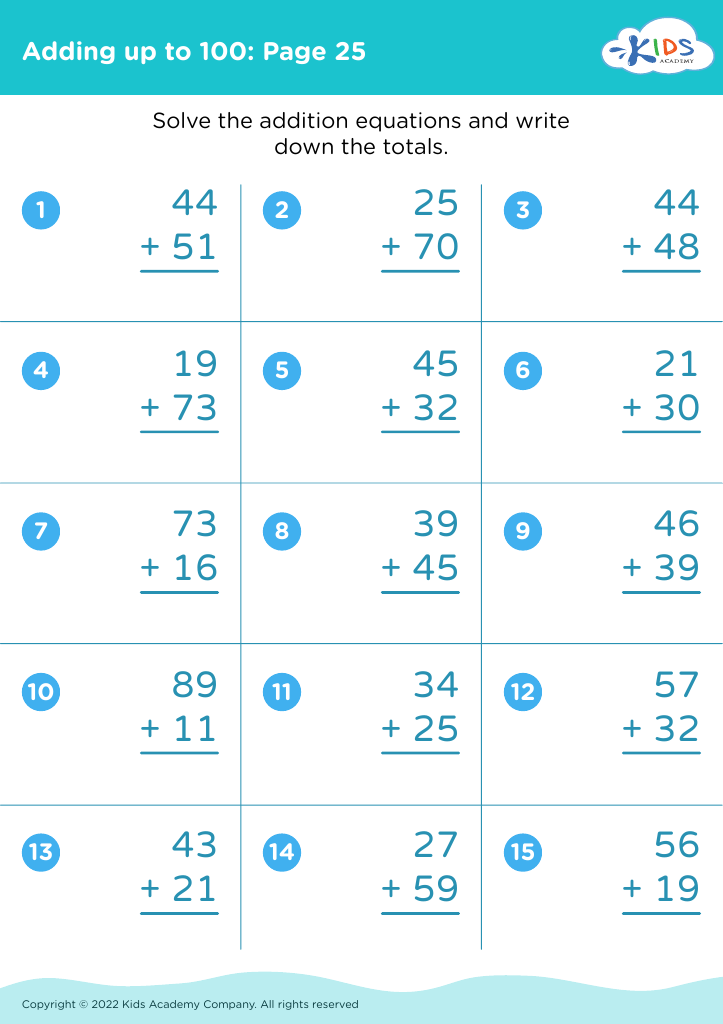
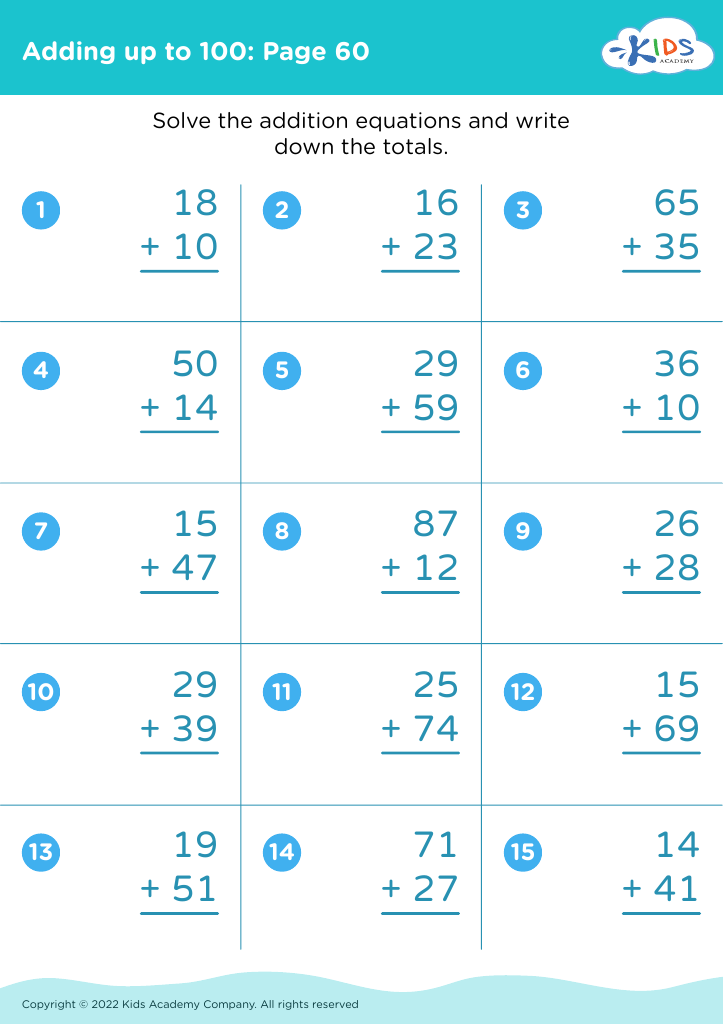
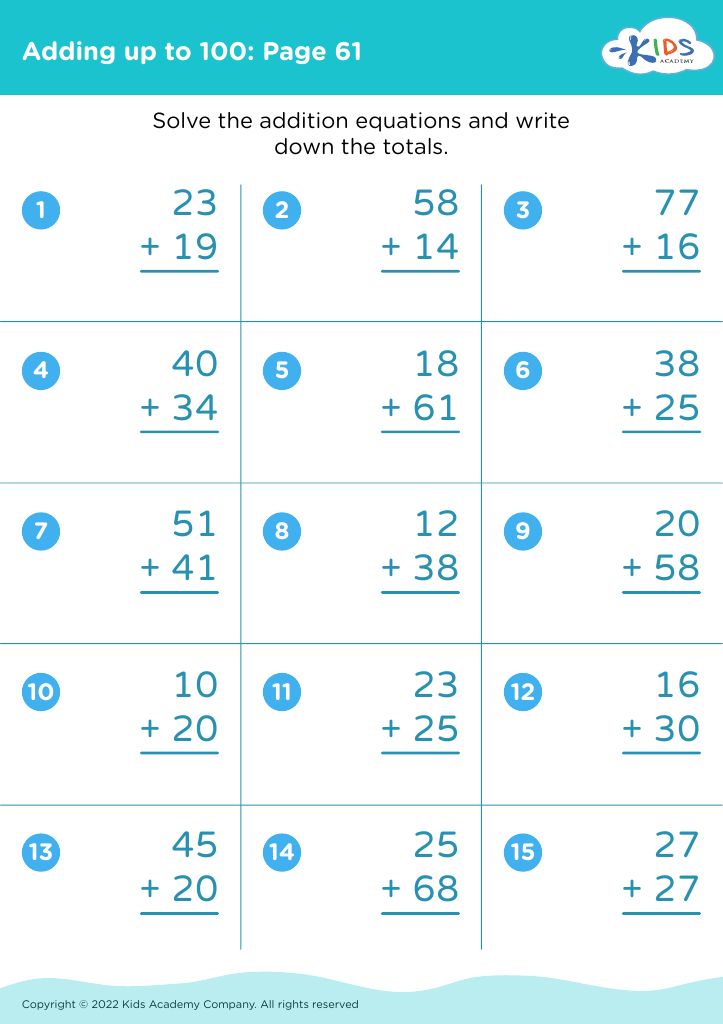
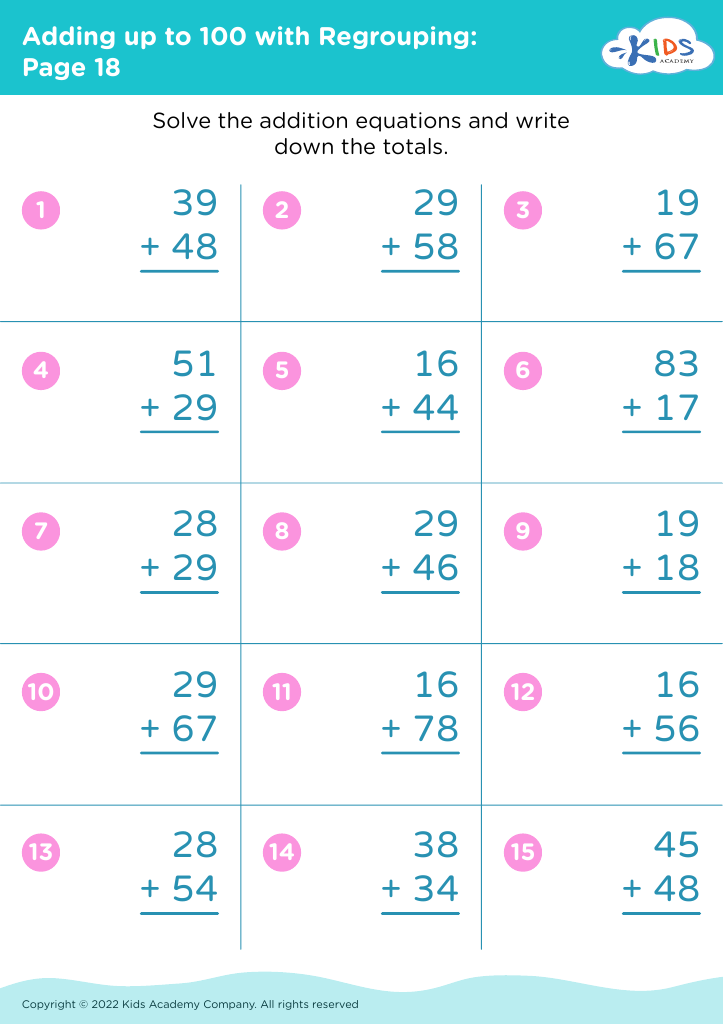
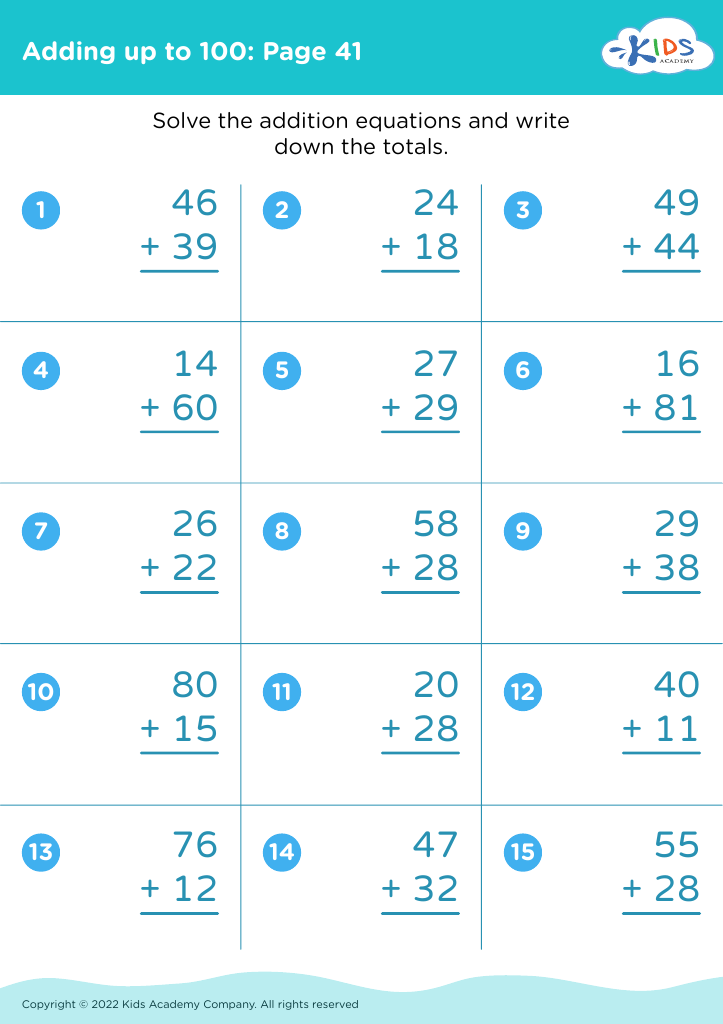
Empower your 8-9-year-olds with our engaging "Understanding Sequences Adding up to 100" worksheets! Designed to enhance arithmetic skills and foster critical thinking, these worksheets guide students through identifying, creating, and analyzing number sequences that add up to 100. With colorful illustrations and interactive activities, learners will develop a solid grasp of patterns and relationships in numbers. Ideal for young mathematicians, these resources promote confidence and improve problem-solving skills. Perfect for classroom use or at-home practice, these worksheets make learning math fun and effective! Discover a world of mathematical sequences today and support your child's growth in foundational math skills!



%20(1).jpg)



Understanding sequences that add up to 100 is crucial for children aged 8-9 because it forms a foundational skill in mathematics that supports more advanced operations. At this age, children are developing their number sense, which bolsters their ability to recognize patterns and relationships between numbers. Grasping sequences fosters logical thinking and promotes critical reasoning, enabling kids to solve problems more effectively.
Moreover, working with sequences enhances a child's fluency in addition and subtraction—key skills they will use continuously. When they understand how numbers can combine to form 100, this not only aids in mental math but also can provide strategies for everyday situations, such as managing money or organizing tasks.
For teachers and parents, supporting this learning means preparing children for more complex mathematical concepts, including algebra and fractions, which they'll encounter in later grades. This foundational knowledge can also build confidence in math, making kids more eager to engage in learning. Encouraging a solid grasp of sequences not only benefits academic performance but also nurtures a lifelong appreciation for mathematics. By caring and investing in these early stages of learning, caregivers can set their children up for future success in both education and life.








