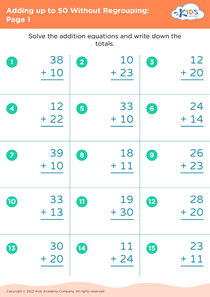
Addition Practice Adding up to 50 with Regrouping Worksheets for Ages 8-9
5 filtered results
-
From - To
Boost your child’s math skills with our engaging "Addition Practice: Adding up to 50 with Regrouping Worksheets" designed for ages 8-9. These printable worksheets introduce essential addition concepts, helping children master combining numbers while learning to regroup. With a variety of fun exercises and colorful designs, kids will enjoy the journey of building confidence in their math abilities. Perfect for home or classroom use, our resources support skill development while keeping young learners motivated. Encourage your child's love for math and set them up for success! Start practicing today and watch them excel in addition with professor-level prowess!
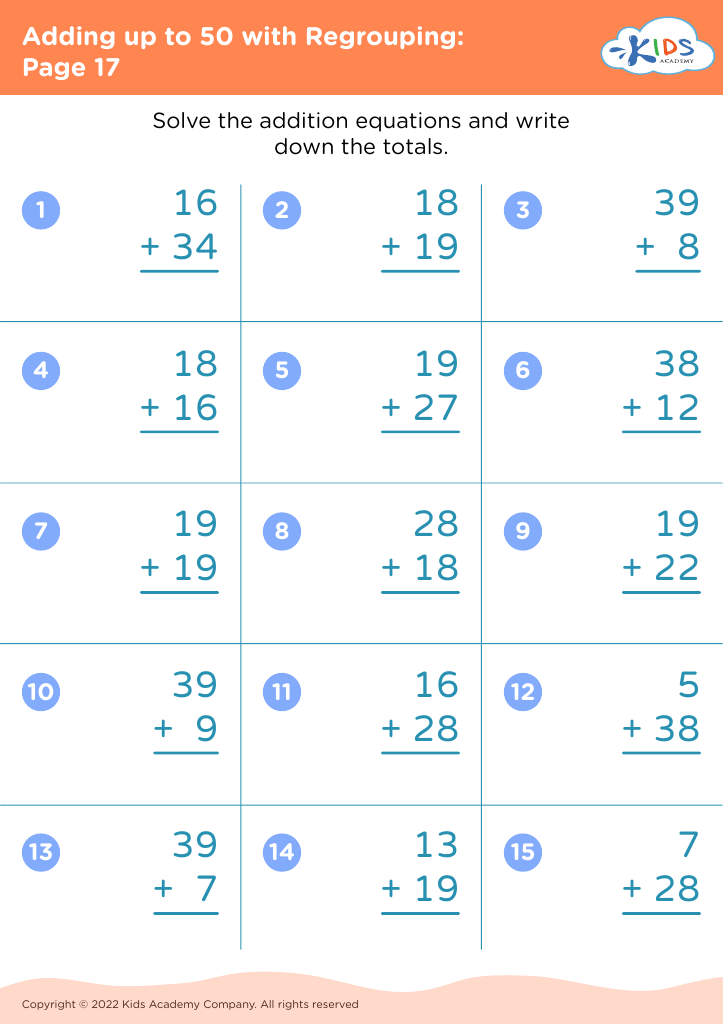
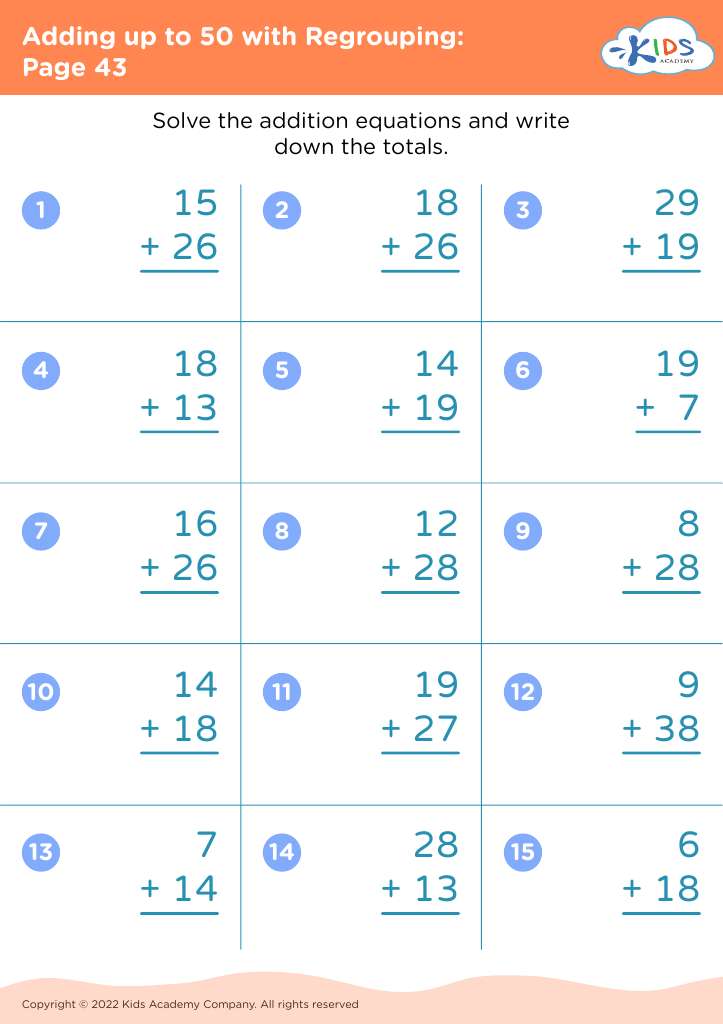
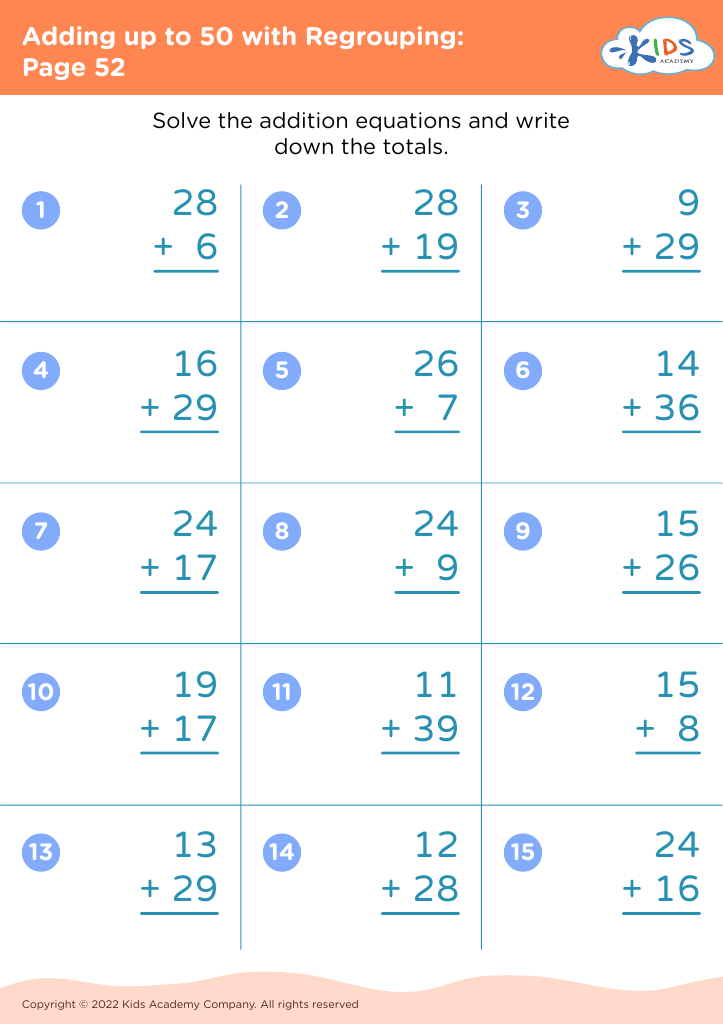
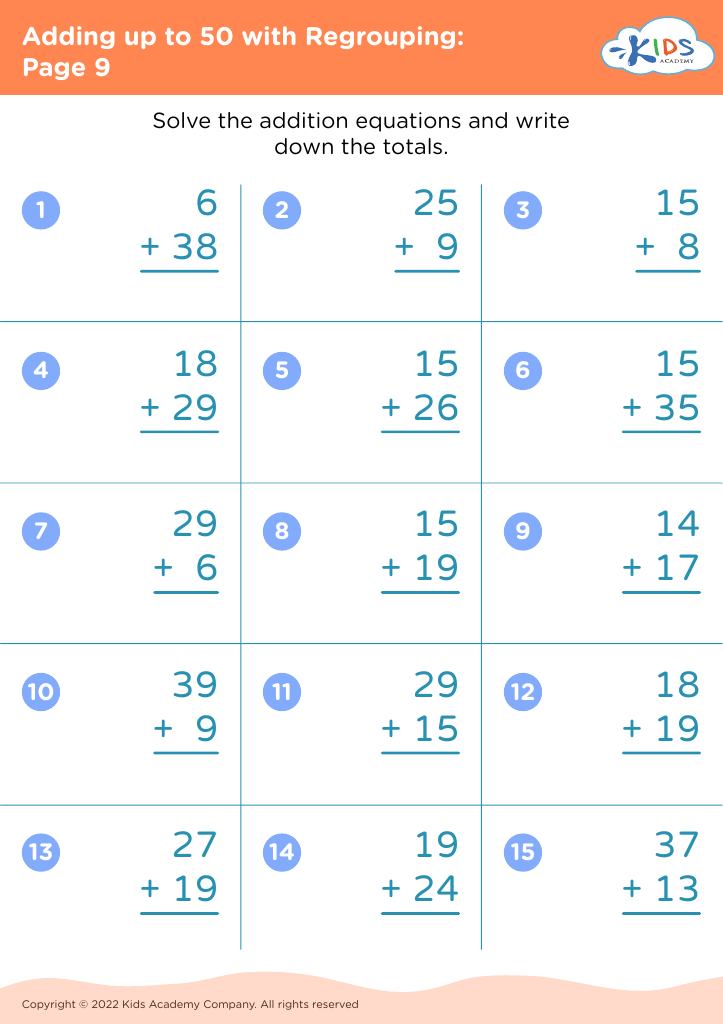
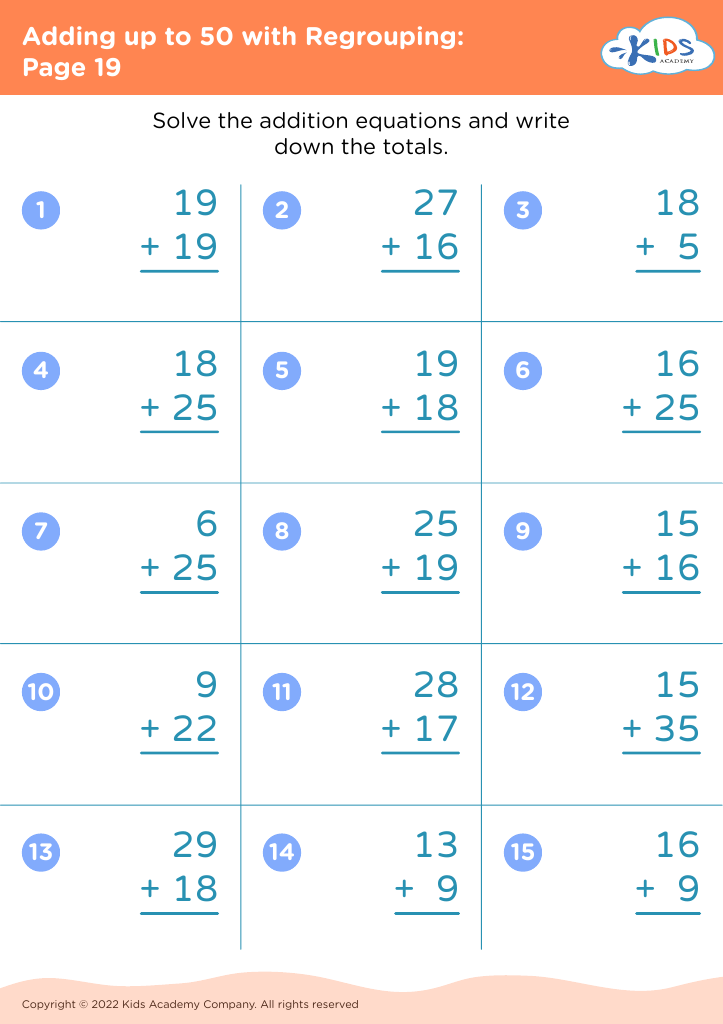


Addition practice, particularly with regrouping, is crucial for children aged 8-9 as it forms a foundational skill in mathematics. At this age, students are typically transitioning from basic addition to more complex arithmetic, and mastering addition up to 50 sets the stage for future mathematical concepts, including subtraction, place value, and multi-digit addition.
Regrouping teaches children how to manage larger numbers by exchanging groups of ten, enhancing their understanding of the number system. It promotes critical thinking and problem-solving skills, critical for academic success. Moreover, these skills foster quantitative reasoning, enabling children to tackle real-world math applications, such as budgeting or measuring.
Parents and teachers should also consider that proficient addition skills boost confidence. When students feel confident in their ability to solve math problems, they are less likely to develop math anxiety and more likely to engage positively with mathematical learning.
Furthermore, consistent practice helps reinforce both memory and understanding. As these students become more comfortable with addition, they can use these skills across subjects, improving overall academic performance. Thus, investing time in addition practice is beneficial for cognitive development and enhances a child’s enthusiasm for learning.